


Should I open or buy an Aroma Joe's franchise in 2027?
Quality
Certified
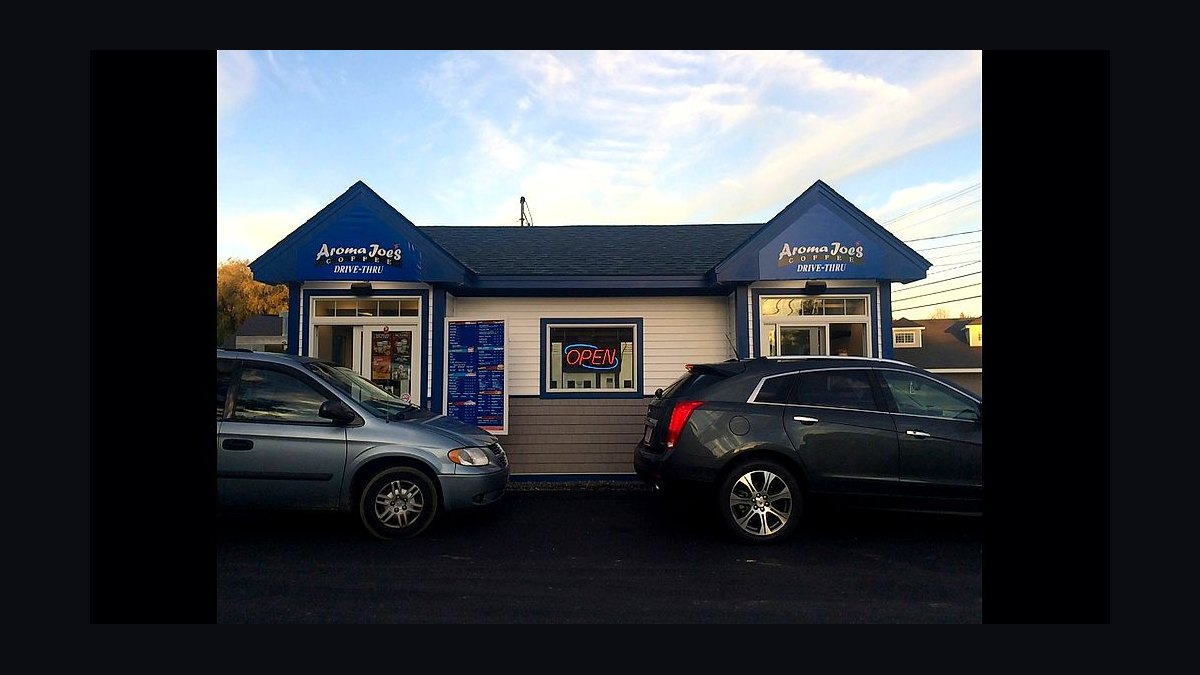
Yes, for a well-capitalized operator who can secure a strong drive-thru site — Aroma Joe's offers a moderate-investment entry into the booming drive-thru coffee-and-energy segment with an established Northeast brand. With a 2026 FDD investment of roughly $400,000-$900,000, mature units grossing $700,000-$1,500,000, and owner earnings of $90,000-$260,000, the model rewards throughput and site quality over brand novelty.
A Site-Selection Decision That Makes or Breaks the Franchise
Picture two prospective franchisees evaluating the same Aroma Joe's territory in southern New Hampshire. One signs a lease on an outparcel next to a Walmart anchor with 38,000 vehicles passing daily and a dedicated dual-lane drive-thru pad. The other takes a cheaper, in-line strip-mall spot on a side road carrying 18,000 vehicles a day because the rent is $2,000/month lower. Eighteen months later, the first location is grossing $1.2 million and clearing close to the top of the owner-earnings range. The second is stuck near $650,000 in gross sales — below the investment's break-even threshold — because the traffic count never supported the throughput the model needs. This is the scenario every Aroma Joe's buyer needs to internalize before signing: the brand, the menu, and the AJ's RUSH energy line are secondary to whether the physical site can move cars through a drive-thru lane fast enough, often enough, to justify the $400,000-$900,000 investment. A franchise agreement with a weak site is not a discount version of the opportunity — it is effectively a different business with the same buildout costs and a much lower ceiling. Site diligence has to happen before the FDD is even fully modeled, because no amount of operational excellence recovers a location that simply doesn't have the car count.
How the Drive-Thru-and-Energy Mechanism Actually Works
Aroma Joe's economics run on a simple mechanical loop: traffic volume feeds throughput, throughput feeds attach rate on higher-margin items (especially AJ's RUSH energy drinks and specialty espresso), and attach rate feeds the average ticket that turns a mediocre site into a strong one. A drive-thru-only or drive-thru-plus-walk-up format keeps the footprint small (1,200-1,800 sq. ft.) and labor lean relative to a full-service café, but it also means almost all revenue depends on cars physically passing the location and choosing to stop. Unlike a sit-down restaurant that can pull from a wider radius through destination visits, a drive-thru coffee concept is a habit business — it converts commuters who already pass the site twice a day into repeat customers, which is why traffic counts (ideally 35,000+ vehicles per day on the adjacent road) matter more than almost any other input. The energy-drink line is the mechanism's margin lever: coffee alone has healthy but capped margins, while AJ's RUSH and specialty add-ons lift the average ticket and differentiate the brand from Dunkin' or a generic coffee shop. But energy drinks also carry higher ingredient costs than drip coffee, so an operator who leans too hard into promoting RUSH can see COGS creep from the low 30% range toward 35%, offsetting some of the ticket lift. The flow below traces how a dollar of drive-thru revenue moves through the model before it reaches the owner.

The Investment, Revenue, and Margin Numbers to Model
The 2026 FDD sets the franchise fee at roughly $25,000, with total Item 7 investment landing between $400,000 and $900,000 depending on land cost, build-out complexity, and market. A realistic midpoint project — after the franchise fee — runs about $650,000, split roughly as $220,000-$520,000 for buildout and leasehold work, $110,000-$240,000 for espresso equipment and POS, $20,000-$60,000 for signage, and $35,000-$95,000 held back as working capital for the first three months. On the revenue side, a mature unit doing $1,100,000 in gross sales should expect COGS of 30%-33% ($330,000-$363,000), labor of 28%-32% ($308,000-$352,000), occupancy of 12%-15% ($132,000-$165,000), and royalty-plus-ad fees of 7%-8% ($77,000-$88,000) — six to seven points of gross sales going to the franchisor between the roughly 6%-7% royalty and the 1%-3% ad contribution. After another 5%-7% in other operating costs (processing fees, maintenance, local marketing), pre-tax owner earnings land in a $55,000-$198,000 band, with a realistic midpoint near $125,000 before debt service. Financing matters as much as the unit economics: most buyers use SBA 7(a) loans covering 80%-90% of the project, with 2027 rates likely running 8%-10% and a required down payment of 10%-20% (roughly $65,000-$180,000 on a $650,000 project). On a $500,000 SBA loan at 8% over ten years, debt service runs about $6,000/month, which trims net cash flow to something closer to $53,000-$126,000 in the early years — meaningfully below the FDD's advertised owner-earnings range, and the gap buyers most often miss when they model the deal off Item 19 alone instead of their own capital stack.
Trade-Offs Against Other Drive-Thru Coffee Concepts
Aroma Joe's sits in a crowded and fast-growing field, and the honest comparison isn't "coffee shop vs. no coffee shop" — it's this brand vs. the other drive-thru concepts chasing the same real estate. Dutch Bros has far greater national brand recognition and marketing muscle but franchises very selectively, so it's rarely an option for a first-time buyer. 7 Brew and Scooter's Coffee are the closest direct competitors on franchise availability and investment size, and both are expanding aggressively into New England — the same territory where Aroma Joe's has its strongest brand equity, which means competitive site pressure will only intensify through 2027. Black Rock Coffee and Ellianos occupy a similar drive-thru niche with somewhat different regional footprints. The trade-off for choosing Aroma Joe's specifically is regional concentration: the brand's recognition and operator support network are strongest in Maine, New Hampshire, and Massachusetts, which is an advantage inside that footprint and a real handicap anywhere else, since the FDD's Item 19 performance data is drawn overwhelmingly from Northeast units. An operator evaluating a site in, say, the mid-Atlantic or Southeast needs to discount those averages accordingly rather than assume they'll transfer. The alternative to any franchise route is an independent drive-thru coffee concept — full control over menu and branding, no royalty or ad fee, but also no FDD-backed Item 19 benchmarks, no training pipeline, and no territory protection, which shifts nearly all of the site-selection and operational risk onto the owner alone.
Common Pitfalls That Sink First-Time Buyers
The single most common mistake is signing a lease before validating traffic counts independently of the franchisor's territory map — a protected territory (typically a 1.5-2 mile radius based on population density) guarantees no second Aroma Joe's nearby, but it does nothing to stop a Dutch Bros or Dunkin' from opening across the street, and it doesn't guarantee the traffic volume the pro forma assumes. Buyers should pull their own traffic-count data from the state DOT rather than relying solely on what the franchisor or landlord provides. A second pitfall is underestimating the drive-thru infrastructure cost: audio/visual ordering systems, menu boards, and lane canopies add $50,000-$80,000 on top of the base buildout, and Aroma Joe's dual-lane or single-lane-with-bypass requirement means a site without existing drive-thru zoning approval can add months of permitting delay or become unworkable entirely — this single issue kills more deals late in the process than any other. A third pitfall is modeling owner income off the FDD's gross Item 19 range without subtracting debt service; a buyer who finances $500,000 of the project needs to plan around the $53,000-$126,000 net range, not the $90,000-$260,000 headline figure, or they risk a cash crunch in year one. A fourth is treating labor cost as fixed — in competitive labor markets like southern New Hampshire or eastern Massachusetts, the 28%-32% labor assumption can slide to 35% or higher, and a drive-thru model needs 4-6 staff per shift plus a manager, so thin staffing to protect margin directly damages throughput speed, which is the entire value proposition. Finally, buyers frequently skip calling more than one or two existing franchisees; the FDD's Item 19 average blends strong and weak sites, and a 20-minute call with three to five operators in comparable markets reveals more about realistic performance than the disclosure document alone.
Related questions
How long does it take to open an Aroma Joe's from signing to opening day?
Typically 6-12 months, covering site validation, lease negotiation, permitting, drive-thru buildout, equipment installation, and staff training, though permitting delays on drive-thru zoning can extend the timeline further.
What credit score and liquid capital do I need to qualify for financing?
Most SBA 7(a) lenders want a 680+ credit score and $100,000-$150,000 in liquid capital, with a 10%-20% down payment on the total project cost.
Can I negotiate a lower royalty as a multi-unit Aroma Joe's operator?
Operators committing to three or more units may be able to negotiate a reduced royalty (roughly 5%-6% instead of 6%-7%) or fee concessions — this is deal-specific and should be confirmed directly against the current FDD.
Is a ROBS 401(k) rollover a good way to fund the down payment?
It can work for buyers with $200,000+ in retirement savings and avoids early-withdrawal penalties, but it adds $5,000-$8,000 in setup complexity and ties retirement funds directly to the business's risk.
How does Aroma Joe's territory protection actually work?
It grants a roughly 1.5-2 mile radius free of a second Aroma Joe's, based on population density and traffic counts — but it does not block competing brands like Dutch Bros or Dunkin' from opening nearby.
FAQ
What is the total investment needed to open an Aroma Joe's franchise? Total investment runs roughly $400,000 to $900,000, including a $25,000 franchise fee, buildout, equipment, signage, and initial working capital. The exact figure depends heavily on land cost and drive-thru infrastructure requirements in your specific market.
How much can I expect to earn as an Aroma Joe's franchise owner? Mature units gross $700,000-$1,500,000 annually, with FDD-reported owner earnings of $90,000-$260,000. After typical SBA debt service, realistic net cash flow in the early years is closer to $53,000-$126,000 for a financed single unit.
What ongoing fees does an Aroma Joe's franchisee pay? Franchisees pay a royalty of roughly 6%-7% of gross sales plus a 1%-3% advertising fee, totaling about 7%-8% of gross revenue going back to the franchisor for brand support and marketing.
Is Aroma Joe's a good fit outside the Northeast? The brand's strongest performance data and operator support come from Maine, New Hampshire, and Massachusetts. Buyers outside that footprint should treat Item 19 averages cautiously and validate local brand awareness before committing to a site.
How competitive is the drive-thru coffee space right now? Very — Dutch Bros, 7 Brew, and Scooter's Coffee are all expanding aggressively, including into Aroma Joe's home Northeast territory, which raises pressure on site selection and could compress traffic at marginal locations.
What's the biggest single risk in buying an Aroma Joe's franchise? Site selection. A location without sufficient vehicle traffic (35,000+/day is the benchmark) or without approved drive-thru zoning can underperform the pro forma by hundreds of thousands of dollars in annual revenue, regardless of operational execution.
Sources
- U.S. Small Business Administration — SBA 7(a) Loan Program overview: https://www.sba.gov/funding-programs/loans/7a-loans
- International Franchise Association — Franchise Economic Outlook: https://www.franchise.org/franchise-information/franchise-business-outlook
- Entrepreneur — Franchise 500 and franchise listings: https://www.entrepreneur.com/franchises
- QSR Magazine — drive-thru and coffee segment coverage: https://www.qsrmagazine.com/
- Nation's Restaurant News: https://www.nrn.com/
- IBISWorld — Coffee & Snack Shops industry reports: https://www.ibisworld.com/
- Statista — coffee and energy drink market data: https://www.statista.com/
- Franchise Business Review: https://www.franchisebusinessreview.com/
- Federal Trade Commission — Franchise Rule / FDD guidance: https://www.ftc.gov/business-guidance/industry/franchises-business-opportunities
Related on PULSE
- Should I open or buy an Aroma Joe's Coffee franchise in 2027?
- Should I open or buy a Tokyo Joe's franchise in 2027?
- Should I open or buy a Happy Joe's Pizza franchise in 2027?
- Should I open or buy a Mosquito Joe franchise in 2027?
- Should I open or buy a Joe's Crab Shack franchise in 2027?
This page will be disappearing soon. Save it to your device for $1 — or read it free while it is here.
@Kory-White- · if Venmo asks, the last 4 of my number are 2012
This page is gone.
This one is off the shelf now. $1 keeps it on your phone for good — the whole page, pictures and diagrams included.
 franchiseShould I open or buy a KinderCare franchise in 2027?
 franchiseShould I open or buy a Subway franchise in 2027?
 franchiseShould I open or buy a UPS Store franchise in 2027?
 franchiseShould I open or buy a FACE FOUNDRIÉ franchise in 2027?
 franchiseShould I open or buy a McAlister's Deli franchise in 2027?
 franchiseShould I open or buy a Sonic Drive-In franchise in 2027?
 franchiseShould I open or buy a Little Caesars franchise in 2027?
 franchiseShould I open or buy an Anytime Fitness franchise in 2027?
 franchiseShould I open or buy a Kona Ice franchise in 2027?
 franchiseShould I open or buy a Big O Tires franchise in 2027?