


Should I open or buy a CubeSmart franchise in 2027?
Quality
Certified
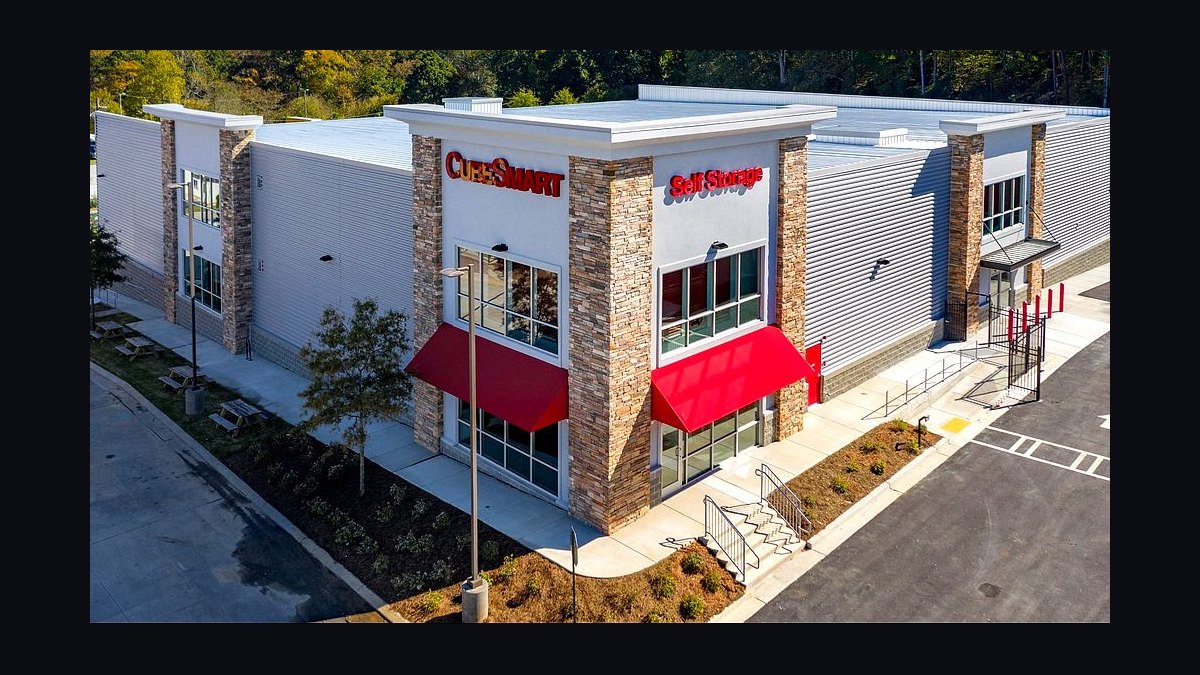
CubeSmart does not franchise. It is a self-storage REIT that owns and third-party-manages stores, so "buying a CubeSmart franchise" is not an available path in 2027. Your real options are joining its third-party management program with a facility you own, buying an existing store outright, or franchising with a brand that actually sells franchises.
What CubeSmart actually offers versus what a franchise would be
The single most important fact to establish before you spend another hour on this is that CubeSmart is not a franchisor. It is a publicly traded real estate investment trust (NYSE: CUBE), one of the largest self-storage owner-operators in the United States. Its growth model is owning real estate, acquiring stores, developing new ones on balance sheet, and managing other people's stores under its brand for a fee. Nowhere in that model is there a franchise disclosure document, a franchise fee, a territory grant, or a franchise agreement — the four things that define an actual franchise offering. If a broker, a "franchise consultant," or a listing site tells you there is a CubeSmart franchise for sale, treat that as a red flag about the source, not as a lead.
What CubeSmart does offer to outside owners is a third-party management program. In that arrangement you own the land and the building — or you buy an existing facility — and CubeSmart operates it under the CubeSmart name. You get the brand on the sign, placement in their website and call-center funnel, their revenue-management pricing engine, their tenant insurance program, their vendor pricing on supplies and marketing, and their district-manager oversight of your on-site staff. You pay a management fee, typically expressed as a percentage of gross revenue in the self-storage third-party management market, plus pass-through costs for payroll, marketing, and credit card processing. That is a services contract, not a franchise. The economics, the risk, and the exit are completely different from what people picture when they say "franchise."
The distinction is not academic, and it changes the entire shape of your capital plan. A franchise typically means you buy a business system: you pay an upfront fee for the right to use a brand and its playbook, you pay ongoing royalties on revenue, you follow the franchisor's operating standards, and you usually lease your real estate. Your capital goes into buildout, equipment, working capital, and the fee. In self-storage under a management contract, your capital goes into real estate — land, vertical construction, or the purchase price of an existing income-producing property. You are a real estate investor who has outsourced operations, not a franchisee. That means your returns are driven far more by cap rates, rent per square foot, lease-up curves, and the debt markets than by any brand playbook.

There is a second reason the "franchise" framing misleads people in self-storage specifically. Self-storage is unusually consolidated at the top and unusually fragmented at the bottom. The large public REITs — CubeSmart among them — own and manage the professionally run end of the market, while thousands of single-facility owners run the rest, many of them small operators with dated software and no revenue management. That structure produces a large third-party management market rather than a franchise market, because the REITs would rather collect a management fee and an acquisition pipeline than sell territory rights. Extra Space, Public Storage, and CubeSmart all run management platforms of meaningful scale. None of them is selling you a franchise.
So if your underlying goal is "I want to own a self-storage business with a national brand on the building," that goal is achievable — just not through a franchise agreement with CubeSmart. If your underlying goal is "I want a franchise, with a franchisor's training wheels and a defined territory," then self-storage brands that do franchise exist, and you should be shopping those instead. Getting clear about which of those two goals is actually yours is the entire decision.
The three paths that are actually on the table
Path one: buy or build a facility and put it into CubeSmart's third-party management program. You control the asset. You sign a management agreement, CubeSmart brands and operates the store, and you receive net cash flow after the management fee and property-level expenses. This is the closest thing to what you asked about, and it is genuinely available — but the gate is capital, not an application to a franchise sales department. Management platforms have facility standards: size, construction quality, market, unit mix, and condition all matter, because the brand does not want to attach its name to a store it cannot make perform. A 15,000-square-foot conversion in a thin rural market is a much harder yes than a 70,000-square-foot climate-controlled facility on a commercial corridor with real traffic counts.

Path two: buy an existing independent self-storage facility and run it yourself or hire a regional manager. This is how most first-time storage owners actually enter. The thesis is straightforward: buy a mom-and-pop store with below-market rents, no revenue management, weak online presence, and deferred maintenance; install modern management software, a real website with online rentals, gate and lock upgrades, tenant insurance, and a systematic rent-increase program; and capture the net operating income lift. That lift is where the return lives. The risk is that you are now the operator, and self-storage operations look simple until you are chasing delinquencies, running lien auctions under your state's statute, and answering the phone at 8pm.
Path three: buy an actual self-storage franchise from a brand that franchises. Some do — the portable and container storage segment in particular has franchised models, and there are storage and moving-adjacent franchise systems in the market. If you go this route, the disciplines are the standard franchise disciplines: read the full Franchise Disclosure Document, especially Item 7 (estimated initial investment), Item 19 (financial performance representations, if any), Item 20 (outlet and franchisee information, including turnover), and Item 21 (financial statements of the franchisor). Call at least ten current franchisees from the Item 20 list and at least five former ones. The former franchisees are the ones who tell you the truth.
The trade-off across the three is fairly clean. Path one gives you brand strength and professional operations but requires the most capital and gives you the least operational control. Path two gives you the most control and the biggest potential value-creation spread, but you carry operational risk and you will not have a national brand's marketing funnel. Path three gives you a defined system and a lower capital entry in some segments, but you pay royalties forever and your upside is capped by the system's economics rather than by real estate appreciation.

One more path deserves a mention because people reach for it: buying shares of CUBE. If what you actually want is exposure to self-storage economics without operating anything, the public equity gives you that with daily liquidity and no capital call. It will not make you a business owner, and it will not produce the depreciation and refinance benefits of direct ownership, but it is the honest answer for a subset of people who describe themselves as wanting a storage franchise.
How to decide which path fits you
The decision comes down to four inputs, in order: how much equity you can deploy, whether you want to operate, what your market looks like, and what your hold period is. Run them in that sequence, because each one eliminates options before the next one matters.
Start with equity. Self-storage acquisitions are typically financed with meaningful equity down, and construction is financed more conservatively than that. If your available equity is well under seven figures, path one is largely off the table for a stabilized, brand-quality facility in a decent metro, and you are realistically looking at a smaller independent store, a partnership, a syndication as a limited partner, or a franchise in a lower-capital adjacent segment. Be honest here rather than optimistic — underestimating equity need is the single most common way first-time storage deals die at the closing table.
Then ask whether you want to operate. This is a temperament question, not a spreadsheet question. Third-party management is genuinely hands-off — you review monthly reporting and approve capital items. Self-operating means hiring, delinquency management, auctions, marketing, and maintenance. Many people want the returns of self-operation and the workload of management contracts. Pick one.

Then look at the market. Self-storage demand is local and supply is local. What matters is square feet of storage per capita within a three-to-five-mile radius, population growth, household formation, apartment stock as a share of housing, median household income, and — most importantly — what is under construction or entitled nearby. A market that looks undersupplied today can be oversupplied in eighteen months if two facilities are in permitting. Pull the actual permit records rather than relying on a broker's summary.
Finally, the hold period. Real estate rewards patience; the value-creation thesis in self-storage — raise rents, cut expenses, refinance or sell into a stabilized cap rate — generally takes three to five years to fully play out. If you need liquidity inside two years, direct ownership is the wrong vehicle, and that is true whether or not a brand name is on the sign.
The numbers behind each option
Start with the third-party management path, because that is the one people most often mistake for a franchise. Management fees in the self-storage third-party market are quoted as a percentage of gross revenue, commonly in the mid-single digits, often with a monthly minimum fee that protects the manager on small or unstabilized stores. That minimum matters enormously during lease-up: a percentage fee on a store at 30% occupancy generates very little, so the floor kicks in, and your effective fee as a share of revenue can be materially higher than the headline percentage in year one. Ask for the minimum in writing and model it at your actual month-by-month projected revenue, not at stabilization.
On top of the management fee, expect pass-through costs. Site payroll is yours. Internet marketing and paid search spend attributable to your store is typically yours. Credit card processing fees are yours. Some platforms charge for call center access or for their tenant insurance administration, and some share tenant insurance commission revenue with the owner — that split is negotiable and is one of the more meaningful line items in a mature store, because tenant protection programs carry high margins. Get the insurance economics in writing too.

Property-level operating expenses in self-storage typically run a meaningful share of effective gross income — self-storage has famously good expense ratios compared to multifamily, mainly because there is no interior maintenance per unit and staffing is thin. But "good" does not mean trivial: property taxes, insurance, payroll, marketing, repairs, snow removal, utilities on climate-controlled space, and software all add up, and property tax reassessment after a sale is the expense line that most often blows up a first-time buyer's pro forma. Underwrite taxes at the reassessed value, not the seller's current bill.
For the acquisition path, the metrics that drive the deal are purchase price per net rentable square foot, in-place rent per square foot versus street rate versus market comps, physical occupancy versus economic occupancy, and the gap between the two. Economic occupancy is the number that tells the truth: a store at 92% physical occupancy with heavy concessions and rents 20% under market is not a 92% store. The value-add thesis is closing that gap — pushing existing-customer rate increases, cutting concessions, and raising street rates — and you should model it as a multi-year ramp with realistic move-out attrition, because every rate increase produces some vacates.
For development, the inputs are land cost, hard construction cost per square foot (which varies enormously between single-story drive-up and multi-story climate-controlled), soft costs, entitlement time, and the lease-up curve. Lease-up is where new developers get hurt. A new store does not fill in six months; the industry norm is a multi-year absorption curve, and every month of slower-than-modeled lease-up is a month of debt service against thin revenue. If your model shows stabilization inside two years, stress it to three and see whether the deal still works.
For the franchise path, the FDD gives you the numbers directly. Item 7 will bracket your total initial investment including the franchise fee, buildout or equipment, initial marketing, and required working capital. Item 19 may or may not include financial performance representations — many franchisors provide none, and the absence is itself information. Royalties are typically a percentage of gross revenue, often with a separate national marketing or brand fund contribution on top. Model royalties plus brand fund together; people routinely forget the second one.

Across all paths, the financing environment is the variable you control least. Self-storage lending is available through banks, credit unions, SBA 7(a) and 504 for owner-operated stores, CMBS for larger stabilized assets, and life companies at the top end. SBA is often the right tool for a first acquisition because of the lower down payment, but it comes with personal guarantees, a longer close, and eligibility rules that hinge on you being an operator rather than a passive investor. That last point matters: if you plan to put the store under third-party management and stay passive, check SBA eligibility carefully before you build your capital stack around it.
Sequencing the work if you decide to move
Order matters here more than most people expect, because a few steps gate everything downstream and doing them out of order wastes months. The sequence below assumes you have decided to own real estate, whether you end up branded or independent.
First, define the buy box in writing: metro or submarket list, size range in net rentable square feet, minimum unit count, acceptable construction types, maximum price, target going-in yield, and whether you will take lease-up risk. A written buy box is what makes brokers take you seriously and what stops you from talking yourself into a bad deal at month eight.
Second, get financing pre-conversations done before you have a deal under contract. Talk to at least three lenders — a local bank that knows the submarket, an SBA lender if you qualify, and a national storage-focused lender. You want to know your realistic leverage, rate, amortization, recourse posture, and reserve requirements before you write an offer, not after.
Third, build deal flow. Broker relationships, direct mail to owners in your buy box, and the storage-specific listing platforms all work. Off-market direct outreach to aging mom-and-pop owners is the highest-value channel for the value-add thesis, and it is slow — assume many months of consistent outreach before the first real conversation.

Fourth, underwrite hard and inspect harder. Beyond standard commercial diligence — survey, environmental Phase I, title, zoning verification — self-storage has its own list: unit mix audit against the rent roll, physical walk of every unit to verify occupancy claims, delinquency aging report, review of the tenant lease form against your state's lien statute, gate and access control system age and vendor support status, roof condition, drainage, and whether the seller's tenant insurance program is assignable. Verify the rent roll physically. Overstated occupancy is the classic seller misrepresentation in this asset class.
Fifth, only after you have a facility under contract, engage the management platform. This is the step people try to do first, and it is backwards. CubeSmart and its peers evaluate a specific asset in a specific market; there is nothing for them to say about a hypothetical. Bring them the address, the rent roll, the site plan, and the photos, and the conversation becomes concrete immediately. If the answer is no, you still have the deal and can pursue a regional operator or self-operation.
Sixth, negotiate the management agreement itself rather than signing the form. The terms that matter: the fee percentage and the monthly minimum, the initial term and renewal, the termination provisions and any termination fee, who controls pricing decisions, who controls capital expenditures and at what threshold, the tenant insurance commission split, how marketing spend is allocated and approved, reporting cadence and format, and what happens to the brand and the customer data if the agreement ends. That last one is easy to overlook and expensive to get wrong — you want clarity on tenant data ownership before you sign, not after you decide to leave.
Seventh, run the store on numbers. Whether branded or independent, track economic occupancy, rent per occupied square foot, move-in and move-out counts, delinquency aging, and cost per rental from marketing spend, monthly. Self-storage is a rate-management business more than a real estate business once you own it, and the operators who win are the ones who raise rents on existing customers systematically rather than sporadically.
The realistic risks nobody puts in the pitch deck

New supply is the dominant risk. Self-storage development is comparatively fast and comparatively cheap versus other commercial asset classes, which means a market that pencils today can be competed away by a facility that breaks ground next year. Before you close, pull planning and permit records for your trade area yourself and call the municipality. Brokers do not always disclose what is entitled two miles away.
Rate compression is the second risk. Street rates in self-storage are volatile and respond quickly to local supply and to housing-market activity, since moves drive a large share of demand. When home sales slow, storage demand softens at the margin. Model a scenario where street rates fall and existing-customer increases meet more resistance, and see whether debt service still clears.
Property tax reassessment is the third, and it is the most reliably underestimated. In many jurisdictions a sale triggers reassessment at your purchase price, and the tax line in the seller's operating statement is simply not your tax line. Get a local tax consultant's estimate during diligence.
Fourth, the brand does not guarantee performance. A national name on the building helps with search visibility and consumer trust, and the revenue-management systems these platforms run are genuinely sophisticated. But the fee comes off the top every month whether the store performs or not, and a well-run independent with a good website and disciplined rate management can outperform a branded store in the same submarket. The brand is a tool, not a moat.
Fifth, if someone is actively selling you a "CubeSmart franchise" in 2027, stop the conversation. Either they are confused about the difference between a management contract and a franchise, or they are selling something else entirely. Verify any franchise offering the only way that means anything: get the FDD, confirm the franchisor's registration in states that require it, and check the entity against public records. The absence of an FDD is dispositive — no FDD, no franchise, no exceptions.
Related questions
Does CubeSmart accept small facilities into third-party management?

Platforms set standards on size, market, and condition. Very small or rural facilities are often declined because the fee revenue does not support district-level oversight. Ask early with a specific address, rent roll, and photos — the answer is asset-specific, not policy-general.
Is buying shares of CUBE a reasonable substitute?
If you want self-storage economic exposure without operating or deploying real estate equity, yes. You get liquidity and diversification but no control, no depreciation benefits, no refinance proceeds, and none of the value-creation spread that direct ownership offers.
Can I use an SBA loan to buy a self-storage facility?
Often yes for owner-operated stores, with the lower down payment SBA programs allow. But eligibility generally assumes you operate the business rather than hold it passively, so confirm how a third-party management arrangement affects eligibility before structuring around it.
What returns should I underwrite for a first storage acquisition?
Underwrite from the asset, not from a target. Build the going-in yield from verified in-place economic occupancy and reassessed taxes, then model the rate program and expense changes over three to five years. If the deal only works on aggressive assumptions, it does not work.
How long does lease-up take on a new store?
Longer than most first-time developers model. Absorption runs over multiple years in typical markets, and it depends heavily on local supply and population growth. Stress your model to a slower curve and verify the deal still services debt.
FAQ
Can I open a CubeSmart franchise in 2027?
No. CubeSmart is a self-storage REIT, not a franchisor. It does not sell franchises, issue Franchise Disclosure Documents, or grant territories. The nearest available arrangement is its third-party management program, where you own the facility and CubeSmart operates it under its brand for a fee — a services contract, not a franchise.

What is the difference between third-party management and a franchise?
In a franchise you buy the right to use a brand and system, pay an upfront fee plus ongoing royalties, and run the business yourself under the franchisor's standards. In third-party management you own the real estate and the operator runs it for you for a percentage of gross revenue. One is a license to operate; the other is outsourced operations.
How much capital do I need to enter self-storage ownership?
Enough to be a real estate buyer, which for a brand-quality facility in a decent metro means substantial equity plus reserves. Smaller independent stores, partnerships, and limited-partner positions in syndications are the lower-capital entry points. Get lender conversations done before you shop so you know your actual leverage.
Is a national brand worth the management fee?
Sometimes. You get search visibility, a call center, revenue-management systems, vendor pricing, and professional oversight, which can lift revenue meaningfully on an under-managed store. But the fee comes off gross revenue monthly regardless of performance. Model the store both ways — branded and self-operated — before assuming the brand pays for itself.
What should I verify before believing any storage franchise offering?
Get the Franchise Disclosure Document. Read Item 7 for total investment, Item 19 for any performance representations, Item 20 for outlet counts and franchisee turnover, and Item 21 for franchisor financials. Then call ten current franchisees and five former ones. No FDD means it is not a franchise.
What is the single biggest underwriting mistake first-time buyers make?
Using the seller's property tax line. In many jurisdictions a sale triggers reassessment at your purchase price, and that one line can erase the spread you thought you were buying. The close second is trusting a rent roll without physically walking the units to verify occupancy.
Sources
- https://www.cubesmart.com/
- https://investors.cubesmart.com/
- https://www.sec.gov/cgi-bin/browse-edgar?action=getcompany&CIK=CUBE&type=10-K
- https://www.ftc.gov/business-guidance/resources/consumers-guide-buying-franchise
- https://www.ftc.gov/legal-library/browse/rules/franchise-rule
- https://www.sba.gov/funding-programs/loans/7a-loans
- https://www.sba.gov/funding-programs/loans/504-loans
- https://www.selfstorage.org/
- https://www.nareit.com/what-reit
- https://www.irs.gov/businesses/small-businesses-self-employed/starting-a-business
Related on PULSE
- Should I open or buy a Public Storage location in 2027?
- Should I open or buy an Extra Space Storage facility in 2027?
- Should I open or buy a U-Haul dealership in 2027?
- Should I open or buy a PODS franchise in 2027?
- How do I underwrite a self-storage acquisition?
- What does a third-party property management agreement actually cost?
This page will be disappearing soon. Save it to your device for $1 — or read it free while it is here.
@Kory-White- · if Venmo asks, the last 4 of my number are 2012
This page is gone.
This one is off the shelf now. $1 keeps it on your phone for good — the whole page, pictures and diagrams included.
 franchiseShould I open or buy a Kumon franchise in 2027?
 franchiseShould I open or buy a Drybar franchise in 2027?
 franchiseShould I open or buy a Jiffy Lube franchise in 2027?
 franchiseShould I open or buy a Planet Fitness franchise in 2027?
 franchiseShould I open or buy a Bojangles franchise in 2027?
 franchiseShould I open or buy a Taco Bell franchise in 2027?
 franchiseShould I open or buy a Firehouse Subs franchise in 2027?
 franchiseShould I open or buy a Primrose Schools franchise in 2027?
 franchiseShould I open or buy a Mathnasium franchise in 2027?
 franchiseShould I open or buy an Ace Hardware franchise in 2027?