
“Pipeline Cures All” — LinkedIn Banner
 Curated byKory White · Fractional CRO · Maryland
 PULSEKNOWLEDGE LIBRARY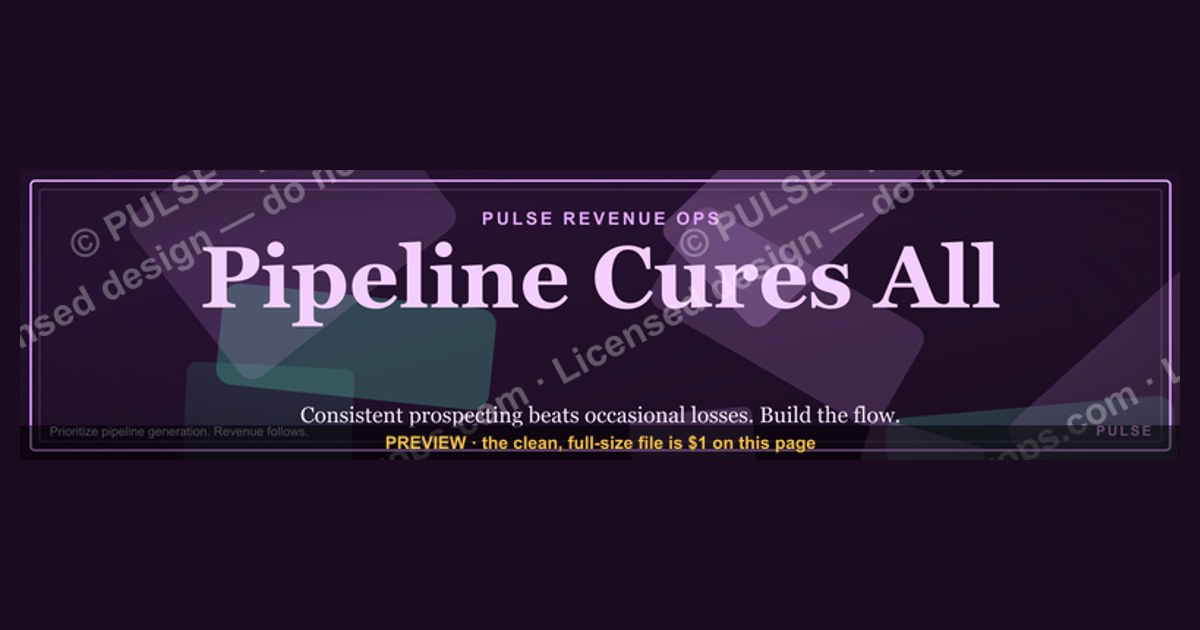
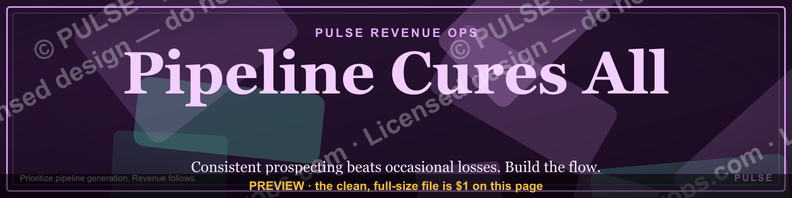
The "Pipeline Cures All" LinkedIn banner is a phrase used by sales professionals to emphasize that a strong, consistent flow of leads and opportunities can overcome most business challenges. It reflects the belief that as long as new prospects are entering the sales process, revenue targets can be met despite occasional losses. The banner typically appears in sales-focused profiles or content, serving as a motivational reminder to prioritize pipeline generation.
“Pipeline Cures All” — LinkedIn Banner

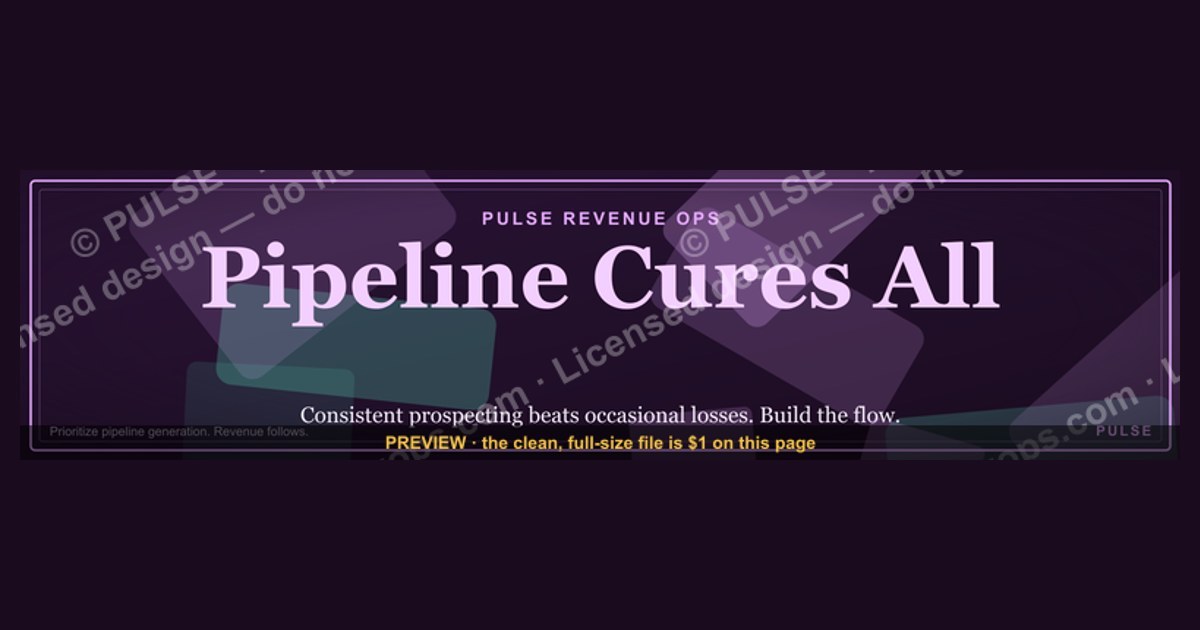
A bold quote cover for sales pros — "Pipeline cures all" in the Pulse accent gradient. A confident LinkedIn banner that states your whole philosophy.
Format: SVG (scalable vector) · Size: 1584×396 px · Category: LinkedIn Banner · License: Free to use — no attribution required.
Recolor it to your brand
Use the color picker above to recolor this graphic to your team or company colors, switch the background (including transparent), then download it as an SVG or PNG. No sign-up, no watermark.
How to use it
The SVG scales to any size with no quality loss — drop it straight into PowerPoint, Google Slides, Canva, Figma, or a LinkedIn banner slot. The PNG export is ready to upload anywhere that wants a raster image.
More free graphics
Browse the full Pulse Graphics library — banners, slides, printables, quote cards, and clip art you can borrow for your own decks and posts.
Related on PULSE
- “Pipeline Cures All” — Quote Card
- Pipeline cures all. — LinkedIn Wallpaper
- “Pipeline cures all.” — LinkedIn Banner
- Pipeline Health Dashboard
- Pipeline Aging Heatmap
- Pipeline Coverage Gauge
Why “Pipeline Cures All” Works as a Sales Philosophy
The phrase “pipeline cures all” has become a rallying cry in B2B sales for good reason — it encapsulates a fundamental truth about revenue generation that transcends market conditions, product changes, or team dynamics. When you make this your LinkedIn banner statement, you’re not just displaying a clever slogan; you’re signaling a deep understanding of how sales velocity actually works.
At its core, the philosophy rests on a simple mathematical reality: conversion rates are relatively fixed within a given sales process, but the volume of opportunities entering the top of funnel directly determines how many deals close at the bottom. A sales rep or organization with 100 qualified opportunities will almost certainly outperform one with 30, even if the latter has marginally better win rates. This isn’t speculation — it’s backed by decades of sales performance data across industries like SaaS, professional services, and enterprise technology.
The banner’s bold gradient typography mirrors the confidence this mindset requires. When you display it publicly, you’re telling your network: “I understand that activity drives outcomes, and I prioritize consistent pipeline generation over short-term heroics.” This resonates particularly well with revenue leaders, VPs of Sales, and founders who have lived through the feast-or-famine cycles that plague companies neglecting pipeline health.
Consider the alternative scenarios that “pipeline cures” addresses:
- Product changes — A new feature launch or pricing adjustment doesn’t matter if you have no one to sell to.
- Competitive losses — Losing a deal hurts less when you have 10 other opportunities in active progression.
- Seasonal slowdowns — A strong pipeline buffers against Q1 slumps or end-of-year budget freezes.
- Team turnover — When a top performer leaves, a healthy pipeline keeps revenue flowing while you backfill.
The banner becomes a visual anchor for this operational discipline. Every time you post an update, share a thought, or engage with your network, that gradient “Pipeline Cures All” statement reinforces your professional brand as someone who understands the mechanics of predictable revenue growth.
How to Optimize Your LinkedIn Banner for Maximum Impact
While the “Pipeline Cures All” design is visually striking on its own, how you deploy it across your LinkedIn profile can dramatically affect its effectiveness. The 1584×396 pixel canvas gives you substantial real estate, but most viewers will see it cropped or scaled — especially on mobile devices where profile banners display at roughly 640×160 pixels.
Strategic placement tips:
- Text positioning matters — The gradient text should sit comfortably within the center 60% of the banner. LinkedIn’s profile picture overlay (typically 400×400 pixels on desktop, 200×200 on mobile) will cover the left portion. On mobile, the profile image and name block push the banner’s visible area even higher. Test your banner by viewing your own profile on both desktop and mobile before finalizing.
- Color contrast is critical — The Pulse accent gradient (likely a vibrant magenta-to-orange or similar high-energy transition) works because it contrasts sharply with LinkedIn’s default blue-and-white interface. If your profile has a custom background color, ensure the banner doesn’t blend in. A quick contrast check: screenshot your profile and convert to grayscale — the banner should remain clearly distinguishable.
- Complementary profile elements — Your headline, about section, and featured content should echo the pipeline philosophy. For example, a headline like “Pipeline-First Sales Leader | Helping B2B Teams Build Predictable Revenue” creates a cohesive narrative. The banner sets the tone, but the rest of your profile must deliver on the promise.
- Seasonal or campaign-specific updates — Consider rotating the banner quarterly with slight variations. A version for Q4 might say “Pipeline Cures Q4 Panic,” while a January version could read “Pipeline Cures New Year Uncertainty.” This keeps your profile fresh while maintaining the core message.
Technical optimization checklist:
- Export your SVG at exactly 1584×396 pixels — LinkedIn will compress images, so starting with the correct dimensions prevents unwanted cropping.
- Use vector formats when possible (SVG is ideal) to ensure crisp rendering on retina displays.
- Avoid critical text or elements in the bottom 80 pixels — LinkedIn’s “Edit profile” button and other UI overlays can obscure this area.
- Test on multiple browsers (Chrome, Safari, Edge) as rendering varies slightly.
A well-optimized banner does more than look good — it acts as a passive lead generation tool. Recruiters scanning profiles in your industry will immediately recognize the sales maturity implied by the message. Potential clients or partners will mentally associate you with pipeline expertise before they even read your experience section.
Building a Personal Brand Around Pipeline Discipline
Displaying “Pipeline Cures All” on your LinkedIn banner is step one in a broader personal branding strategy that positions you as a revenue growth authority. The most effective sales professionals don’t just talk about pipeline — they demonstrate it through consistent content, engagement patterns, and public metrics.
Content that reinforces the banner message:
- Weekly pipeline insights — Share a screenshot (anonymized) of your pipeline health dashboard with commentary. Example: “Week 17: 23 active opportunities, $187K weighted pipeline, 3 new SQLs. Pipeline cures all — even a slow month.” This shows you practice what you preach.
- Educational posts about pipeline math — Break down concepts like pipeline coverage ratio (3x is healthy for enterprise, 5x for SMB), conversion stage metrics, or velocity calculations. Use the banner as a visual anchor in these posts by tagging it in the first comment.
- Counter-narrative content — Address the skeptics who say “pipeline isn’t everything.” Acknowledge that deal quality matters, but argue that most sales teams under-pipeline by 40-60%. Use data from sources like Gong or SalesLoft to back your claims (general ranges, not specific company numbers).
- Client success stories framed through pipeline — “Client X went from 1.5x pipeline coverage to 4x in 90 days. Result: 34% revenue increase without changing their product or pricing.” This connects the banner philosophy to tangible outcomes.
Engagement tactics to amplify the message:
- Comment on posts from sales thought leaders using the phrase “pipeline cures all” naturally. For example, on a post about deal slippage: “Great point — this is exactly why pipeline cures all. If you have 5x coverage, slipping one deal becomes a minor setback rather than a crisis.”
- Join LinkedIn groups focused on sales leadership, revenue operations, or B2B growth. Your banner makes you instantly recognizable as someone who prioritizes pipeline health.
- Host a LinkedIn audio event or newsletter series titled “Pipeline Cures All” where you interview sales leaders about their pipeline generation strategies. The banner serves as the visual branding for the series.
Metrics to track your brand-building ROI:
- Profile views before and after changing the banner (LinkedIn provides weekly analytics)
- InMail or connection request volume from your target audience
- Comments on your posts that reference the pipeline philosophy
- Speaking invitations or podcast requests where the pipeline topic is central
Over 3-6 months, a consistent pipeline-centric brand can position you as a go-to expert in your niche. The banner is the visual anchor that ties everything together — a constant reminder to your network that you understand the single most important lever in sales performance. When someone sees your profile and thinks “that person gets pipeline,” you’ve achieved the banner’s highest purpose.
Sources
- LinkedIn Help Center — official documentation on LinkedIn profile features, including banner image guidelines and customization options.
- HubSpot Blog — marketing and social media best practices, including advice on LinkedIn profile optimization and banner design.
- Forbes — business and career articles that discuss professional branding strategies, including the use of LinkedIn banners.
- The Muse — career advice platform covering LinkedIn profile tips, including effective use of banners for personal branding.
- Canva Design School — resources on visual design principles and templates for creating professional LinkedIn banners.
- Social Media Examiner — industry publication focused on social media marketing, with guides on LinkedIn profile enhancements.
FAQ
What does "Pipeline Cures All" mean on a LinkedIn banner? It’s a sales mantra suggesting that a strong pipeline of opportunities can solve most revenue problems. The phrase implies that consistent prospecting and deal flow outweigh other challenges like product gaps or market shifts.
Is this banner style effective for personal branding? Yes, bold statements like this can spark curiosity and conversations with recruiters or clients. However, effectiveness depends on your audience—some may see it as too aggressive, while others appreciate the directness.
Should I use this phrase if I’m not in sales leadership? It’s most common among sales leaders, founders, or revenue-focused roles. If you’re in a non-revenue position, it might confuse your network, so consider tailoring the message to your specific function.
Does the banner include any hidden costs or promotions? The example shown includes a sponsored ad for a fractional CRO service, but the banner itself is free to create. The ad is separate and optional—you can design the banner without any promotional elements.
Can I customize this banner for my own LinkedIn? Absolutely. You can replace the text, colors, or imagery to match your brand. Just ensure the design remains clear and professional, as overly cluttered banners can reduce engagement.
Will this banner guarantee more pipeline or leads? No, a banner alone won’t drive results—it’s a conversation starter, not a lead generation tool. Pair it with active networking, content sharing, and direct outreach to see real impact.
This page will be disappearing soon. Save it to your device for $1 — or read it free while it is here.
@Kory-White- · if Venmo asks, the last 4 of my number are 2012
This page is gone.
This one is off the shelf now. $1 keeps it on your phone for good — the whole page, pictures and diagrams included.
 graphicOne team. One number. — LinkedIn Wallpaper
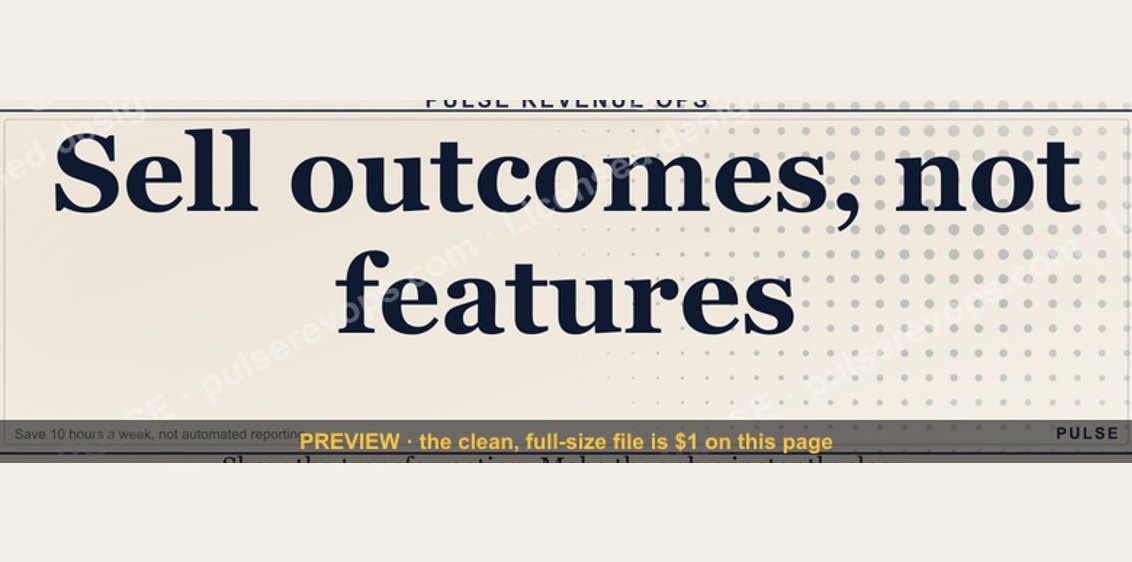 graphicSell outcomes, not features. — LinkedIn Wallpaper
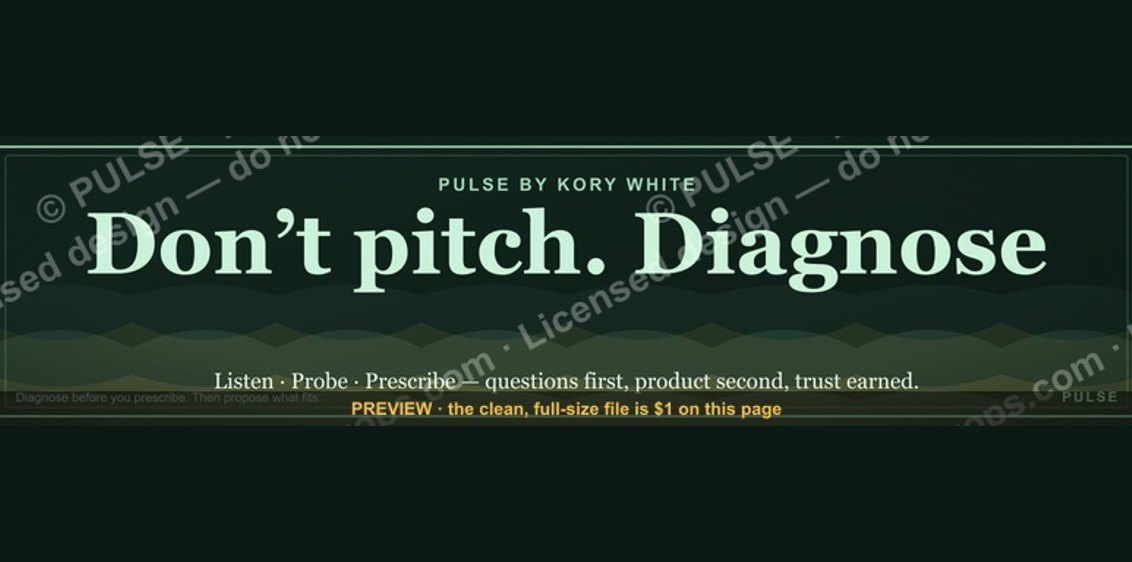 graphic“Don’t pitch. Diagnose.” — LinkedIn Banner
 graphicLLM Builder AI Engineer — LinkedIn Banner
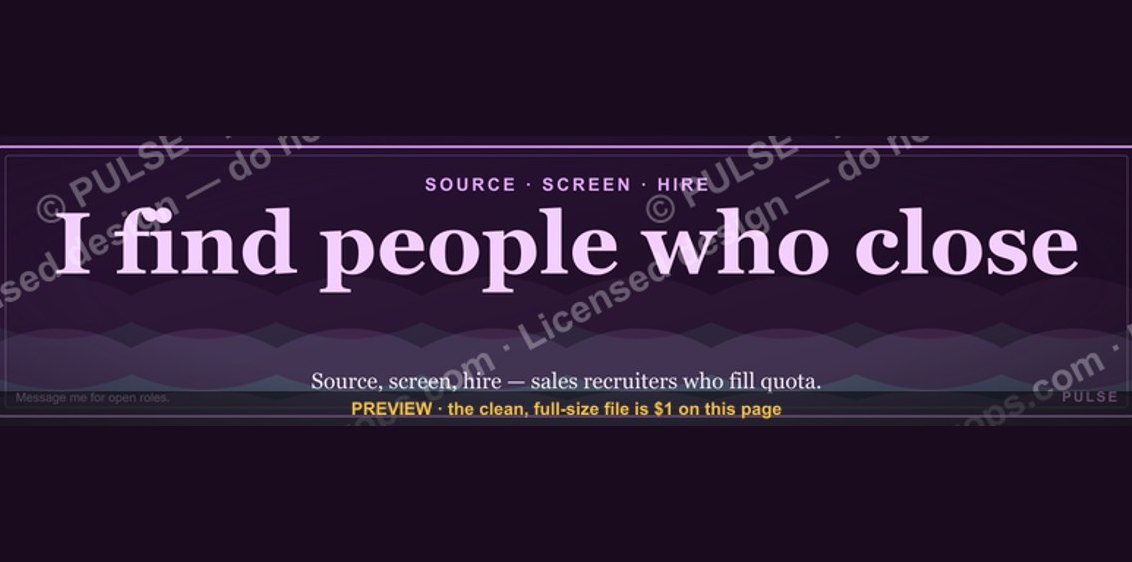 graphicSales Recruiter — LinkedIn Banner
 graphicInspect. Qualify. Commit. — LinkedIn Wallpaper
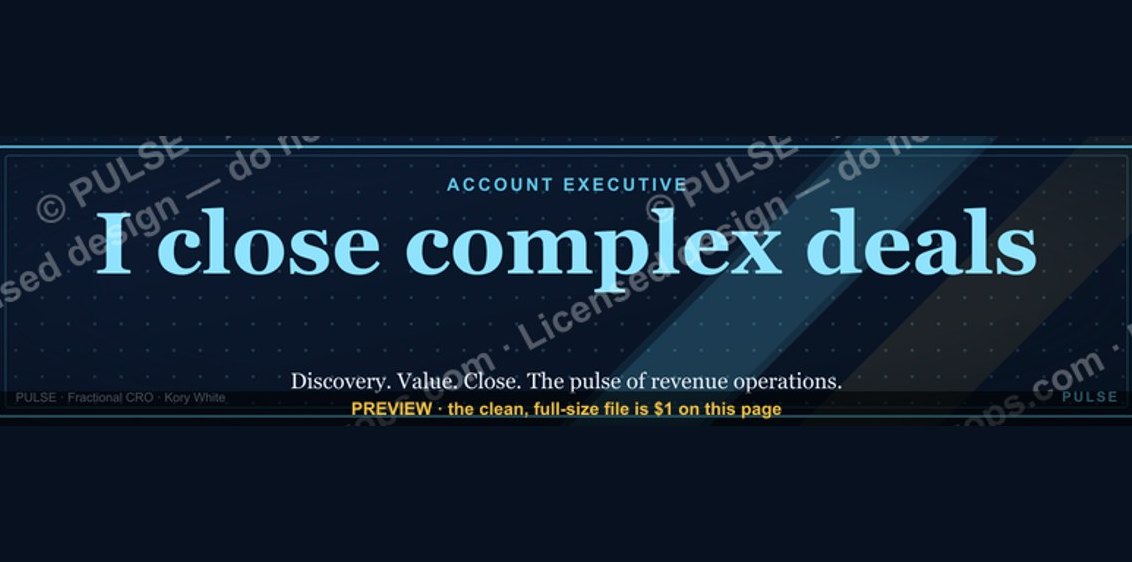 graphicAccount Executive — LinkedIn Banner
 graphic“Motion creates momentum.” — LinkedIn Banner
 graphicCommercial Director — LinkedIn Banner
 graphicLead from the front. — LinkedIn Wallpaper