
“Price is what you pay. Value is what you get.” — Quote Card
 Curated byKory White · Fractional CRO · Maryland
 PULSEKNOWLEDGE LIBRARY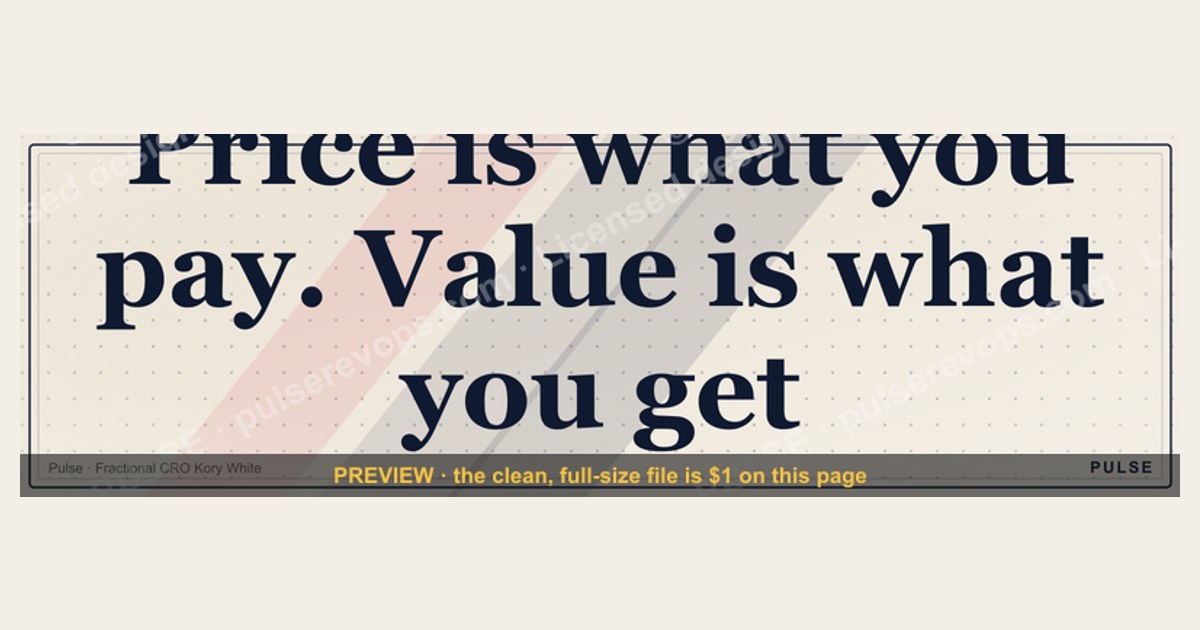
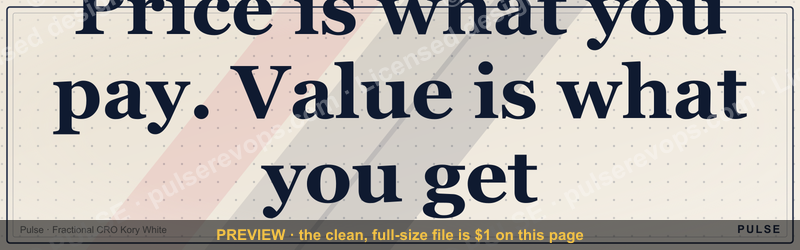
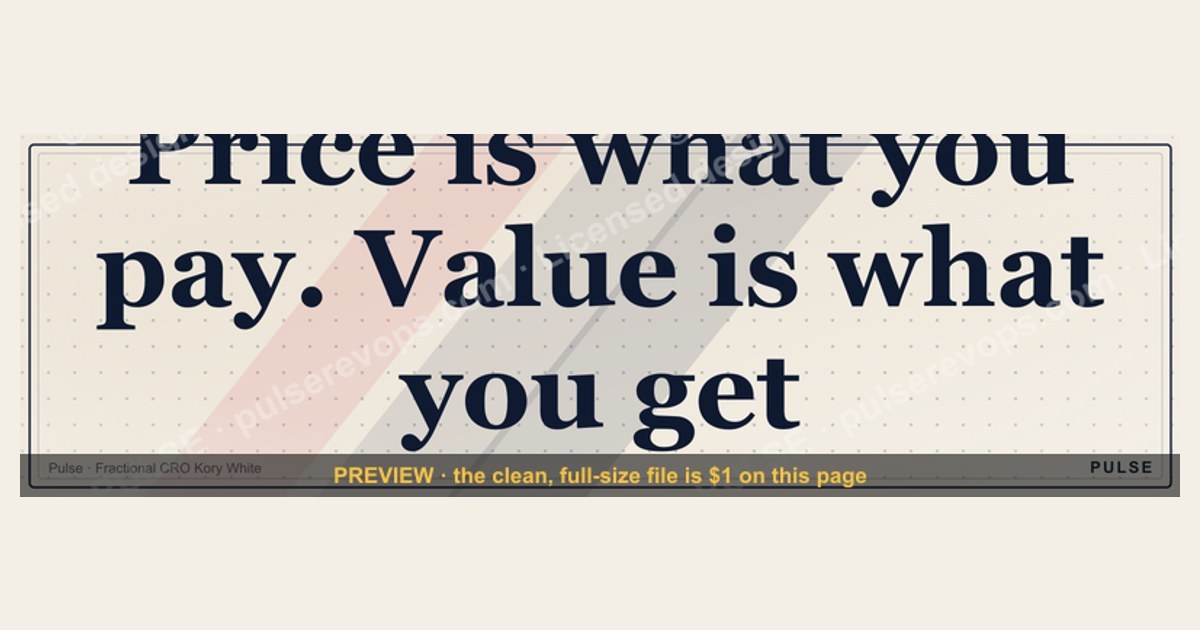
This quote card features Warren Buffett’s well-known investing principle that the monetary cost of an asset is distinct from its true worth. It reminds you that a low price does not guarantee good value, nor does a high price automatically mean poor value. The card serves as a visual prompt to focus on the long-term benefits and quality of what you’re buying, rather than just the upfront cost.
“Price is what you pay. Value is what you get.” — Quote Card

A square social quote card — "Price is what you pay. Value is what you get." in the Pulse accent style. A shareable LinkedIn or Instagram graphic and a ready slide pull-quote.
Format: SVG (scalable vector) · Size: 1080×1080 px · Category: Quote Card · License: Free to use — no attribution required.
Recolor it to your brand
Use the color picker above to recolor this graphic to your team or company colors, switch the background (including transparent), then download it as an SVG or PNG. No sign-up, no watermark.
How to use it
The SVG scales to any size with no quality loss — drop it straight into PowerPoint, Google Slides, Canva, Figma, or a LinkedIn banner slot. The PNG export is ready to upload anywhere that wants a raster image.
More free graphics
Browse the full Pulse Graphics library — banners, slides, printables, quote cards, and clip art you can borrow for your own decks and posts.
Related on PULSE
- “Deals stall where the value is unclear.” — Quote Card
- Time to Value > ACV — RevOps Banner
- “SELL THE VALUE” — Sales Floor Print
- The Value Selling Ladder — Infographic
- “Sell the value, not the price.” — LinkedIn Banner
- “Sell the Problem, Not the Product” — Quote Card
The Psychology Behind the Price-Value Gap
Understanding why Buffett’s distinction matters requires looking at how human psychology distorts our perception of both price and value. Behavioral economists have identified several cognitive biases that consistently cause people to overpay for low-value items while undervaluing truly transformative purchases.
The anchoring effect is perhaps the most powerful. When you see a $5,000 watch next to a $50,000 watch, the cheaper option suddenly feels like a bargain — even if a $200 watch would serve you just as well. Luxury brands exploit this ruthlessly, placing their highest-priced items first in a collection to make everything else seem reasonable. Conversely, savvy investors use anchoring to their advantage by focusing on intrinsic value rather than market noise.
Loss aversion plays an equally critical role. Research suggests people feel the pain of a loss roughly twice as intensely as the pleasure of an equivalent gain. This is why many investors sell winning stocks too early (locking in gains) and hold losing positions too long (avoiding the pain of realizing a loss). Buffett’s quote directly challenges this: if you focus on value received rather than price paid, you reframe the transaction as a gain (what you get) rather than a loss (what you give up).
The endowment effect further complicates matters. Once you own something, you instinctively value it more than before you owned it. This is why used-car sellers consistently overprice their vehicles and why homeowners often refuse to sell at market prices. Buffett’s framework requires stepping outside this bias: the value of an asset exists independently of your emotional attachment to it.
For practical application, consider the 20-10-5 rule used by some financial advisors: before any significant purchase, ask yourself three questions. Will this still provide value in 20 years? Will I remember this purchase in 10 years? Will it meaningfully improve my life in 5 years? If the answer to all three is no, the price almost certainly exceeds the value, regardless of the sticker price.
Practical Frameworks for Calculating Real Value
Moving from theory to application, several concrete frameworks help translate Buffett’s wisdom into daily decisions. These are not academic exercises but tools used by professional investors, entrepreneurs, and high-net-worth individuals to avoid overpaying for anything.
The Replacement Cost Test asks: If you lost this item today, would you pay full price to replace it immediately? This cuts through rationalization. A $4,000 designer handbag might fail this test if you’d simply buy a $200 alternative. But a $4,000 emergency fund contribution passes easily — you’d replace it without hesitation. Apply this to subscriptions, memberships, and services you rarely use. Cancel anything that fails the test.
The Hourly Value Calculation converts price into time. Divide the cost by your hourly wage (or desired hourly rate) to see how many hours of work this purchase requires. A $200 dinner out might represent 4 hours of labor at $50/hour. Is that meal worth 4 hours of your life? This framework is particularly effective for recurring expenses. A $15 monthly streaming service costs 18 minutes of work per month — trivial. But a $200 monthly car payment costs 4 hours of work every month, which might shift your perspective.
The Opportunity Cost Matrix compares what you’re buying against what else that money could do. For a $1,000 purchase, ask: Could this be invested for a 7% annual return ($70/year)? Could it pay off high-interest debt? Could it fund a weekend trip or a course that increases earning potential? The true cost of any purchase isn’t just the price tag — it’s the foregone alternative. This is why Buffett himself famously lives in the same Omaha house he bought in 1958 for $31,500 (about $340,000 in today’s dollars). The opportunity cost of a more expensive home would be the investment returns that capital could generate.
The Utility Decay Curve acknowledges that most purchases deliver diminishing satisfaction over time. A new car might bring joy for 3 months, then becomes ordinary transportation. A gym membership might feel motivating for 2 weeks, then becomes a monthly expense you rarely use. Plot your expected satisfaction on a scale of 1-10 over 12 months. If the curve drops below 5 within 3 months, the value is likely short-lived. Items that maintain high utility — quality tools, education, health investments, experiences — typically justify higher prices.
Real-World Applications Across Major Life Domains
Buffett’s principle isn’t abstract philosophy — it’s a practical tool that can save you tens of thousands of dollars annually when applied systematically. Here’s how it plays out across the most significant spending categories.
Housing represents the largest single expense for most people. The price-value gap here is enormous. A $500,000 house might provide $400,000 worth of shelter value, with the extra $100,000 going toward status, location premium, or emotional appeal. The key question: how much of that premium are you willing to pay for non-functional benefits? Many financial advisors suggest capping housing costs at 28% of gross income, but Buffett’s framework goes further — consider the value of the space itself versus the cost of maintaining it. A smaller home in a good neighborhood often provides better value than a larger home in a mediocre one, because location value tends to appreciate while square footage depreciates.
Transportation is where the price-value disconnect is most dramatic. A new $45,000 SUV might provide $25,000 of actual transportation value — getting you from point A to point B reliably and safely. The remaining $20,000 pays for brand cachet, features you rarely use, and depreciation. A 3-year-old certified pre-owned vehicle at $28,000 might provide $24,000 of value, with only $4,000 in premium. The math becomes even more stark when you consider that the average new car loses 60% of its value in 5 years. Buffett himself drives a 2014 Cadillac XTS he bought used — not because he can’t afford a new one, but because the marginal value of a new car doesn’t justify the price.
Education and Skill Development is where value often dramatically exceeds price. A $1,000 certification that increases your earning potential by $10,000/year provides extraordinary value — the price is trivial compared to the return. Yet many people hesitate at this cost while freely spending $1,000 on a vacation that provides no lasting value. The framework flips the script: invest aggressively in anything that compounds your earning ability, and be frugal with consumables.
Healthcare and Wellness presents a complex value calculation. A $200 gym membership you actually use 4 times per week provides incredible value — roughly $12.50 per session for improved health, longevity, and quality of life. But a $200 membership you use twice per month costs $100 per visit — terrible value. Similarly, preventive care that costs $500 today might prevent $50,000 in future medical expenses. The value isn’t in the service itself but in the avoided costs downstream.
Experiences vs. Things is where Buffett’s wisdom aligns with happiness research. Multiple studies show that experiences provide more lasting satisfaction than material possessions. A $5,000 trip creates memories that appreciate over time, while a $5,000 sofa depreciates immediately. The price may be identical, but the value trajectory is completely different. This doesn’t mean never buy things — it means evaluate every purchase on its long-term value curve rather than its initial price tag.
Sources
- Investopedia — explains the difference between price and value in investing and finance
- Harvard Business Review — covers value-based pricing and business strategy concepts
- The Wall Street Journal — reports on market valuations and investor perspectives
- Warren Buffett’s annual Berkshire Hathaway shareholder letters — source of the quote and its context
- The Financial Times — analyzes asset pricing and long-term value creation
- The Economist — explores economic principles of price versus perceived value
FAQ
What does “Price is what you pay. Value is what you get” really mean? This quote, often attributed to Warren Buffett, reminds us that the cost of something (the price) is not the same as its true worth (the value). You might pay a high price for something that delivers little value, or a low price for something that proves invaluable over time.
How can I apply this quote to everyday purchases? Before buying, ask yourself whether the item or service will solve a real need or bring lasting benefit. A cheap product that breaks quickly may have low value, while a pricier investment that lasts or saves you time can offer high value.
Is this quote only about money? No—it applies to time, effort, and opportunity cost too. For example, spending hours on a free tool that frustrates you may have a low value, while paying for a streamlined solution could save you stress and hours of work.
Does this mean I should always buy the most expensive option? Not necessarily. High price doesn’t guarantee high value, and low price doesn’t mean poor value. The key is to evaluate what you actually get in return—quality, durability, convenience, or results—relative to what you give up.
How do I measure value when comparing products or services? List the specific benefits you expect (e.g., longevity, support, efficiency) and weigh them against the total cost. A product that costs twice as much but lasts three times longer may offer better value. Honest reviews and personal needs matter more than price tags alone.
Can this quote help in business or investing decisions? Absolutely. In investing, a stock’s market price may differ from its intrinsic value based on earnings, growth, and risk. In business, paying for a high-quality tool or talent can yield far greater returns than choosing the cheapest option that underdelivers.
This page will be disappearing soon. Save it to your device for $1 — or read it free while it is here.
@Kory-White- · if Venmo asks, the last 4 of my number are 2012
This page is gone.
This one is off the shelf now. $1 keeps it on your phone for good — the whole page, pictures and diagrams included.
 graphic“People buy outcomes, not features.” — Quote Card
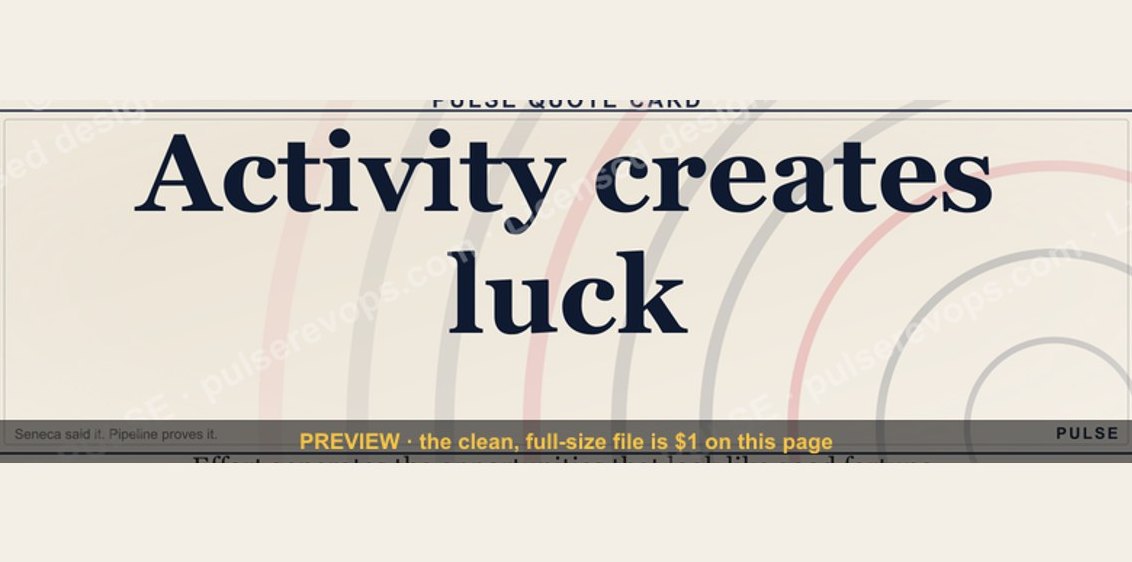 graphic“Activity creates luck.” — Quote Card
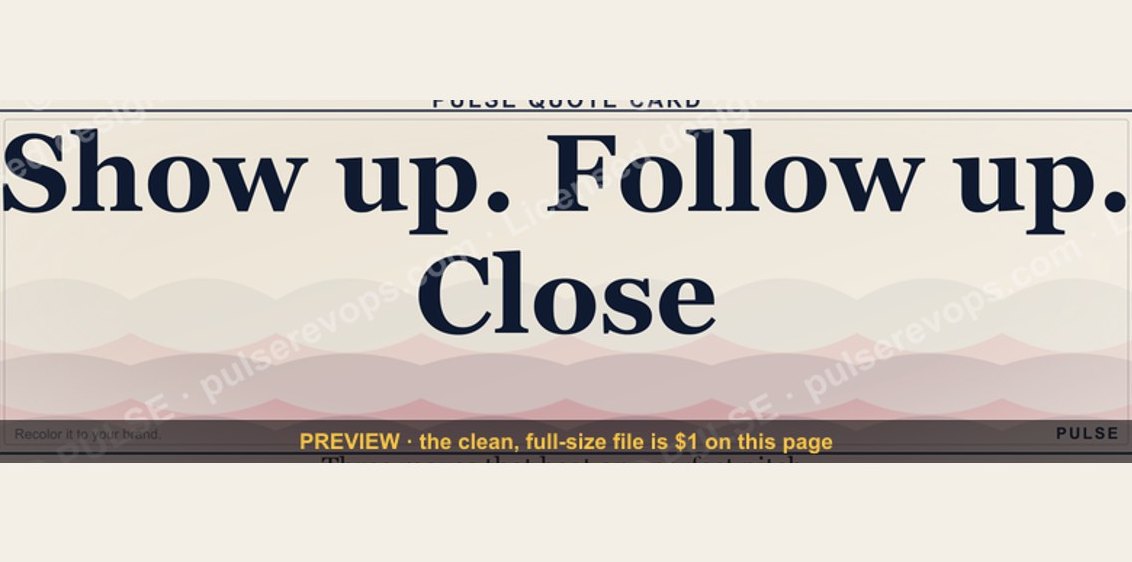 graphic“Show up. Follow up. Close.” — Quote Card
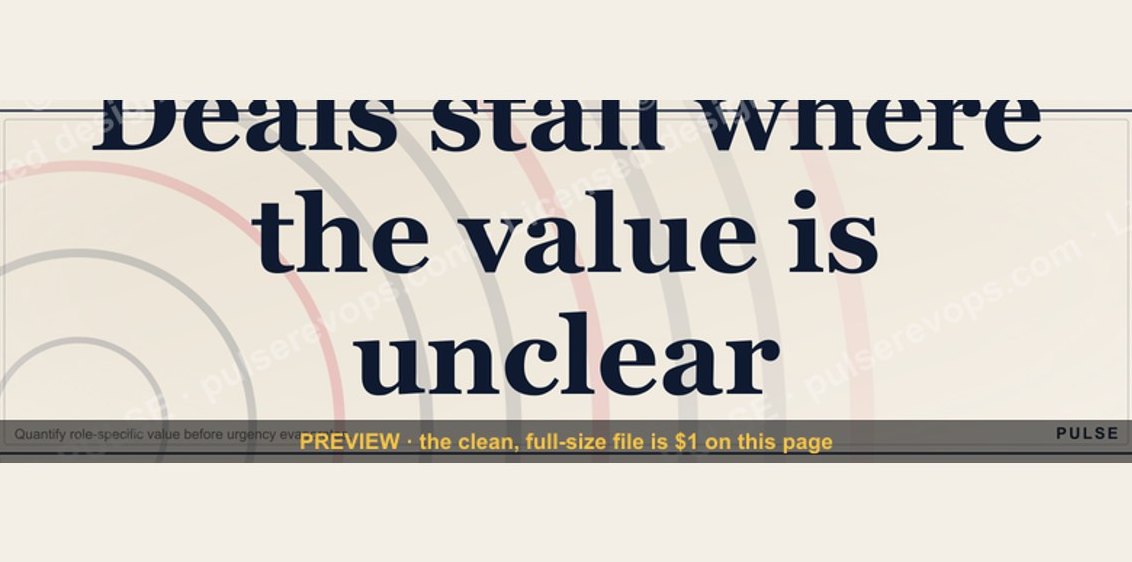 graphic“Deals stall where the value is unclear.” — Quote Card
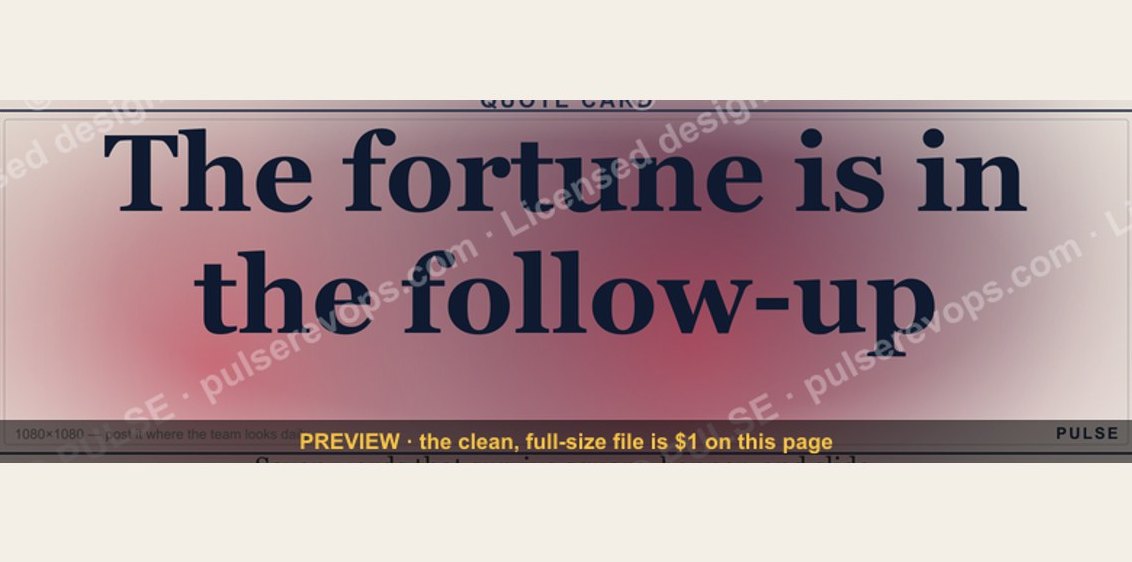 graphic“The fortune is in the follow-up.” — Quote Card
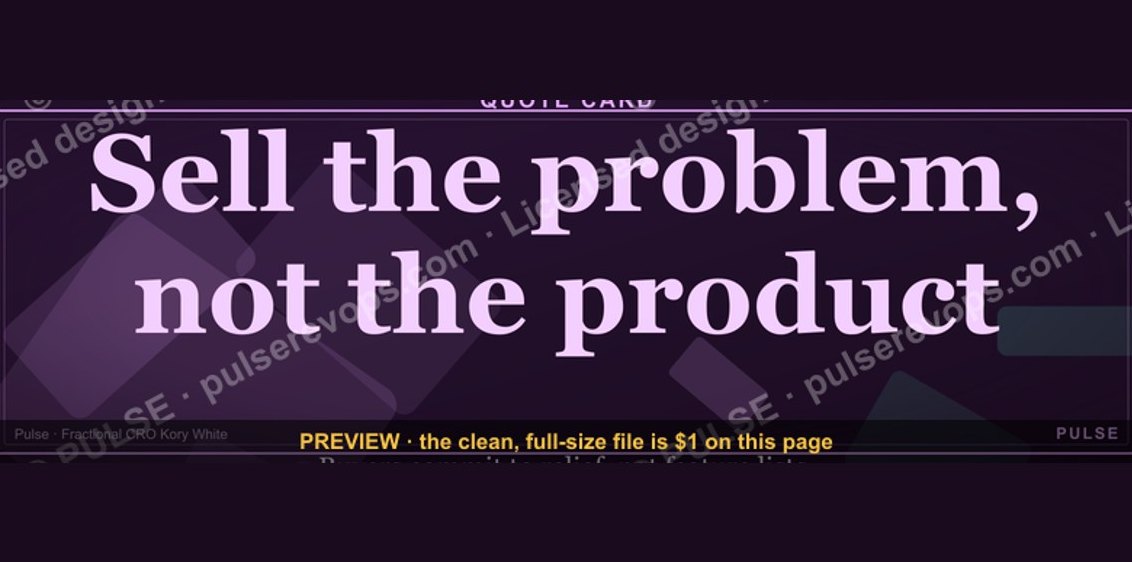 graphic“Sell the problem, not the product.” — Quote Card
 graphic“Sell the meeting, not the demo.” — Quote Card
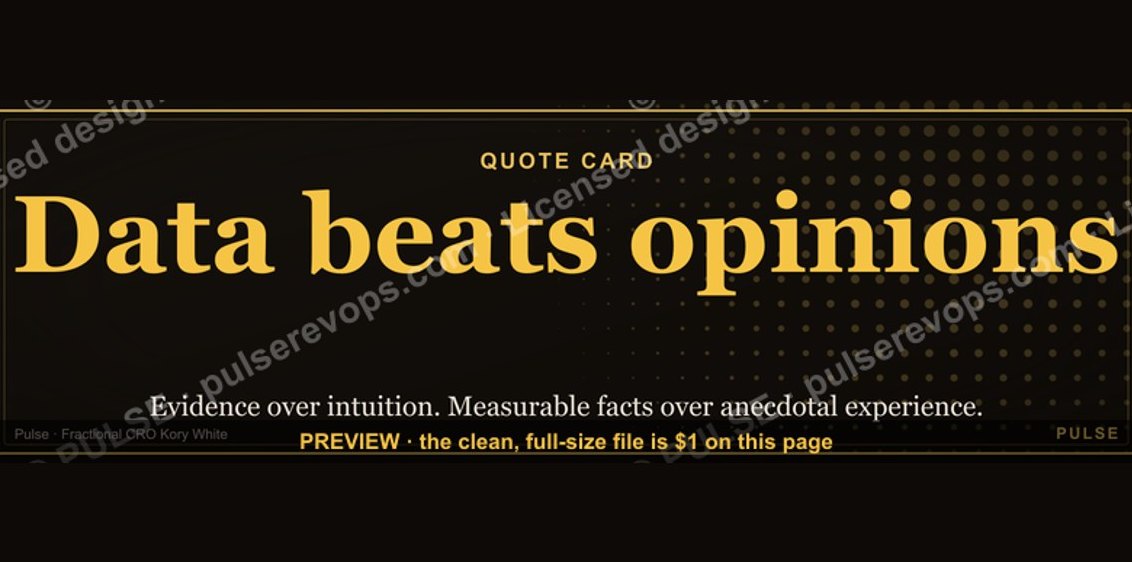 graphic“Data beats opinions.” — Quote Card
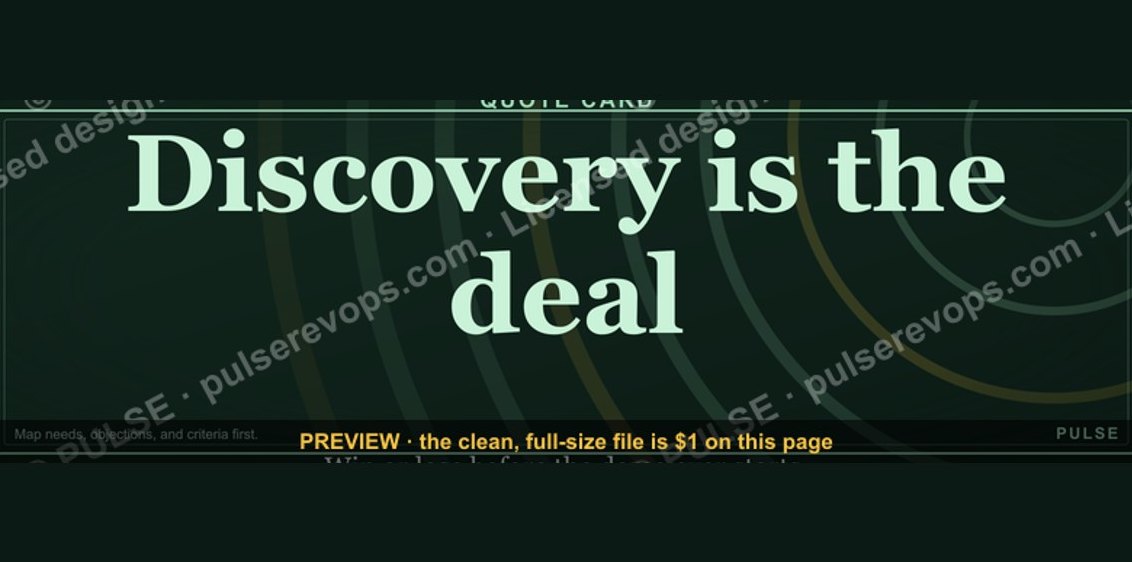 graphic“Discovery is the deal.” — Quote Card
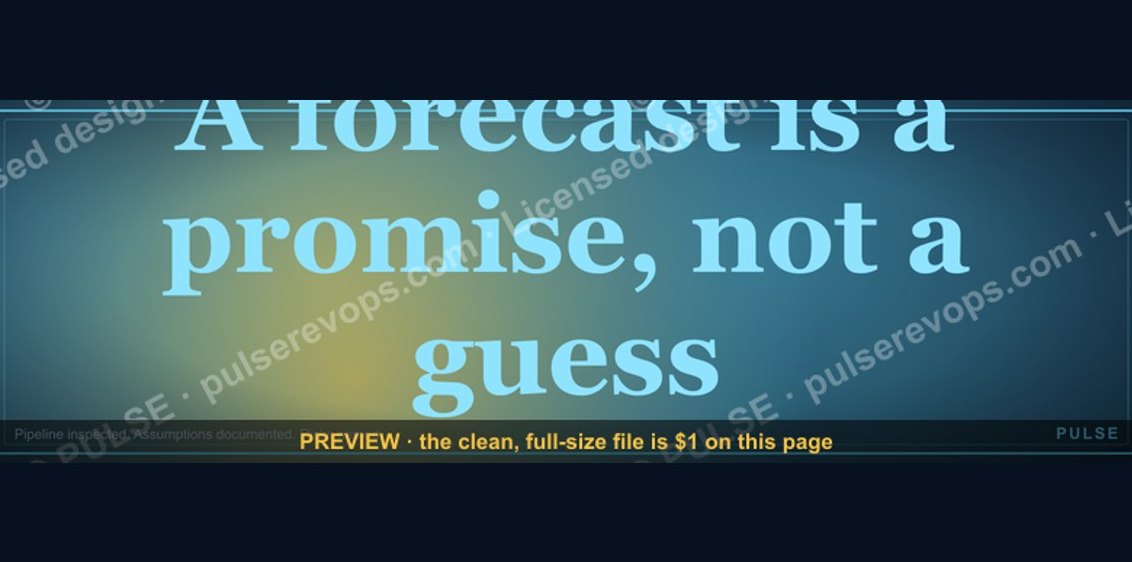 graphic“A forecast is a promise, not a guess.” — Quote Card