
“Discovery is the deal.” — Quote Card
 Curated byKory White · Fractional CRO · Maryland
 PULSEKNOWLEDGE LIBRARY
Quality
Certified


"Discovery is the deal" is a sales principle meaning that the outcome of a sales conversation is largely determined during the exploration phase, not the closing phase. When a salesperson deeply understands a prospect's needs, challenges, and decision-making context before presenting any solution, the prospect is more likely to see the value and buy. The deal is effectively won or lost in discovery, making that conversation the most critical moment in the revenue cycle. This principle is widely taught in modern B2B sales training and consultative selling frameworks.
The outcome you should expect
Teams that shift from pitch-heavy approaches to structured discovery typically see measurable improvements in win rates, deal sizes, and sales cycle efficiency. This happens because discovery addresses two major deal-killers: misalignment between solution and need, and unaddressed objections that surface too late in the process.
Beyond close rates, three concrete outcomes are commonly reported by sales organizations that adopt discovery-first methodologies:

- Average deal size increases because discovery uncovers additional pain points and stakeholders. Sales teams often document 10–30% expansion in initial deal value after implementing mandatory discovery phases before demos.
- Sales cycle length shortens — when decision criteria and objections are mapped during discovery, the proposal-to-close stage becomes more straightforward rather than a prolonged negotiation.
- Customer retention improves — deals won through genuine discovery tend to have higher satisfaction because the solution actually matches the problem, leading to lower churn rates.
The Quote Card itself serves as an operational anchor. Teams that display "Discovery is the deal" in their CRM, Slack channels, or meeting rooms report higher adherence to discovery protocols. It becomes a visual reminder that shortcuts in discovery create problems later in the sales process.

What drives that outcome
The mechanism behind "Discovery is the deal" operates through three interconnected drivers: trust acceleration, objection preemption, and decision criteria mapping. Each driver amplifies the others, creating a compounding effect that makes closing feel more natural.
Trust accelerates because discovery triggers psychological safety. When a prospect feels genuinely heard — not interrogated with a script — their defensive barriers lower. Research in behavioral economics shows that people who feel understood are significantly more likely to cooperate and share sensitive information. In a sales context, this means the prospect reveals budget constraints, internal politics, and true priorities that they might not share with a pushy vendor.

Objection preemption works because discovery surfaces concerns before they become roadblocks. A typical sales conversation may contain several hidden objections that only emerge during negotiations or after the proposal. A thorough discovery conversation surfaces these potential objections, giving the salesperson time to address each one proactively. This transforms objections from surprises into expected variables that have already been managed.
Decision criteria mapping transforms discovery from passive listening into an active strategy session. When a salesperson documents exactly what matters to each stakeholder — cost, speed, ease of integration, support quality, or other factors — they can tailor the proposal to hit those specific criteria. This mapping also reveals which stakeholders have veto power and which are champions, allowing strategic allocation of attention.

Benchmarks and realistic ranges
The "Discovery is the deal" philosophy produces different results depending on deal complexity, industry, and team maturity. Here are commonly cited benchmarks from B2B sales organizations:
- Small deals (under $10,000 ACV): A 30-minute discovery call using a structured framework typically yields higher win rates than unstructured approaches. The improvement comes partly from quickly disqualifying bad-fit prospects — discovery helps salespeople say no faster, saving time for better opportunities.
- Mid-market deals ($10,000–$100,000 ACV): Discovery typically takes 60–90 minutes, often split across two calls. Organizations that invest this time see meaningfully higher win rates compared to those that skip or rush discovery.
- Enterprise deals (over $100,000 ACV): These require multiple discovery conversations spanning different stakeholder groups. The payoff is substantial, with enterprise deals won through discovery tending to have lower discount rates because the value proposition is precisely aligned with each stakeholder's priorities.

Time investment matters. Teams that spend insufficient time on discovery relative to their total sales cycle tend to see lower win rates. Teams that allocate 30–50% of their cycle to discovery typically see stronger results. There is a diminishing returns point beyond which discovery becomes analysis paralysis — the sweet spot for most organizations is balanced.
Risks, edge cases, and failure modes
The "Discovery is the deal" principle fails when applied dogmatically or without context. Understanding these failure modes prevents the philosophy from becoming a liability:
The paralysis trap. Some teams over-invest in discovery, conducting numerous calls before ever showing a solution. This frustrates prospects who want to see if a product works before investing more time. A clear discovery-to-demo threshold helps protect both the team's time and the prospect's patience.

The script problem. Discovery becomes ineffective when reps treat it as a checklist rather than a conversation. Asking all prepared questions without listening to the answers makes the prospect feel interrogated, not understood. The best discovery calls feel like a conversation between equals, not an interview.
The wrong stakeholder. Discovery with a contact who cannot make decisions or influence budget is often wasted effort. Pre-call qualification helps confirm that the person being met has budget authority, decision influence, or direct access to someone who does.

The premature solution. Some reps hear the first problem and immediately jump to a solution pitch. This derails discovery because the prospect stops sharing deeper needs. A useful discipline is to dig deeper into each stated problem before discussing solutions.
The time-constrained buyer. Some prospects explicitly say they have limited time and want to see a demo immediately. Pushing for discovery in that scenario risks losing the meeting. A better approach is to offer a quick demo while using it as a discovery vehicle — asking questions about what resonates and what doesn't.

A practical rollout plan
Implementing the "Discovery is the deal" philosophy requires systematic change across a revenue team. Here's a phased approach:
Phase 1: Audit and baseline. Record current discovery calls from different reps. Measure talk-to-listen ratios. Calculate current win rates for deals that received discovery calls versus those that skipped them. Identify common discovery gaps.

Phase 2: Training and toolkit. Build a question bank of open-ended questions organized by topic: problem exploration, past attempts, personal impact, decision process, and success criteria. Create a discovery summary template. Conduct role-play sessions where reps practice discovery with peer feedback. Distribute the Quote Card as visual reinforcement.
Phase 3: Pilot and measure. Implement a discovery gate — no demo or proposal sent until a discovery summary is completed. Track completion rates and win rates. Address resistance by showing early wins.

Phase 4: Refine and scale. Review the question bank based on what actually works. Create escalation criteria for complex situations. Roll out the process to the entire revenue team, including customer success for expansion deals.
Ongoing: Monthly discovery audits. Randomly select discovery calls for review. Share examples of excellent discovery and common mistakes. Celebrate reps who consistently hit discovery milestones.
Related questions
What does "Discovery is the deal" mean for sales reps?
It means your success depends on how well you explore a prospect's needs before presenting any solution. Reps who master discovery consistently outperform those who focus primarily on closing techniques.
How long should a discovery call last?
For smaller deals, aim for 30 minutes. For mid-market deals, plan 60–90 minutes. Enterprise deals may require multiple discovery conversations spanning different stakeholders.
Can discovery work for transactional sales?
Discovery is most powerful for complex, high-consideration purchases. For simple transactions, a brief qualification call may suffice — the effort of deep discovery may outweigh the benefit for very small deals.
What is a discovery summary document?
A one-page recap of what was learned during discovery, including stated needs, uncovered needs, stakeholder priorities, decision criteria, and any hidden objections. It serves as a shared reference for the sales team and prospect.
FAQ
What does "Discovery is the deal" mean? It means the real value in sales isn't the pitch — it's the deep, curious exploration of a prospect's world. When you truly understand their challenges, goals, and context, the solution almost sells itself.
Is this quote from a specific person or book? The quote is often attributed to seasoned sales leaders and consultative selling frameworks, but its exact origin is unclear. It's a principle widely shared in modern B2B sales training, not a single authored line.
How is discovery different from a standard sales call? A discovery conversation is structured to uncover unspoken needs and priorities, while a typical call might jump to features or pricing. Discovery focuses on asking open-ended questions and listening more than talking.
Can discovery work for any product or industry? Yes, but it's most powerful in complex, high-consideration purchases — like SaaS, consulting, or enterprise services. For simple, low-cost items, the effort may outweigh the benefit.
How long should a discovery conversation last? It varies widely, but a thorough initial discovery often runs 30–60 minutes. Shorter sessions can work for smaller deals, while enterprise opportunities may require multiple discovery meetings.
What's the biggest mistake people make with discovery? The most common error is treating discovery as a checklist of questions rather than a genuine exploration. Rushing to present a solution or talking too much can kill the trust and insight you're trying to build.
Sources
- HubSpot Sales Blog — Discovery Call Best Practices
- Salesforce — Sales Process Optimization and Win Rate Data
- Gartner — Sales Effectiveness Benchmarks
- Challenger Sales — Discovery Techniques and Buyer Engagement
- Forrester Research — Sales Process Analysis
- Harvard Business Review — Consultative Selling Research
- RAIN Group — Discovery and Consultative Selling Research
Related on PULSE
This page will be disappearing soon. Save it to your device for $1 — or read it free while it is here.
@Kory-White- · if Venmo asks, the last 4 of my number are 2012
This page is gone.
This one is off the shelf now. $1 keeps it on your phone for good — the whole page, pictures and diagrams included.
 graphic“Data beats opinions.” — Quote Card
 graphic“Make the buyer the hero.” — Quote Card
 graphic“No decision is your real competitor.” — Quote Card
 graphic“Don't pitch. Diagnose.” — Quote Card
 graphic“The fortune is in the follow-up.” — Quote Card
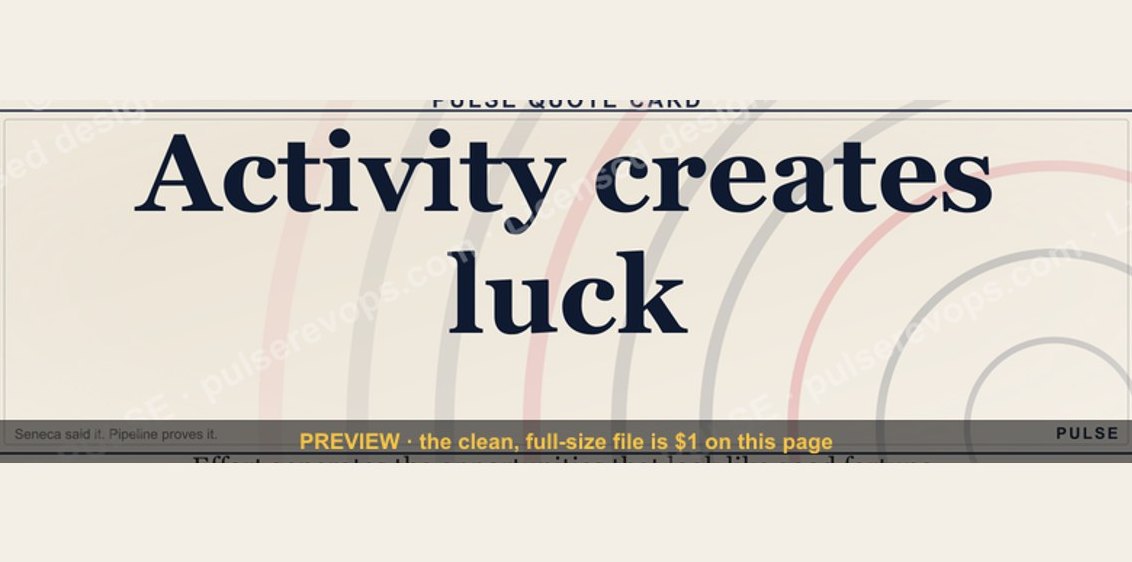 graphic“Activity creates luck.” — Quote Card
 graphic“Your pipeline is your paycheck.” — Quote Card
 graphic“The best discovery feels like free therapy.” — Quote Card
 graphic“Price is what you pay. Value is what you get.” — Quote Card
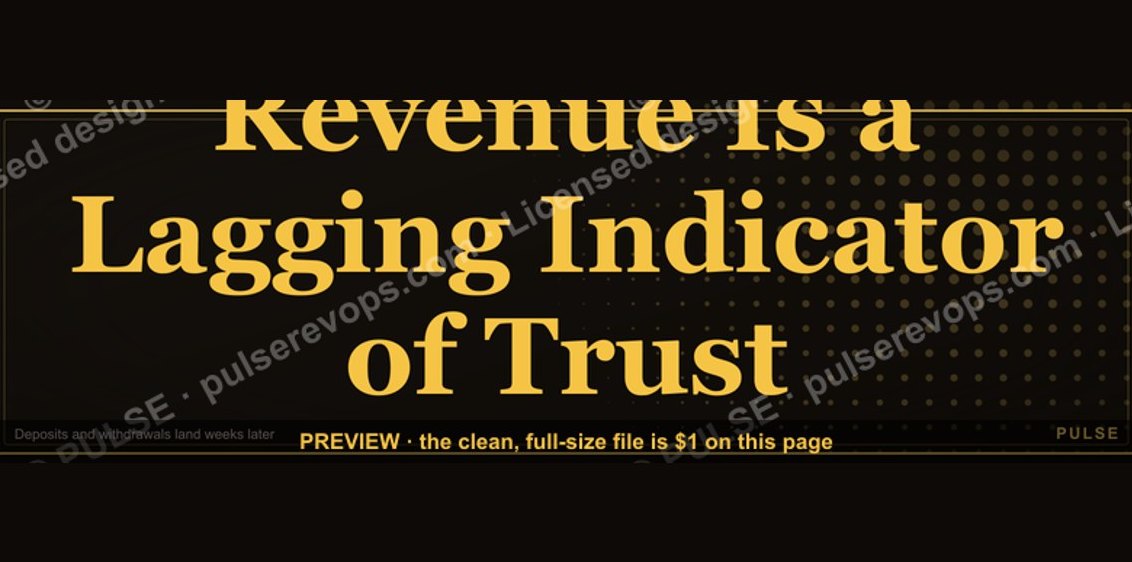 graphic“Revenue Is a Lagging Indicator of Trust” — Quote Card