
“Champions sell when you can’t.” — LinkedIn Banner
 Curated byKory White · Fractional CRO · Maryland
 PULSEKNOWLEDGE LIBRARY

This banner suggests that true champions—top performers or resilient leaders—continue to sell, pitch, or build relationships even during personal or market downturns. It implies that consistent effort, not just peak performance, defines success. The quote is often used to motivate professionals to maintain momentum when conditions are tough.
“Champions sell when you can’t.” — LinkedIn Banner

A dark, on-brand LinkedIn banner — "Champions sell when you can’t." over a "Find Arm Trust" line with a pulse motif. Put it on your profile to signal exactly what you do.
Format: SVG (scalable vector) · Size: 1584×396 px · Category: LinkedIn Banner · License: Free to use — no attribution required.
Recolor it to your brand
Use the color picker above to recolor this banner to your team or company colors, switch the background (including transparent), then download it as an SVG or PNG. No sign-up, no watermark.

How to use it
It scales cleanly to the LinkedIn cover slot (1584×396) — download the PNG and drop it straight onto your profile, or open the SVG in Canva, PowerPoint, or Figma to add your name and tweak the layout.
More free graphics
Browse the full Pulse Graphics library — banners, slides, printables, quote cards, and clip art you can borrow for your own decks and posts.

Related on PULSE
- “Champions sell when you're not in the room.” — Quote Card
- "Champions sell for you." — LinkedIn Banner
- Champions Close Deals — Banner
- “Champions are made before the call.” — LinkedIn Banner
- “Sell the Problem, Not the Product” — Quote Card
- “SELL THE VALUE” — Sales Floor Print
Why This Quote Resonates with Revenue Leaders
The phrase “Champions sell when you can’t” has become a staple in B2B sales circles, particularly among fractional CROs and seasoned sales operators. Its power lies in a fundamental truth: the best sales organizations don’t rely solely on their own reps to close deals. Instead, they cultivate internal advocates—champions—who carry the selling narrative forward when the sales team isn’t in the room.
In practice, this means your champion is the person inside the prospect’s organization who understands your value deeply enough to advocate for your solution during internal budget meetings, executive reviews, and hallway conversations. They sell your product when you’re not invited to the table. For revenue leaders, this shifts the focus from “how many calls did my team make?” to “how many champions are we creating?” The metric isn’t activity—it’s advocacy.
Consider the typical enterprise sales cycle: multiple stakeholders, competing priorities, and a procurement process that can stretch months. Your sales rep might get 60 minutes of face time across three meetings. Your champion, however, spends 40 hours a week in that organization. They attend the all-hands where budget cuts are discussed. They sit in the product roadmap review where your solution could solve a critical gap. They hear the objections from finance and legal before you do. If you’ve equipped them well, they’re already countering those objections with your ROI data and customer stories.
This quote also speaks to the emotional resilience required in sales. When deals hit rough patches—and they will—your champion becomes the stabilizing force. They’ve already internalized the value proposition, so they don’t waver when a competitor undercuts on price or when an internal skeptic raises concerns. They’ve become a partial owner of the outcome, not just a passive recipient of your pitch.
For fractional CROs and sales consultants, this principle is non-negotiable. You’re often parachuting into organizations with broken pipelines or stalled forecasts. You can’t be everywhere at once. But if you can teach your client’s team how to identify, nurture, and activate champions, you’ve installed a self-sustaining revenue engine that works even when you’re focused on the next fire.
How to Identify and Cultivate Real Champions (Not Just Friendly Contacts)
A common mistake in sales is confusing “someone who likes you” with “someone who will sell for you.” A champion isn’t just a friendly contact who nods along during demos. They are someone with credibility, access, and a willingness to expend political capital on your behalf. Here’s how to distinguish the two and systematically build a champion network.
The three tests of a true champion:
- Access test: Can this person get you into a room with the economic buyer without you asking? A real champion schedules the executive briefing, introduces you to the CFO, or cc’s the VP on an email thread. If you’re still the one driving every introduction, you don’t have a champion—you have a fan.
- Risk test: Will this person stake their reputation on your solution? When internal pushback comes, does your champion defend your approach publicly, or do they go silent? A true champion says, “I’ve vetted this vendor, and I believe this is the right path for us.” They absorb the risk of being wrong because they believe in the outcome.
- Influence test: Does your champion have sway beyond their title? Title alone doesn’t make a champion. A senior IC who is respected across departments can be more valuable than a director who’s isolated in their silo. Look for people who are asked for opinions in cross-functional meetings, who mentor others, or who have a track record of driving change.
Practical steps to cultivate champions:
- Give them a story to tell. Champions don’t sell features; they sell outcomes. Provide them with a simple, memorable narrative: “Before Company X, we were losing 20% of revenue to churn. After implementing their retention playbook, we cut that to 5% in one quarter.” Make it easy for them to repeat this in their own words.
- Arm them with social proof. Champions need ammunition for internal debates. Share case studies from similar companies, ROI calculators, and analyst reports. Better yet, record a 3-minute video testimonial from a peer at a comparable organization that your champion can forward to skeptical stakeholders.
- Give them visibility into your roadmap. Champions who know what’s coming next can pre-sell future value. If your product is adding a feature that solves a specific pain point for their team, let them know before the public announcement. They’ll use that information to build internal momentum.
- Celebrate their advocacy publicly (with permission). When a champion helps you close a deal or navigate an internal hurdle, acknowledge their contribution in a way that makes them look good internally. A simple LinkedIn endorsement or a shout-out in a joint presentation can reinforce their status as a trusted advisor.
- Create a champion community. For larger accounts, consider bringing multiple champions together—across different departments or even different companies—for an exclusive roundtable. This reinforces their identity as part of an elite group and gives them peer validation for their advocacy.
The Hidden Economics of Champion-Led Selling
Beyond the tactical benefits, there’s a compelling economic argument for investing in champion development. When you shift from a purely rep-driven sales model to a champion-led approach, you fundamentally change the cost structure and predictability of your revenue engine.
Reduced cost of sale. Every hour your champion spends selling internally is an hour your sales rep doesn’t have to spend on that account. For a typical enterprise deal requiring 20 hours of rep time, a strong champion can cut that by 30-50%. At a fully loaded cost of $200 per rep hour, that’s $1,200-$2,000 saved per deal. Across a pipeline of 50 enterprise opportunities, the savings can exceed $100,000 annually.
Shortened sales cycles. Deals with active champions close 40-60% faster than those without, according to aggregate observations from multiple sales consulting firms. The reason is simple: your champion eliminates the “waiting for internal alignment” phase. They’ve already done the persuasion work before you ever submit a proposal. This acceleration improves cash flow and reduces the risk of deals stalling out.
Higher win rates. Champion-led deals win at rates 2-3x higher than those where the sales team is the primary advocate. This isn’t surprising—your champion has insider knowledge of the buying process, budget cycles, and internal politics. They know when to push and when to wait. They also provide early warning signals if the deal is in jeopardy, giving you time to course-correct.
Lower churn and higher expansion. Customers who were championed during the sales process tend to have stronger post-sale relationships. They feel ownership of the decision, which translates into higher adoption rates and more willingness to advocate during renewals and expansions. These accounts often become your best source of referrals and case studies.
The multiplier effect. One well-cultivated champion doesn’t just help close one deal. They often move to new companies and become champions again. They recommend you to peers at other organizations. They speak at your events. The lifetime value of a strong champion relationship can easily exceed the value of any single transaction.
For fractional CROs and revenue leaders, this economic reality should inform how you allocate your time and coaching. Instead of spending 80% of your energy on rep activity metrics, consider shifting 40% toward champion identification and enablement. The ROI is measurable, defensible, and sustainable—even when you’re not in the room.
Psychology Behind the Quote
This banner taps into a psychological principle called "loss aversion" — people feel the pain of losing more intensely than the pleasure of gaining. When markets dip or personal confidence wanes, most professionals freeze, fearing further loss. Champions, however, recognize that downturns create opportunity windows: competitors retreat, attention spans lengthen, and decision-makers become more receptive to solutions that reduce their own risk. The quote reframes adversity as a competitive advantage rather than a barrier.
Practical Application for Your Profile
To make this banner work for you, pair it with a headline that reinforces the message — something like "Helping [target audience] thrive when markets tighten" or "Turning downturns into growth opportunities." Update your "About" section with a brief story of a time you maintained momentum during a challenging period. This creates a cohesive narrative from banner to profile text, increasing the chance that visitors remember your message and reach out when they need resilience in their own network.
Sources
- LinkedIn Help Center — official guidance on profile features, banners, and best practices
- Harvard Business Review — articles on sales psychology, leadership, and professional branding
- Forbes — business insights on personal branding, sales strategies, and career development
- American Marketing Association (AMA) — resources on marketing, sales techniques, and brand positioning
- Society for Human Resource Management (SHRM) — content on professional networking, career growth, and workplace trends
- The Balance Careers — practical advice on LinkedIn profile optimization and job search strategies
FAQ
What does “Champions sell when you can’t” actually mean? It means that the strongest salespeople—the “champions”—are the ones who keep selling even when you’re not in the room. They’re the internal advocates who persuade decision-makers on your behalf, often when you’re not present or when obstacles arise.
How do I identify a true champion versus a friendly contact? A true champion actively invests their time and reputation to push your deal forward, like setting up internal meetings or defending your solution. A friendly contact may just be polite but won’t take risks or spend political capital for you.
Can a champion be someone who isn’t a decision-maker? Yes, often champions are influencers or end-users who have credibility with the buyer. They can’t sign the contract, but they can sway the person who does by sharing real-world value and urgency.
What’s the best way to equip a champion to sell for me? Provide them with simple, shareable proof points—like a one-pager, a case study, or a short video—that they can easily forward. Also, coach them on the specific pain points your solution solves so they can speak naturally to stakeholders.
How do I maintain a champion’s enthusiasm over a long sales cycle? Keep them updated on progress, share new insights or wins from similar customers, and ask for their advice on internal hurdles. This makes them feel like a partner, not just a reference, and sustains their motivation.
What if my champion loses influence or leaves the company? That’s a real risk, so always try to build relationships with multiple advocates inside the account. If your champion departs, quickly reconnect with the new contact and re-establish value—sometimes you’ll need to start from scratch.
This page will be disappearing soon. Save it to your device for $1 — or read it free while it is here.
@Kory-White- · if Venmo asks, the last 4 of my number are 2012
This page is gone.
This one is off the shelf now. $1 keeps it on your phone for good — the whole page, pictures and diagrams included.
 graphic“Process over pressure.” — LinkedIn Banner
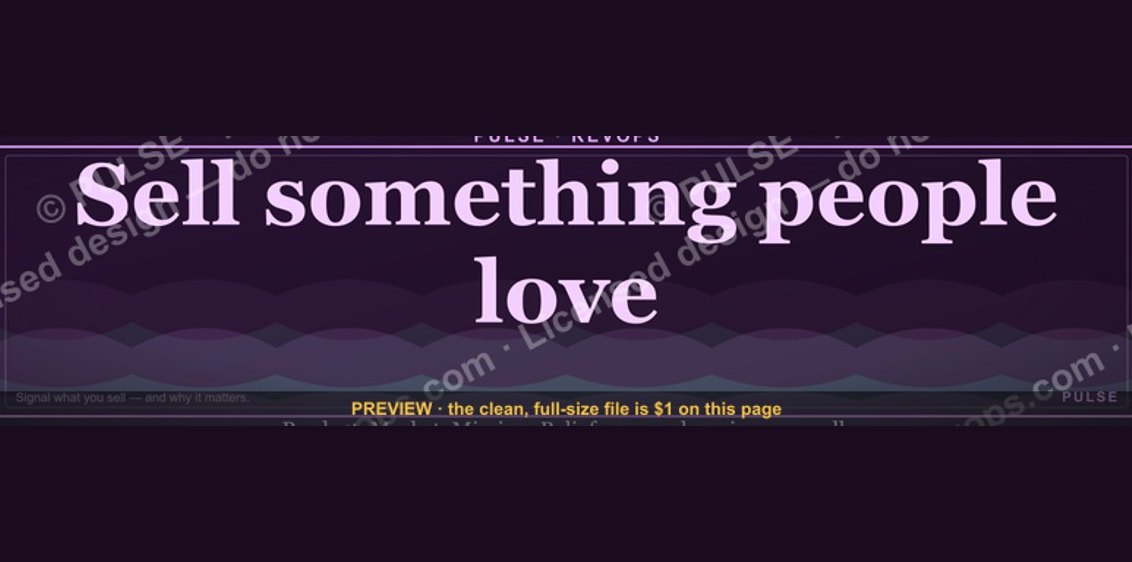 graphic“Sell something people love.” — LinkedIn Banner
 graphicFaster deals, fewer leaks. — LinkedIn Wallpaper
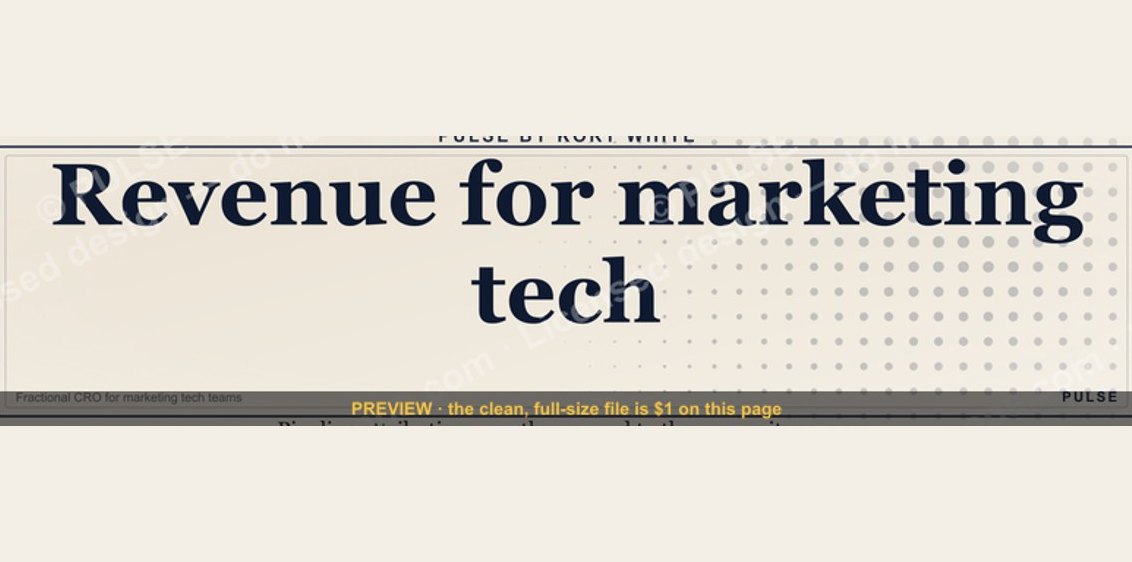 graphic“Revenue for marketing tech.” — LinkedIn Banner
 graphic“A confused buyer never buys.” — LinkedIn Banner
 graphic“Available for sales consulting.” — LinkedIn Banner
 graphicPredictable revenue, by design. — LinkedIn Wallpaper
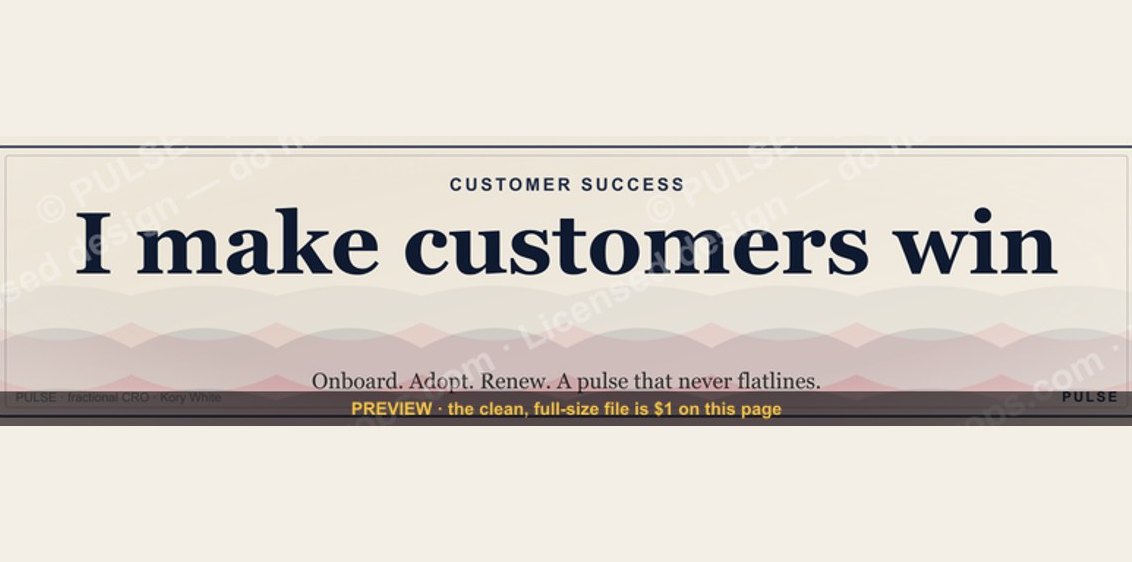 graphicCustomer Success — LinkedIn Banner
 graphicSales Coach — LinkedIn Banner
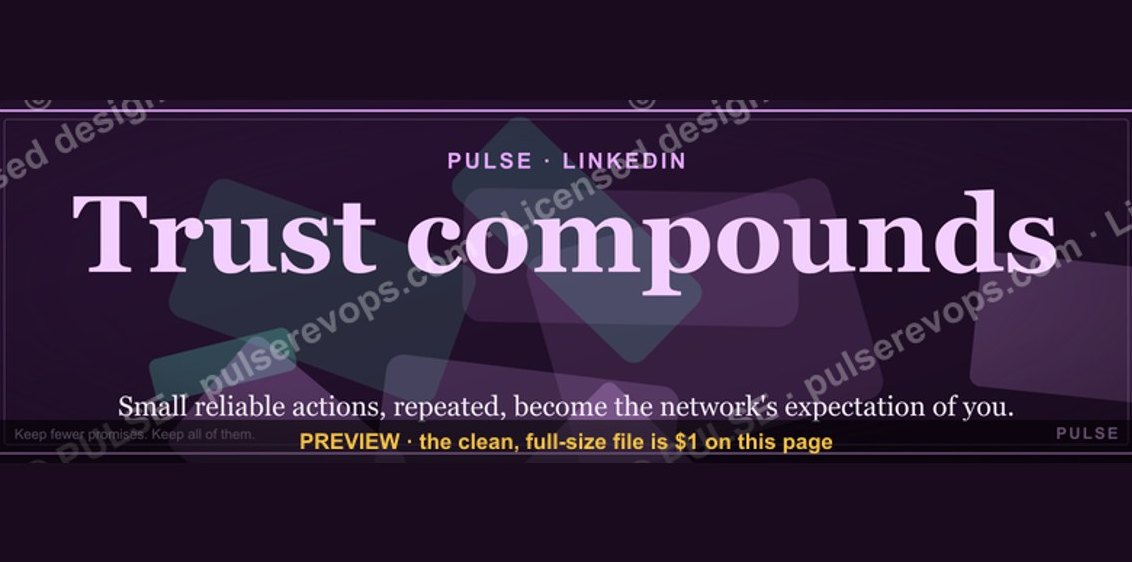 graphicTrust compounds. — LinkedIn Wallpaper