
Should I open or buy a Newk's Eatery franchise in 2027?
 Curated byKory White · Fractional CRO · Maryland
 PULSEKNOWLEDGE LIBRARY
Quality
Certified
Open a Newk's Eatery franchise in 2027 only if you have restaurant operating experience, roughly $1.0M–$1.4M of total project capital, and a daytime-dense trade area where catering can become a real second revenue line. Passive investors and low-daytime-traffic sites should pass — this concept is lunch-led and operator-dependent.
The operator standing in an empty endcap at 2 p.m.
Picture the decision the way it actually arrives. You are a two-unit operator in a sunbelt metro. Your existing brands are casual dining, and your Friday nights are strong but your Tuesdays are dead. A broker sends you a 3,600 square foot second-generation endcap in a center anchored by a grocery store, with a regional hospital campus a mile away and three office buildings within a ten-minute drive. The rent quote is meaningfully lower than what the same space commanded a few years ago, because a lot of second-generation restaurant space came back to market. You walk it at 2 p.m. on a Wednesday and the parking lot is half full. That is the moment the Newk's question gets real.
What you are actually deciding is not "is Newk's a good brand." It is whether a polished fast-casual, lunch-weighted, catering-dependent box fits the trade area you can actually secure and the management bandwidth you actually have. Those are three separate underwriting questions, and franchise sales conversations tend to collapse them into one enthusiastic answer.
The first question is capital adequacy. A traditional inline Newk's build sits in the seven-figure range once you total the franchise fee, leasehold improvements, furniture and equipment, signage, smallwares and technology, training and grand opening, and three months of working capital. The franchisor publishes financial qualification thresholds — meaningful liquidity and net worth — and those thresholds exist for a reason. In fast casual, the single most reliable predictor of a Year 2 failure is not menu, brand, or even site. It is opening under-capitalized and running out of runway before the catering channel matures. If your equity check leaves you with nothing behind it, you are not buying a restaurant, you are buying a countdown.
The second question is daypart fit. Newk's does the overwhelming majority of its business in a narrow midday window. There is no breakfast daypart to lean on when lunch softens and no alcohol-driven dinner ramp to rescue a slow week. Every dollar of fixed cost — rent, CAM, taxes, royalty, marketing contribution, salaried management — has to be absorbed by a business that is effectively running hot for three hours a day plus a softer dinner tail. That is not a flaw; it is the model. Concepts built this way can be extremely profitable because prep, labor scheduling, and inventory are predictable. But they punish sites without daytime population brutally.

The third question is whether you personally will run catering as a sales function. This is the part most first-time operators underestimate. Catering at a brand like Newk's is not an order channel that fills itself from the website. It is a business-to-business sales motion: named target accounts, a rep who calls on office managers and hospital administrators and school district staff, follow-up cadence, standing-order conversion, and a service level that makes the reorder automatic. If that sentence sounds like something you would delegate and forget, the economics of the concept will not show up for you.
Here is the honest framing. If you are the operator who already runs restaurants, already has a general manager bench, already knows how to hire and hold a kitchen team, and can put a real catering plan on paper before you sign — this is a credible use of a seven-figure project. If you are a first-time owner planning to hire a general manager and check in weekly, the same box will produce meaningfully thinner margins and a longer payback, and you will spend three years learning what the experienced operator knew on day one.
How the money actually moves through the box
The mechanism worth understanding is not the P&L line items in isolation. It is the sequence: a fixed-cost block gets set at lease signing, a variable-cost block gets set by your operating discipline, and a revenue mix gets set by your trade area and your catering effort. Whether the unit works is decided mostly by the first and third of those, and most operators spend their attention on the second.

Start with fixed costs. Occupancy — base rent, common area maintenance, insurance, real estate taxes — is locked the day you sign a ten-year lease. Royalty and the brand marketing contribution are percentages of gross sales, so they scale, but they behave like a fixed drag on margin because they never go away and never negotiate. Salaried management is semi-fixed: you need a general manager and typically an assistant or kitchen manager regardless of whether you do $1.6M or $2.4M. Add those together and you get a number that has to be cleared before you earn a dollar.
Now the leverage. Because a large slice of the cost structure does not flex with volume, every incremental dollar of sales above the breakeven line drops through at a much higher rate than the average margin suggests. This is why average unit volume matters so disproportionately in fast casual. Two units with identical operating discipline and a few hundred thousand dollars of AUV difference do not have modestly different profits — they have dramatically different profits, because the second unit is spreading the same fixed block across more revenue.
Then there is the mix effect, which is the part specific to this concept. Catering and dine-in do not carry the same margin. Catering orders are batched, scheduled in advance, produced during known windows, and delivered or picked up with far less service labor per dollar than a walk-in lunch rush. You know the order the day before, so you buy to it and prep to it. Waste drops. Labor per transaction drops because one production run serves fifty people instead of fifty separate service interactions. That is why operators who push catering mix upward improve restaurant-level margin even when total sales are flat.
The downstream effect matters too. Catering accounts create predictable baseline revenue — a hospital that orders every Thursday, a law firm that orders for every deposition day, a school district with a standing weekly order. Predictable revenue lets you schedule labor tighter, forecast food purchases more accurately, and reduce the variance that eats fast-casual margins. Operators in adjacent segments — pizza, barbecue, sandwich shops, even coffee — have run this same play for years: convert transactional volume into recurring institutional accounts and the whole cost structure gets easier to manage.

The failure mechanism is the mirror image. Sign a lease in a trade area with weak daytime population, and you have locked the fixed block against a revenue ceiling you cannot raise. No amount of labor discipline fixes a site that structurally cannot generate midday volume. You will spend Year 1 believing it is a marketing problem, Year 2 believing it is a management problem, and Year 3 discovering it was a real estate problem the whole time. This is the single most common way seven-figure restaurant projects go wrong, and it is decided before you open.
There is a RevOps-shaped lesson buried in this, and it is worth naming because it is exactly the discipline most independent restaurant owners never build: the catering side of a franchise is a pipeline business with a defined funnel — target accounts, first orders, reorder rate, account revenue, churn. Treating it with the same rigor a revenue operations team applies to a sales pipeline is the actual differentiator between a median unit and a top-quartile one. Named accounts, a call cadence, a tracked conversion rate from first order to standing order, and a monthly review of account-level revenue. Most operators run catering on vibes and wonder why their mix stalls.
Reading the real numbers without fooling yourself
Every number that matters is in the Franchise Disclosure Document, and the discipline is reading it correctly rather than reading it optimistically.

Item 7 gives you the initial investment range. Read the low and high as what they are: a range across markets with very different construction costs, not a forecast for your specific build. Construction pricing varies enormously by metro, by whether you are taking second-generation restaurant space with usable infrastructure or building out a raw shell, and by how much the landlord contributes as a tenant improvement allowance. A second-generation space with existing grease interceptor, hood, and utility capacity can save a substantial share of the build-out line. A raw shell in a high-cost metro can push you past the disclosed high end. Get a real contractor bid on your actual space before you finalize your number, and add a contingency — construction overruns on restaurant builds are the norm, not the exception.
Item 5 and Item 6 give you the fee structure: the initial franchise fee, the ongoing royalty as a percentage of gross sales, the brand marketing fund contribution, and any local marketing minimum. Model these as a combined percentage off the top, because that is how they hit your P&L. Also read the fine print on what triggers additional fees — transfer fees, renewal fees, required remodel obligations at a defined point in the term, technology fees. Remodel obligations in particular are a real capital event that operators routinely forget to reserve for, and they can arrive right when you were planning to harvest cash.
Item 19 is the financial performance representation, and it is where discipline matters most. Read exactly what population it describes. Is it all franchised units or a subset? Does it exclude units open less than a defined period? Does it report an average, a median, or quartiles? An average unit volume can be pulled upward by a handful of exceptional locations, which is why the median and the bottom-quartile figure are more useful to a prospective single-unit operator than the headline average. If the disclosure breaks out quartiles, underwrite to the second quartile, not the top. If it does not, ask franchisees directly.
Item 20 is the most valuable section in any FDD and the most skipped. It contains unit counts by state, openings, closures, terminations, non-renewals, and transfers over the disclosed years — and, critically, contact information for current and former franchisees. The pattern to look for is not the growth number the franchise development team quotes. It is the ratio of closures and transfers to total units. Transfers can be benign — an operator retiring, a partnership restructuring — or they can be distress sales dressed up as succession. Former franchisee contacts are gold. They have no reason to sell you anything.
Call at least six current operators and two former ones. Ask specific questions, not general ones. What is your actual annual volume, not the system average? What percentage of your sales is catering? What is your food cost and your labor cost at full ramp? How many hours a week are you or your partner physically in the restaurant? What did the build actually cost versus the Item 7 range? What surprised you in Year 1? Would you sign again? If you were opening a second unit, what would you do differently on site selection? Operators are usually startlingly honest with people who have not signed yet.
Then build your own model with three cases. The base case should assume you open below system average, because new units almost always do — brand awareness has to build, the catering pipeline starts empty, and the kitchen team is learning. Ramp it over eighteen to twenty-four months. The downside case should assume you land meaningfully below that and ask a single question: can you survive it? Not "is it a good return" — can you make debt service and payroll for eighteen months at that level without a capital call? If the answer is no, you are under-capitalized regardless of what the qualification thresholds say. The upside case is the least important, because nobody defaults from the upside.
On financing, most single-unit restaurant franchise projects in the United States get done with a Small Business Administration 7(a) loan, typically with the borrower contributing meaningful equity and the bank financing the balance against the project plus a personal guarantee. Rates on these loans are variable and tied to a base rate, so model debt service across a range rather than a single rate, and understand that your personal guarantee means the downside case is not contained inside the entity. Run three lenders in parallel rather than sequentially — restaurant-experienced Small Business Administration lenders underwrite franchise deals routinely and their terms and closing timelines differ materially. Ask each whether the brand appears on the SBA franchise directory, because that affects how cleanly the deal underwrites.
Two more numbers to hold onto. First, payback period on your equity, not on total project cost — you care when your own cash comes back, and leverage changes that calculation substantially. Second, the multiple a mature unit trades at on resale, because your exit is part of the return. Restaurant franchise resales generally trade on a multiple of seller's discretionary earnings, which means the resale value of your unit is a direct function of the cash flow you build, and improving cash flow by a modest amount compounds into a much larger equity outcome at sale. Operators who understand this run the business toward a sale-ready P&L from the beginning: clean books, documented systems, a general manager who can run without the owner, and a lease with real term remaining.
What you give up, and what else that money could buy
Every franchise decision is a comparison, and the honest comparison set for this capital level is broader than the franchisor will present.
The core trade-off with a polished fast-casual concept at this investment level is revenue ceiling versus capital intensity. You are paying more up front — more square footage, more equipment, more finish-out — in exchange for a higher potential unit volume and a catering channel that lower-capital sandwich concepts largely do not have. That trade is good if you hit volume and bad if you do not, which is another way of saying the entire bet is on site quality and operating execution.
The multi-unit alternative deserves serious weight. The same capital that funds one polished fast-casual box can often fund two or three lower-investment quick-service units. That path diversifies site risk — one weak location does not sink you — and gives you a portfolio across a territory. The cost is management load. Three units means three general managers, three hiring pipelines, three sets of equipment failures, and a district-manager layer you either build or become. Operators who have done it will tell you the second unit is harder than the first and the third is where you find out whether you built systems or just worked hard.

The independent concept alternative is real and under-considered. Building your own restaurant costs less to open, carries no royalty or marketing fund, and keeps all the equity upside. What you give up is everything the franchise fee buys: a proven menu, tested unit economics, supply chain leverage, a build-out spec that has been value-engineered across many units, training systems, and brand recognition on opening day. If you have a chef partner and deep local knowledge, independent can outperform. If you are buying a system because you need a system, paying for it is rational.
Acquisition of an existing franchised unit is the alternative most first-time buyers should look at harder than they do. Buying a mature unit gets you day-one cash flow, an existing team, a proven site with actual sales history, and an established local customer base — and you can underwrite from real trailing financials instead of projections. You will pay a transfer fee, you will need franchisor approval, and you will inherit whatever the seller left behind: deferred maintenance, aging equipment, a soured reputation, a lease with limited term, or a staff that is leaving with the owner. The diligence is different but the risk profile is often lower, because you are buying a known number rather than a hoped-for one. Watch for the seller who is exiting right before a required remodel — that is a capital obligation transferring to you.
There is also the conversion angle, which is where a lot of franchise growth actually happens. Operators running a declining concept sometimes convert an existing box rather than build new, reusing the shell, the hood, and much of the infrastructure. This lowers the capital requirement substantially. It requires franchisor approval on the site and typically a full re-image to brand standard, but the arithmetic can be far better than a ground-up build.

Finally, consider the do-nothing alternative honestly. Capital deployed into a restaurant is illiquid, personally guaranteed, and management-intensive. Compare the projected return not just against other restaurant deals but against the return on doing something else with the same money and the same three years of your attention. Plenty of experienced operators pass on good concepts because the deal in front of them does not clear their own hurdle rate, and that is a legitimate outcome of good diligence, not a failure of it.
The mistakes that actually kill these deals
The pitfalls that sink restaurant franchise projects are not exotic. They are the same handful, repeated.
Signing the wrong lease because it was cheap. A below-market rent in a trade area without the population to support the concept is the most expensive discount in the business. Underwrite the site first, then negotiate the rent. Pull real daytime population and workplace employment data for the three-mile ring, not just residential population — a bedroom suburb with impressive household counts and no daytime employment is exactly the trap. Drive the site at 11:30 a.m. on a Tuesday and again at 12:45 p.m., and count cars. Talk to neighboring tenants about their lunch traffic. Ask the landlord what previous restaurant tenants in that space did in volume and why they left.
Opening under-capitalized. The disclosed working capital line in the FDD is a minimum, not a plan. Restaurant openings routinely run over on construction, slip on timeline while rent accrues, and ramp slower than projected. Hold a reserve beyond the disclosed range — enough to cover several months of full operating costs including debt service if sales come in materially below plan. The operators who fail rarely fail because the concept did not work. They fail because they ran out of money before it had time to.

Treating catering as passive. This is the specific pitfall for a catering-weighted concept. If nobody in your organization owns catering revenue as a number they are measured on, catering will drift to whatever walks in through the website, and you will underperform on the exact channel that justifies the investment level. Assign it to a person. Give them a target account list. Track first orders, reorder rate, and revenue per account monthly. Compensate on it. This is straightforward revenue operations discipline applied to a restaurant, and it is remarkably rare.
Hiring the general manager too late. The management hire needs to happen early enough to complete the franchisor's training program before the doors open, and ideally to spend real time in an existing high-volume unit. Rushing this produces an opening run by someone learning the systems on live customers during the highest-stakes ninety days the unit will ever have. Start the search months before opening, and hire for the ability to hold a team together under pressure rather than for menu knowledge, which can be taught.
Underwriting to the average instead of the median. Averages in franchise disclosures are pulled upward by top performers with better sites, longer tenure, and more units. Your first unit is by definition none of those things. Underwrite to the middle or the lower-middle of the distribution and let outperformance be a surprise rather than a requirement.

Ignoring the closure and transfer data. A growing unit count with a steady stream of transfers is a different story than a growing unit count with almost none. Read the multi-year tables in Item 20 and calculate the ratio yourself. Then call former franchisees and ask what happened. Franchise development teams present net growth; you want the gross picture.
Assuming the competitive set stays still. The segment you are entering is contested from below by lower-priced sandwich and quick-service concepts with far cheaper builds, and from the side by bowl and salad concepts targeting the same white-collar lunch customer. Assume competitors open near you during your term. Underwrite a site that would still work with a new competitor across the street, because in a good trade area one will arrive.
Skipping the attorney. Have a franchise attorney read the franchise agreement, not just the FDD. The agreement governs territory protection, transfer rights, renewal terms, personal guarantee scope, remodel obligations, dispute resolution venue, and what happens if you want out. Territory language in particular varies enormously — understand exactly what protection you are getting and whether it covers non-traditional locations, delivery, or catering into adjacent areas. This is a few thousand dollars against a seven-figure commitment and it is never the wrong call.
Forgetting that you are also buying a job. For at least the first eighteen months, a single-unit franchise is a full-time operating role, not an investment. If your model only works because you are unpaid, it does not work — put a market-rate general manager salary into the projection even if you plan to fill the role yourself, so you can see whether the business earns a return above your own labor.
Related questions
How long does it take from signing to opening?
Realistically five to nine months from franchise agreement to open doors, driven mostly by site control, landlord negotiation, permitting, and construction. Permitting is the most variable piece and the least controllable. Build a schedule with slack and assume rent may start accruing before you are generating revenue.
Is a second-generation restaurant space always cheaper?
Usually but not automatically. Existing hood, grease interceptor, and utility capacity save real money. But an odd layout, undersized electrical service, or a landlord requiring demolition of unusable improvements can erase the savings. Get a contractor walkthrough before assuming a second-generation space is the cheaper path.
Should I sign a multi-unit development agreement up front?
Rarely on your first deal. Development agreements commit you to a build schedule with penalties for missing it, before you know whether you can operate the concept profitably. Open one unit, learn the model, then negotiate development rights from a position of proven performance.
What margin should a well-run unit produce?
Restaurant-level profit in fast casual commonly lands in the low-to-mid teens as a percentage of sales for well-run units, before corporate overhead and debt service. Owner-operated units generally outperform absentee-managed ones by a meaningful margin. Anything projected well above that range deserves scrutiny.
Can I finance this without a personal guarantee?
Almost never at this size. Small Business Administration lending and most conventional restaurant financing require a personal guarantee, often secured against personal assets. Treat the downside case as something that reaches your personal balance sheet, not just the operating entity.
FAQ
What does it cost to open a Newk's Eatery franchise?
The total initial investment for a traditional inline location runs into the seven figures once you include the initial franchise fee, leasehold improvements, furniture and equipment, signage, technology and smallwares, training and opening costs, and several months of working capital. The exact figure depends heavily on your market's construction costs and whether you are taking second-generation restaurant space or building out a raw shell. Always confirm the current range in the most recent Franchise Disclosure Document and get a real contractor bid on your specific space.
How much revenue does a typical location generate?
The franchisor discloses average unit volume in Item 19 of the Franchise Disclosure Document, and that is the only figure you should rely on. Read carefully which units are included, whether the number is an average or a median, and whether quartile breakdowns are provided. A new unit typically opens below the system average and ramps over the first eighteen to twenty-four months as brand awareness builds and the catering pipeline fills.
How important is catering to the business model?
Very. Catering carries a materially better margin profile than dine-in because orders are known in advance, produced in batches, and require far less service labor per dollar. For a lunch-weighted concept, catering is the channel that extends revenue beyond the midday rush and creates predictable recurring accounts. Operators who staff and manage catering as a business-to-business sales function consistently outperform those who treat it as an inbound order channel.
Can I own one as a passive investment?
You can structurally, but the returns generally do not justify it. Owner-operated units outperform absentee-managed units meaningfully in fast casual, and the gap is widest in the first two years when systems, staffing, and the catering pipeline are all being built. If you intend to be passive, either budget for a strong and well-compensated general manager from day one and accept thinner margins, or look at acquiring an established unit with a proven management team already in place.
Is it better to build new or buy an existing unit?
Buying an existing franchised unit gets you day-one cash flow, a trained team, and real trailing financials to underwrite against instead of projections — often a lower-risk path for a first-time franchisee. Building new gets you site selection control, new equipment, and no inherited problems. Check whether the seller is exiting ahead of a required remodel obligation, since that capital cost transfers to you along with the business.
What is the biggest reason these deals fail?
Site selection, followed closely by under-capitalization. A lunch-led concept in a trade area without sufficient daytime population cannot generate the volume needed to clear a fixed cost block that was locked in at lease signing, and no amount of operating skill fixes that. The second killer is opening without enough reserve to survive a slower-than-projected ramp. Both mistakes are made before the doors open.
Sources
- https://www.sba.gov/funding-programs/loans/7a-loans
- https://www.ftc.gov/business-guidance/resources/consumers-guide-buying-franchise
- https://www.ftc.gov/legal-library/browse/rules/franchise-rule
- https://www.bls.gov/ppi/
- https://www.restaurant.org/research-and-media/research/
- https://www.census.gov/programs-surveys/cbp.html
- https://www.cbre.com/insights
- https://www.nrn.com/
- https://www.ibisworld.com/united-states/market-research-reports/
- https://www.bizbuysell.com/
Related on PULSE
- [Should I open or buy a Beyond Juicery + Eatery franchise in 2027?](/knowledge/q15412)
- [Should I open or buy a Modern Market Eatery franchise in 2027?](/knowledge/q15225)
- [Should I open or buy a Zoup Eatery franchise in 2027?](/knowledge/q15167)
- [Should I open or buy a CoreLife Eatery franchise in 2027?](/knowledge/q15166)
- [Should I open or buy an Oxi Fresh Carpet Cleaning franchise in 2027?](/knowledge/q15521)
- [Should I open or buy an Oil Can Henry's franchise in 2027?](/knowledge/q15520)
This page will be disappearing soon. Save it to your device for $1 — or read it free while it is here.
@Kory-White- · if Venmo asks, the last 4 of my number are 2012
This page is gone.
This one is off the shelf now. $1 keeps it on your phone for good — the whole page, pictures and diagrams included.
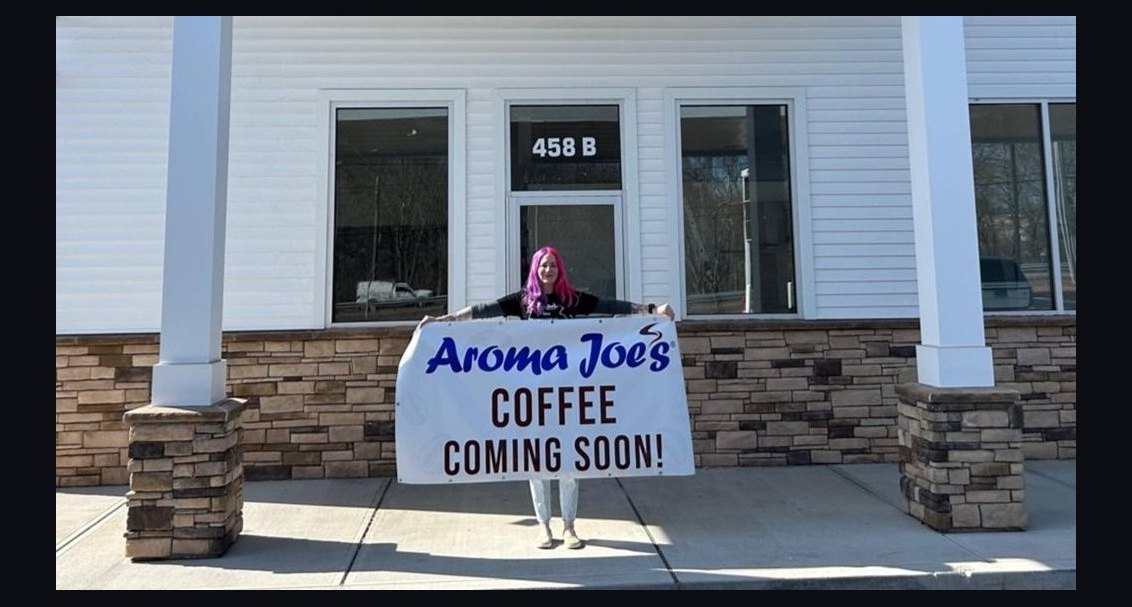 pulse-qShould I open or buy an Aroma Joe's Coffee franchise in 2027?
 pulse-qShould I open or buy a Duck Donuts franchise in 2027?
 pulse-qShould I open or buy a Buca di Beppo franchise in 2027?
 pulse-qShould I open or buy a Bojangles franchise in 2027?
 pulse-qShould I open or buy a Snap Fitness franchise in 2027?
 pulse-qAs-Is vs Warm Shell vs Turnkey: Which Delivery Saves Me the Most?
 pulse-qHow Many Employees Should I Schedule Each Shift at My Hot Pot Restaurant in 2026?
 pulse-qShould I open a yoga teaching business in 2027?
 pulse-qShould I open or buy a Body20 franchise in 2027?
 pulse-qHow Do I Set Attach Rates for My Service Fees in 2026?