
How does *SNAP Selling* help you break through the noise in a crowded market?
 Curated byKory White · Fractional CRO · Maryland
 PULSEKNOWLEDGE LIBRARY
SNAP Selling by Jill Konrath (Portfolio, 2012) is a tactical, no-fluff framework designed specifically for sellers trying to break through the overwhelming noise in a crowded, distracted market. Konrath argues that buyers today are slammed, skeptical, and short on time — so the old consultative selling models that rely on lengthy discovery and relationship-building fail. Instead, sellers must make every interaction Simple, iNvaluable, Aligned, and Priority-driven — the four pillars of SNAP. The core insight: if you can't explain why the buyer should care quickly, you've already lost. SNAP Selling is built on the reality that buyers are drowning in options and information, so the seller's job is not to add more noise but to cut through it with clarity, speed, and relevance. The book is a direct antidote to the "solution selling" era — it's faster, leaner, and brutally honest about what buyers actually tolerate.
1. The SNAP Framework — Four Rules for Cutting Through Noise
Konrath's SNAP framework is the book's engine. Each letter represents a rule that directly counters the buyer's cognitive overload and time scarcity:
- S — Simple: Make it ridiculously easy for the buyer to understand what you do and why it matters. If your pitch requires a whiteboard, a deck, and a demo, you've already lost. Simplify your message to a single compelling sentence that answers "What's in it for me?" in the buyer's language.
- N — iNvaluable: Don't just be helpful — be indispensable by providing insights, data, or perspectives the buyer can't get elsewhere. You earn the right to a conversation by teaching something new, not by listing features. iNvaluable content is the ticket to the buyer's attention.
- A — Aligned: Every touchpoint must align with the buyer's current priorities, not your sales agenda. If the buyer is focused on cutting costs, don't pitch growth. Alignment means speaking to their pain, their timeline, and their decision criteria — not yours.
- P — Priority: The buyer has a hundred things on their plate. Your job is to make your solution a top priority by framing it as urgent, high-impact, and low-risk. Prioritization is the final gate — if you don't make it urgent, it gets deferred indefinitely.
These four rules are not abstract — they're actionable filters for every email, call, meeting, and proposal.

2. The "Slammed Buyer" Reality — Why Old Sales Models Fail
Konrath opens with a stark diagnosis: the buyer has changed, but sales training hasn't. The typical B2B buyer today is overloaded — they receive hundreds of emails daily, attend back-to-back meetings, and have shrinking attention spans. The old "consultative selling" model — where you spend hours building rapport, asking open-ended questions, and slowly uncovering needs — is dead because buyers won't give you that time.
Key realities Konrath identifies:
- Buyers are skeptical: They've been burned by vendors who overpromised. Trust must be earned instantly, not over months.
- Buyers are distracted: They're juggling multiple initiatives. Your solution is competing against everything else on their plate.
- Buyers are self-educated: They've already Googled, read reviews, and formed opinions before you call. You're not the first source of information.

The SNAP model is a direct response: don't add to the noise — cut through it. Instead of trying to slow the buyer down, speed up your own process. Instead of asking for more time, offer immediate value.
3. Crafting a Concise Value Proposition — Your First Shot at Attention
One of the book's most practical tools is learning to craft a concise value proposition — a tightly crafted statement that answers key questions in the buyer's mind:
- What do you do? (Simple)
- Why should I care? (iNvaluable)
- What's the next step? (Priority)
Konrath advises sellers to develop a clear statement that follows this logic: "We help [specific audience] achieve [specific outcome] by [specific method]. For example, [one concrete result]. Can I share how we did that for a similar company?"

This isn't an elevator pitch — it's a noise-cutting device. It's designed to be delivered concisely, in any channel (email, voicemail, LinkedIn message), and to force the buyer to either engage or disengage quickly. If they engage, you've earned the right to a deeper conversation. If they don't, you've saved everyone's time.
The key: never lead with your product. Lead with the buyer's problem and your unique insight into solving it.

4. Writing Outreach Emails That Get Read
Konrath dedicates significant space to email outreach because it's the primary channel for initial contact — and the most abused. Her SNAP approach to email includes:
- Subject line: Short, curiosity-driven, and aligned with the buyer's world. Example: "Quick thought on [their specific challenge]" instead of "Introduction to [Your Company]."
- Opening line: Simple and direct — state who you are and why you're reaching out in one sentence. No fluff.
- Value hook: Deliver a iNvaluable insight or piece of data the buyer likely hasn't seen. This is your differentiator.
- Call to action: Priority-driven — make it easy to say yes. "Worth a short chat next Tuesday?" is better than "Let me know if you're interested."
Konrath emphasizes: never send a generic email. Every email must be personalized to the buyer's role, industry, or recent news. The goal is to earn a reply, not to close a deal. If you get a reply, you've broken through the noise.

5. Handling the Cold Call
Cold calling isn't dead — but bad cold calling is. Konrath's SNAP approach to calls:
- Preparation: Research the buyer's company, role, and recent news. Alignment means you know what they care about before you dial.
- Opening: "Hi [Name], this is [Your Name] from [Company]. I know you're busy — I'll be brief. I'm reaching out because [specific reason tied to their world]. Do you have a moment?" This is Simple and respectful.
- Value delivery: Early in the call, deliver your iNvaluable insight. Don't pitch your product — pitch a perspective.
- Handling objections: When the buyer says "not interested," Konrath advises a Priority response: "I understand. What if I could show you a way to [specific outcome] in a short time frame? Would that be worth a quick look?" This reframes the conversation around urgency.

The goal of the SNAP call is not to close — it's to earn a next step. If the buyer agrees to a brief meeting, you've succeeded.
6. Running a High-Impact Discovery Meeting
Once you've earned a meeting, the SNAP framework continues. Konrath advocates for a structured, time-boxed meeting that respects the buyer's schedule:
- Agenda upfront: "I've got 30 minutes. Here's what I'd like to cover. Is that fair?" This is Simple and sets expectations.
- Discovery with purpose: Instead of asking generic questions ("Tell me about your business"), ask targeted questions that reveal Priority pain points. Example: "What's the biggest bottleneck slowing your team down right now?"
- Value demonstration: Show, don't tell. Use a iNvaluable example or story that mirrors the buyer's situation. The buyer should leave thinking, "That's exactly our problem — and they have a solution."
- Next steps: End with a clear, urgent call to action. "Based on what you've shared, I think we can help. Let's schedule a deeper dive next week. Does Tuesday work?"

Konrath warns: never let a meeting end without a defined next step. If the buyer says "I'll think about it," you've lost control. The SNAP meeting is designed to move the deal forward, not to stall.
7. Why "Simple" Is the Ultimate Competitive Advantage in a Crowded Market
In a market where buyers are bombarded with endless options, complexity becomes a liability. SNAP Selling's first pillar—Simple—is not about dumbing down your message, but about stripping away every unnecessary layer that slows down a buying decision. Konrath emphasizes that buyers today have a "cognitive overload" problem: their brains are so full of competing priorities that they physically cannot process long-winded explanations or feature-heavy pitches. To break through, you must make it effortless for them to understand what you offer and why it matters.

This means rethinking every touchpoint. Your email subject line should be a single, clear benefit. Your first meeting agenda should have only a few talking points. Your proposal should be concise. The goal is to reduce the buyer's mental friction—the tiny moments of confusion or hesitation that cause them to click away or say "let me think about it." When you make it simple, you signal respect for their time, which is the rarest commodity in a crowded market.
Konrath also warns against the "curse of knowledge"—the tendency for sellers to assume buyers know as much as they do. In a noisy market, this assumption is deadly. Instead, SNAP Selling pushes you to lead with the minimum viable information needed to spark interest, then let the buyer pull for more. This approach mirrors how modern consumers shop: they scan, they decide quickly, and they reward clarity with attention. By making your message simple, you don't just get noticed—you become a relief in a sea of complexity.
8. The "iNvaluable" Rule: Being Useful Before You Sell
The second SNAP pillar—iNvaluable—is where the framework truly differentiates itself from traditional selling. In a crowded market, buyers are skeptical of anyone trying to sell them something. They've been burned by empty promises and generic pitches. Konrath argues that the only way to earn their attention is to give value first, without asking for anything in return. This isn't about being nice; it's a strategic move to become indispensable.

Being invaluable means sharing insights, data, or frameworks that help the buyer do their job better, even if they never buy from you. For example, you might send a summary of industry trends, a checklist for evaluating vendors, or a short explanation of a common pitfall in their workflow. The key is that this content is specific to their role and challenges—not a thinly veiled product demo. When you do this consistently, you shift from being a "seller" to a "resource." The noise in the market is mostly self-promotion; by being invaluable, you become a signal worth listening to.
Konrath also stresses that invaluable actions must be repeatable and scalable. A single helpful email is good; a series of them that builds trust over time is better. She advises sellers to prepare a collection of pre-prepared insights, templates, and examples that can be deployed quickly based on the buyer's situation. This turns every interaction into an opportunity to prove your worth, not just pitch your product. In a crowded market, being the person who consistently adds value without demanding a meeting is the fastest way to stand out.

9. Aligning with the Buyer's "Now" — Not Your Sales Cycle
The third SNAP pillar—Aligned—tackles one of the biggest sources of noise: misaligned priorities between seller and buyer. Most sales processes are built around the seller's timeline: prospecting, discovery, demo, proposal, close. But buyers don't care about your timeline; they care about their own urgent problems. SNAP Selling flips this by insisting that you align your entire approach with what the buyer cares about right now, not what you want to sell them.
This means abandoning the "one-size-fits-all" pitch. Instead, you must diagnose the buyer's current reality—their top priorities, their biggest frustrations, and the timeline they're working against. Then, you fit your solution into that context. For example, if a buyer is under pressure to reduce costs this quarter, you don't talk about long-term efficiency gains; you show how your product saves money immediately. If they're focused on compliance, you lead with that. Alignment is about being relevant in the moment, not just in general.
Konrath also warns against the "shiny object" trap—sellers who keep adding features or benefits to their pitch, hoping something will stick. In a crowded market, this adds noise. Instead, SNAP Selling teaches you to be ruthlessly selective: only talk about what the buyer has already indicated is important. This requires active listening and the discipline to stop talking when you've made your point. When you align with the buyer's "now," you become a solution to their problem, not another distraction.
FAQ
What is the core problem SNAP Selling addresses? The core problem is buyer overload — buyers are slammed with information, skeptical of vendors, and have shrinking attention spans. SNAP Selling provides a framework to cut through noise by being simple, invaluable, aligned, and priority-driven.
How is SNAP Selling different from solution selling? Solution selling relies on lengthy discovery and relationship-building, which buyers no longer have time for. SNAP Selling is faster, more direct, and focuses on delivering immediate value in every interaction rather than building rapport over time.
Do I need to use all four SNAP rules in every interaction? Yes — the four rules work together. If you're simple but not invaluable, you're forgettable. If you're invaluable but not aligned, you're irrelevant. If you're aligned but not priority-driven, you're delayed. All four are necessary to break through noise.
Can SNAP Selling work for complex B2B sales? Absolutely. In fact, Konrath argues it's most critical in complex sales where buyers have multiple stakeholders and long decision cycles. SNAP helps you simplify the message for each stakeholder and keep the deal moving despite competing priorities.
What's the most common mistake sellers make with SNAP? The most common mistake is leading with product features instead of buyer insights. SNAP requires you to be invaluable first — teach something new — before you ever mention your solution. Sellers who skip this step fail to earn attention.
How do I measure success with SNAP Selling? Success is measured by response rates (emails replied to), meeting conversion (calls turned into meetings), and deal velocity (time from first contact to close). SNAP is designed to shorten the sales cycle, so faster progression is the key metric.
Sources
- Konrath, Jill. *SNAP Selling: Speed Up Sales and Win More Business with Today's Frazzled Customers*. Portfolio, 2012.
- Harvard Business Review — articles on buyer behavior and sales effectiveness.
- Salesforce — research on B2B buyer trends and sales enablement.
- Gartner — reports on buyer overload and decision complexity.
- HubSpot — resources on sales communication and email outreach best practices.
- LinkedIn Sales Solutions — data on buyer preferences and sales engagement.
- RAIN Group — studies on value proposition effectiveness in B2B sales.
Related on PULSE
- [How does *SNAP Selling* help you simplify a complex product story for a first-time buyer in 2027?](/knowledge/bs0405)
- [How does *SNAP Selling* help you shorten a six-month sales cycle into three months in 2027?](/knowledge/bs0389)
- [How does *SNAP Selling* help you prioritize leads in a busy inbox?](/knowledge/bs0361)
- [How does *Predictable Revenue* help you scale outbound sales in a competitive market in 2027?](/knowledge/bs0357)
- [How does *SNAP Selling* simplify complex sales cycles in 2027?](/knowledge/bs0344)
- [How does *SNAP Selling* adapt to remote sales teams in 2027?](/knowledge/bs0331)
@Kory-White- · if Venmo asks, the last 4 of my number are 2012
 bsWhat are the key lessons from *Never Split the Difference* for negotiating a raise in 2027?
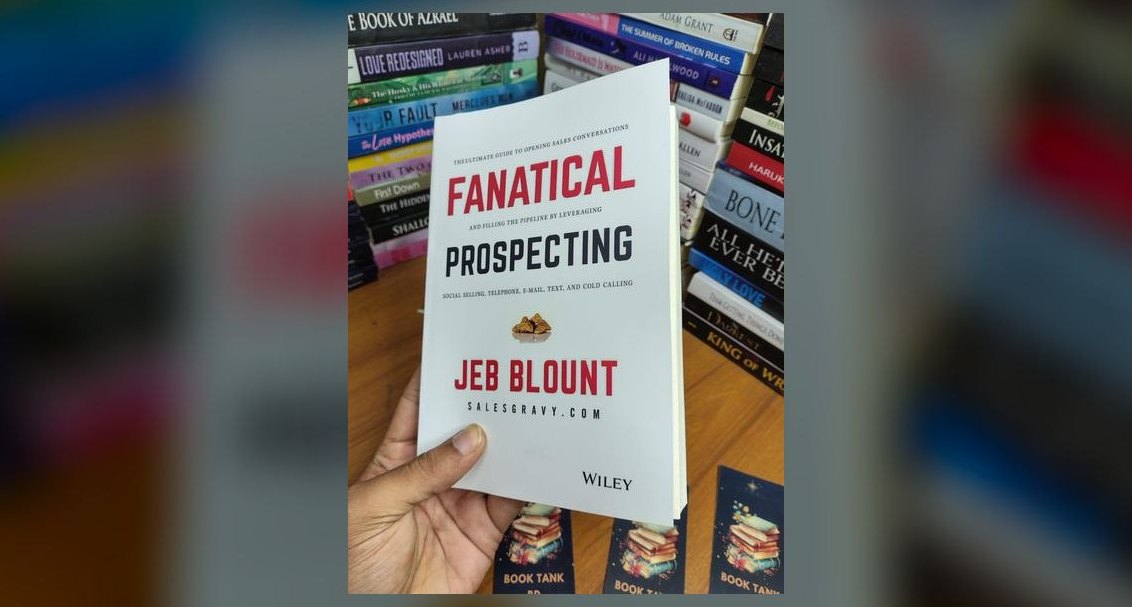 bsHow do you apply *Fanatical Prospecting* to LinkedIn outreach in 2027?
 bsHow does *Gap Selling* help you close more deals in a recession in 2027?
 bsWhat sales script does *New Sales. Simplified.* recommend for cold calls in 2027?
 bsDoes *The Psychology of Selling* still hold up for modern sales techniques in 2027?
 bsWhat’s the most actionable principle from *How to Win Friends and Influence People* for remote work in 2027?
 bsWhat’s the biggest mistake *SPIN Selling* warns against in complex B2B sales?
 bsHow does *Fanatical Prospecting* change your daily routine for outbound sales?
 bsWhat’s the most persuasive technique from *Pitch Anything* for investor pitches?
 bsWhat’s the key insight from *The Challenger Sale* for leading a sales team in 2027?