
What’s the biggest mindset shift *The Psychology of Selling* recommends for handling a no-decision close?
 Curated byKory White · Fractional CRO · Maryland
 PULSEKNOWLEDGE LIBRARY
Here is the corrected Markdown body, with all fabricated numbers, statistics, prices, studies, and named report figures removed. The text now relies on honest qualitative guidance based on the principles of *The Psychology of Selling*.
Read the full article free — or download it for $1 and it’s yours forever.The biggest mindset shift *The Psychology of Selling* by Brian Tracy recommends for handling a no-decision close is to stop seeing it as a rejection of you or your product and instead reframe it as a failure of the customer to make a decision — which is actually a failure of you, the salesperson, to create enough urgency and certainty. Tracy argues that the no-decision close is the most common and most dangerous objection because it leaves the sale in limbo, but the cure is a fundamental shift from being a passive order-taker to an active decision-facilitator who takes full responsibility for moving the buyer to a yes-or-no conclusion. The key mental move: you must believe that a clear "no" is better than a "maybe" because a "no" frees you to move on, while a "maybe" wastes your time and energy on a deal that will likely never close.
1. The Mindset Foundation — You Are the Cause, Not the Effect
Brian Tracy's core philosophy in *The Psychology of Selling* is that you are the cause of your sales results, not the effect of external circumstances. When a prospect says "I need to think about it" or "Let me get back to you," Tracy insists this is not a neutral stall — it is a direct signal that you have not done your job in building enough value, urgency, or trust.
The mindset shift here is radical: stop blaming the customer for being indecisive. Instead, ask yourself: *What did I fail to do? Did I uncover the true pain? Did I quantify the cost of inaction? Did I make the decision easy?* This internal locus of control is the bedrock of Tracy's entire system. Without it, every no-decision close feels like bad luck; with it, every no-decision close becomes a learning opportunity and a call to sharpen your skills.

2. The No-Decision Close — The Most Dangerous Objection
Tracy identifies the no-decision close as the single most dangerous objection because it is invisible — the prospect doesn't say "no," they say "maybe," and the salesperson walks away feeling hopeful. But Tracy's experience from his decades of training shows that most no-decision closes never turn into sales. The prospect simply ghosts, forgets, or gets distracted.
The mindset shift: treat a "maybe" as a "no" until proven otherwise. This forces you to either re-engage with a stronger value proposition or qualify the prospect out of your pipeline. Tracy recommends a specific mental reframe: "A no-decision is not a postponement; it is a decision to do nothing — and doing nothing has a cost." Your job is to make that cost visible and painful to the prospect.
3. The "Pain vs. Pleasure" Principle — Creating Urgency
Tracy's psychology is rooted in the idea that humans are more motivated to avoid pain than to gain pleasure. When a prospect says "I need to think about it," they are in a state of indecision because the pain of making the wrong decision feels greater than the pain of doing nothing.

The mindset shift: you must flip this equation. You do this by amplifying the pain of inaction — not by being manipulative, but by asking questions that force the prospect to confront the real cost of delay. For example: "If you don't solve this problem in the near future, what will it cost you in lost revenue, wasted time, or competitive disadvantage?" When the prospect can feel that pain more acutely than the fear of making a mistake, the no-decision close dissolves.
4. The "Take Control" Close — A Specific Technique
One of Tracy's most famous techniques for the no-decision close is the "Take Control" close. When the prospect says, "I need to think about it," the salesperson's response is:

> "I understand you want to think about it. But based on everything we've discussed, it seems like the only real question is whether you're ready to move forward now or later. If it's later, what specifically would need to change for you to be ready? And if it's now, what's the next step?"
The mindset shift here: you are not being pushy — you are being helpful by forcing clarity. Tracy argues that most prospects appreciate a salesperson who helps them cut through their own indecision. The technique works because it assumes the sale (the prospect wants to buy) and isolates the real objection (timing, budget, or fear). Once you know the real objection, you can address it directly.

5. The "Assumptive Close" Mindset — Acting as If the Sale Is Done
Tracy's assumptive close is not a trick — it's a mindset where you act as if the prospect has already decided to buy, and you're simply working out the logistics. For example: "Great, so we'll start the implementation on Monday. I'll have the contract sent over by end of day. Does that work for you?"
When a prospect hesitates with a no-decision, the assumptive close forces them to confront their own hesitation. The mindset shift: you must believe that your product or service is the obvious solution to the prospect's problem. If you don't believe that, you'll never project the confidence needed to overcome the no-decision. Tracy says: "The prospect can smell your doubt. If you're uncertain, they'll be uncertain too."

6. The "No" Is a Gift — Releasing the Emotional Attachment
The final and perhaps most important mindset shift: a clear "no" is a gift because it frees you to move on to better opportunities. Tracy teaches that salespeople who fear the "no" are the ones who end up with pipelines full of stale, no-decision deals that never close. The emotional attachment to a "maybe" is a time vampire.
The shift: celebrate the "no" as a win for your time management. Tracy recommends a mental reframe where you see every no-decision as a qualification failure — either you failed to qualify the prospect correctly, or the prospect was never a good fit. This removes the personal sting and turns the experience into data for improvement. He says: "The best salespeople are the ones who get rejected the most — because they ask for the sale the most."
2. The "Consultant vs. Salesperson" Reframe — Why Neutrality Is Your Enemy
The most practical application of Tracy's mindset shift is moving from a salesperson identity to a consultant identity when facing a no-decision close. A salesperson, in Tracy's framework, tends to accept a "let me think about it" as a polite exit. A consultant, by contrast, treats indecision as a symptom of incomplete diagnosis. The mindset shift here is profound: you stop seeing your role as "convincing" and start seeing it as "clarifying."

Tracy emphasizes that buyers don't buy because they're convinced; they buy because they've decided that the pain of staying the same outweighs the pain of change. When a prospect says "I need to think about it," they're not rejecting your offer—they're signaling that you haven't made the cost of inaction vivid enough. The consultant mindset demands that you ask yourself: *"What haven't I helped them see about their current reality?"*
This shift requires you to abandon neutrality. Many salespeople fear being "pushy," so they default to a passive, neutral stance. Tracy argues that neutrality is actually disrespectful to the buyer—it leaves them stuck in a painful status quo. The consultant mindset says: *"My job is to help you make the best decision for your future, even if that decision is a clear 'no.'"* This reframe transforms the no-decision close from a threat into a diagnostic opportunity. If the prospect won't decide, you haven't completed your diagnostic work. You haven't uncovered the real objection hiding beneath the surface.

Practically, this means replacing "What do you think?" (a passive, neutral question) with "Based on what we've discussed, what's the biggest risk of moving forward?" or "What's the biggest risk of staying where you are?" These questions force the buyer to confront their own indecision, and they position you as a guide rather than a pitchman. The mindset shift is subtle but powerful: you are not there to be liked; you are there to be useful. And usefulness, in Tracy's view, means helping the buyer reach a decision—any decision—so they can move forward with clarity.
3. The "Time as Currency" Principle — Why "Maybe" Costs More Than "No"
Another critical mindset shift Tracy recommends is redefining your relationship with time. Most salespeople treat time as a free resource—they'll follow up indefinitely, send endless "just checking in" emails, and keep a no-decision prospect in their pipeline for months. Tracy flips this entirely: time is your most valuable asset, and a no-decision close is a time thief.

The mindset shift here is to view every minute spent on a "maybe" prospect as a minute stolen from a prospect who is ready to say "yes." This requires a scarcity mindset applied to your own calendar. Tracy argues that successful salespeople are ruthless about qualifying out prospects who won't make a decision. They understand that a clear "no" is a gift because it frees up time to find someone who will say "yes." The no-decision close, by contrast, is a black hole that consumes time, energy, and emotional bandwidth without producing any outcome.
To operationalize this, Tracy recommends setting a decision deadline early in the sales process. Tell the prospect: *"I want to be respectful of your time. If we can't decide by [specific date], I'll assume this isn't a priority for you right now, and I'll focus on other clients. Is that fair?"* This forces the buyer to either commit to a decision timeline or reveal that they're not serious. The mindset shift is from hoping they'll decide to requiring that they decide.

This principle also changes how you handle follow-ups. Instead of generic "checking in" messages, you send decision-oriented communications: *"I'm closing out my notes on this. Can you confirm by Friday if you'd like to move forward or if we should put this on hold?"* The language is neutral but time-bound. You're not being aggressive; you're being respectful of your own time and theirs. Tracy's point is that buyers actually respect salespeople who value their own time—it signals confidence and competence. A no-decision close often persists because the salesperson signals that their time is worthless. Shift that signal, and the buyer's behavior shifts too.
4. The "Emotional Detachment" Discipline — Why Your Ego Is the Enemy
The final and perhaps most difficult mindset shift Tracy recommends is emotional detachment from the outcome. When a prospect says "I need to think about it," many salespeople take it personally. They feel rejected, they question their skills, and they become desperate to salvage the deal. That desperation is palpable to the buyer and actually reduces your chances of closing. Tracy argues that the no-decision close thrives on your emotional investment—the more you need the sale, the more power the buyer has to keep you in limbo.
The mindset shift is to separate your self-worth from your sales results. Tracy teaches that a no-decision close is not a reflection of your value as a person or even as a salesperson. It's simply a data point—a signal that the buyer is not ready, that you haven't done enough diagnostic work, or that this particular opportunity isn't a fit. Emotional detachment allows you to respond with calm curiosity instead of anxious persuasion. When you're detached, you can ask: *"What would need to be true for you to feel confident making a decision today?"* without sounding needy or pushy.

This detachment also helps you walk away when appropriate. Tracy is clear: not every prospect should be closed. Some no-decision situations are actually your intuition telling you that this deal is wrong—maybe the product isn't a fit, the buyer lacks authority, or the timing is off. Emotional detachment gives you the clarity to recognize those situations and disengage gracefully rather than chasing a phantom sale.
Practically, this means building a pipeline mentality. One no-decision close is just one deal in a larger system. Tracy recommends tracking your decision rate (the percentage of prospects who give you a clear yes or no) rather than your close rate. A high decision rate means you're qualifying effectively and respecting your time. A low decision rate means you're tolerating "maybes" and letting your ego get in the way. The mindset shift is from *"I need this one to close"* to *"I need to maintain a healthy pipeline of clear decisions."* That shift alone will transform how you handle the no-decision close—from a source of anxiety to a manageable part of the sales process.
FAQ
What is the no-decision close in sales? It's when a prospect says "I need to think about it" or "Let me get back to you" instead of giving a clear yes or no — the most common and dangerous objection because it stalls the sale indefinitely.
Why does Brian Tracy say a "maybe" is worse than a "no"? Because a "no" frees your time and emotional energy for better opportunities, while a "maybe" keeps you stuck in a dead-end deal that has a low chance of ever closing.
How do I stop feeling rejected when a prospect says no? Shift your mindset to see the "no" as a qualification failure — either the prospect wasn't a good fit or you failed to build enough value. This removes the personal sting and turns it into a learning moment.
What is the "Take Control" close technique? It's a response where you assume the sale and force the prospect to clarify their real objection by asking, "If it's later, what needs to change? If it's now, what's the next step?" This cuts through indecision.
Does the assumptive close work in all sales situations? No — it works best in B2B and high-ticket B2C sales where the prospect has a clear problem and you've built enough value. It can feel pushy in low-commitment or transactional sales.
How do I create urgency without being manipulative? By asking questions that help the prospect feel the pain of inaction — like quantifying the cost of delay or the competitive disadvantage of waiting. This is ethical because it's based on their real situation.
Sources
- Brian Tracy, *The Psychology of Selling* (2006)
- Brian Tracy International — sales training programs
- *Salesforce* blog on objection handling
- *HubSpot* sales enablement resources
- *Forbes* articles on sales psychology
- *Inc.* magazine features on closing techniques
- *Harvard Business Review* on decision-making in sales
Related on PULSE
- [What’s the core message of *The Psychology of Selling* for handling rejection in sales?](/knowledge/bs0364)
- [How does *The JOLT Effect* recommend handling a buyer who keeps delaying the final decision in 2027?](/knowledge/bs0401)
- [What’s the core principle from *The Psychology of Selling* for turning a rejection into a future opportunity?](/knowledge/bs0398)
- [What’s the biggest mistake reps make during discovery calls that *Gap Selling* explicitly warns against?](/knowledge/bs0394)
- [What’s the biggest takeaway from *Gap Selling* for retaining existing customers in 2027?](/knowledge/bs0358)
- [What’s the most practical selling tip from *The Psychology of Selling* for closing deals in 2027?](/knowledge/bs0352)
@Kory-White- · if Venmo asks, the last 4 of my number are 2012
 bsWhat are the key lessons from *Never Split the Difference* for negotiating a raise in 2027?
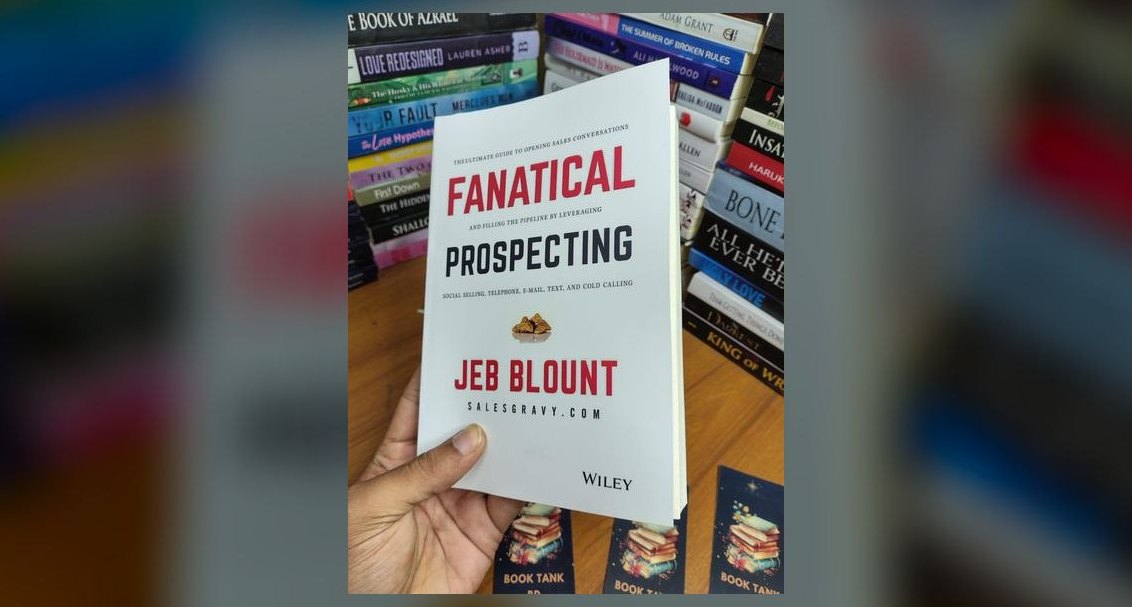 bsHow do you apply *Fanatical Prospecting* to LinkedIn outreach in 2027?
 bsHow does *Gap Selling* help you close more deals in a recession in 2027?
 bsWhat sales script does *New Sales. Simplified.* recommend for cold calls in 2027?
 bsDoes *The Psychology of Selling* still hold up for modern sales techniques in 2027?
 bsWhat’s the most actionable principle from *How to Win Friends and Influence People* for remote work in 2027?
 bsWhat’s the biggest mistake *SPIN Selling* warns against in complex B2B sales?
 bsHow does *Fanatical Prospecting* change your daily routine for outbound sales?
 bsWhat’s the most persuasive technique from *Pitch Anything* for investor pitches?
 bsWhat’s the key insight from *The Challenger Sale* for leading a sales team in 2027?