
What’s the core principle from *The Psychology of Selling* for turning a rejection into a future opportunity?
 Curated byKory White · Fractional CRO · Maryland
 PULSEKNOWLEDGE LIBRARY
Brian Tracy's core principle is that rejection is impersonal feedback about fit or timing, not a verdict on you. Detach your identity from the outcome, thank the prospect sincerely, secure explicit permission to reconnect later, and log the objection. That respectful exit converts a "no" into a scheduled future opportunity.
The two exits from a "no" — hard close versus permissioned re-entry
Every rejection ends one of two ways, and the choice you make in the final ninety seconds determines whether the prospect is dead or dormant. The first exit is the *hard close* — the reflexive push. The prospect says "we're happy with our current provider," and the rep counters with a discount, a feature list, or the "just five more minutes" plea. It occasionally works. More often it converts a neutral no into a negative memory, and the psychology of that memory is the entire problem: people remember how an interaction ended far more vividly than what was actually discussed. A rep who argues on the way out has permanently tagged themselves in that buyer's mind as *the one who wouldn't take no*.
The second exit is *permissioned re-entry*. The rep accepts the answer at face value, thanks the prospect for the candor, asks one diagnostic question about what would need to change, and requests explicit permission to check back at a named interval. Nothing is sold. Something more durable is banked: a warm record, a stated trigger condition, and consent. Tracy's framing throughout *The Psychology of Selling* is that the salesperson's real inventory is not the product but the relationship pipeline, and rejection is the cheapest way to stock it.

The trade-offs are asymmetric in a way most reps underestimate. The hard close has a small immediate upside — occasionally a prospect was on the fence and one more push tips them. Its downside is permanent and invisible: you never learn about the deal you don't get invited to eighteen months later. Permissioned re-entry has zero immediate upside — you definitely do not close today — but its downside is essentially nil and its optionality compounds. In a market where a typical B2B contract renews annually and the average buying committee reshuffles regularly, the population of "not now" accounts is always larger than the population of "yes today" accounts. You are choosing between a lottery ticket and an index fund.
There is a third exit worth naming because reps fall into it by accident: the *ghost*. The rep hears no, mumbles something, hangs up, and never records anything. This is the worst of the three. It preserves goodwill by doing nothing, but it destroys the informational value of the rejection entirely. No objection is logged, no trigger is captured, no follow-up date exists. The account effectively never happened. Most CRMs are full of closed-lost records that are ghosts — a stage change and no narrative — which is why "reactivate closed-lost" campaigns so often perform worse than cold outbound. There is nothing in the record to personalize against.

The adjacent version of this same choice shows up well outside net-new sales. Customer success teams face it at renewal when a customer downgrades; recruiters face it when a candidate declines an offer; partnerships teams face it when a prospective partner passes on an integration. In each case the reflex is to argue and the durable move is to exit gracefully with a named condition and a date. The mechanics transfer almost unchanged, which is a decent signal that the underlying principle is about human memory and reciprocity rather than about selling technique specifically.
How to decide which exit a given rejection deserves
Not every no deserves the same treatment, and reps who apply permissioned re-entry indiscriminately end up with a follow-up queue full of accounts that will never buy. The deciding variable is *why* the no happened. Tracy's law-of-averages framing helps here: rejection is a predictable statistical event, so the useful work is classifying it, not feeling it. Three categories cover nearly everything.
Timing rejections — no budget this cycle, a contract that runs another eleven months, a reorg in progress, a hiring freeze. These are the highest-value follow-ups because the objection has a known expiry date. The right move is to ask for the date directly: "When does your current agreement come up for renewal?" Then set the follow-up for roughly sixty to ninety days before that date, which is typically when evaluation actually starts rather than when the contract technically ends.

Fit rejections — you genuinely do not solve their problem, they are too small, they are in a segment you do not serve well. The honest response is to say so and, where you can, refer them somewhere better. This costs you nothing and produces a disproportionate amount of referral traffic, because a person you honestly turned away tells the story to peers. It also protects your follow-up queue from clutter.
Preference rejections — they like the incumbent, the champion has a relationship with a competitor, someone internally has already decided. These are the ambiguous middle. They are worth a light-touch nurture but not a calendared call. The trigger to watch is personnel change: when the person who chose the incumbent leaves, the preference leaves with them, and that is the moment to reappear.

A fourth bucket exists and deserves respect rather than strategy: the *do not contact me again*. Honor it absolutely, suppress the record, and move on. Any attempt to be clever here is both a legal risk under GDPR and CAN-SPAM-style regimes and a reputational one.
The classification takes under a minute and should happen while the call is still fresh. Reps who defer it to end-of-day write vague notes — "not interested" — which is functionally identical to the ghost. The value of the rejection lives in the specificity of what you wrote down.

The numbers behind each option
Tracy's law of averages is not a motivational slogan; it is an argument for measuring your own ratios rather than borrowing anyone else's. The instruction is concrete: track dials, connects, conversations, meetings booked, opportunities created, and closed deals for a rolling ninety-day window, then compute the conversion between each pair. Once you know that it takes, say, a certain number of conversations to produce one meeting, a single no stops being an emotional event and becomes a decrement on a counter you already expected to decrement.
The practical arithmetic works like this. Suppose your own data shows you need twenty conversations to book one meeting, four meetings to create one opportunity, and three opportunities to close one deal. That is 240 conversations per closed deal, which means 239 of them end in something other than a sale. If your average deal is worth a known amount, you can divide it by 240 and derive the actual dollar value of a single conversation — including the ones that end in no. Reps who run this calculation once tend to stop dreading the phone, because the no is now visibly compensated. The specific figures are yours to measure; the discipline of measuring them is the transferable part.

The follow-up math is where permissioned re-entry earns its keep. Compare two reps working identical territories. Rep A hard-closes and moves on, so the only pipeline available next quarter is whatever new names marketing supplies. Rep B banks a permissioned follow-up on roughly a third of the accounts that say no. After four quarters, Rep B is sitting on a compounding book of warm, pre-qualified, objection-known accounts with stated trigger conditions, while Rep A restarts from zero every ninety days. Even at a conversion rate materially below net-new — and re-engaged accounts frequently convert *better*, because the qualification work is already done — the accumulated volume overwhelms the difference. This is why territory-heavy fields like insurance, commercial real estate, and enterprise B2B software reward tenure so steeply: the veteran is not smarter, they are sitting on four years of banked nos.
There is a cost side to be honest about. Follow-up queues consume time, and time spent recontacting a preference rejection is time not spent prospecting. A reasonable discipline is to cap the recurring follow-up book at what you can genuinely touch in a fixed weekly block — a couple of hours, roughly — and to prune anything that has cycled twice without movement. An uncapped queue quietly becomes a to-do list you avoid opening, which is the same failure mode as the ghost with extra guilt attached.

The emotional numbers matter too, and this is where the *Psychology* in Tracy's title is doing real work. Social rejection activates neural circuitry that overlaps substantially with physical pain, which is why "just don't take it personally" fails as advice — the response is prior to the reasoning. What works is redirecting attention fast enough that rumination never establishes. Tracy's prescription is short and mechanical: a brief pause, a written note, a rehearsed better response, then the next dial. The window matters more than the duration. Two focused minutes immediately after the call beats twenty minutes of replaying it that evening, when the details have blurred into a general feeling of having done badly.
One adjacent measurement worth borrowing from revenue operations: track *reason codes* on closed-lost, not just the stage. A pipeline where forty percent of losses code to "timing" implies a follow-up program is your highest-leverage investment. A pipeline where forty percent code to "price" implies a packaging problem no amount of graceful exiting will fix. The rejection log is a product research instrument as much as a sales one, and the teams that read it that way tend to find things the win/loss interviews miss.

Implementation — the post-rejection sequence, step by step
The principle collapses without a routine, so here is the routine. It runs in three phases: in the moment, within two minutes, and on a recurring cadence.
In the moment. When the no lands, pause. Deliberately — a couple of seconds of silence, not a rush to fill the air. Tracy treats the pause as a tool: it signals composure, and it frequently prompts the prospect to elaborate unprompted, which is where the real objection surfaces. "We're all set" becomes "well, honestly, we just signed with someone in March" only if you leave room for it. Then thank them specifically: not a generic "thanks for your time" but "thank you for being straight with me about that — it saves us both a cycle." Then ask the one diagnostic question: *what would need to change for this to become worth revisiting?* Finally, request permission with a named interval: "Would it be all right if I checked back in around February, when that renewal comes up?" A named month gets consent far more reliably than an open-ended "sometime."
Within two minutes. Write three things down while the call is still warm: the prospect's exact words, the emotion you felt, and one concrete adjustment for next time. The verbatim wording matters because it is what you will personalize the re-entry against a year later — "you mentioned in October that the March renewal was the gate" is a devastatingly effective opening line, and it is only available if you wrote it. Logging the emotion sounds soft but serves a mechanical purpose: naming an affect reliably reduces its intensity, which is the whole trick behind the ritual. Then set the follow-up task with a real date, not a vague reminder.

Mentally rehearse the improved response. Replay the moment the objection landed and script what you would say instead — then run that script in your head a handful of times. This is standard rehearsal practice from athletics and surgical training, and Tracy's application is straightforward: rehearse both the objection and your composed reply so that next time the response is retrieved rather than invented. The pre-call version is equally useful — spend a minute before a call imagining the prospect saying "not interested," and the actual event lands with far less force. Inoculation, not optimism.
On a recurring cadence. Two loops run above the individual call. Daily, spend a few minutes reviewing the day's rejections and extracting one lesson from each — this is what builds the personal objection library that eventually makes you hard to surprise. Weekly, look across the whole set for pattern: if the same objection appears five or more times in a row, the problem is upstream in your script or your targeting, and grinding harder will not fix it. That distinction — between a rejection that is statistical noise and a rejection that is a signal about your strategy — is the judgment the whole system exists to support.

Sequencing the re-entry itself. When the trigger date arrives, do not open with a pitch. Open with their own words and the changed condition: "Back in October you mentioned the incumbent contract ran through March. Wanted to check whether that's still the timeline." No product mention in the first message. The goal of contact one is to confirm the condition changed; the pitch belongs in contact two, after they have told you the door is open. Reps who reopen with a deck convert far worse than reps who reopen with a question, for the same reciprocity reason the graceful exit worked in the first place.
Tooling, briefly. None of this requires special software — a CRM task with a date and a text field covers it. What does matter is that the objection text lives in a searchable field rather than a call-notes blob, so that when a competitor has a public outage or you ship the feature three prospects cited, you can pull the list of people who told you that specific thing and contact exactly them. That query is only possible if the logging discipline was there at the moment of the no. It is the single highest-return habit in the whole sequence, and the one most reps skip.
Related questions
Does this apply to inbound leads that go dark, not just explicit rejections?
Yes, with one change: a ghost never gave you a reason, so you have nothing to re-enter against. Send one short breakup message that explicitly offers the exit — "should I close this out?" — which frequently produces the honest objection you were missing, and gives you something to log.
How long should I wait before re-contacting after a no?
Let the stated trigger set it, not a default interval. Contract renewal means sixty to ninety days before that date. A hiring freeze means when hiring resumes. Absent any trigger, a quarterly light touch is reasonable; monthly reads as pressure and erodes the goodwill you just banked.
Is expressing gratitude for a rejection manipulative?
Only if it is fake. The gratitude is genuine because the prospect's directness saved you weeks of chasing a dead deal — that is a real service. Reps who perform gratitude they do not feel get read instantly, and the tone lands worse than saying nothing.
What if my manager pushes me to keep pressing after a no?
Bring the data. Track re-engaged closed-lost conversion against fresh outbound conversion in your own territory over two quarters. The permissioned-follow-up book usually wins on efficiency, and a measured comparison changes the conversation from a style disagreement into an operating one.
FAQ
What exactly is the core principle, stated in one sentence?
Rejection is information about fit or timing rather than a judgment of you, so the correct response is to detach emotionally, extract the reason, exit with genuine gratitude and explicit permission to return, and log it — which turns the no into a dated future opportunity instead of a dead end.
How is this different from just "being persistent"?
Persistence without permission is pressure, and it burns the account. The distinction is consent: you are returning because they told you when and under what condition, and you open by referencing their own words. That is a different act from calling the same person repeatedly hoping the answer changes.
Does the emotional detachment part actually work, or is it just reframing?
The reframe alone is weak — the pain response fires before the reasoning does. What makes it work is the mechanical ritual attached: pause, write the three items, rehearse the better script, dial again. The behavior interrupts the rumination loop; the reframe is what the behavior installs over time.
How many rejections on the same objection before I change my approach?
Roughly five in a row on the identical objection is a reasonable trigger to stop and diagnose. Below that it is likely noise in the averages. Above it, the problem is your script, your targeting, or your positioning — and more effort applied to a broken strategy just produces more nos faster.
Should I follow up on rejections where the prospect was rude?
Usually not worth the queue slot, unless the account is genuinely high-value and the rudeness was situational — a bad day, a fire drill. Rudeness is often a signal of an unrelated pressure rather than a view of you, but there are always more accounts than hours, so spend the hours on the ones who were merely direct.
Can this principle be applied outside of sales?
Yes, and it transfers cleanly. Declined job candidates, passed-on partnerships, rejected internal proposals, downgraded customers — all follow the same shape. Accept the answer, ask what would change it, get permission to return, write down the reason. The mechanics are about memory and reciprocity, not about closing technique.
Sources
- https://www.briantracy.com/blog/sales-success/
- https://hbr.org/2018/09/how-to-handle-rejection-at-work
- https://www.apa.org/monitor/2012/04/rejection
- https://www.ncbi.nlm.nih.gov/pmc/articles/PMC3076808/
- https://www.salesforce.com/resources/articles/sales-follow-up/
- https://blog.hubspot.com/sales/handling-sales-rejection
- https://www.gartner.com/en/sales/insights/b2b-buying-journey
- https://www.rand.org/pubs/research_reports.html
- https://www.dalecarnegie.com/en/resources
Related on PULSE
- [What's the core message of *The Psychology of Selling* for handling rejection in sales?](/knowledge/bs0364)
- [What's the biggest mindset shift *The Psychology of Selling* recommends for handling a no-decision close?](/knowledge/bs0382)
- [What's the most practical selling tip from *The Psychology of Selling* for closing deals in 2027?](/knowledge/bs0352)
- [Does *The Psychology of Selling* still hold up for modern sales techniques in 2027?](/knowledge/bs0333)
- [How does *SNAP Selling* help you shorten a six-month sales cycle into three months in 2027?](/knowledge/bs0389)
- [What's the most persuasive principle from *Influence: The Psychology of Persuasion* for social media in 2027?](/knowledge/bs0368)
@Kory-White- · if Venmo asks, the last 4 of my number are 2012
 bsWhat are the key lessons from *Never Split the Difference* for negotiating a raise in 2027?
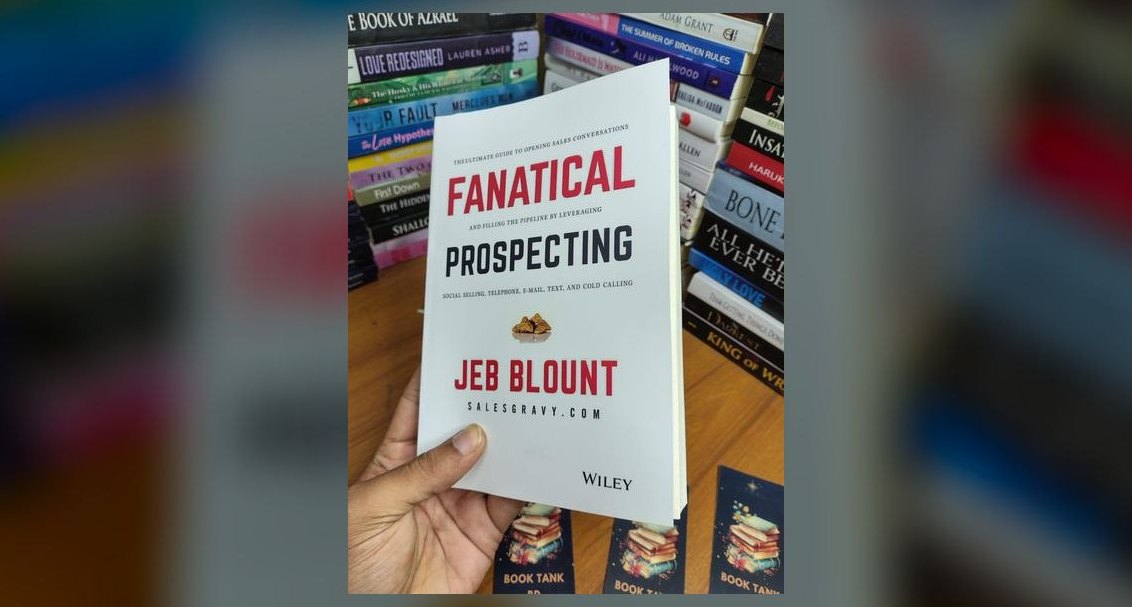 bsHow do you apply *Fanatical Prospecting* to LinkedIn outreach in 2027?
 bsHow does *Gap Selling* help you close more deals in a recession in 2027?
 bsWhat sales script does *New Sales. Simplified.* recommend for cold calls in 2027?
 bsDoes *The Psychology of Selling* still hold up for modern sales techniques in 2027?
 bsWhat’s the most actionable principle from *How to Win Friends and Influence People* for remote work in 2027?
 bsWhat’s the biggest mistake *SPIN Selling* warns against in complex B2B sales?
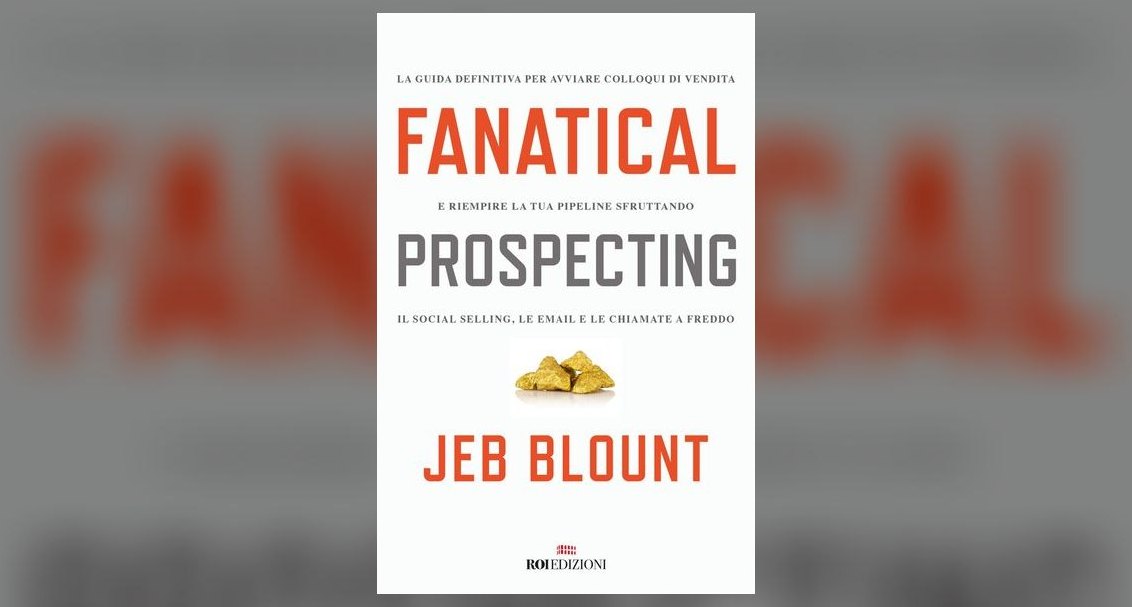 bsHow does *Fanatical Prospecting* change your daily routine for outbound sales?
 bsWhat’s the most persuasive technique from *Pitch Anything* for investor pitches?
 bsWhat’s the key insight from *The Challenger Sale* for leading a sales team in 2027?