
What’s the most actionable chapter in *How to Win Friends and Influence People* for cold calling in 2027?
 Curated byKory White · Fractional CRO · Maryland
 PULSEKNOWLEDGE LIBRARY
Part Two, Chapter One — "Do This and You'll Be Welcome Anywhere," Carnegie's principle of becoming genuinely interested in other people — is the most actionable chapter for cold calling in 2027. It governs the first eight seconds, where synthetic outreach fails: real curiosity changes vocal tone, and tone is what a skeptical buyer screens on before hearing a single word of your pitch.
The Tuesday morning that makes the case
Picture a mid-market SDR working an outbound list on a Tuesday in 2027. She has 140 dials queued in a parallel dialer, a CRM panel that auto-summarizes each account, and an AI research pane that has already drafted three "personalized" opening lines per prospect. Her connect rate is somewhere in the low single digits. Of the connects she does get, most end inside fifteen seconds. Her manager's diagnosis is predictable: tighten the script, sharpen the value prop, get to the ask faster.
That diagnosis is wrong, and the reason it's wrong is exactly what Carnegie's chapter is about. The prospect is not rejecting the value proposition. He never heard it. What he heard was the opening cadence of a call — the slight upward lilt of someone reading, the compressed pace of someone who has said this sentence 400 times, the micro-pause where a script branch loads. His brain classified the call as *outreach* before it processed a single noun. The hang-up was a category judgment, not a content judgment.
Here is the part that makes 2027 different from 2015. In 2015, the SDR's competition for that eight-second window was other SDRs. In 2027, it's an ambient wall of automated voice outreach, AI-drafted personalization that reads like it was assembled from a profile scrape, and carrier-level spam labeling that pre-frames unknown numbers as suspicious before the phone even rings. The buyer has developed a fast, cheap heuristic: *does this sound like a person who wants something from me, or a person who is curious about me?* The first gets hung up on. The second gets four more seconds.
Carnegie's chapter is the operating manual for landing in the second bucket. He opens it with the observation that a dog is welcome everywhere because it is unfeignedly delighted to see you — it wants nothing, it sells nothing, and its interest is obviously real. His argument is that people can cultivate the same quality on purpose, and that doing so beats any technique for making yourself liked. Translated to a headset in 2027: the prospect's screening heuristic is looking for evidence of orientation. Are you oriented toward your quota, or toward him? That orientation leaks through paralinguistic channels — pace, pitch variance, breath, the length of your pause after he speaks — and it leaks faster than you can conceal it.

The SDR's actual problem, then, is that her pre-call state is *anxiety plus repetition*, and the human voice broadcasts that state with high fidelity. No amount of script tightening fixes a state problem. Carnegie's chapter fixes state problems, which is why it outperforms the tactically flashier chapters on a dial-by-dial basis.
How genuine interest actually reaches the prospect's ear
The mechanism is not mystical. It runs through three linked layers, and each one is observable and coachable.
Layer one: internal orientation. Before the dial, your attention is pointed somewhere. If it's pointed at the outcome — book the meeting, hit the number, survive the call — your body enters a mild threat state. Shoulders rise, breath moves higher into the chest, the throat tightens. If your attention is pointed at a genuine question about the prospect's world, the threat state doesn't fire. This is the single lever Carnegie's chapter actually pulls, and it's upstream of everything else.
Layer two: vocal production. Breath support and laryngeal tension are not under conscious control in any reliable way, but they are downstream of orientation. A relaxed throat produces more harmonic richness; a tight one produces a thinner, more compressed sound. Curiosity produces natural pitch variance because genuine questions have rising contours. Anxiety flattens contour into a monotone or pushes it into an unnaturally bright, salesy register. Both flat and forced-bright get pattern-matched by the listener as *not a real conversation*.
Layer three: listener classification. The prospect isn't consciously analyzing your larynx. He's running a fast social categorization that humans do constantly and mostly below awareness — friend or threat, peer or supplicant, person or process. Vocal warmth and unforced pacing are inputs to that categorization. He decides before your third sentence, and everything after that is either fighting the initial classification or riding it.
This is also why "smile while you dial" is half-right and half-useless. The physical smile does change the shape of the vocal tract and does audibly brighten the tone. But a performed smile layered over an anxious state produces an uncanny mismatch — bright vowels, tense breath — and listeners detect mismatches more easily than they detect either signal alone. Carnegie's version is better because it works on the cause rather than the symptom: don't perform warmth, *generate the internal state that produces warmth*, and let the voice follow.
The practical consequence: the chapter's value shows up in a metric most outbound teams don't track. They track connects and meetings. The variable Carnegie moves sits between them — call *survival* past the opening, which you can measure directly as median call duration on connected calls, or as the percentage of connects that last beyond twenty seconds. If that number is low, no downstream framework helps you, because you're not getting to the downstream.
Turning the chapter into a pre-call ritual you'll actually run
Abstract advice dies on a dial list. Here's the chapter converted to a sequence that takes under ninety seconds per account and survives contact with a real dialing block.
Step one — the one-question prep (30–45 seconds). Open the prospect's recent activity: a post, a job change, an earnings note, a hiring pattern, a product launch. Write one sentence in the notes field, in your own words, that starts with "I'm curious about…" Not "the pain point is…" — *curious about*. The framing matters. "I'm curious how they're staffing support now that they've opened three new regions" puts you in learner posture. "Their pain point is support staffing" puts you back in pitch posture with a personalization veneer, which is precisely the thing 2027 buyers have learned to smell.
Step two — the physical reset (10 seconds). Feet flat, one slow exhale longer than the inhale, shoulders down. This is not wellness decoration; it's the fastest available intervention on layer two. Standing helps for the same reason — it changes breath support.
Step three — the opening (first eight seconds live). Say your name at conversational speed, then a genuine, specific, unhurried reason you're calling *this person*. Then stop and let them respond. The most common failure here is stacking: name, company, value prop, and ask compressed into one breath because you're afraid of the interruption. That compression is the audible signature of a cold call. Carnegie's chapter argues for the opposite move — make the other person feel important, which on a phone call means giving them room to exist in the conversation within the first ten seconds.
Step four — the pause after they speak. Count one full beat before you respond. Reps skip this because silence feels expensive when you're being evaluated, but the pause is the highest-leverage half-second on the call. It signals processing rather than waiting, it breaks the tennis-match rhythm buyers associate with scripts, and it frequently produces a second, more honest sentence from the prospect that the first one was covering for.
Step five — the close, whether or not you got the meeting. End with something true about the conversation. If they gave you a useful correction about their environment, say so. Carnegie's whole thesis is that genuine appreciation is not a closing technique; it's a posture that makes the *next* interaction possible. In a 2027 market where sequences run six to twelve touches across channels, the tone in which a no lands determines whether touch four gets a hearing.
Where this broadens usefully: the same ritual transfers almost unchanged to a first discovery call, to a renewal conversation with a churn-risk account, and to a partner-channel intro call. The dial-list context is just where the eight-second constraint is most brutal.
What the numbers actually look like, and what they don't
Be careful here, because outbound is a field where confident numbers get repeated until they sound like physics. A few things are worth stating honestly.
Connect rates are structurally low and getting lower. Across mid-market and enterprise B2B outbound, dial-to-connect rates in the low single digits are typical, and they've drifted down as mobile screening, carrier spam labeling, and general call fatigue have compounded. Anyone quoting you a specific universal figure is quoting their own segment. The right move is to measure your own baseline over at least a few hundred dials before you attribute movement to any technique.
Volume alone stopped working before 2027. When one team can generate enormous dial volume with automation, the marginal value of a dial collapses and the marginal value of a *good* connect rises. That's the economic reason a 1936 chapter about sincerity has more leverage now than it did in a low-noise environment. Scarcity moved from reach to attention.
The measurable thing is duration, not likability. You can't instrument sincerity. You can instrument what it produces. Three metrics worth putting on a board:
- *Survival rate*: percentage of connected calls lasting beyond twenty seconds. This is the Carnegie metric. It moves first when orientation improves.
- *Talk-to-listen ratio in the first minute*: if the rep is above roughly two-thirds talking, they're pitching, not connecting. Conversation-intelligence platforms have measured talk ratios for years and consistently find that the better-performing side of the distribution talks less in early-stage calls.
- *Callback and reply rate on the follow-up touch*: whether the tone of a no leaves a door open.
Expect a slow curve, not a spike. Orientation is a habit, and habits move over weeks. A realistic coaching arc is two to four weeks of daily reps before the change shows in aggregate duration data, and the intermediate signal is qualitative — reps report that calls "feel less like a fight" before the dashboard moves.
Segment effects are real. The technique has the largest effect where the buyer has high screening pressure and low switching urgency — senior operators, technical buyers, saturated categories. It has a smaller marginal effect in genuinely urgent inbound-adjacent scenarios where the prospect already wants the call. Don't over-attribute.
One number that's safe to trust: your own recordings. Pull twenty of your calls that died inside fifteen seconds and twenty that survived past a minute. Listen only to the first eight seconds of each, with the transcript hidden. The difference is almost always audible, almost always about pace and pitch contour, and almost never about word choice. That exercise convinces skeptical reps faster than any external benchmark.
Trade-offs: when Carnegie's chapter isn't the right tool
Treating one chapter as a complete outbound strategy is its own failure mode. The honest framing is that this chapter owns a specific segment of the call and hands off to other frameworks after that.
Where it wins. The opening. The permission window. The recovery after an objection lands hot. The tone of a graceful no. Anything where the prospect's decision is *about you as a category* rather than about your offer.
Where it doesn't. Qualification rigor. Multi-threading a complex deal. Building a business case a CFO will sign. Genuine interest gets you a hearing; it does not tell you whether the opportunity is real, who the economic buyer is, or what the compelling event is. Structured qualification approaches exist precisely because warmth is not information. A rep who is beloved by every prospect and forecasts nothing is a well-known and expensive failure pattern.

The competing chapters. Carnegie's other principles are genuinely useful and genuinely secondary in this context. Remembering names matters once you're in a sequence with someone, and it's excellent for voicemail and follow-up — but on a first dial, the prospect usually hangs up before name recall does any work. Talking in terms of the other person's interests is powerful, and it presupposes you already know their interests, which on a true cold call you often don't. Avoiding argument matters after an objection, not before one exists. The reason Part Two, Chapter One outranks them for cold calling specifically is sequencing: it operates in the window that gates access to every other chapter.
The competing modern approaches. A teaching-led, insight-first opener can work extremely well with buyers who respect provocation and have the seniority to act on it. A permission-based opener trades a little momentum for a lot of goodwill. A pattern-interrupt opener buys attention at the cost of sounding like a technique when it misfires. None of these conflict with genuine interest; they're *deliveries*, and Carnegie's chapter is about the *state* underneath the delivery. The mistake is treating them as substitutes.
The automation trade-off. There's a real tension between the volume the tooling enables and the presence the chapter requires. Ninety seconds of genuine prep per account is not compatible with maximum-throughput dialing. Most teams resolve this with tiering: a researched, human-prepped motion for a small high-value list, and a lighter-touch motion for the long tail. That's a legitimate strategy, and it's more honest than pretending you can be genuinely curious about 300 accounts a day.
The pitfalls that turn sincerity into a new script
Most teams that adopt this chapter break it in one of six predictable ways.

Pitfall one: manufacturing the compliment. "I saw your post and was genuinely impressed" delivered flat, about a post you skimmed, is worse than no personalization at all — it's a false signal, and buyers who have absorbed thousands of AI-generated openers detect false personalization instantly. The fix: if you can't find something you're honestly curious about in thirty seconds, don't fake one. Open plainly and honestly instead. Plain beats fake.
Pitfall two: turning the ritual into a mandated field. The moment "curiosity note" becomes a required CRM field with a completion metric attached, reps fill it with filler and the whole mechanism inverts. Compliance kills the state you were trying to create. Coach it in call reviews; don't instrument it as an activity metric.
Pitfall three: mistaking warmth for weakness. Genuine interest does not mean apologizing for calling, over-softening the ask, or trailing off. Carnegie's dog analogy is about unselfconscious enthusiasm, not deference. The best-calibrated version is warm *and* direct: a real reason for calling, a clear ask, and no hedging. Reps who read the chapter as permission to be tentative see their meeting rate fall even as their call duration rises.
Pitfall four: skipping the reset under volume pressure. By dial ninety, the ritual erodes and every call sounds like dial ninety. The countermeasure is blocking: dial in bursts of fifteen to twenty-five with a real break between, rather than grinding two hundred straight. Duration data typically shows a visible decay curve inside long unbroken blocks, and that curve is the chapter failing under fatigue, not the chapter being wrong.
Pitfall five: coaching the words instead of the state. Managers listen to a recording, hear a weak opener, and rewrite the opener. The rep delivers the new words in the same anxious state and nothing changes. Better coaching question: "What were you thinking about right before you dialed?" That question gets at the actual variable.
Pitfall six: assuming AI tooling will supply the warmth. Research assistants can hand a rep better raw material than any human could assemble at that speed — recent moves, org changes, technology signals, hiring patterns. That's genuinely useful and worth using. What the tooling cannot supply is the rep's orientation in the two seconds before the connect. Handing a rep perfect research and expecting the call to land is like handing someone a script in a language they don't feel. Use the tooling for input; own the state yourself.
There's a broader point here that reaches past cold calling. Every channel that gets automated eventually gets discounted by its audience, and the residual value migrates to whatever can't be synthesized. Email went through this. Sequenced LinkedIn outreach went through it. Voice is going through it now. Carnegie's chapter keeps mattering because it operates on the one input that automation can imitate but not possess — an actual interest in the other person. That's the durable *strategy*, and it's why a book from 1936 is still the most actionable thing on an SDR's shelf. Whatever else changes about outbound, the chapter that teaches you to want something for the person rather than from them is the one that keeps paying — which is the whole argument of *How to Win Friends and Influence People*.
Related questions
Should I use Carnegie's principles on voicemail too?
Yes, but differently. On voicemail, the name principle carries more weight — say it clearly and unhurried, give one honest reason for the call, one low-friction ask, and stop. Under twenty seconds. Rambling reads as disregard for their time.
Does this work for AI-assisted or hybrid dialing motions?
It works alongside them. Let automation handle list building, research surfacing, and connect routing. Reserve the human for the eight-second window. The failure mode is letting throughput targets compress prep time to zero, which removes the only input the chapter needs.
Which chapter should I read second?
"Talk in Terms of the Other Person's Interests," for the discovery portion of the call, and the principles on avoiding argument for objection handling. Read them as handoffs from the opening rather than as competing openers.
How do I coach this on a team that's behind on activity?
Don't add it as a new metric. Add median connect duration to the existing dashboard, then coach pre-call state in one-on-ones using recordings. Activity-pressured teams break rituals; measured outcomes survive.
Is genuine interest detectable through modern voice analytics?
Analytics platforms score observable proxies — talk ratio, pace, pitch variance, interruption counts, silence. Those correlate with the state but aren't the state. Treat the scores as a mirror for coaching, never as a target to game.
FAQ
Why this chapter rather than the more famous "Remember Names" principle?
Sequencing. On a first dial the prospect frequently disconnects before name recall can do any work, so the name principle has no surface to act on. Genuine interest operates in the opening seconds, where the actual gate is. Names become highly valuable on the second touch, in voicemail, and throughout an ongoing sequence — just not at the very front.
Can I get results by performing warmth without feeling it?
Partially, and unreliably. Performed warmth produces a mismatch between vocal brightness and breath tension that listeners detect as inauthentic even when they can't articulate why. It's also exhausting to sustain across a dialing block. Generating a real question you care about is less effort than acting, and it holds up better at dial ninety than at dial nine.
What if I'm introverted or naturally monotone?
Neither is a barrier. The chapter asks for curiosity, not extroversion — and introverts often run the listening portion better than high-energy reps do. Monotone delivery usually reflects reading rather than thinking; when you're genuinely asking a question you want answered, contour appears on its own. Record yourself asking a friend something you actually want to know, then compare it to a call recording. The gap is the coaching target.
How does this apply to a technical or highly complex B2B product?
Better, not worse. Complex products attract buyers with strong screening instincts and low tolerance for scripted enthusiasm. Point your curiosity at their architecture and constraints rather than your feature list — "how are you handling X today" is both genuine interest and genuine discovery. The product conversation lands later, and lands better, once you've earned the right to have it.
Does the same principle transfer to email and LinkedIn outreach?
The underlying orientation transfers; the mechanism doesn't. In text you lose vocal channels entirely, so genuine interest has to show up as specificity — a detail no scraper would surface and no template would produce. That's harder to fake in writing than most people assume, which is why generic personalization reads as generic even when the merge fields are correct.
How long before I see this in my numbers?
Plan on two to four weeks of consistent daily practice before aggregate duration data moves, longer if your dial volume is low enough that the sample is noisy. The early signal is qualitative: calls stop feeling adversarial, objections arrive as information rather than as dismissals, and reps voluntarily stop compressing their openers.
Sources
- https://www.dalecarnegie.com/en/courses/how-to-win-friends-and-influence-people
- https://hbr.org/2018/07/how-to-become-a-better-listener
- https://hbr.org/2016/12/what-great-listeners-actually-do
- https://www.gong.io/resources/
- https://www.salesforce.com/resources/research-reports/state-of-sales/
- https://www.fcc.gov/call-blocking
- https://www.apa.org/monitor/2019/10/cover-listening
- https://www.nature.com/articles/s41562-017-0204-4
- https://www.gartner.com/en/sales
Related on PULSE
- [What's the most actionable chapter in *How to Win Friends and Influence People* for networking in 2027?](/knowledge/bs0362)
- [What's the most underrated chapter in *How to Win Friends and Influence People* for building executive relationships?](/knowledge/bs0392)
- [What's the most actionable principle from *How to Win Friends and Influence People* for remote work in 2027?](/knowledge/bs0335)
- [What's the best chapter in *How to Win Friends and Influence People* for leading a team in 2027?](/knowledge/bs0376)
- [How to Win Friends and Influence People by Dale Carnegie — Cliff Notes & Chapter-by-Chapter Summary](/knowledge/bs0005)
- [What's the best summary of *How to Win Friends and Influence People* for managers in 2027?](/knowledge/bs0349)
@Kory-White- · if Venmo asks, the last 4 of my number are 2012
 bsWhat are the key lessons from *Never Split the Difference* for negotiating a raise in 2027?
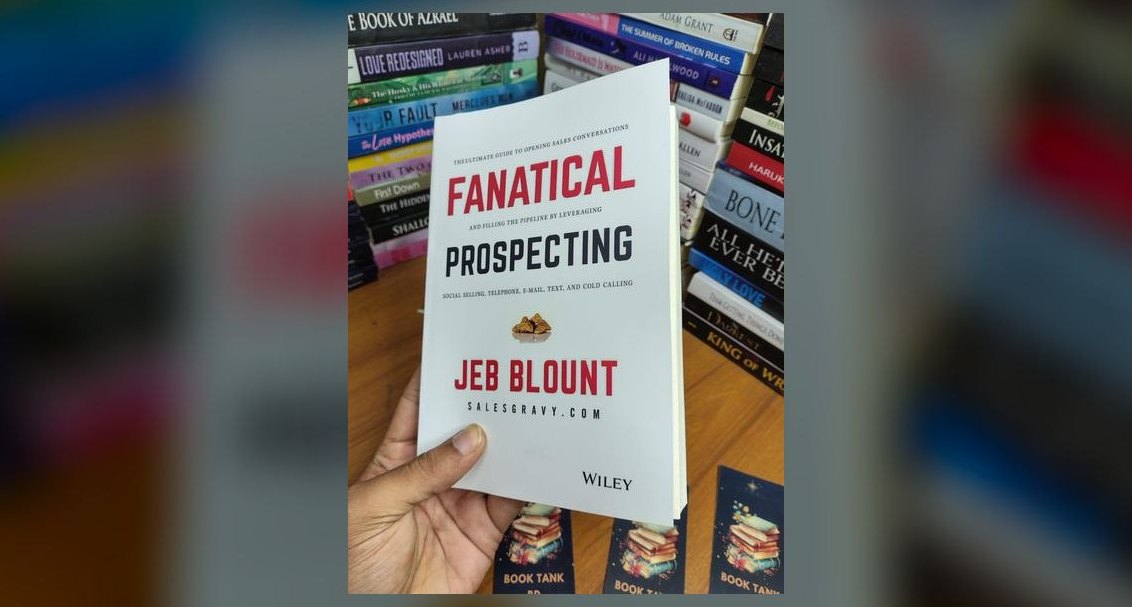 bsHow do you apply *Fanatical Prospecting* to LinkedIn outreach in 2027?
 bsHow does *Gap Selling* help you close more deals in a recession in 2027?
 bsWhat sales script does *New Sales. Simplified.* recommend for cold calls in 2027?
 bsDoes *The Psychology of Selling* still hold up for modern sales techniques in 2027?
 bsWhat’s the most actionable principle from *How to Win Friends and Influence People* for remote work in 2027?
 bsWhat’s the biggest mistake *SPIN Selling* warns against in complex B2B sales?
 bsHow does *Fanatical Prospecting* change your daily routine for outbound sales?
 bsWhat’s the most persuasive technique from *Pitch Anything* for investor pitches?
 bsWhat’s the key insight from *The Challenger Sale* for leading a sales team in 2027?