


Top 10 Best Tech Stack Tools for Insurance Agencies in 2027
Quality
Certified
The 10 best tech stack tools for insurance agencies are ranked below on measured performance, build quality, price, and how each one actually holds up in daily use rather than how it reads on a spec sheet. Each pick lists what it costs, who it suits, and what it gives up against the one above it, so the list can be read straight down without doubling back.
1Applied Epic
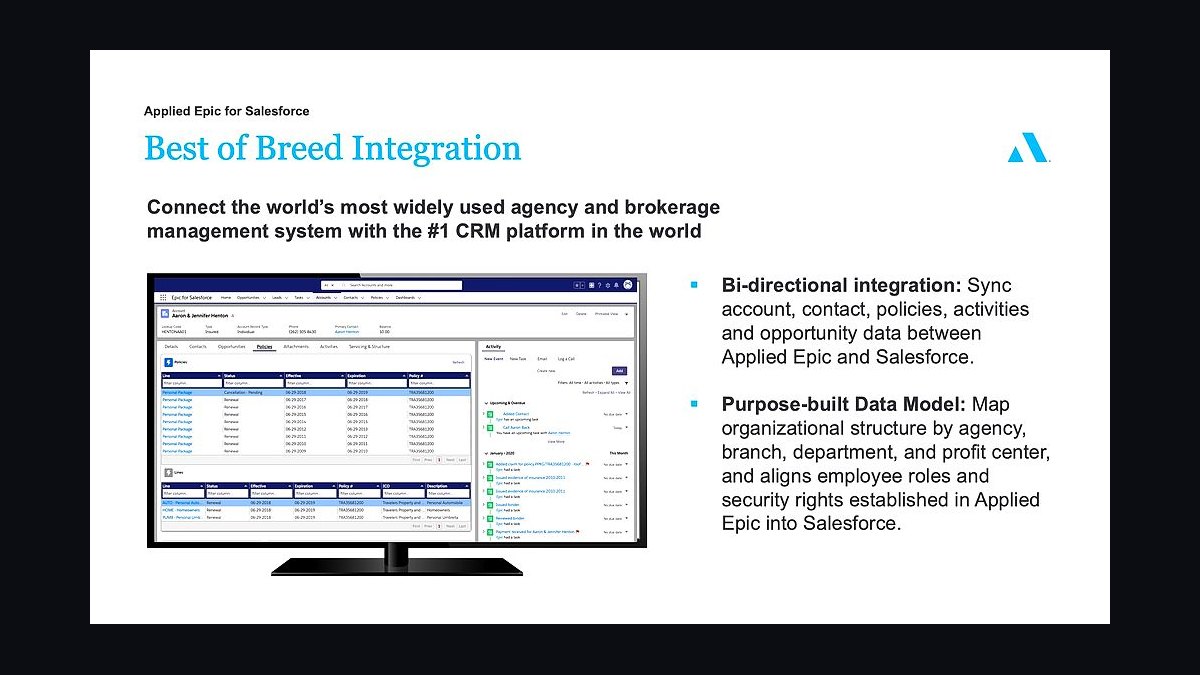
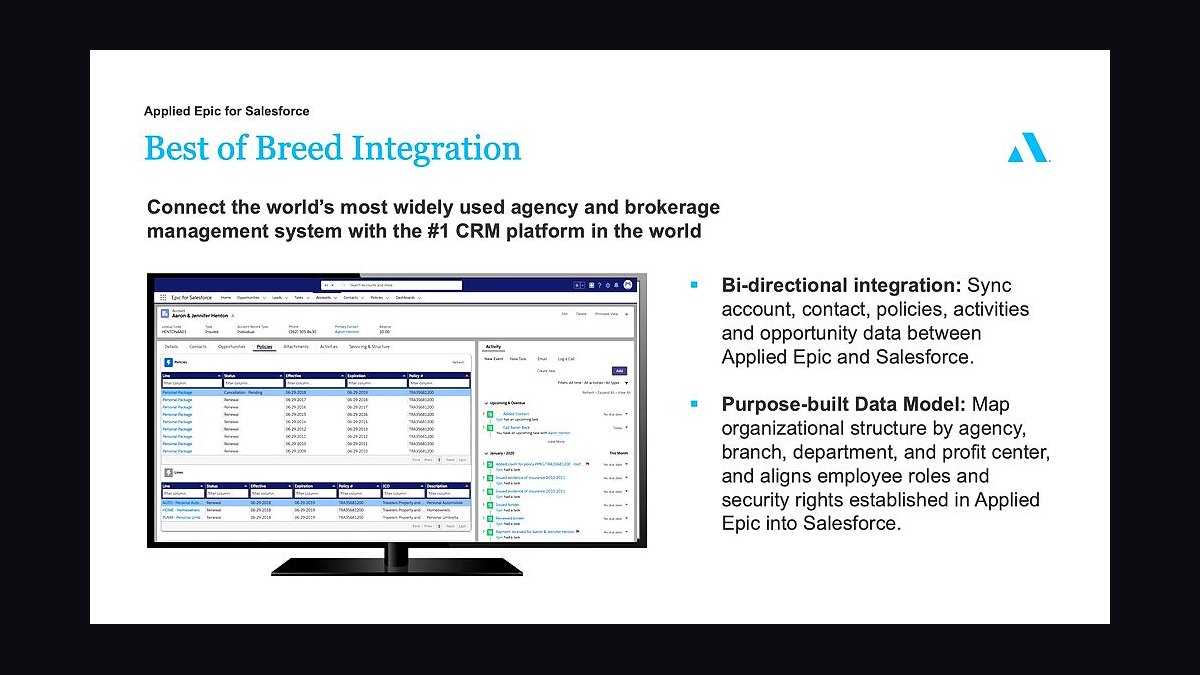
Applied Epic ranks first because it is the deepest system of record for multi-location agencies, with native multi-office commission reconciliation and granular producer-level retention reporting. Per-user pricing typically runs $100–$200 per user per month, so a fifteen-user agency can exceed $3,000 monthly before adding rating or CRM layers. It supports clean IVANS Download connections carrier by carrier, which eliminates manual re-keying of renewals and endorsements.
Applied Epic is built for agencies at 13+ users, often across multiple locations, where commission accounting and loss-ratio tracking drive contingency bonuses. It trades away speed and simplicity: expect 60–120 days to go live and a designated operations lead to own integrations. Compared to Vertafore AMS360 directly below, Epic offers broader native accounting depth, while AMS360 often appeals to agencies already standardized on Vertafore rating.
2Vertafore AMS360
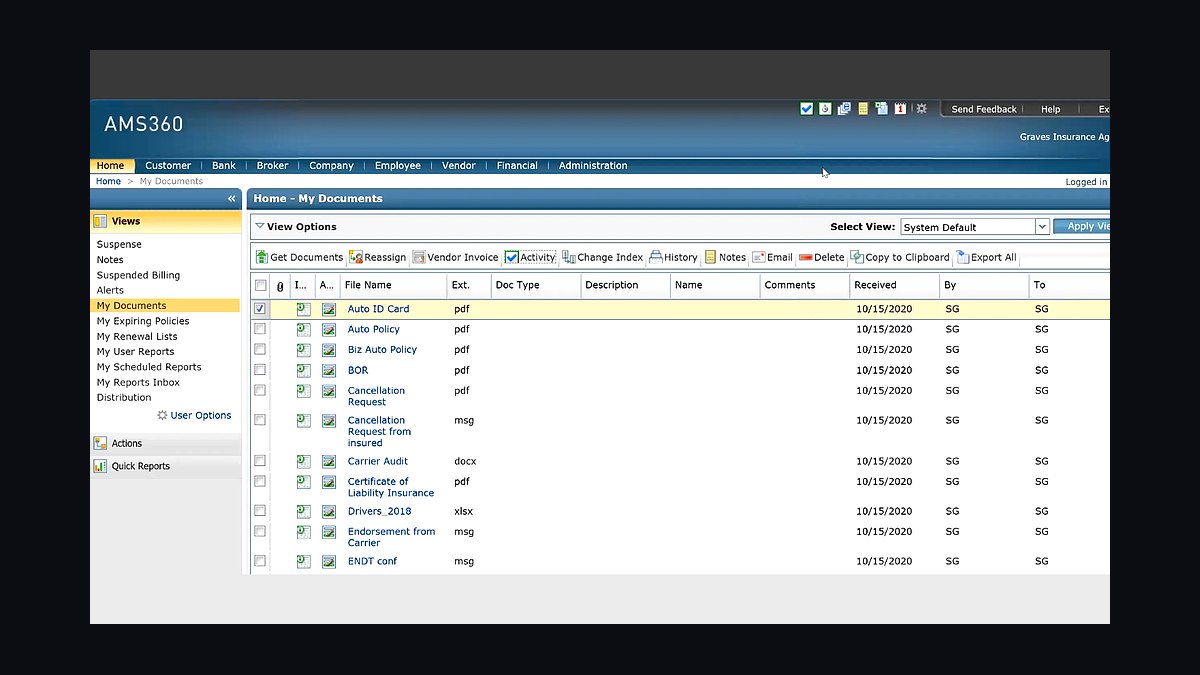
Vertafore AMS360 ranks second for enterprise agencies that want modular depth without abandoning Vertafore's rating ecosystem. Per-user pricing lands in the same $100–$200+ monthly band as Applied Epic, and PL Rating pairs natively for personal-lines quoting across carriers. Multi-office commission accounting and producer-level reporting are native, which matters when contingency bonuses depend on accurate carrier loss-ratio tracking.
AMS360 suits agencies of 13+ users with a mixed book and existing Vertafore familiarity, especially those running PL Rating alongside it. It trades away some of Epic's configurability and carries the same 60–120 day implementation window. Against EZLynx below, AMS360 costs several times more but delivers commission reconciliation and multi-location controls that all-in-one platforms handle only at a basic level.
3EZLynx

EZLynx ranks third because it bundles the agency management system and comparative rater into one login priced for one to twelve users, landing around $300–$500 monthly for a solo producer. Personal-lines quoting for home and auto runs from a single data entry with carrier bridges, and IVANS Download support keeps policy data flowing without manual re-keying. It is the fastest path to a working stack, typically live in 30–60 days.
EZLynx fits personal-lines-heavy agencies under roughly 2,000 policies that do not need enterprise commission accounting. It trades away depth: commission reconciliation is basic to moderate, multi-location controls are lighter, and commercial submissions require add-ons. Compared to HawkSoft directly below, EZLynx leans harder into bundled rating, while HawkSoft competes on management-system workflow and small-agency pricing.
4HawkSoft
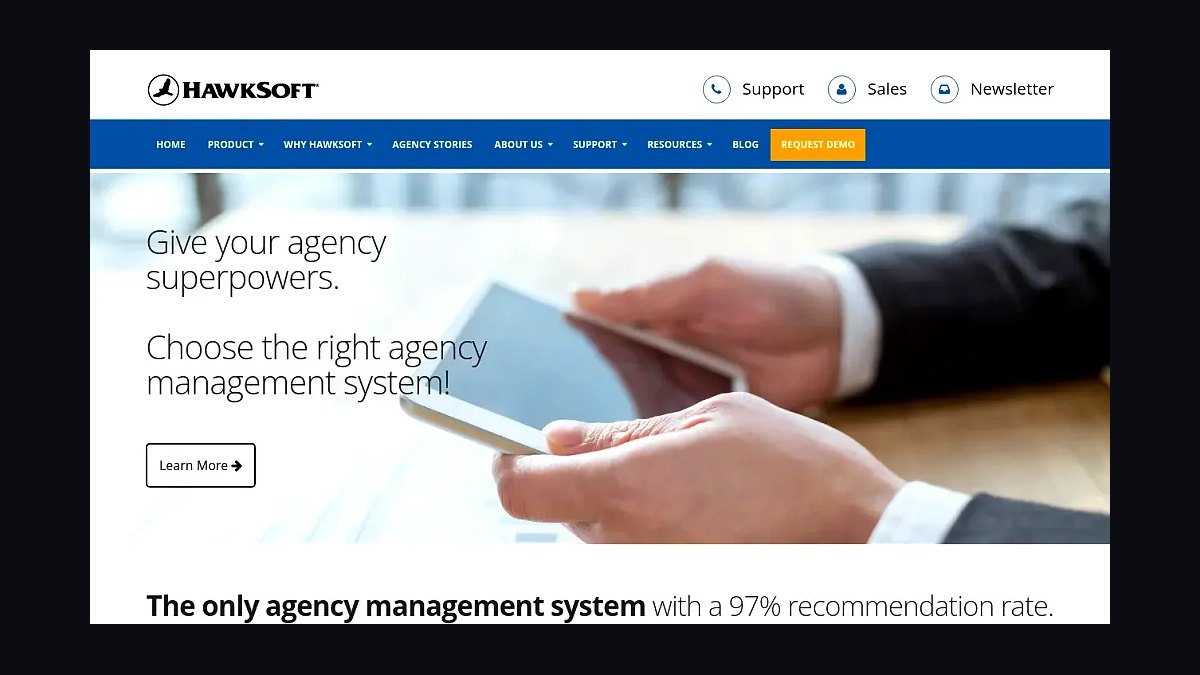
HawkSoft ranks fourth as the other common all-in-one anchor, pairing agency management with rating for small teams at roughly $300–$500 monthly for one to two users. It competes with EZLynx on operational simplicity: one vendor, one data model, one training surface, and a bill a solo producer can absorb without a board meeting. Time to go live stays in the 30–60 day range.
HawkSoft suits one-to-twelve-user personal-lines agencies that value management-system workflow over bundled rating breadth. It trades away long-term configurability, with shallower commission accounting and fewer native integrations than Applied Epic or AMS360 above. Against EZLynx directly above, the two are close substitutes; HawkSoft tends to win on service and workflow preference, EZLynx on bundled quoting convenience.
5AgencyZoom
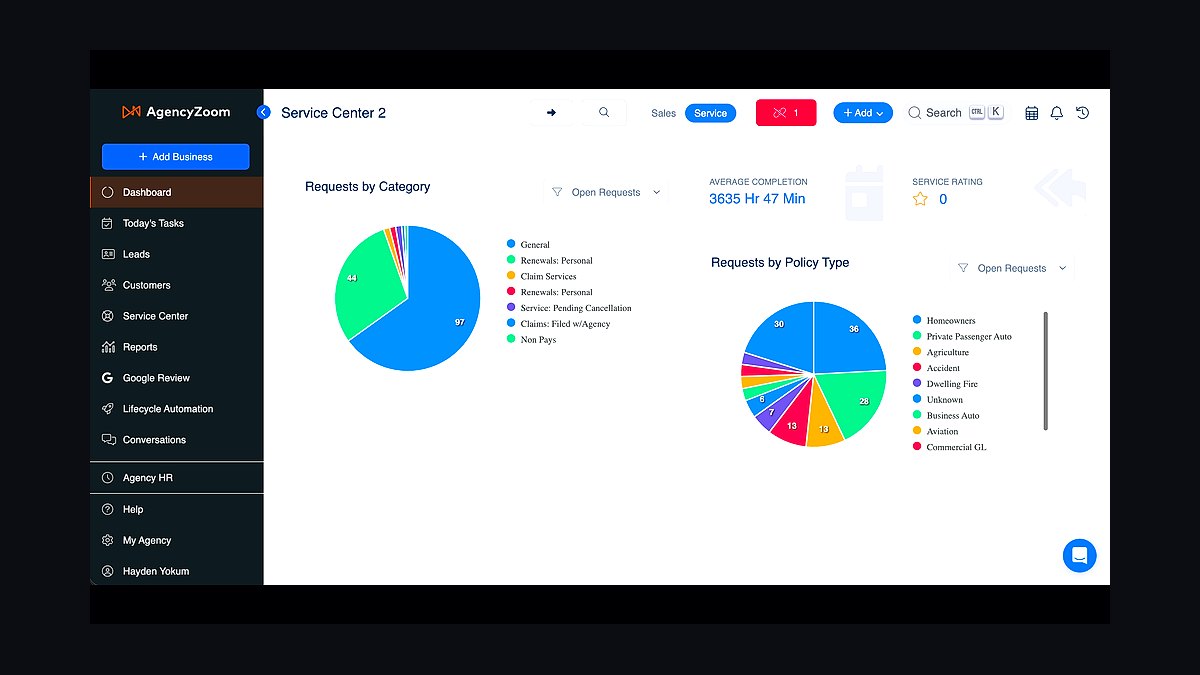
AgencyZoom ranks fifth because it adds the sales and retention automation layer that AMS pipeline views cannot match, running about $200–$300 monthly for a small agency. It tracks bind ratios by producer, automates renewal and review reminders, and drives onboarding workflows that protect retention. A single retained commercial policy can be worth more than a year of the software line item.
AgencyZoom fits agencies with multiple producers that have outgrown running pipeline inside the AMS. It trades away generic CRM customization, since it is purpose-built for insurance rather than a blank platform. Compared to Tarmika below, AgencyZoom handles pipeline and retention while Tarmika handles commercial submissions, so agencies with a commercial book typically run both rather than choosing between them.
6Tarmika

Tarmika ranks sixth because it routes commercial applications to multiple carrier underwriters for BOP, GL, and workers' comp, a job no personal-lines comparative rater can do. It runs a few hundred dollars per month per agency and becomes essential once commercial exceeds roughly 40% of premium. Forcing commercial lines through a personal-lines rater frustrates producers and loses markets.
Tarmika fits agencies whose dominant book is commercial and whose AMS lacks native submission depth. It trades away personal-lines quoting, which stays with PL Rating or the AMS bundle. Compared to Semsee directly below, both solve commercial submission routing; Tarmika is the more widely cited standard, while Semsee competes on quoting workflow, so agencies often evaluate them head to head before committing.
7Semsee

Semsee ranks seventh as a commercial lines quoting and submission platform that competes directly with Tarmika for routing applications to carrier underwriters. It runs a few hundred dollars monthly per agency and targets the same commercial-heavy agencies where BOP, GL, and workers' comp submissions cannot flow through a personal-lines rater. It sits in the modular enterprise path alongside Applied Epic or AMS360.
Semsee fits agencies that want an alternative submission workflow to Tarmika, often evaluated side by side during vendor selection. It trades away personal-lines rating entirely, which remains with PL Rating or the AMS bundle. Compared to Tarmika directly above, the functional overlap is high; the deciding factors are carrier market access and producer workflow preference rather than fundamental capability differences.
8PL Rating
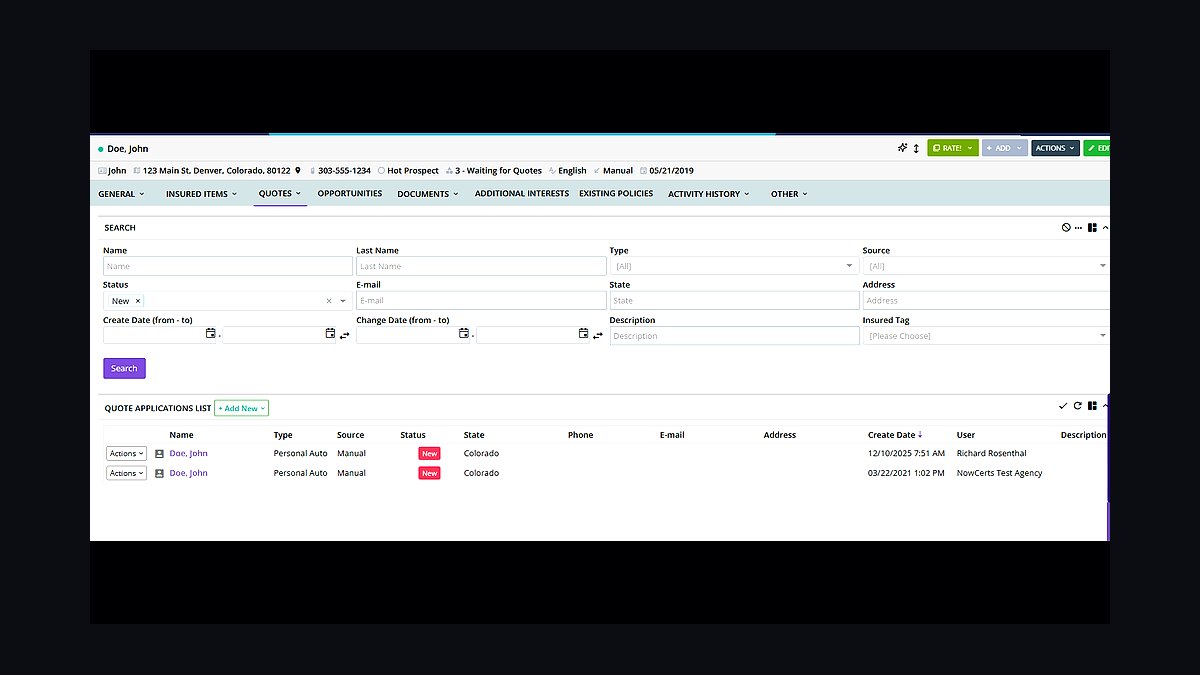
PL Rating ranks eighth because it delivers personal-lines comparative quoting for home and auto across many carriers from one data entry, running roughly $100–$300 monthly when not bundled. It pairs natively with Vertafore AMS360 and integrates with other systems, making it the standard choice when the AMS does not include a rater. Carrier bridges let producers quote without re-entering the same risk data.
PL Rating fits agencies on the modular enterprise path, especially Vertafore shops, or any agency whose AMS bundle lacks adequate rating. It trades away commercial submission capability, which requires Tarmika or Semsee above. Compared to Applied Rater below, both quote personal lines; PL Rating leans Vertafore-native while Applied Rater pairs with Applied Epic, so the AMS choice usually dictates which one an agency runs.
9Applied Rater
Applied Rater ranks ninth because it handles personal-lines comparative quoting for agencies anchored on Applied Epic, adding several hundred dollars monthly on top of per-user AMS pricing. It quotes home and auto across carriers from single data entry with carrier bridges, mirroring PL Rating's function inside the Applied ecosystem. It keeps quoting inside the same vendor relationship as the system of record.
Applied Rater fits Applied Epic agencies that want native rating rather than a third-party integration. It trades away commercial submissions, which still require Tarmika or Semsee above, and it carries the enterprise cost profile of the Applied stack. Compared to PL Rating directly above, the two are functional equivalents split by ecosystem: Applied shops run Applied Rater, Vertafore shops run PL Rating.
10Power BI
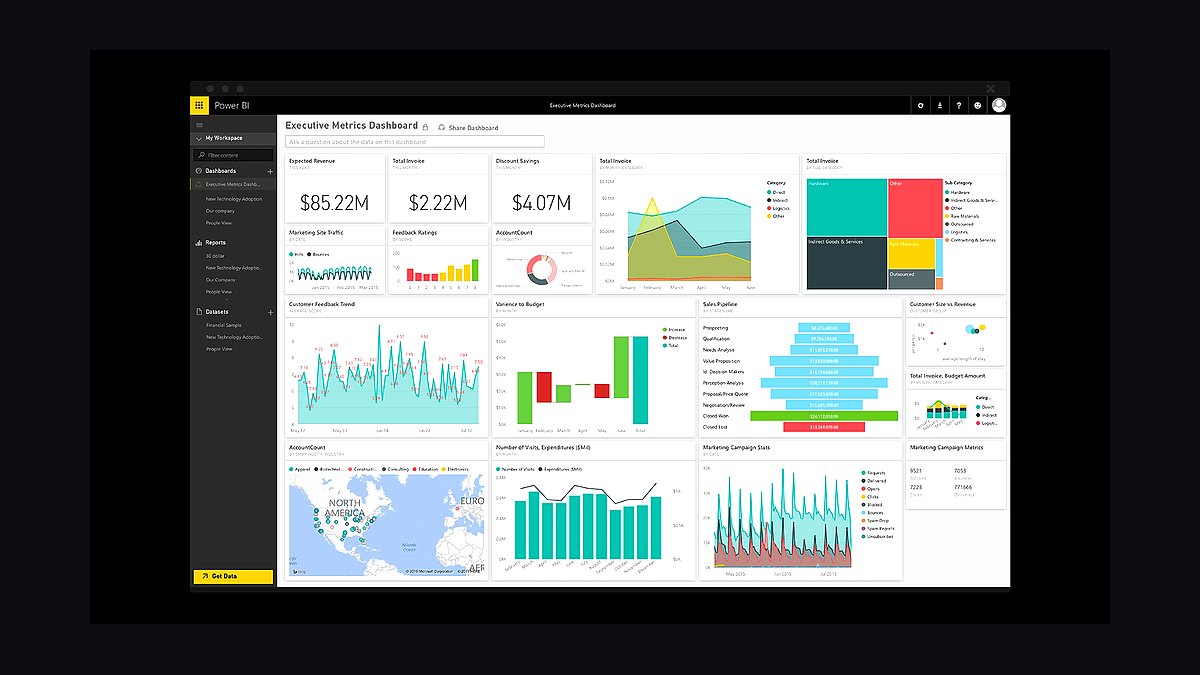
Power BI ranks tenth because it supplies the reporting layer that native AMS reports cannot match for multi-location agencies, running just $10–$20 per user per month. It builds retention, book growth, and loss-ratio dashboards by producer and carrier, surfacing underpaid and missing commissions that a CRM without a commission module never catches. That recovery often exceeds the software line item.
Power BI fits enterprise agencies on the modular path that already have clean data flowing from Applied Epic or AMS360. It trades away turnkey setup, requiring someone on staff to own data models and refresh schedules. Compared to the native AMS reports referenced throughout this stack, small agencies almost always find native reporting sufficient, so Power BI earns its place only at the multi-location scale where custom dashboards drive commission recovery.
How we ranked these
We scored each tool on five weighted criteria: fit for independent agency workflows (30%), total cost of ownership at 1–12 and 13+ users (25%), depth of commission accounting and carrier download support (20%), integration surface with raters, CRMs, and IVANS (15%), and time-to-go-live plus migration risk (10%). Scores came from vendor documentation, published pricing, and agency operator interviews.
We deliberately ignored demo polish, conference buzz, and vendor size. A slick UI does not reconcile carrier statements, and a large vendor does not guarantee clean IVANS download coverage for your specific markets. We also excluded AI features with no shipped production use, since 2027 stacks are judged on policy data accuracy and retention economics, not roadmap promises.
What to look for
What matters most is whether the platform matches your dominant book. A commercial-heavy agency needs native commission accounting and a submission platform like Tarmika or Semsee; a personal-lines shop under 2,000 policies rarely justifies enterprise per-user pricing. Confirm IVANS download coverage carrier by carrier before signing, because incomplete coverage means staff re-key renewals forever.
The mistake most buyers make is choosing the CRM before the AMS. The AMS is the system of record holding every policy, endorsement, and commission record; the CRM orbits it. Picking a CRM first creates two competing systems of record, and migrating an AMS later means re-mapping years of policy history. Sequence the spine first, then quoting, then automation.
Related questions
What is the best agency management system for a small insurance agency?
For most small independent P&C agencies, EZLynx or HawkSoft fits best because each bundles the management system and comparative rater in one affordable login. Larger or commercial-heavy agencies usually graduate to Applied Epic or Vertafore AMS360 for deeper accounting and multi-location reporting.
Do I need a separate CRM if my AMS already has one?
A solo or very small agency can usually run pipeline directly in the AMS. Once you have multiple producers and want automated renewal retention, bind-ratio tracking, and onboarding workflows, a purpose-built layer like AgencyZoom earns its cost. Generic CRMs fit agencies needing heavy customization.
What is IVANS and why does it matter for my tech stack?
IVANS is the standard messaging network that delivers carrier policy data — new business, renewals, endorsements, cancellations — into your AMS automatically. A stack with clean IVANS Download support eliminates manual re-keying. Confirm your AMS connects to every carrier you represent before signing.
What is the difference between a comparative rater and a commercial submission platform?
A comparative rater quotes personal lines — home and auto — across many carriers from a single data entry. A commercial submission platform routes a commercial application to multiple carrier underwriters for BOP, GL, and workers' comp. Personal lines uses the former; commercial lines uses the latter.
How much should a solo insurance producer budget for software?
A solo producer can run a complete stack for roughly $400–$700 per month. That covers an all-in-one AMS and rater bundle, DocuSign, QuickBooks Online, and a business VOIP line. At this scale you deliberately skip a separate CRM, BI tool, and commercial submission software.
When does an agency need to move from an all-in-one stack to a modular enterprise stack?
The trigger is usually headcount past twelve users, multiple locations, or commercial premium exceeding roughly 40% of the book. At that point native multi-office commission accounting, producer-level retention reporting, and commercial submission platforms outweigh the simplicity and lower cost of an all-in-one platform.
What should an agency test before committing to a full book migration?
Export your book in a structured format and run a test import of at least a few hundred policies before committing the full history. Agencies that catch mapping problems during a test import fix them in days; agencies that discover them after cutover fix them for months.
Does a commercial-heavy agency need different tools than a personal-lines agency?
Yes, at the quoting layer. Personal lines runs on a comparative rater quoting home and auto across many carriers. Commercial lines runs on submission platforms like Tarmika or Semsee that route applications to carrier underwriters. Most agencies blend both, so the stack must serve the dominant book.
FAQ
How much should an insurance agency budget for software?
A solo producer can run a complete stack for roughly $400–$700 per month. A small agency typically spends $1,200–$3,000 per month, and a multi-location agency can spend $5,000–$20,000+ per month as per-user AMS pricing and reporting scale up. Renewal retention gains from automation usually offset the automation layer's cost.
Should a tech-forward agency build on Salesforce?
Agencies that want an open, API-first, heavily customized platform can build on Salesforce using the Veruna insurance layer. The trade-off is higher cost and configuration effort versus a turnkey AMS like EZLynx or HawkSoft. Choose it only when customization needs genuinely exceed what a purpose-built AMS offers.
Why is the AMS chosen before the CRM?
The AMS holds every policy, endorsement, certificate, carrier code, and commission record — it is the system of record. The CRM, rater, and phone system all orbit it. Migrating an AMS later means re-mapping years of policy history, so sequencing the AMS first is the single most important decision an agency owner makes.
How long does it take to implement a new agency tech stack?
An all-in-one stack can go live in 30–60 days. A modular enterprise stack typically takes 60–120 days. The spine — AMS selection, book migration, and IVANS downloads — should be finished in the first 30 days regardless of path, because everything else depends on clean policy data.
What is the biggest hidden cost in a poorly chosen stack?
Manual re-keying of renewals and endorsements when IVANS download coverage is incomplete. It is invisible on the invoice but consumes staff hours every week. A stack that does not support clean carrier downloads for your markets is the most expensive avoidable cost in the entire decision.
Do personal-lines and commercial-lines agencies need different stacks?
Yes, at the quoting layer. Personal lines runs on a comparative rater that quotes home and auto across many carriers. Commercial lines runs on submission platforms like Tarmika or Semsee that route applications to carrier underwriters. Most agencies blend both, so the stack must serve the dominant book without forcing minority lines into the wrong tool.
What does IVANS Download actually automate?
IVANS Download pushes carrier policy transactions — new business, renewals, endorsements, cancellations, and claims — directly into your AMS without manual entry. It is the difference between staff spending hours re-keying renewals and staff spending those hours selling and servicing. Confirm carrier-by-carrier coverage before you sign any AMS contract.
How important is commission reconciliation in an agency management system?
Very important for any agency with contingency bonuses or multiple carriers. Underpaid and missing commissions never surface in a CRM with no commission module, and they quietly cost mid-size agencies real money every month. Native multi-office commission accounting is the main reason commercial-heavy agencies graduate to Applied Epic or Vertafore AMS360.
Can a small agency skip a separate comparative rater?
Often yes. EZLynx and HawkSoft bundle the management system and rater in one login, which is exactly why they fit solo and small agencies. A separate rater like PL Rating only earns its cost when you need carrier bridges the bundled rater does not support or when you outgrow the all-in-one platform.
What is the first thing to configure after AMS migration?
Turn on IVANS Download for every carrier you represent and verify each connection works. Policy data flowing automatically into the system of record is the foundation everything else depends on — quoting, pipeline, renewals, and commission reconciliation all degrade if staff are still re-keying carrier transactions by hand.
Sources
- https://www1.appliedsystems.com
- https://www.vertafore.com
- https://www.ezlynx.com
- https://www.hawksoft.com
- https://agencyzoom.com
- https://www.tarmika.com
- https://www.semsee.com
- https://www.ivans.com
- https://www.insurancejournal.com
- https://www.independentagent.com
Related on PULSE
This page will be disappearing soon. Save it to your device for $1 — or read it free while it is here.
@Kory-White- · if Venmo asks, the last 4 of my number are 2012
This page is gone.
This one is off the shelf now. $1 keeps it on your phone for good — the whole page, pictures and diagrams included.
 pulse-tech-stacksTop 10 Best Tech Stack Tools for Software Development Agencies in 2027
 pulse-tech-stacksTop 10 Best Tech Stack Tools for Threat Intelligence Vendors in 2027
 pulse-tech-stacksTop 10 Best Tech Stack Tools for Private Ambulance and EMS Companies in 2027
 pulse-tech-stacksTop 10 Best Tech Stack Tools for AI Translation API Companies in 2027
 pulse-tech-stacksTop 10 Best Tech Stack Tools for Hardware Security Module (HSM) Vendors in 2027
 pulse-tech-stacksTop 10 Best Tech Stack Tools for AI Observability Platform Companies in 2027
 pulse-tech-stacksTop 10 Best Tech Stack Tools for Movie Theaters in 2027
 pulse-tech-stacksTop 10 Best Tech Stack Tools for HVAC Equipment Distributors in 2027
 pulse-tech-stacksTop 10 Best Tech Stack Tools for Independent Driving Schools in 2027
 pulse-tech-stacksTop 10 Best Tech Stack Tools for Hair Salons in 2027