


Top 10 Best Tech Stack Tools for Hospitals and Health Systems in 2027
Quality
Certified
The 10 best tech stack tools for hospitals and health systems are ranked below on measured performance, build quality, price, and how each one actually holds up in daily use rather than how it reads on a spec sheet. Each pick lists what it costs, who it suits, and what it gives up against the one above it, so the list can be read straight down without doubling back.
1Epic Systems EHR
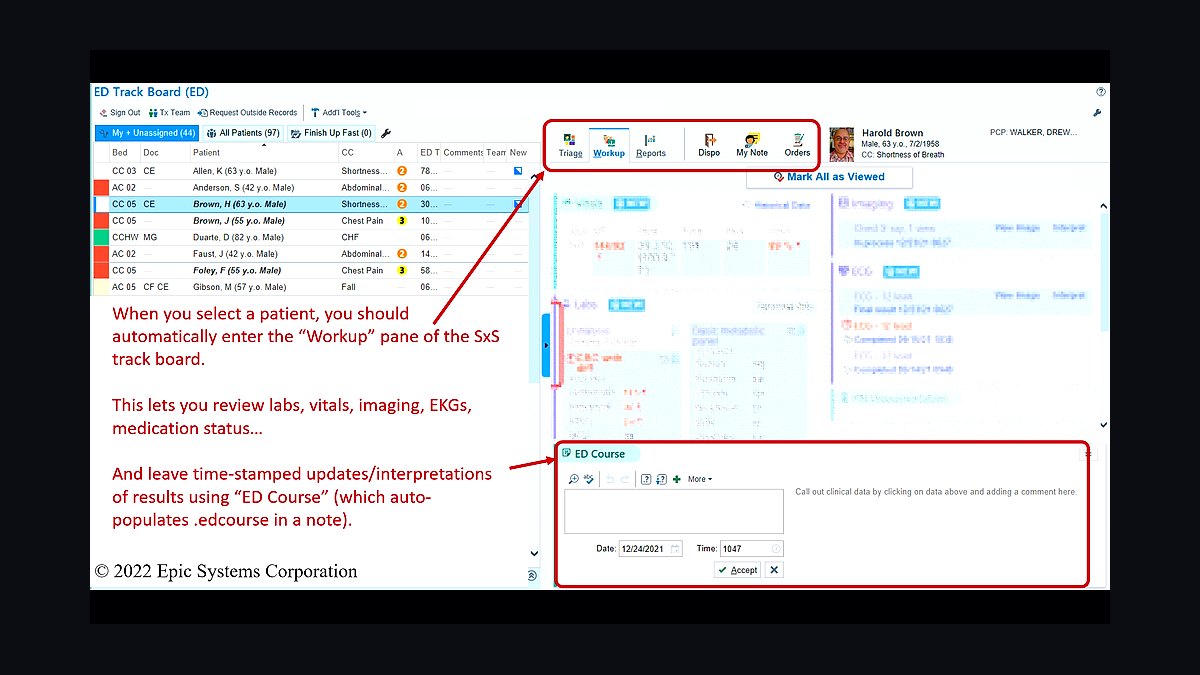
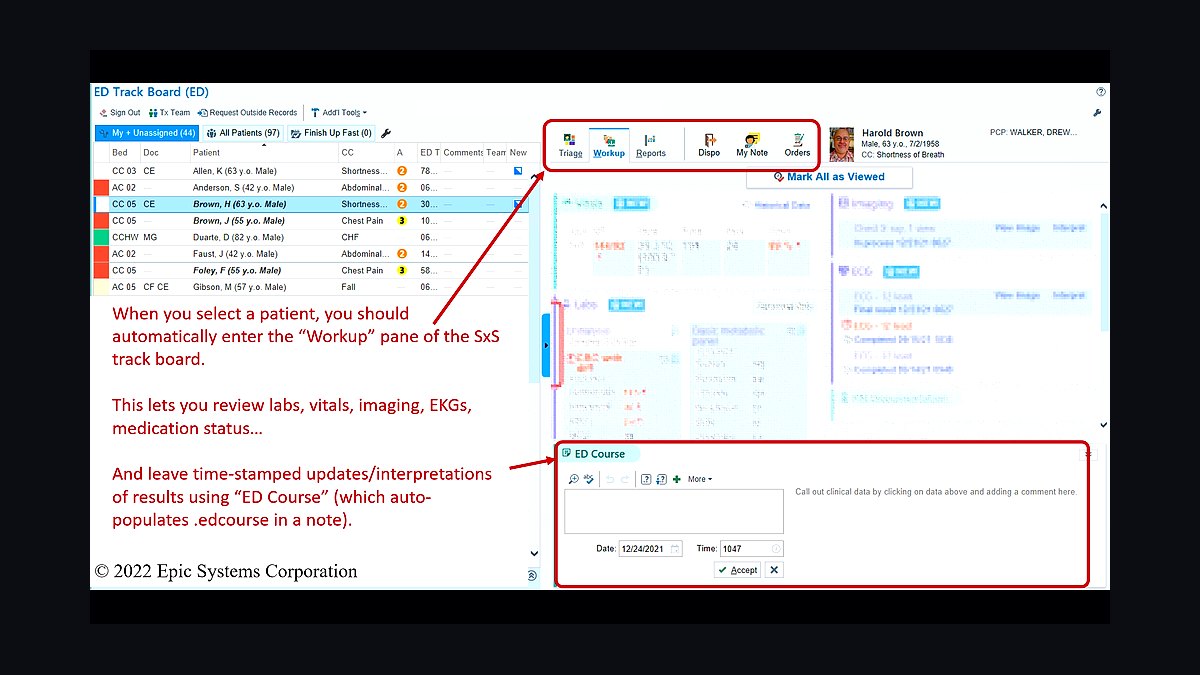
Epic ranks first because it is the all-consuming clinical spine for large IDNs and academic medical centers, not one app among many. Enterprise programs commonly land between $20M and $200M+ in total cost of ownership over the contract life, depending on bed count and footprint. MyChart, Cogito analytics, and Epic Resolute revenue cycle ship natively, so suite-maximalist systems push most layers into one platform.
Epic is built for 10+ hospital systems that can absorb multi-year implementations and board-level capital approval. It trades away cost flexibility and best-of-breed depth in enterprise imaging and physician scheduling, where specialists still outperform the suite. A community hospital choosing MEDITECH below it gets 80% of the same coverage for a fraction of the license and program spend.
2Oracle Health Cerner
Oracle Health (Cerner) ranks second as the primary national challenger to Epic and the strongest fit for federal, community, and Oracle-ERP shops. It runs clinical documentation, order entry, pharmacy, and RevCycle natively, with an equivalent patient portal for its base. Pricing scales with bed count and module mix, typically well below Epic at comparable scope for mid-size systems.
It is the right call for 4-10 hospital systems that want suite coverage without Epic's capital commitment, or that already run Oracle Fusion for finance and HR. It trades away Epic's MyChart ubiquity and Cogito analytics depth, and integration ecosystems are thinner. Systems that outgrow it often migrate to Epic above; smaller ones drop to MEDITECH below.
3MEDITECH Expanse
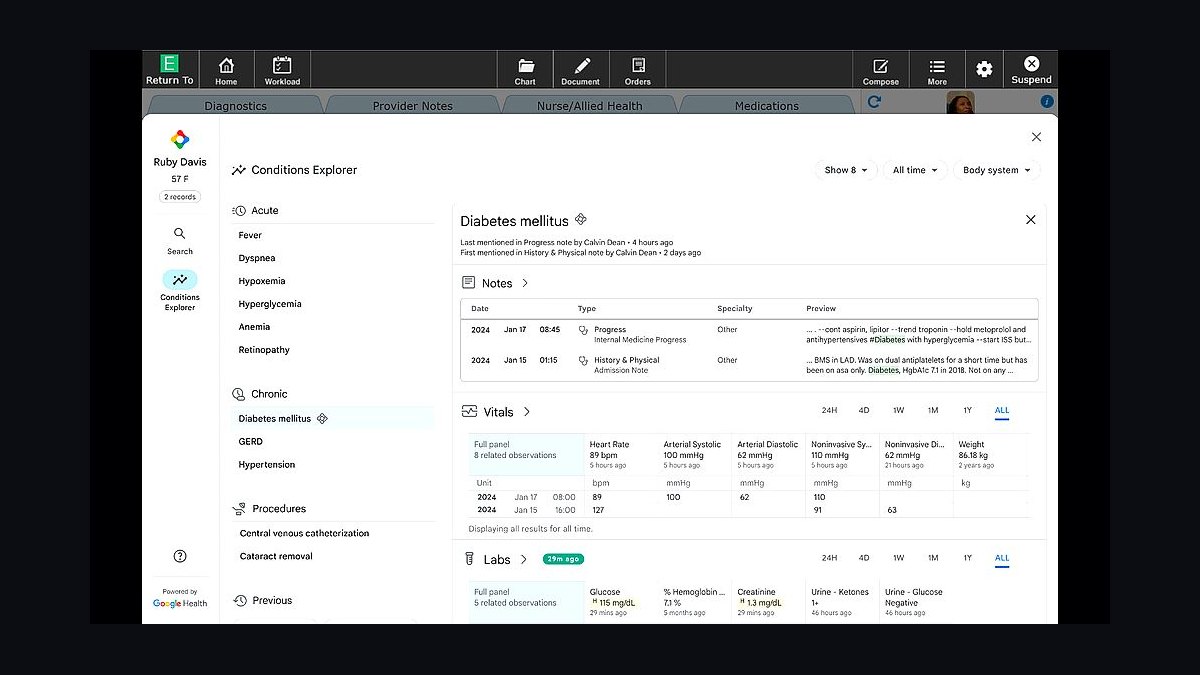
MEDITECH Expanse ranks third as the pragmatic, lower-cost EHR for community and critical-access hospitals under roughly 50 beds. It covers clinical, portal, basic revenue cycle, lab, and scheduling inside one suite, so a 25-bed hospital can skip standalone analytics, enterprise imaging, and physician scheduling entirely. Total annual technology spend commonly lands in the low single-digit millions with MEDITECH as the dominant line.
It is built for hospitals that cannot justify Epic or Oracle Health pricing and want one vendor for nearly everything. It trades away the integration depth, analytics, and third-party ecosystem that large IDNs demand, and specialty modules are shallower. Systems that grow past a handful of hospitals typically graduate to Oracle Health above.
4Workday Healthcare ERP
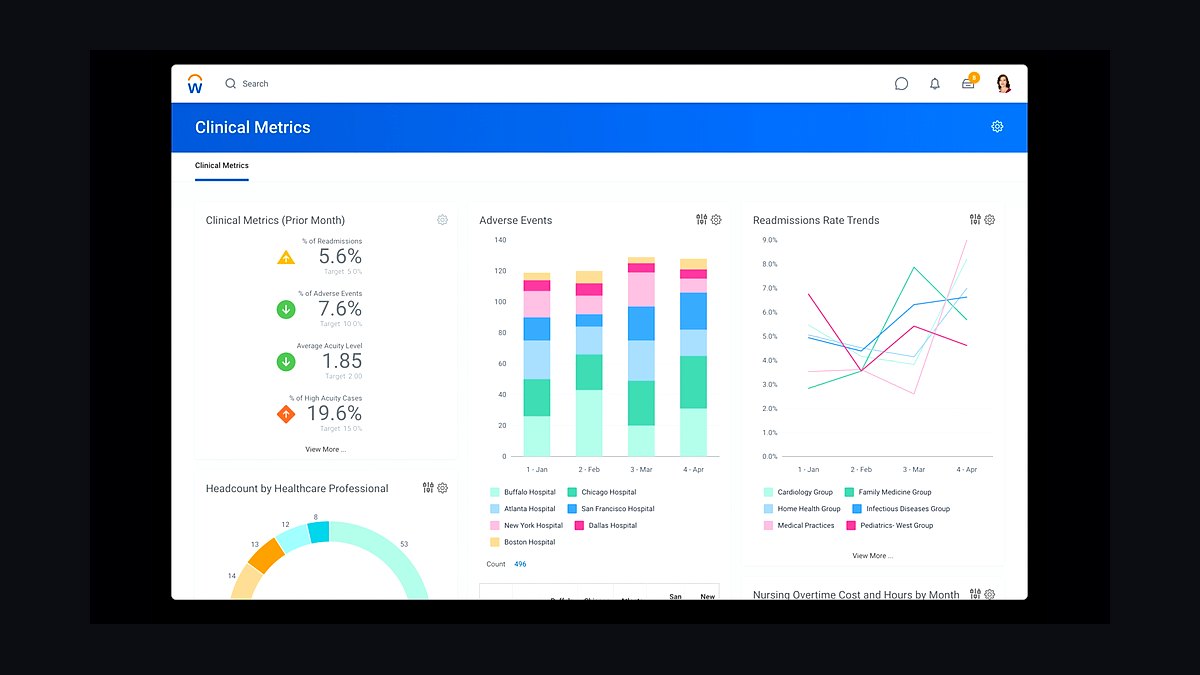
Workday ranks fourth because finance, HR, payroll, and procurement are the second-largest platform commitment after the EHR, running $1M-$10M+ per year at system scale. It is the modern cloud favorite for health system general ledger and HCM, with continuous updates replacing the multi-year upgrade cycles of legacy ERP. It integrates cleanly with Epic, Oracle Health, and MEDITECH through standard interfaces.
It is for mid-to-large systems that want a single cloud ERP across finance and workforce rather than bolting modules onto the EHR. It trades away some healthcare-specific supply-chain depth, which is why GHX below handles the actual trading network. Oracle Fusion competes hard where Oracle Health is the EHR, and Infor CloudSuite Healthcare is the vertical alternative.
5Epic Resolute Revenue Cycle
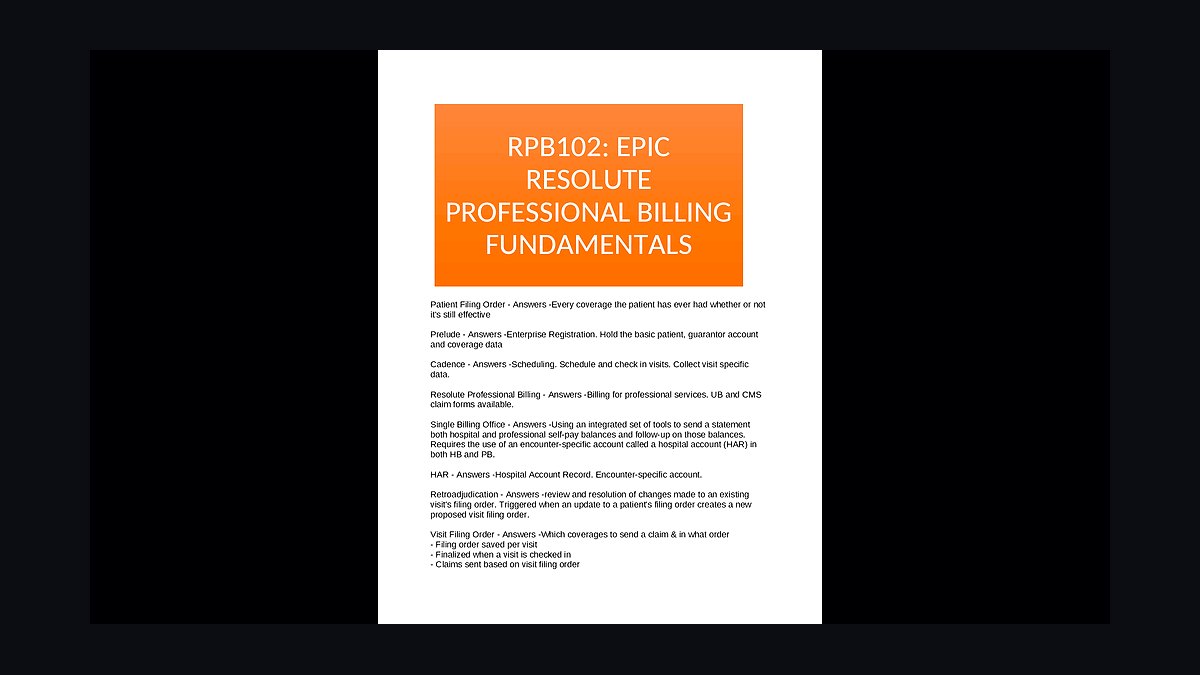
Epic Resolute ranks fifth because revenue cycle is where hospital cash actually lives, and RCM tooling and services frequently run 2%-5% of net patient revenue. Resolute handles charge capture, coding, claims, denials, and patient collections natively inside the same chart clinicians document in, eliminating interface lag between clinical events and billing. For Epic shops it is the default, with no separate clearinghouse contract required.
It is for suite-maximalist systems that want billing tightly coupled to clinical documentation and are willing to accept Epic's roadmap pace. It trades away the specialized denial analytics and payer-specific automation that Waystar, R1 RCM, and FinThrive build as standalone businesses. Many large systems run Resolute plus one bolt-on for exactly that gap.
6Waystar Revenue Cycle
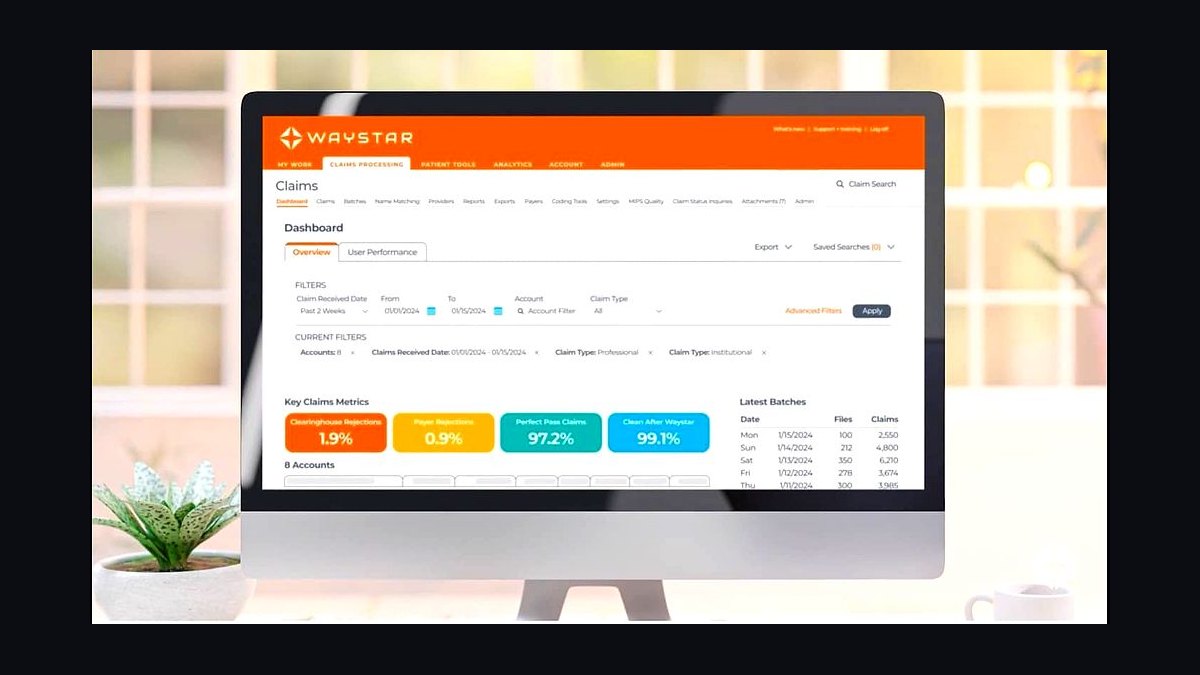
Waystar ranks sixth as the leading bolt-on revenue cycle layer for systems that want clearinghouse, payment automation, and denial analytics beyond what the EHR ships. It sits on top of Epic, Oracle Health, or MEDITECH and handles claims scrubbing, prior authorization, and payer connectivity across Medicare, Medicaid, and commercial plans. Pricing is typically transaction-based and scales with claim volume.
It is for systems whose EHR revenue cycle is functional but weak on denials prevention and payer rule automation. It trades away the single-vendor simplicity of Epic Resolute above, adding an interface and a second contract to manage. Smaller hospitals rarely need it; R1 RCM is the outsourced-services alternative when staffing is the bigger constraint.
7Imprivata Clinical SSO
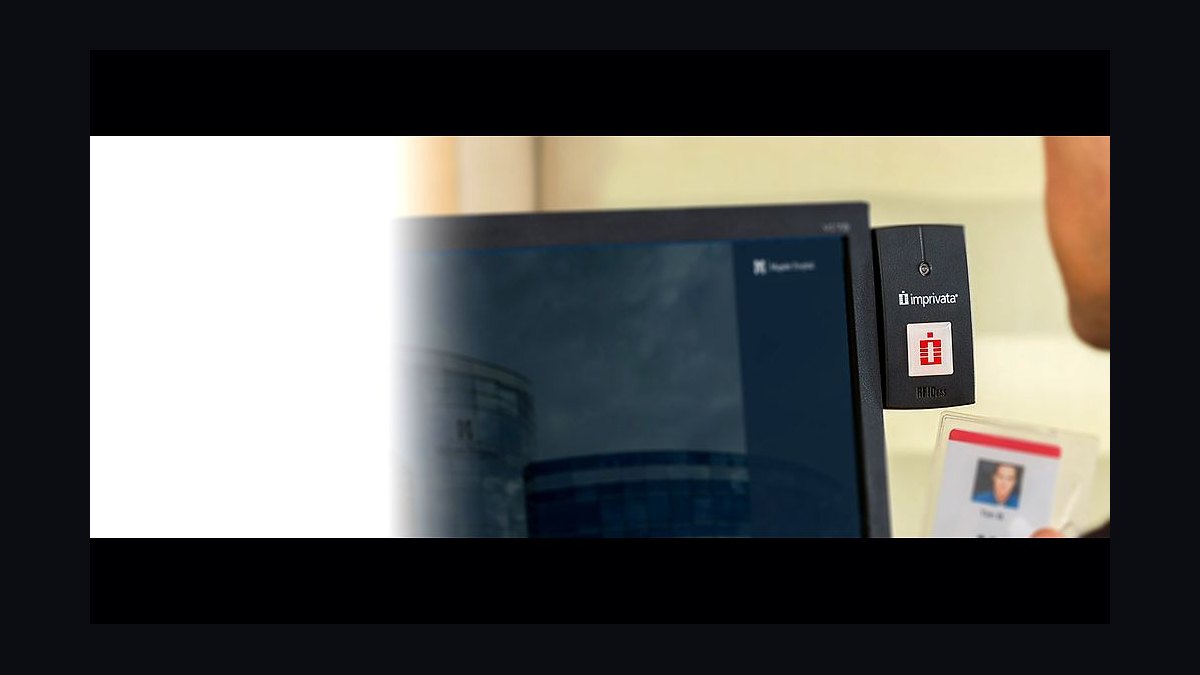
Imprivata ranks seventh because clinical single sign-on and tap-to-go badge authentication solve the fourteen-logins-a-shift problem while keeping access auditable down to the encounter. It runs $100K-$1M+ per year at system scale and is one of the few layers every hospital buys regardless of EHR choice or bed count. It is also a frontline security control, not just a convenience tool.
It is for any hospital with shared clinical workstations and roaming staff, from critical-access to large IDN. It trades away nothing meaningful except budget, though native EHR plus Active Directory SSO is the free but weaker alternative. It pairs directly with the CrowdStrike and Claroty security layer below, since identity is the first gate attackers probe.
8TigerConnect Clinical Communication

TigerConnect ranks eighth as the leading HIPAA-compliant secure messaging, on-call routing, and alarm management platform for care teams. It runs roughly $50K-$500K+ per year depending on user count and device fleet, replacing pagers and unsecured SMS with auditable clinical workflows. It integrates with Epic, Oracle Health, and MEDITECH to route alerts and consult requests into the right hands.
It is for systems that need secure texting and on-call scheduling across nursing units, ED, and specialty consult teams. It trades away the hands-free wearable badge form factor that Vocera by Stryker owns on nursing floors, which matters in sterile and high-mobility environments. Smaller hospitals often run it as their only communication layer, skipping the wearable fleet entirely.
9Sectra Enterprise Imaging
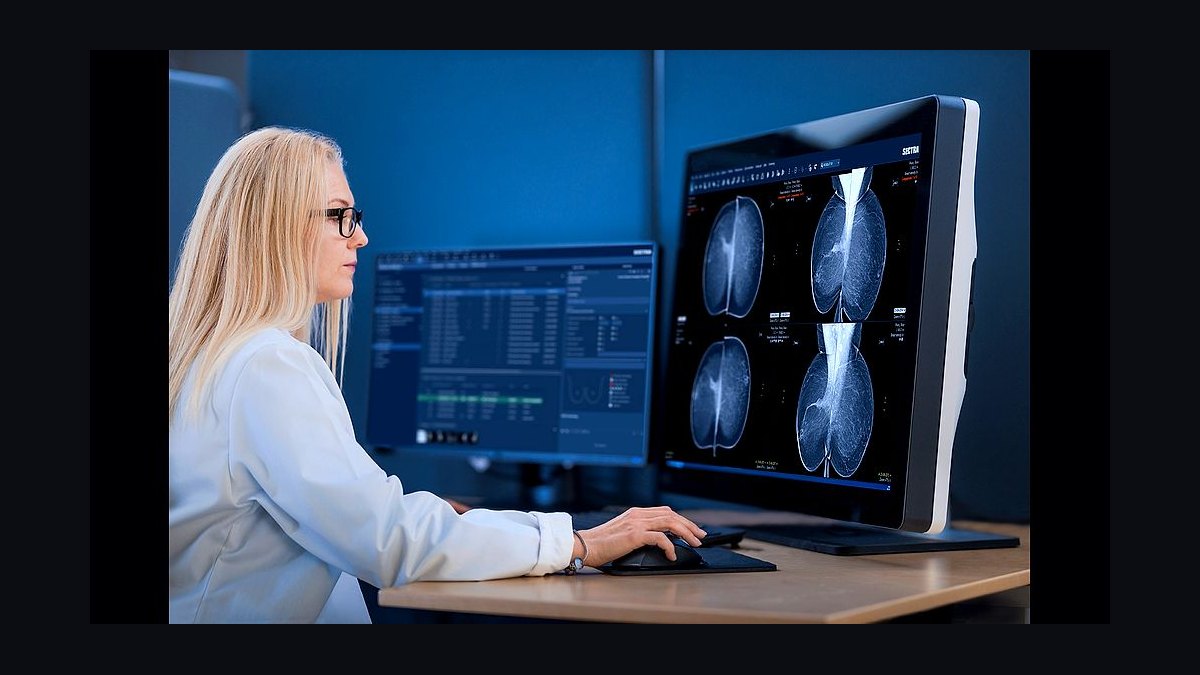
Sectra ranks ninth as the top-rated enterprise imaging and PACS platform for radiology and cardiology, with multi-year capital commitments in the low-to-mid seven figures for a large system. It handles the image volumes and specialty workflows that general EHR modules cannot match, and it consistently leads KLAS enterprise imaging rankings. It integrates with the EHR through standard HL7 and FHIR interfaces.
It is for systems with high imaging volume and multi-specialty reading needs across radiology, cardiology, and pathology. It trades away the deep modality integration that GE HealthCare and Philips offer when their CT and MRI scanners are already on-site. Critical-access hospitals typically skip it entirely and use their EHR vendor's basic imaging module.
10CrowdStrike Falcon Healthcare
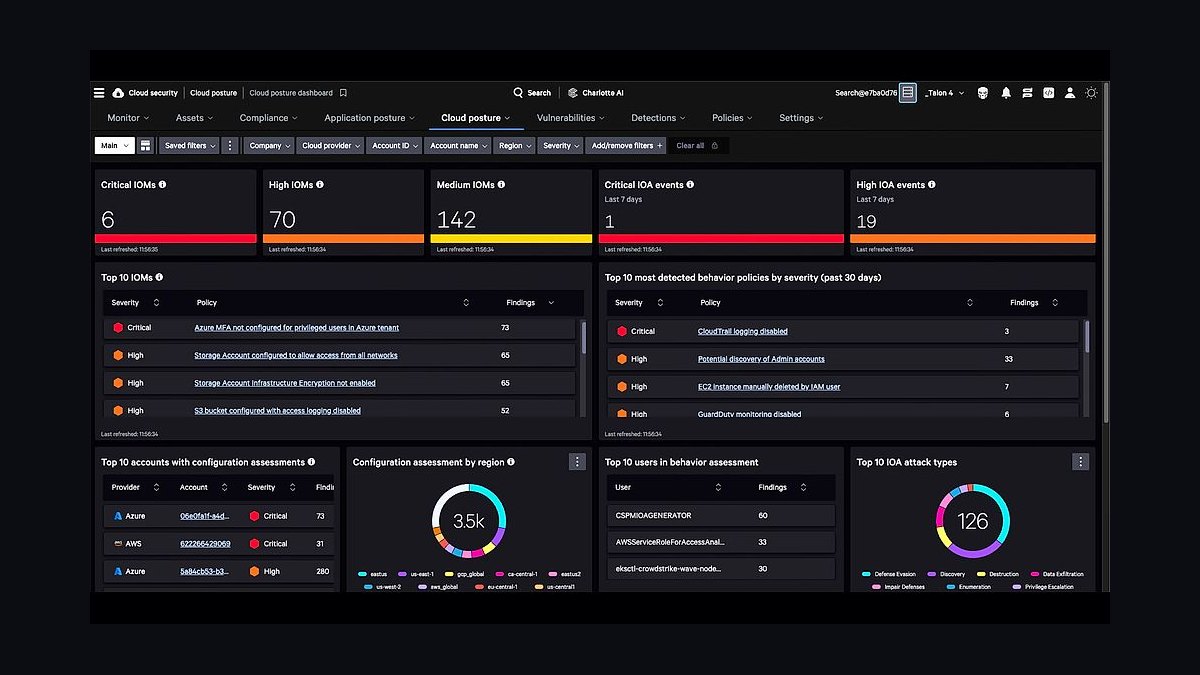
CrowdStrike Falcon ranks tenth because endpoint detection and response across servers, workstations, and clinical endpoints is now board-level infrastructure, with combined security spend commonly $500K-$5M+ per year depending on bed size. It covers the enterprise side of the attack surface, while Claroty handles the medical-device and IoMT layer that cannot run traditional agents. Together they close the ransomware entry points that have hit hospitals hardest.
It is for every hospital size, since infusion pumps, imaging modalities, and patient monitors are networked and hard to patch. It trades away nothing operationally, but it must be paired with a device-visibility layer to be complete, which is why Claroty is the standard companion. Microsoft Defender is the lower-cost alternative where the Microsoft stack is already entrenched.
How we ranked these
We ranked tools by four weighted criteria: EHR integration depth and certified interoperability (30%), total cost of ownership across a five-to-ten-year contract life (25%), clinical workflow fit and clinician adoption evidence (25%), and security, identity, and HIPAA compliance maturity (20%). We scored each layer against named deployments at critical-access, community, and IDN scale, using published pricing ranges, peer-reviewed adoption data, and KLAS-style satisfaction signals where available.
We deliberately ignored vendor marketing claims, analyst quadrant placement, and demo polish, because none predict go-live success in a hospital. We also excluded startup-only tools without multi-year enterprise references, consumer-grade messaging apps, and any product whose roadmap depends on an unproven acquisition. Feature-count comparisons were dropped too: a longer checklist loses to a shorter one that clinicians actually use at 3 a.m. on a shared workstation.
What to look for
What matters most is how much your chosen EHR already absorbs. If Epic or Oracle Health covers 80% of a layer natively, a best-of-breed bolt-on usually adds integration cost, duplicate data entry, and a second contract to renew. Buy outside the suite only where the EHR is genuinely weak, such as enterprise imaging, physician scheduling, or denials analytics, and require a working HL7/FHIR interface before signing anything.
The mistake most buyers make is treating the clinical go-live as the finish line and under-resourcing revenue cycle, identity, and device security until after activation. Denials spike, clinicians juggle fourteen logins, and unsegmented infusion pumps become the ransomware entry point. Fund Imprivata, CrowdStrike, and Claroty in the same budget cycle as the EHR, and run the revenue-cycle workstream in parallel from day one, not as a phase two.
Related questions
Why is the EHR the spine of a hospital tech stack rather than one app among many?
The enterprise EHR is simultaneously the clinical record, order-entry system, pharmacy system, documentation layer, patient portal, analytics warehouse, and increasingly the revenue cycle and scheduling platform. Clinicians live inside it for an entire shift. Because its footprint is so wide, every other buying decision is downstream: you purchase best-of-breed only where the suite is genuinely weak or a specialty demands depth it cannot match.
How much does an enterprise EHR like Epic actually cost a health system?
Enterprise EHR programs commonly land between $20M and $200M+ in total cost of ownership over the contract life, scaling with bed count, ambulatory footprint, and module selection. That figure includes licensing, implementation services, clinical informaticist staffing, and multi-year support. Large IDNs often exceed it once analytics, portal, and revenue-cycle modules are added. Critical-access hospitals running MEDITECH spend a fraction of that.
When should a hospital buy best-of-breed instead of using the EHR vendor's module?
Buy outside the suite only where the EHR is genuinely deficient or a specialty needs depth the suite cannot match: enterprise imaging, physician and provider scheduling, denials analytics, and medical-device security are the common exceptions. Every bolt-on adds integration cost, duplicate data entry, and another contract. Require a working HL7 or FHIR interface plan before signing, and document why the native module failed.
What does revenue cycle management look like in a modern hospital stack?
RCM covers charge capture, coding, claims scrubbing, prior authorization, denials management, and patient financial responsibility across Medicare, Medicaid, and dozens of commercial payers. Suite shops run Epic Resolute or Oracle Health RevCycle natively; many systems still bolt on Waystar for clearinghouse automation, outsource to R1 RCM, or run FinThrive for analytics-driven denials work. Tooling and services frequently consume 2% to 5% of net patient revenue.
Why does clinical single sign-on matter enough to be its own layer?
A nurse cannot log in fourteen times a shift across the EHR, PACS, lab, messaging, and scheduling systems without losing minutes per patient and creating workarounds that undermine audit trails. Imprivata's tap-and-go badge authentication and SSO solve that while keeping access governed down to the individual clinician and encounter. It is simultaneously a workflow tool and a frontline security control, typically $100K-$1M+ per year at system scale.
How real is the medical-device and IoMT security threat to hospitals?
Infusion pumps, imaging modalities, and patient monitors cannot run traditional endpoint agents, so they often sit unsegmented and unpatched on clinical networks. That has made them a primary ransomware entry point in recent hospital attacks. The standard response pairs CrowdStrike endpoint detection across servers and workstations with Claroty or Medigate for device visibility, inventory, and network segmentation, treated as core infrastructure rather than a security nice-to-have.
What does a 25-bed critical-access hospital actually need to buy?
Far less than a large system. A critical-access hospital typically runs MEDITECH or its EHR vendor's suite for clinical, portal, basic revenue cycle, lab, and scheduling in one platform, then adds only what is unavoidable: Imprivata for clinical SSO, an endpoint security agent, and a supply-chain connection. It deliberately skips standalone analytics, enterprise imaging, and physician-scheduling platforms. Annual technology spend commonly lands in the low single-digit millions.
How long does a hospital EHR implementation really take?
Full clinical go-lives take two to four years at enterprise scale, not quarters. That includes vendor selection, design and build, validation, phased site activations, and a command-center go-live model. Leaders who schedule it like a software upgrade staff it thin and burn out clinical informaticists when reality stretches the timeline. Frame it as a discrete multi-year capital initiative with a dedicated program office and realistic activation phases.
FAQ
What is the best tech stack for a hospital or health system in 2027?
It is EHR-first and EHR-dominant. Pick the spine — Epic for large IDNs, Oracle Health (Cerner) as primary challenger, MEDITECH for community and critical-access hospitals — and everything else is shaped by what that vendor already covers. Around it sit ERP and supply chain, revenue cycle, clinical communication, imaging, workforce scheduling, clinical SSO, analytics, and a security layer covering endpoints and connected medical devices.
Is Epic always the right choice for a large health system?
No, but it is the default for large academic medical centers and integrated delivery networks because of its integrated suite, MyChart portal, and Cogito analytics. Oracle Health competes hard in federal, community, and Oracle-standardized environments, and MEDITECH Expanse is the pragmatic lower-cost choice for community and critical-access hospitals. The right answer depends on bed count, budget, existing footprint, and how much suite consolidation you can realistically absorb.
How should a hospital decide between Epic and Oracle Health?
Weigh total cost of ownership over the contract life, existing module coverage, ambulatory and specialty fit, analytics maturity, and the strength of local implementation talent. Epic tends to win on integrated suite depth and patient portal adoption; Oracle Health wins where Oracle ERP and database standardization already exist, in federal settings, and in some community segments. Reference-site visits at hospitals your size matter more than any demo.
What percentage of net patient revenue should revenue cycle tooling cost?
RCM tooling and services frequently run 2% to 5% of net patient revenue, making it one of the largest line items in the technology stack after the EHR itself. That range covers clearinghouse, coding, denials analytics, prior authorization, and patient financial responsibility. Systems that under-resource this layer typically see denials spike and cash slow within months of a clinical go-live, which is far more expensive than the tooling.
Do hospitals still need a separate PACS in 2027?
Most large systems do, because radiology and cardiology imaging depth still exceeds what general EHR modules deliver. Sectra rates at the top for enterprise imaging; GE HealthCare and Philips are deeply entrenched where their CT and MRI modalities are already on-site. Suite hospitals increasingly use the EHR vendor's native imaging for basic viewing, but enterprise imaging remains a multi-year capital commitment in the low-to-mid seven figures.
What is GHX and why does it appear in nearly every hospital stack?
GHX is the healthcare-specific trading network connecting providers, distributors, and manufacturers for purchase orders, invoices, and item-master data. It pairs with whichever ERP runs procurement, typically Workday, Oracle Fusion, or Infor CloudSuite Healthcare. Subscription pricing scales with transaction volume and commonly reaches the mid-six figures per year for a large system. Without it, supply-chain data reconciliation becomes manual and error-prone.
How do hospitals handle interoperability between all these systems?
Through an integration engine exchanging HL7 v2 messages and FHIR resources, increasingly aligned with TEFCA for cross-organizational exchange. The EHR sits at the center; clinical SSO gates entry; the portal and ancillary systems exchange data through the engine; revenue cycle flows from clinical events into ERP and the supply exchange; and every transactional system feeds the analytics warehouse. Interoperability is a regulatory and clinical-safety requirement, not optional.
What is the biggest mistake health systems make when building this stack?
Treating the clinical go-live as the finish line and under-resourcing revenue cycle, identity, and device security until after activation. Denials spike, clinicians juggle too many logins, and unsegmented infusion pumps become the ransomware entry point. Fund Imprivata, CrowdStrike, and Claroty in the same budget cycle as the EHR, and run the revenue-cycle workstream in parallel from day one rather than as a later phase.
How much should a regional community health system budget annually?
A system running roughly four to ten hospitals typically spends in the tens of millions annually on technology, with multi-year EHR implementation capital on top. That covers Oracle Health or MEDITECH Expanse, Workday ERP, Waystar or R1 RCM for revenue cycle, TigerConnect, QGenda, GHX, Sectra or GE imaging, and CrowdStrike plus Claroty. Exact figures swing widely with bed count, ambulatory volume, and how much is outsourced.
Will AI change the hospital tech stack by 2027?
AI is being absorbed into existing layers rather than replacing them. Ambient clinical documentation, coding assistance, and denials prediction are arriving inside the EHR and RCM platforms, not as separate categories. The practical effect is that buyers should ask vendors how AI features are validated, audited, and governed under HIPAA, rather than adding a new AI line item. The spine, the identity layer, and the security layer remain the same.
Sources
- https://www.epic.com/
- https://www.oracle.com/health/
- https://www.meditech.com/
- https://www.hhs.gov/hipaa/index.html
- https://www.hl7.org/
- https://www.hl7.org/fhir/
- https://www.ghx.com/
- https://www.imprivata.com/
- https://www.crowdstrike.com/
- https://www.claroty.com/
Related on PULSE
This page will be disappearing soon. Save it to your device for $1 — or read it free while it is here.
@Kory-White- · if Venmo asks, the last 4 of my number are 2012
This page is gone.
This one is off the shelf now. $1 keeps it on your phone for good — the whole page, pictures and diagrams included.
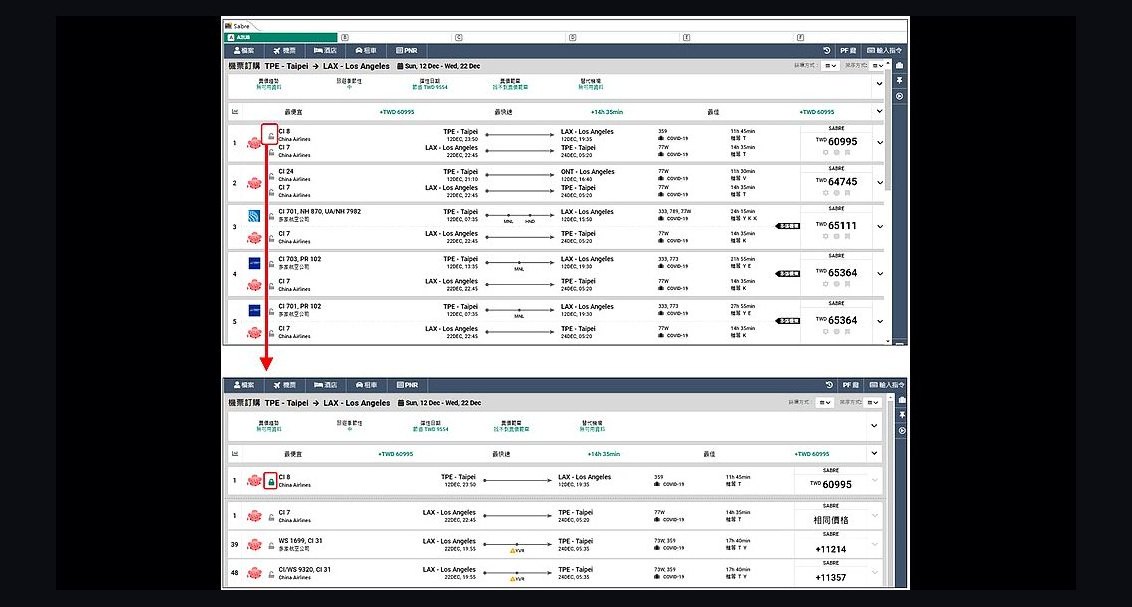 pulse-tech-stacksTop 10 Best Tech Stack Tools for Online Travel Agencies (OTAs) in 2027
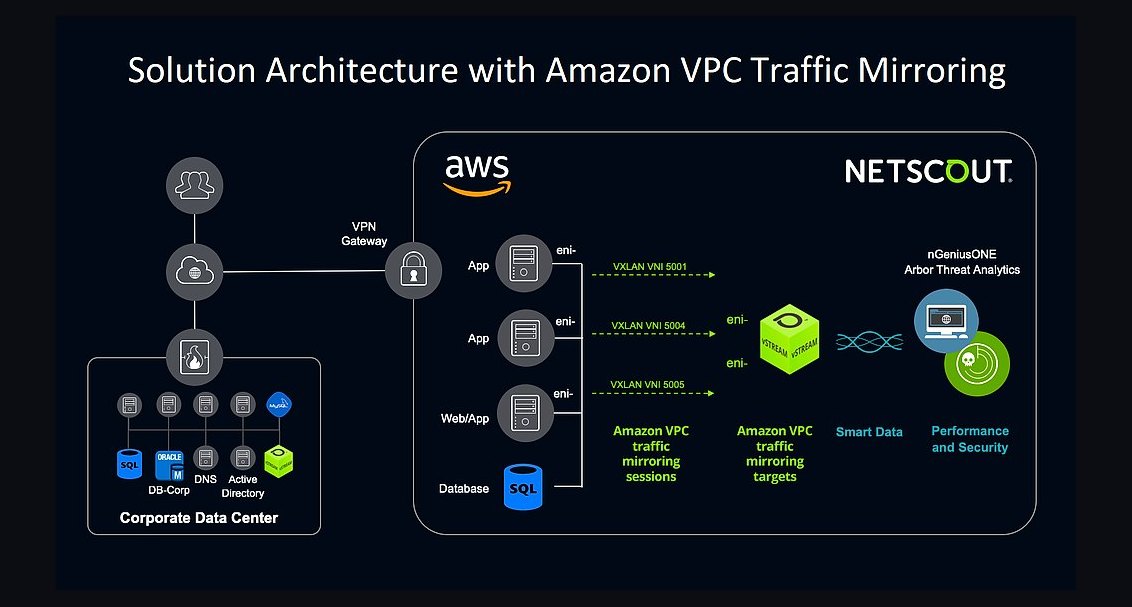 pulse-tech-stacksTop 10 Best Tech Stack Tools for API Security Vendors in 2027
 pulse-tech-stacksTop 10 Best Tech Stack Tools for Threat Intelligence Vendors in 2027
 pulse-tech-stacksTop 10 Best Tech Stack Tools for Independent Food Trucks in 2027
 pulse-tech-stacksTop 10 Best Tech Stack Tools for Home Inspection Companies in 2027
 pulse-tech-stacksTop 10 Best Tech Stack Tools for Fine-Tuning Platform Companies in 2027
 pulse-tech-stacksTop 10 Best Tech Stack Tools for Window Cleaning Services in 2027
 pulse-tech-stacksTop 10 Best Tech Stack Tools for CrossFit Boxes in 2027
 pulse-tech-stacksTop 10 Best Tech Stack Tools for Small Pest Control Companies in 2027
 pulse-tech-stacksTop 10 Best Tech Stack Tools for Tire Shops in 2027