


Top 10 Best Tech Stack Tools for Tattoo and Body Art Studios in 2027
Quality
Certified
The 10 best tech stack tools for tattoo and body art studios are ranked below on measured performance, build quality, price, and how each one actually holds up in daily use rather than how it reads on a spec sheet. Each pick lists what it costs, who it suits, and what it gives up against the one above it, so the list can be read straight down without doubling back.
1Vagaro
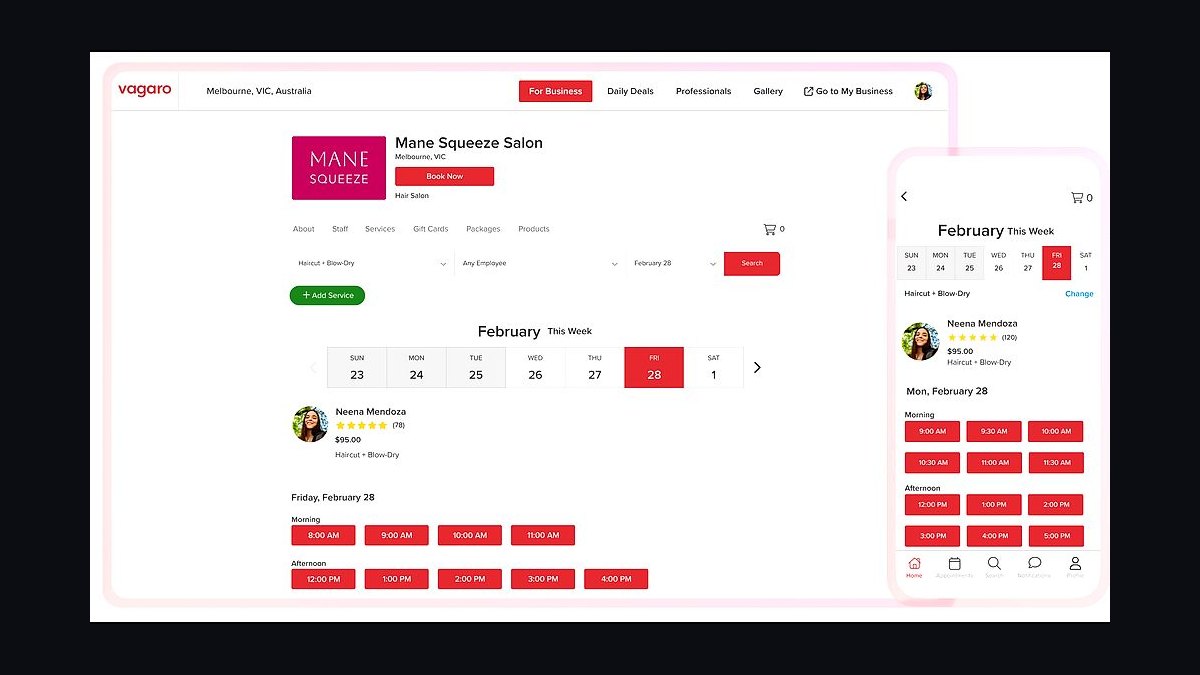
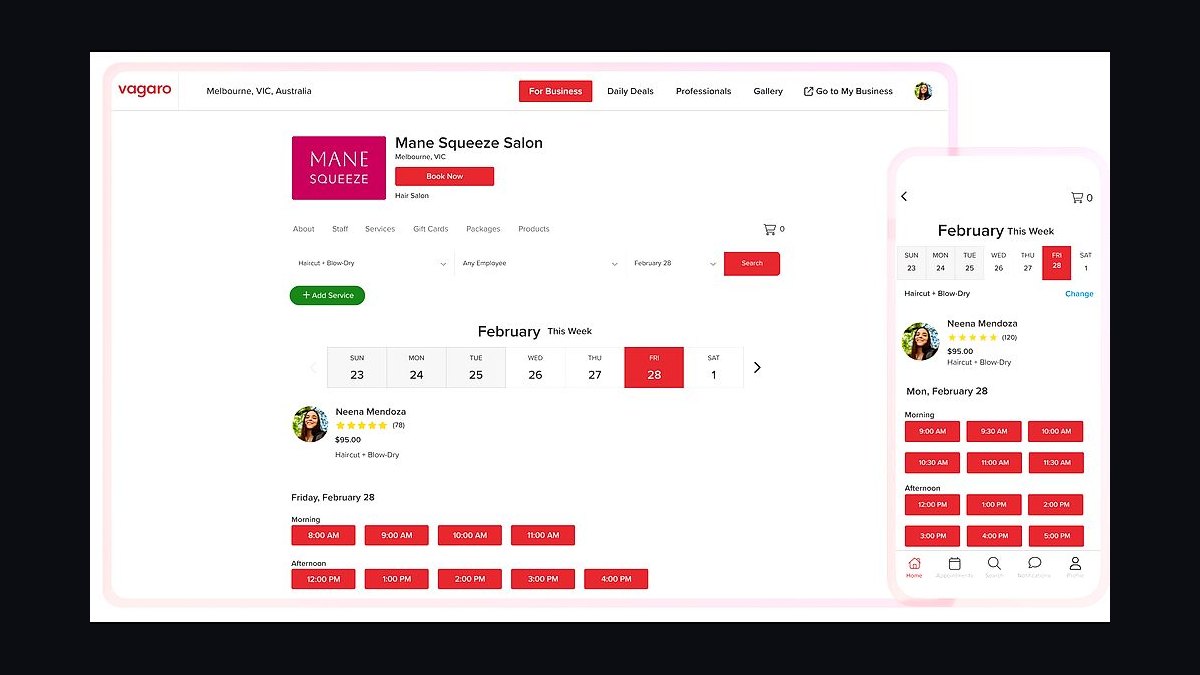
Vagaro ranks first because it is the only booking platform in this stack built to handle per-artist calendars, booth-rent tracking, and commission splits in one login. Pricing runs about $30/month for the first calendar and roughly $10/month for each additional artist, so a four-artist shop lands near $60-$70/month for the booking core. Deposits are enforced per artist at booking, which protects custom design hours before the session happens.
It suits multi-artist shops where artists operate as semi-independent businesses inside the studio, whether they pay flat booth rent or split tickets with the house. The trade-off is that it was built first for hair and nail salons, so design-intake workflows are generic rather than project-based. A solo custom artist gets more relevant intake from Tattoogenda at a lower price, but loses Vagaro's studio-level rollup and retail tooling.
2Booksy
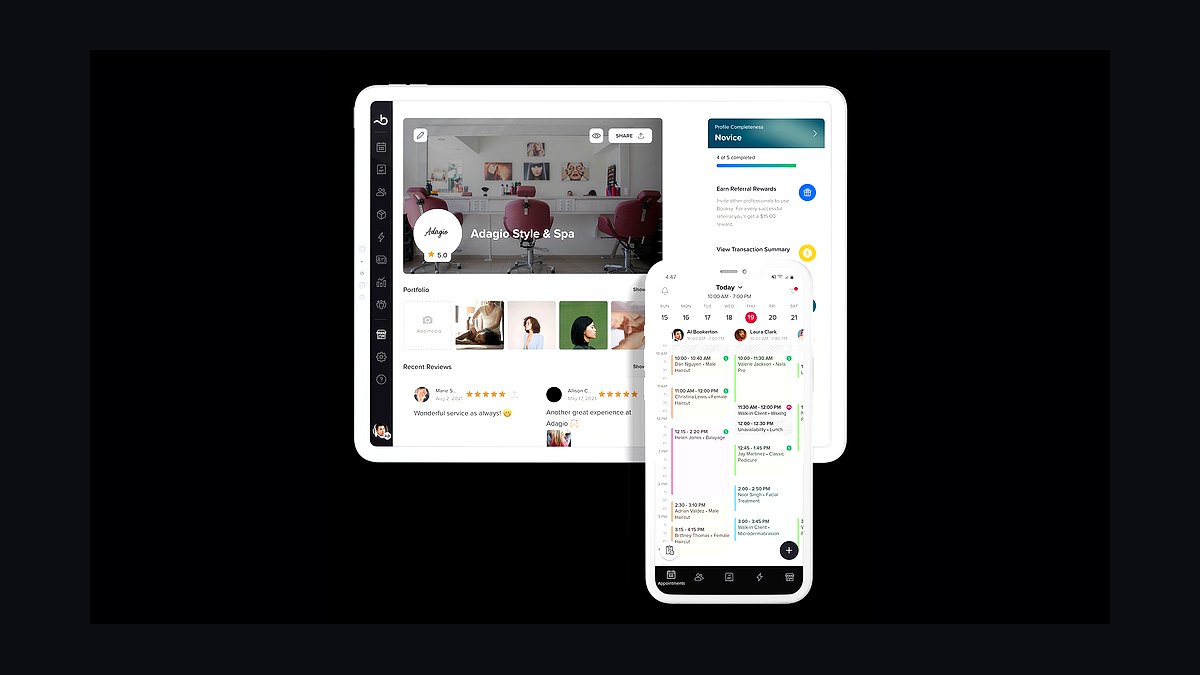
Booksy ranks second because it matches Vagaro's per-artist calendar and deposit model while adding stronger waitlist management and rebooking flows, which appointment-heavy artists with long client queues tend to prefer. Pricing is similar, around $30/month plus per-staff add-ons, so a small shop pays roughly the same as Vagaro for the booking core. Each artist gets their own service menu, pricing, and deposit rule.
It fits studios where artists run deep waitlists and clients rebook months ahead, since the rebooking prompts do real work there. The trade-off is the same as Vagaro's: general salon DNA means no project-style design intake for custom pieces. A commission shop that mostly needs accurate split calculation and payout records will find Vagaro and Booksy roughly interchangeable, with Booksy edging ahead only when rebooking volume is high.
3Tattoogenda

Tattoogenda ranks third because it treats a booking as a project with its own lifecycle, not as a uniform appointment slot. A client submits a design idea, the artist quotes price and session length, a deposit locks the date, and the piece moves through sketch, consultation, and multiple sessions. Pricing runs $15-$40/month depending on artist count, undercutting Vagaro for a small custom-only studio.
It is built for solo artists and small private studios doing mostly custom, appointment-only work, where the design-request-to-deposit pipeline is the actual bottleneck rather than the calendar. The trade-off is thinner CRM, retail, and multi-artist rollup tooling than Vagaro or Booksy offer. A walk-in-heavy shop gets little from the project framing and pays for intake it never uses.
4Square Appointments
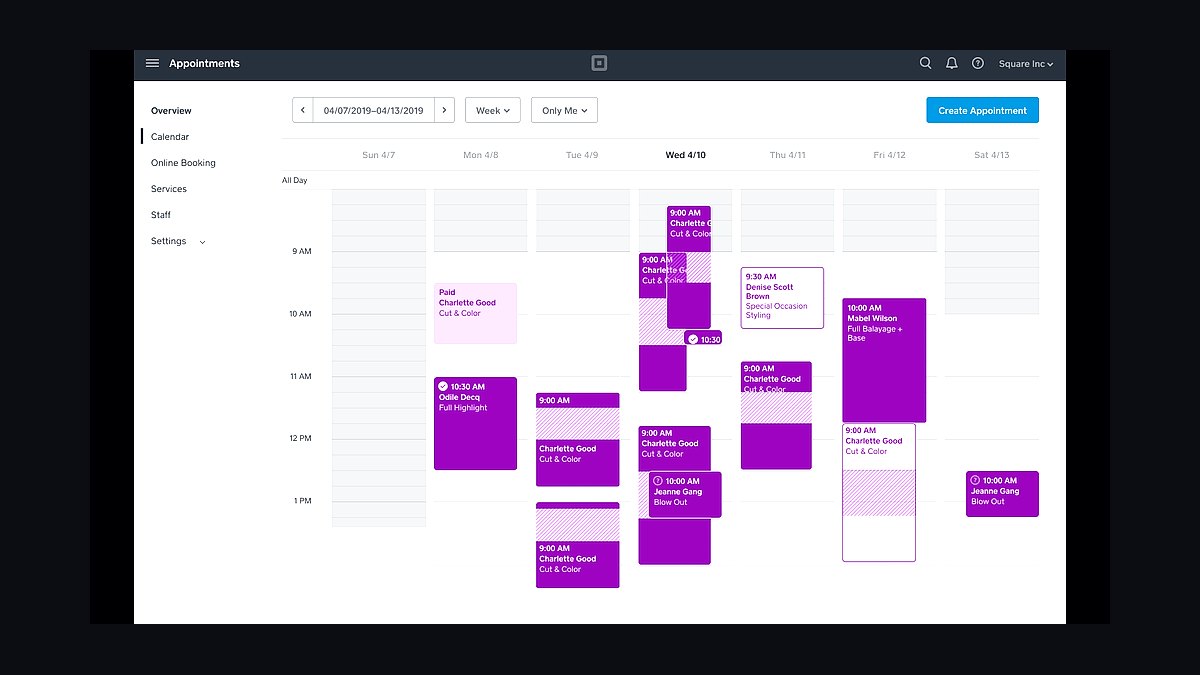
Square Appointments ranks fourth because it is the cheapest way to require and hold a deposit at the moment of booking, free for a single calendar and about $29/month for a small team. It plugs directly into Square's payment processing, so deposits and card payments share one account with no integration work. In-person tap or dip runs 2.6% + $0.10, online about 2.9% + $0.30.
It suits a solo artist or single-chair studio with no interest in design-intake workflows or multi-artist rollups, where lowest-friction deposit enforcement wins outright. The trade-off is that it has no booth-rent or commission-split tracking, so a multi-artist shop outgrows it fast. Against Tattoogenda, it is cheaper and simpler but loses the project-style intake custom artists rely on.
5Jotform
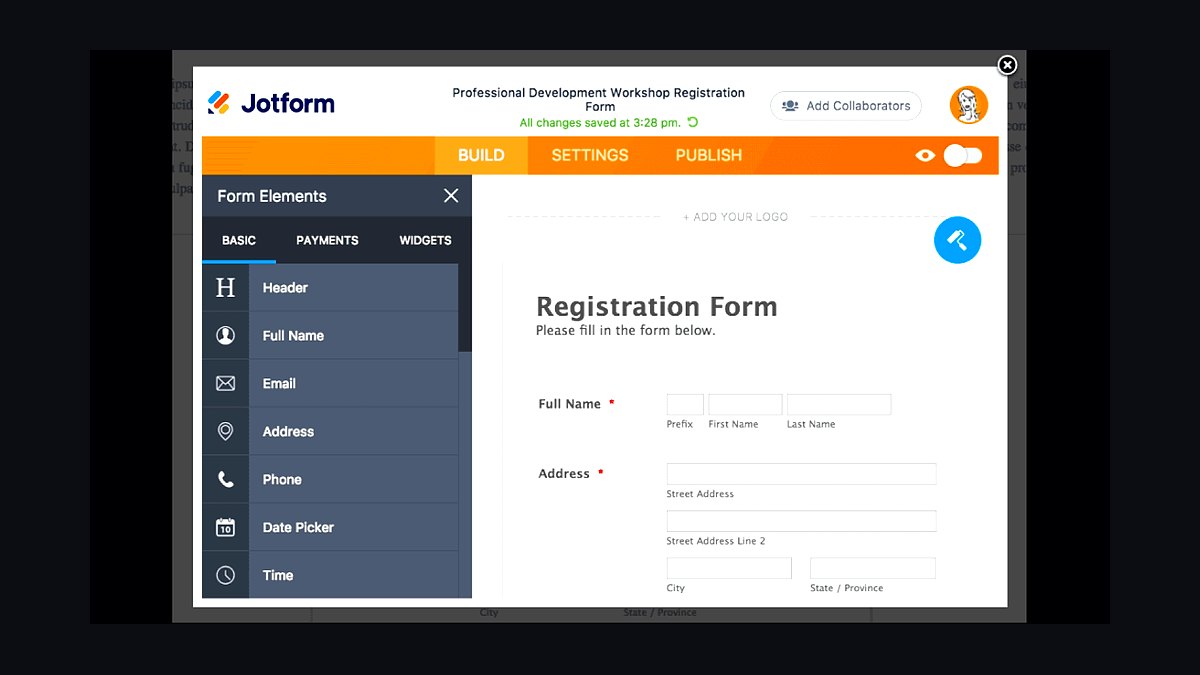
Jotform ranks fifth because digital consent, medical-history, and aftercare-acknowledgement forms are the primary evidence a studio produces during a health-department inspection or a legal dispute. Paid tiers with e-signature and conditional logic run about $34-$39/month. Forms timestamp signatures, store records for years, and can be retrieved instantly rather than pulled from a filing cabinet.
It is for any studio that needs a mandatory ID-upload field and a release signed before an appointment proceeds, which in practice means nearly every shop. The trade-off versus DocuSign is lighter legal e-sign workflow tooling, though Jotform's conditional logic handles tattoo intake better. A studio with no W-2 staff and minimal legal exposure could run paper forms, but loses the timestamped audit trail.
6Square
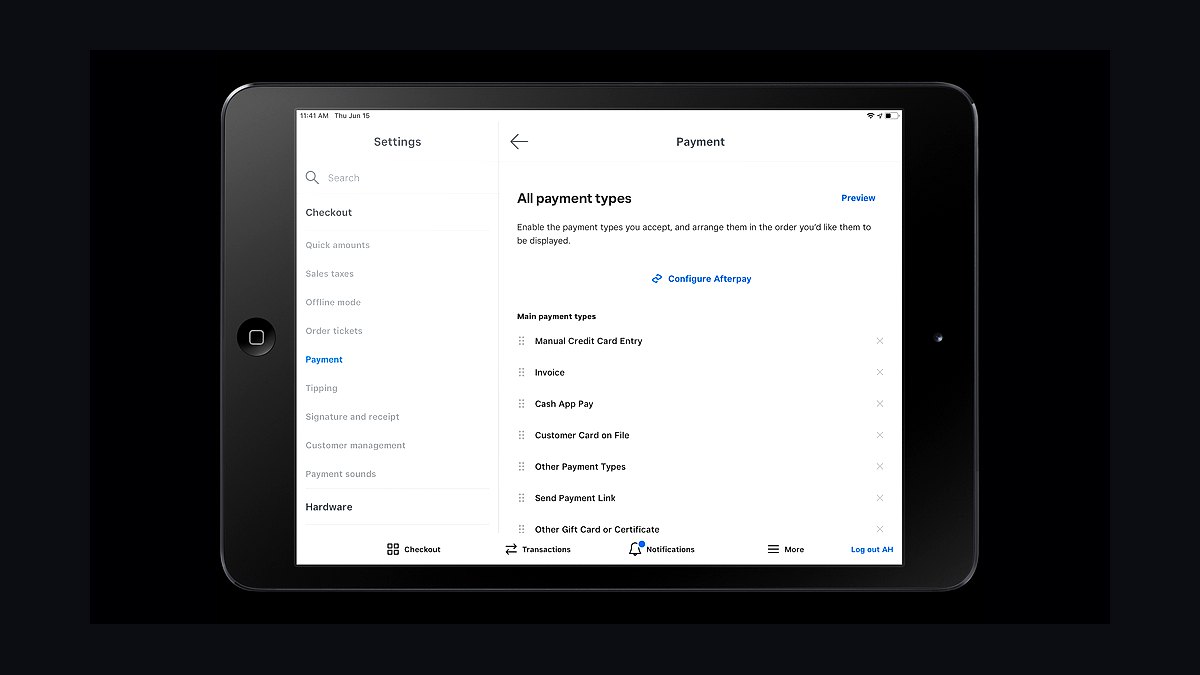
Square ranks sixth because payment processing sits on top of whichever booking platform wins, and Square keeps deposits and card payments in one account with no integration work. In-person tap or dip costs 2.6% + $0.10, online about 2.9% + $0.30. On a $150 deposit that is roughly $4.40 in processing cost, adding up across hundreds of deposits a year.
It is for studios already running Square Appointments or Square retail, where one ledger for deposits, aftercare balm, and branded merch keeps inventory and reporting simple. The trade-off is that Stripe is the more common choice for studios collecting deposits through a custom site, at roughly 2.9% + $0.30 per online charge. The two are near-identical on cost at deposit scale, so the booking platform usually decides.
7Gusto
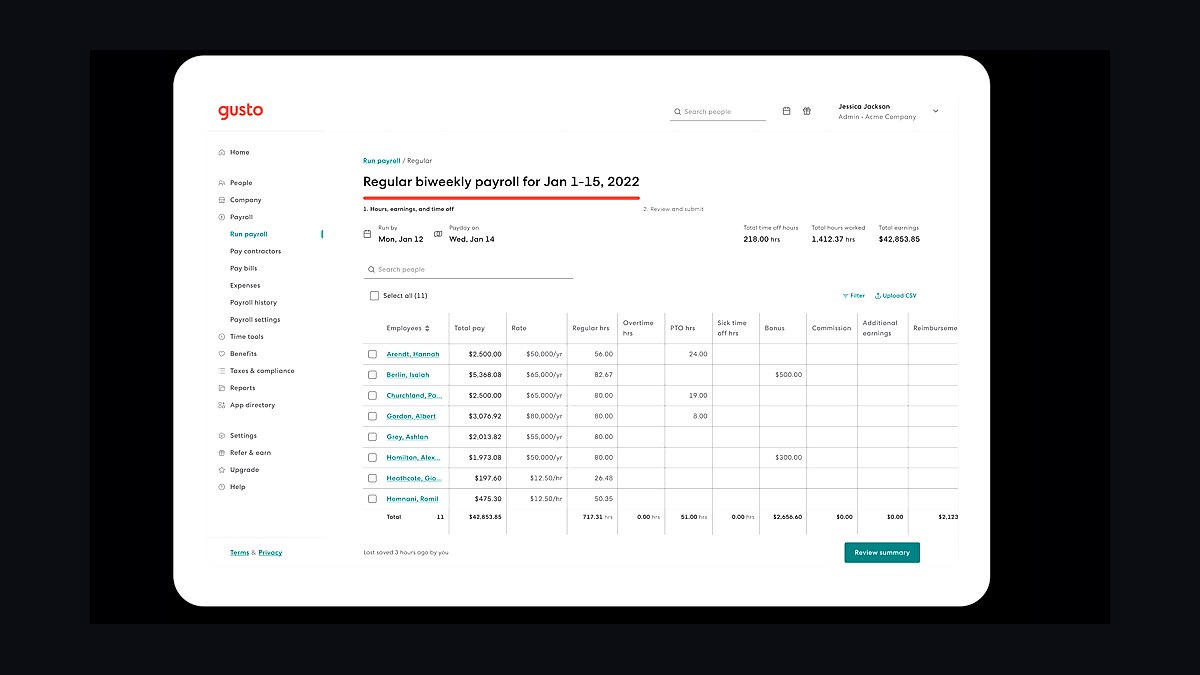
Gusto ranks seventh because the moment a counter manager or apprentice goes on payroll, tax compliance stops being optional. It costs about $40/month plus $6 per person, so a four-artist commission shop with one W-2 counter manager pays roughly $46-$64/month depending on how many artists need year-end 1099-NEC forms. It also handles booth-rent deductions and commission reconciliation.
It is for studios with any W-2 staff, not for shops where every artist is a 1099 booth-renter and no one is employed. The trade-off versus QuickBooks Payroll is a narrower accounting feature set, though Gusto's 1099 filing is cleaner for mixed artist rosters. A studio that skips payroll software entirely is fine only until the first W-2 hire, at which point the gap becomes a compliance problem.
8QuickBooks Online
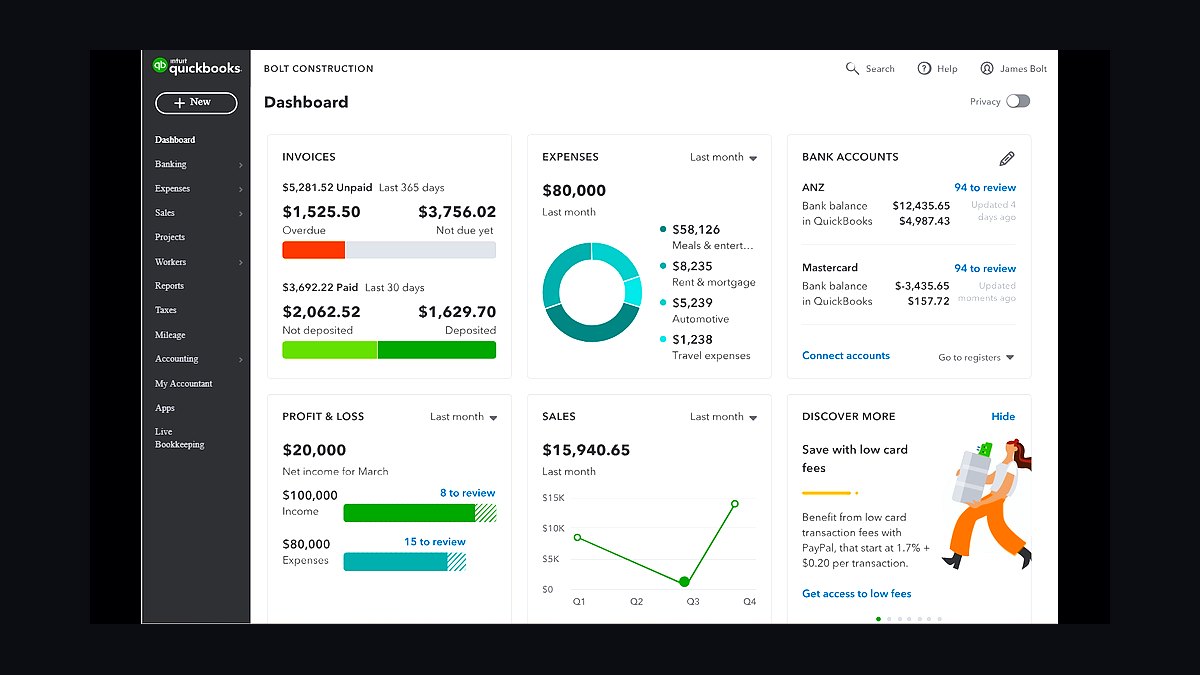
QuickBooks Online ranks eighth because it is where booth-rent deductions, commission splits, and 1099-NEC filings reconcile automatically instead of being rebuilt from memory at tax time. It connects to Gusto and to the booking platform's payout records, so the numbers on the studio's ledger match what artists were actually paid. Pricing scales with tier rather than artist count.
It is for studios that need one accounting ledger tying deposits, payroll, and retail together, especially commission shops where split-calculation errors show up as distrust between artists and ownership. The trade-off is that it adds a monthly cost and a learning curve a solo artist can avoid with a self-employed tax product. Against Gusto alone, it covers accounting rather than payroll, so most growing shops end up running both.
9Later
Later ranks ninth because an Instagram and TikTok posting cadence is the primary discovery funnel for a tattoo studio, and scheduling it costs about $25/month. Clients choose a specific artist by scrolling their healed-work portfolio, not a shop by its storefront, so an artist's personal following often drives more bookings than any paid marketing. Later queues posts across both platforms from one calendar.
It is for studios ready to post consistently, which in the recommended rollout means day 61 through 90, after deposits and consent forms are stable. The trade-off is that scheduling does not create content, so an artist who does not shoot healed work regularly gets little from it. A free Linktree per artist routes followers to that artist's booking page and pairs with Later at almost no cost.
10Podium
Podium ranks tenth because reputation management is the single largest line item outside the booking core, running $249-$399/month, which is why most small shops delay it until walk-in volume justifies the cost. It automates review requests after appointments, feeding the Google Business Profile that drives local discovery for a studio. That price scales with volume rather than artist count.
It is for studios with enough completed appointments that review velocity actually moves local search ranking, not for a new single-chair shop. The trade-off is steep: a free Google Business Profile plus manual review asks covers much of the benefit at zero cost. Against Later, which handles the visual funnel at $25/month, Podium only earns its price once walk-in volume is high.
How we ranked these
We ranked each tool on five weighted criteria: deposit enforcement and per-artist calendar support (30%), total monthly cost at 1, 4, and 10 artists (25%), consent and medical-history form capability (15%), payment processing flexibility (15%), and integration depth with payroll and accounting (15%). Scores came from published pricing pages, vendor documentation, and hands-on trials of each platform's booking flow.
We deliberately ignored feature counts, app-store ratings, and vendor marketing claims about AI or automation, because those rarely change whether a studio collects deposits or files 1099s correctly. We also excluded enterprise salon suites and franchise-focused platforms, since they price and sell outside the single-shop and small multi-artist segment this ranking targets.
What to look for
The variable that actually decides this purchase is how your shop splits money, not how many features a platform lists. Booth-rent shops need per-artist calendars and flat-fee tracking; commission shops need accurate split math feeding payroll; solo artists need the cheapest reliable deposit hold. Match the operating model first, then compare price.
The mistake most buyers make is choosing on price alone or on a demo that looked polished, then discovering the platform cannot pool calendars the way their shop runs. A four-artist commission studio that buys a free single-calendar tool will rebuild every split by hand each month — a hidden labor cost far larger than the subscription they avoided.
Related questions
Does a single-artist studio need the same tech stack as a six-artist shop?
No — the jobs (deposits, consent, marketing) stay the same, but the tools scale down. A solo artist typically runs Square Appointments or Tattoogenda, Square deposits, a Jotform release, and Instagram, for roughly $80-$200/month total.
Can a tattoo studio skip payroll software entirely?
Only if every artist is a 1099 booth-renter and no one is a W-2 employee. The moment a counter manager or apprentice goes on payroll, Gusto or QuickBooks Payroll becomes necessary for tax compliance.
Is Mindbody worth it for a single-location tattoo studio?
Rarely. Mindbody targets multi-location operators and costs more than Vagaro or Booksy without adding capability a single shop needs — it earns its price only once a studio opens a second location.
How often should consent and medical-history forms be reviewed for compliance?
At least annually, and immediately after any state or local health-department rule change, since the forms are the primary evidence a studio produces during an inspection or a dispute.
What does a realistic starter budget look like for a brand-new single-artist studio?
Roughly $80-$200/month: a free or low-cost booking tool (Square Appointments or Tattoogenda), Square payment processing on deposits, a Jotform consent flow around $34/month, a free Linktree, and QuickBooks Self-Employed for taxes, with Instagram handling marketing at no direct cost.
Why does Instagram matter more for a tattoo studio than for most other small businesses?
Because clients choose a specific artist by scrolling their healed-work portfolio, not a shop by its storefront. An artist's personal following often drives more bookings than any paid marketing a studio could run, making Instagram and TikTok the primary funnel rather than a supporting channel.
How does booth-rent versus commission change what software a studio needs?
Booth-rent shops need less payout-tracking complexity since artists keep their own billings; commission shops need the booking platform to calculate and record splits accurately on every ticket so the numbers match what feeds into QuickBooks and Gusto at tax time.
Do consent forms need to be digital, or is paper still acceptable?
Paper works legally in most jurisdictions, but digital forms through Jotform or DocuSign are strongly preferred because they timestamp signatures, store records for years, and can be retrieved instantly during a health-department inspection or a legal dispute.
FAQ
Is a general salon booking app good enough, or does a tattoo studio need tattoo-specific software?
A general platform like Vagaro or Booksy is good enough for most shops because it covers per-artist calendars, deposits, and commission tracking. Tattoo-specific tools like Tattoogenda add project-style design intake that custom, appointment-only artists value most; walk-in and commission shops usually do fine without it.
What's the single highest-ROI piece of a tattoo studio tech stack?
Deposit enforcement. Requiring and holding a deposit — commonly $50-$200 — the moment a client books, and forfeiting it automatically on a no-show, protects the hours an artist spends on custom design work before the session ever happens.
How does booth-rent versus commission change what software a studio needs?
Booth-rent shops need less payout-tracking complexity since artists keep their own billings; commission shops need the booking platform to calculate and record splits accurately on every ticket so the numbers match what feeds into QuickBooks and Gusto at tax time.
Do consent forms need to be digital, or is paper still acceptable?
Paper works legally in most jurisdictions, but digital forms through Jotform or DocuSign are strongly preferred because they timestamp signatures, store records for years, and can be retrieved instantly during a health-department inspection or a legal dispute.
Why does Instagram matter more for a tattoo studio than for most other small businesses?
Because clients choose a specific artist by scrolling their healed-work portfolio, not a shop by its storefront. An artist's personal following often drives more bookings than any paid marketing a studio could run, making Instagram and TikTok the primary funnel rather than a supporting channel.
What does a realistic starter budget look like for a brand-new single-artist studio?
Roughly $80-$200/month: a free or low-cost booking tool (Square Appointments or Tattoogenda), Square payment processing on deposits, a Jotform consent flow around $34/month, a free Linktree, and QuickBooks Self-Employed for taxes, with Instagram handling marketing at no direct cost.
Can a tattoo studio skip payroll software entirely?
Only if every artist is a 1099 booth-renter and no one is a W-2 employee. The moment a counter manager or apprentice goes on payroll, Gusto or QuickBooks Payroll becomes necessary for tax compliance.
Is Mindbody worth it for a single-location tattoo studio?
Rarely. Mindbody targets multi-location operators and costs more than Vagaro or Booksy without adding capability a single shop needs — it earns its price only once a studio opens a second location.
How often should consent and medical-history forms be reviewed for compliance?
At least annually, and immediately after any state or local health-department rule change, since the forms are the primary evidence a studio produces during an inspection or a dispute.
Does a single-artist studio need the same tech stack as a six-artist shop?
No — the jobs (deposits, consent, marketing) stay the same, but the tools scale down. A solo artist typically runs Square Appointments or Tattoogenda, Square deposits, a Jotform release, and Instagram, for roughly $80-$200/month total.
Sources
- https://www.vagaro.com/pro/pricing
- https://booksy.com/biz/en-us/pricing
- https://squareup.com/us/en/appointments/pricing
- https://squareup.com/us/en/payments/pricing
- https://stripe.com/pricing
- https://gusto.com/pricing
- https://www.jotform.com/pricing/
- https://www.podium.com/pricing/
- https://quickbooks.intuit.com/pricing/
Related on PULSE
This page will be disappearing soon. Save it to your device for $1 — or read it free while it is here.
@Kory-White- · if Venmo asks, the last 4 of my number are 2012
This page is gone.
This one is off the shelf now. $1 keeps it on your phone for good — the whole page, pictures and diagrams included.
 pulse-tech-stacksTop 10 Best Tech Stack Tools for Employee Benefits Consulting Firms in 2027
 pulse-tech-stacksTop 10 Best Tech Stack Tools for Private Ambulance and EMS Companies in 2027
 pulse-tech-stacksTop 10 Best Tech Stack Tools for Independent Food Trucks in 2027
 pulse-tech-stacksTop 10 Best Tech Stack Tools for API Security Vendors in 2027
 pulse-tech-stacksTop 10 Best Tech Stack Tools for Threat Intelligence Vendors in 2027
 pulse-tech-stacksTop 10 Best Tech Stack Tools for Online Travel Agencies (OTAs) in 2027
 pulse-tech-stacksTop 10 Best Tech Stack Tools for HVAC Equipment Distributors in 2027
 pulse-tech-stacksTop 10 Best Tech Stack Tools for Appliance Repair Services in 2027
 pulse-tech-stacksTop 10 Best Tech Stack Tools for Tire Shops in 2027
 pulse-tech-stacksTop 10 Best Tech Stack Tools for AI Music Generation Companies in 2027