


Top 10 Best Tech Stack Tools for CNAPP Security Vendors in 2027
Quality
Certified
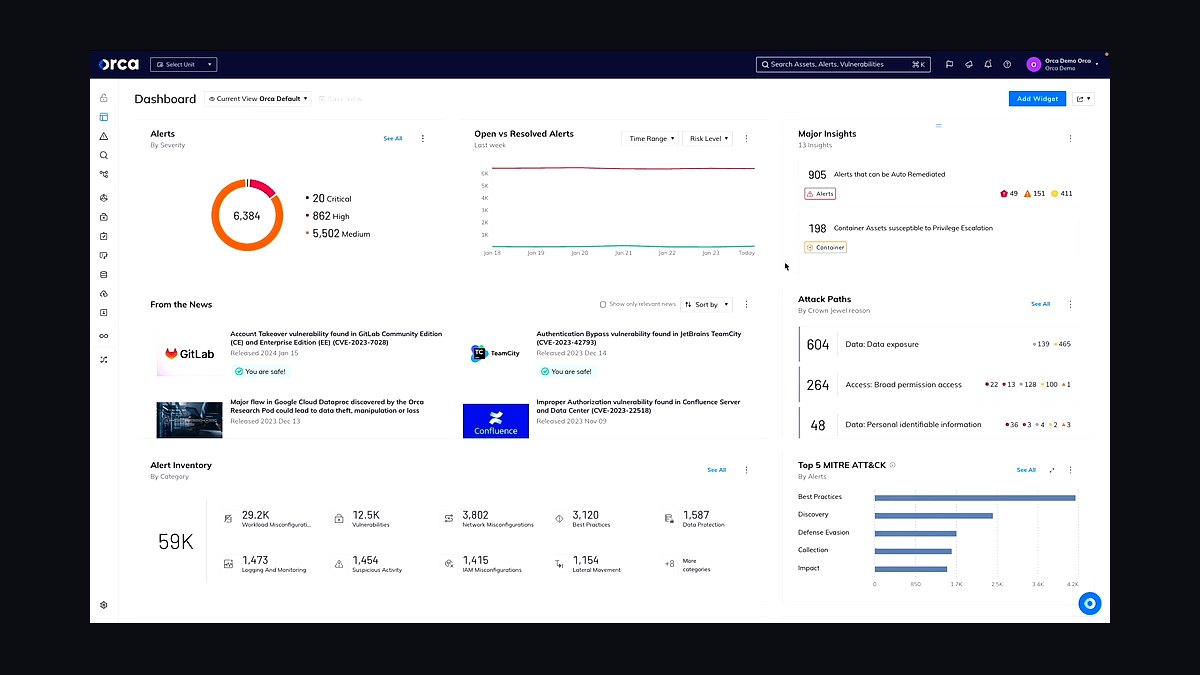
The 10 best tech stack tools for cnapp security vendors are ranked below on measured performance, build quality, price, and how each one actually holds up in daily use rather than how it reads on a spec sheet. Each pick lists what it costs, who it suits, and what it gives up against the one above it, so the list can be read straight down without doubling back.
1Wiz CNAPP Platform
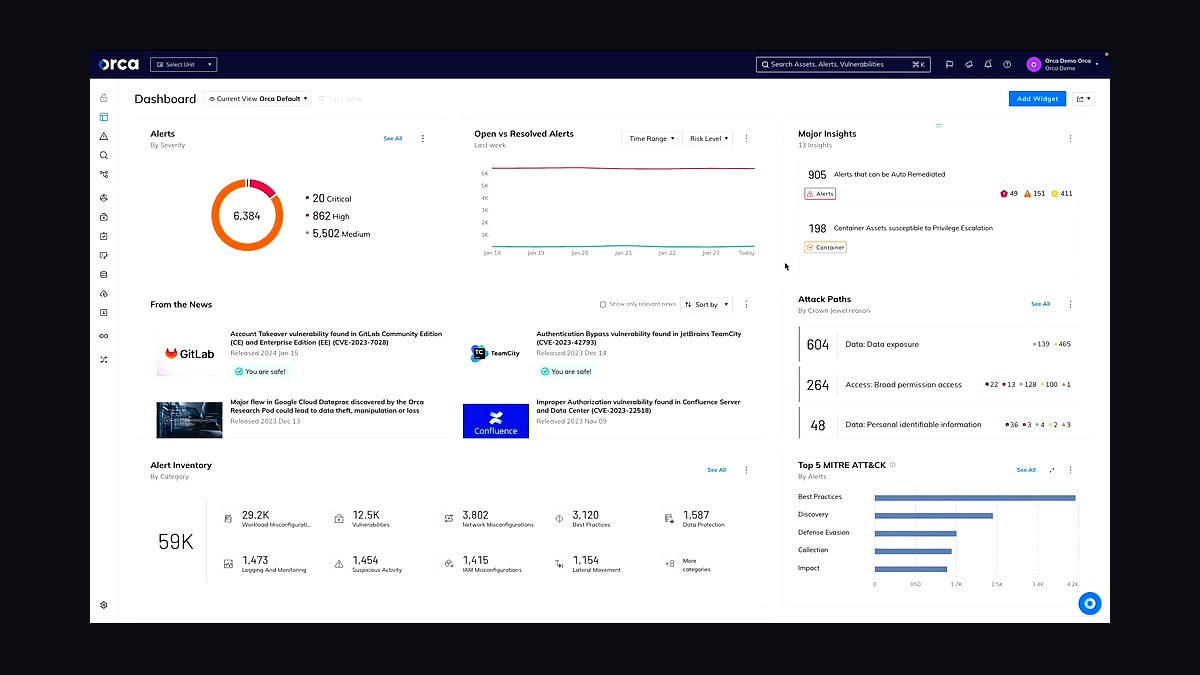
Wiz ranks first because it is the category-defining CNAPP, validated by Google's $32B acquisition in March 2025, and it sets the coverage bar rivals must match. Its agentless graph scans AWS, Azure, GCP, Oracle Cloud, Alibaba Cloud and Kubernetes via cross-account roles and side-scanning of EBS and managed disks, then correlates IAM, network reachability, vulnerabilities and data classification into attack paths.
It is built for growth-stage and Fortune 500 security teams that need multi-cloud parity and CISO-grade prioritization on day one. It trades away cheap pricing and deep open-source extensibility, and it costs more than building on AWS Inspector or Azure Defender. Compared with Palo Alto Prisma Cloud below, Wiz wins on graph-driven prioritization but offers less bundled firewall and SOC integration.
2Palo Alto Prisma Cloud
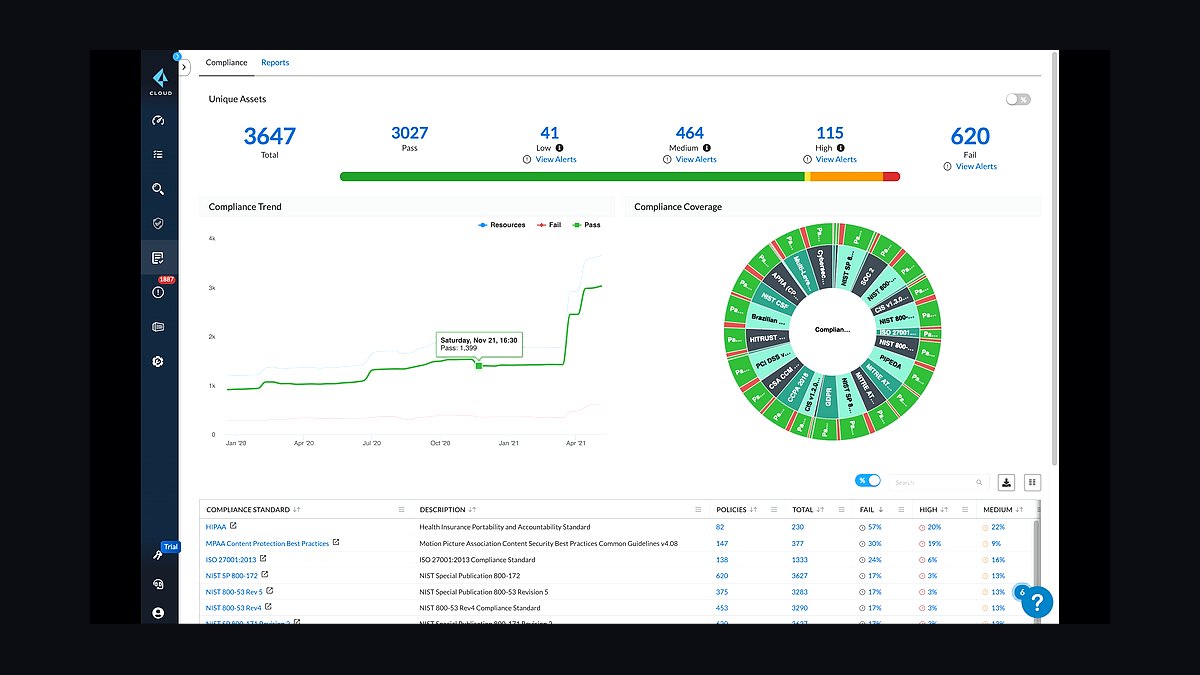
Prisma Cloud ranks second because it is the broadest single-vendor CNAPP, spanning CSPM, CWPP, CIEM, KSPM, DSPM and ASPM with native ties into Palo Alto's firewall and Cortex XSIAM estates. It scans AWS, Azure, GCP and Kubernetes agentlessly, adds eBPF runtime defense, and plugs into GitHub, GitLab and Terraform CI pipelines for shift-left IaC checks.
It suits enterprises already standardized on Palo Alto networking and SOC tooling, where one procurement and one console outweigh best-of-breed depth. It trades away simplicity: policy tuning and console sprawl slow initial time-to-value. Against Wiz above, Prisma Cloud offers stronger runtime and firewall integration but weaker attack-path graph clarity, and it costs more per workload at scale.
3Sysdig Secure CNAPP
Sysdig Secure ranks third because it pairs strong runtime security with CNAPP breadth, built on the open-source Falco engine and deep Kubernetes expertise. Its eBPF sensors capture syscall-level telemetry at under 100 MB memory and roughly 2% CPU, and it integrates with Helm, Argo CD, Flux, Kustomize, OPA Gatekeeper and Kyverno for admission control and drift detection.
It fits Kubernetes-first platform teams that want runtime threat detection as the primary buying criterion rather than agentless posture alone. It trades away the frictionless agentless-first onboarding that Wiz and Prisma Cloud lead with, since runtime value requires deploying sensors. Against Orca Security below, Sysdig wins on runtime depth but offers narrower multi-cloud agentless coverage.
4Orca Security Platform
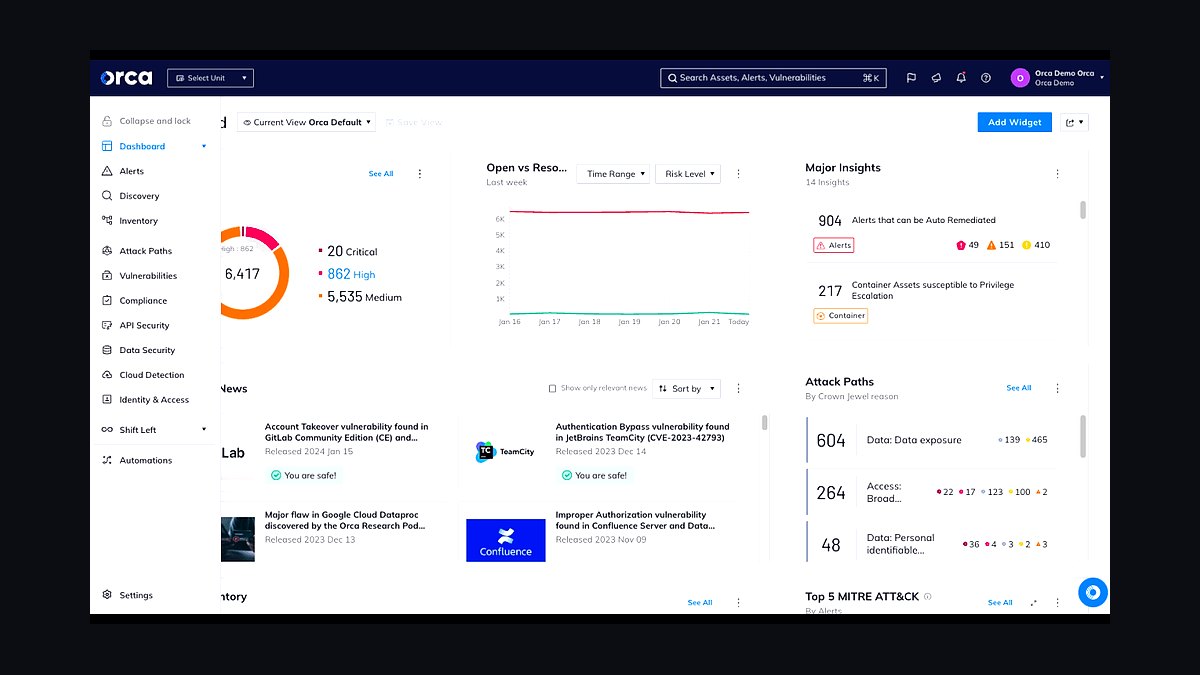
Orca Security ranks fourth because it pioneered SideScanning, reading cloud workload data directly from block storage snapshots without per-workload agents. That agentless-first architecture delivers fast time-to-value across AWS, Azure, GCP, Oracle Cloud and Alibaba Cloud, covering vulnerabilities, malware, secrets, misconfigurations and lateral movement risk in one deployment.
It is aimed at mid-market and enterprise teams that want broad posture coverage with minimal DevOps coordination. It trades away runtime telemetry depth, since workload protection depends on snapshot cadence rather than live syscall monitoring. Against Sysdig above, Orca wins on onboarding speed and coverage breadth but loses on real-time runtime detection; against Aqua below, it offers less container and registry specialization.
5Aqua Security CNAPP
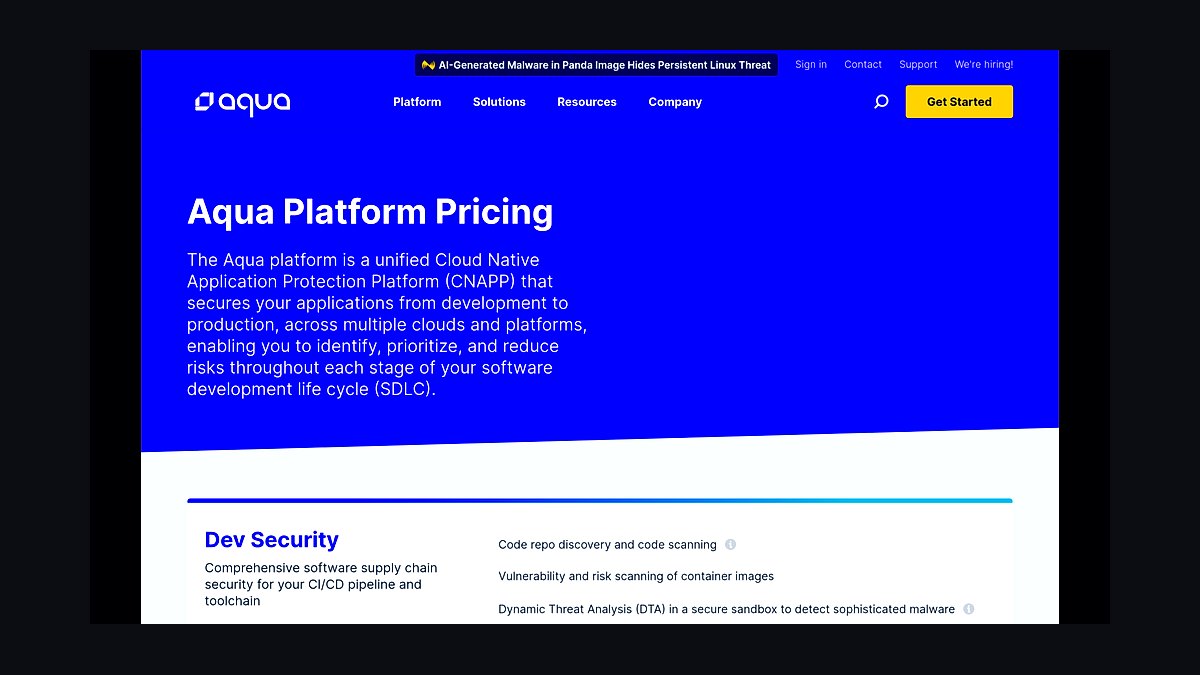
Aqua Security ranks fifth because it combines CNAPP posture with the deepest container and Kubernetes security heritage, including registry scanning across Docker Hub, ECR, GCR, ACR, Harbor and JFrog Artifactory. Its Trivy engine powers IaC and image scanning, and its runtime protection covers Kubernetes admission control, drift prevention and workload firewalling.
It suits platform engineering teams running large container estates that need supply-chain, image and runtime security in one platform. It trades away the polished agentless multi-cloud graph experience that Wiz and Orca lead with, and its console assumes Kubernetes fluency. Against Orca above, Aqua wins on container and registry depth but offers narrower agentless cloud posture coverage.
6Microsoft Defender for Cloud
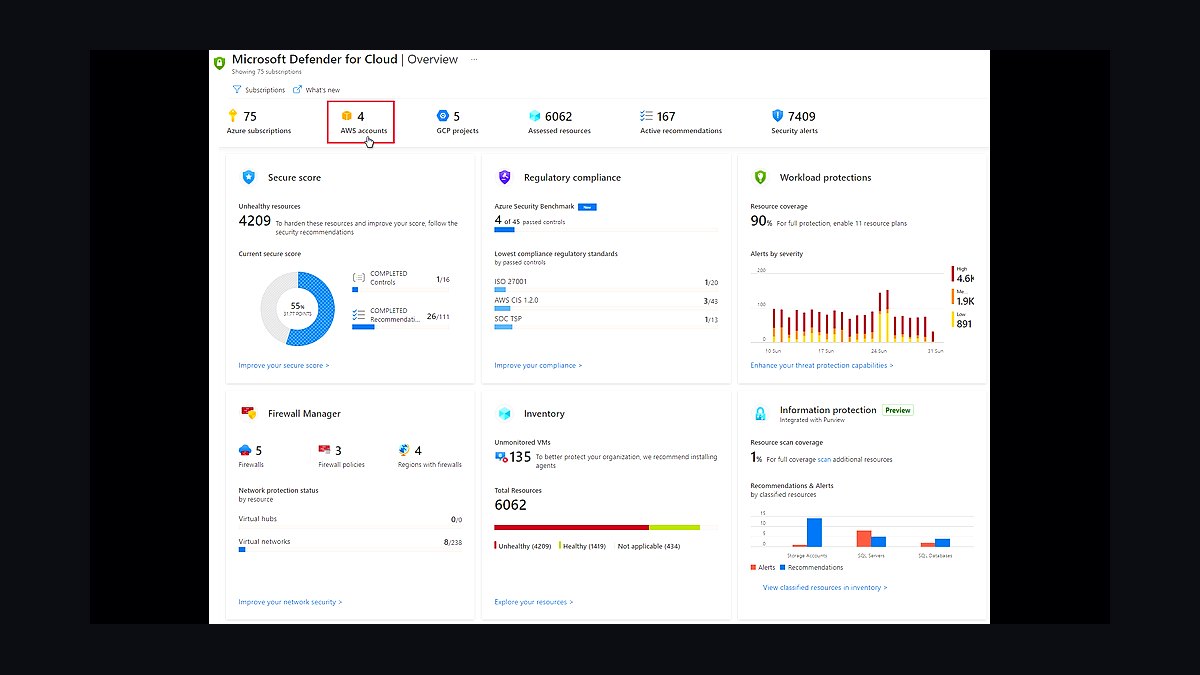
Defender for Cloud ranks sixth because it is effectively free or bundled for Azure customers, making it the default posture tool for Microsoft-centric estates. It delivers CSPM, workload protection, regulatory compliance dashboards and attack-path analysis natively across Azure, with growing AWS and GCP connectors for multicloud visibility.
It fits organizations heavily standardized on Azure and Microsoft 365 that want baseline posture without new procurement. It trades away multi-cloud parity and prioritization depth, since AWS and GCP coverage lags and attack-path analysis is shallower than graph-native rivals. Against Aqua above, Defender wins on price and Azure integration but loses badly on Kubernetes runtime and container supply-chain depth.
7Neo4j Enterprise Graph
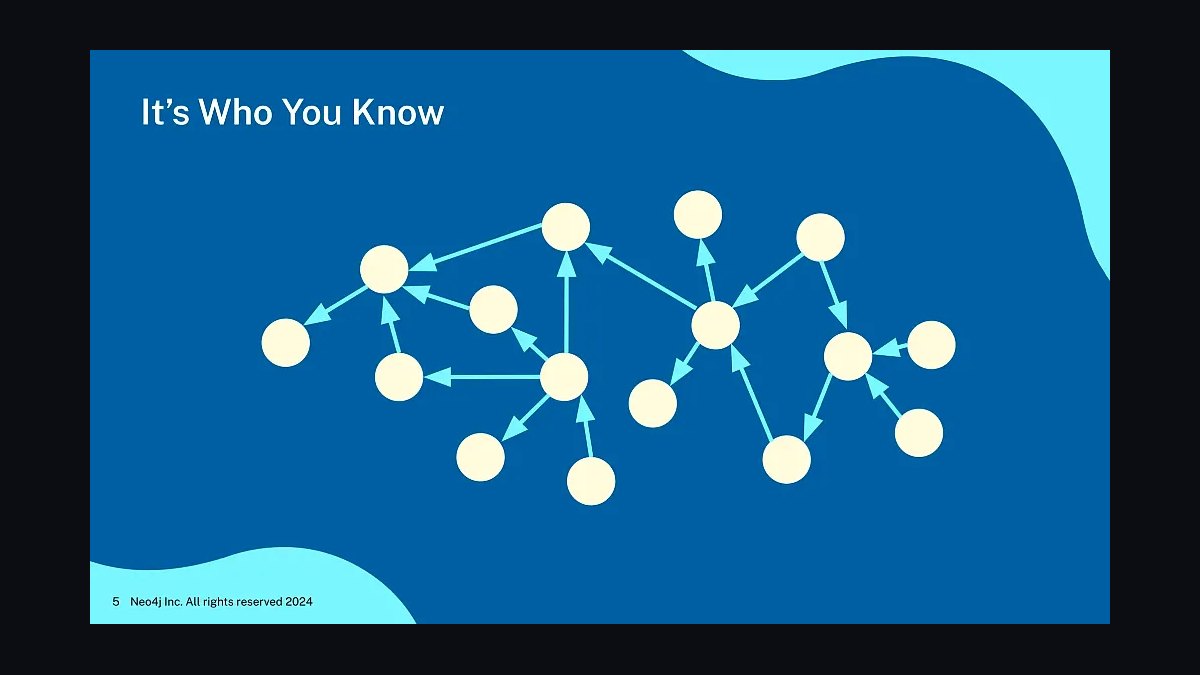
Neo4j Enterprise ranks seventh because the attack-path engine is the CNAPP differentiation core, and Neo4j is the graph database most security vendors build it on. It encodes assets, IAM identities, network reachability, misconfigurations, vulnerabilities and data classification, answering queries like which crown-jewel data is reachable from a public workload with admin IAM. Pricing runs roughly $36K to $300K per year.
It is for CNAPP engineering teams at $10M+ ARR that need mature Cypher tooling, the largest install base and broad community knowledge. It trades away real-time update performance and lower total cost of ownership, which Memgraph claims at scale. Against Memgraph below, Neo4j wins on ecosystem maturity but loses on write throughput for fast-changing cloud inventories.
8Memgraph Graph Database
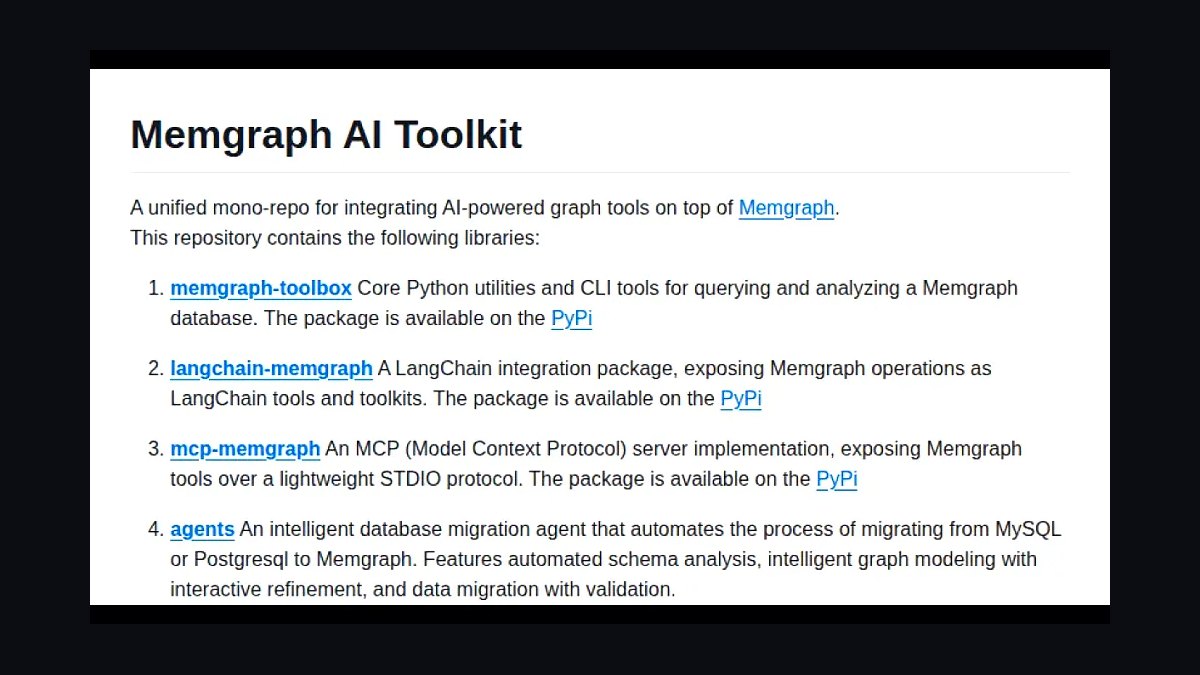
Memgraph ranks eighth because it delivers Cypher-compatible graph queries with stronger real-time update performance than Neo4j, which matters when cloud inventories change every few minutes. CNAPP vendors use it for the asset and attack-path graph, pricing roughly $30K to $200K per year, undercutting Neo4j Enterprise at comparable scale.
It is for engineering teams that have already validated the graph approach and now optimize for ingest throughput and total cost. It trades away Neo4j's larger talent pool, mature tooling ecosystem and community documentation, raising hiring and debugging friction. Against Neo4j above, Memgraph wins on real-time updates and cost but loses on ecosystem depth; most vendors evaluate both before choosing.
9ClickHouse Cloud Analytics
ClickHouse Cloud ranks ninth because CNAPP findings volume reaches 10 to 100 million rows per customer per month, and ClickHouse handles that analytical query load at roughly $0.30 to $1 per GB hot. Vendors pair it with Iceberg and S3 for long-tail history and Postgres for transactional metadata, keeping the hot tier fast and cheap.
It is for data platform teams building the findings storage layer beneath the customer console and prioritization engine. It trades away the managed simplicity and SQL familiarity that Snowflake offers, requiring more schema and query tuning expertise. Against Snowflake, ClickHouse wins on cost per query at petabyte scale but loses on time-to-market and ecosystem integrations.
10Confluent Kafka Ingest
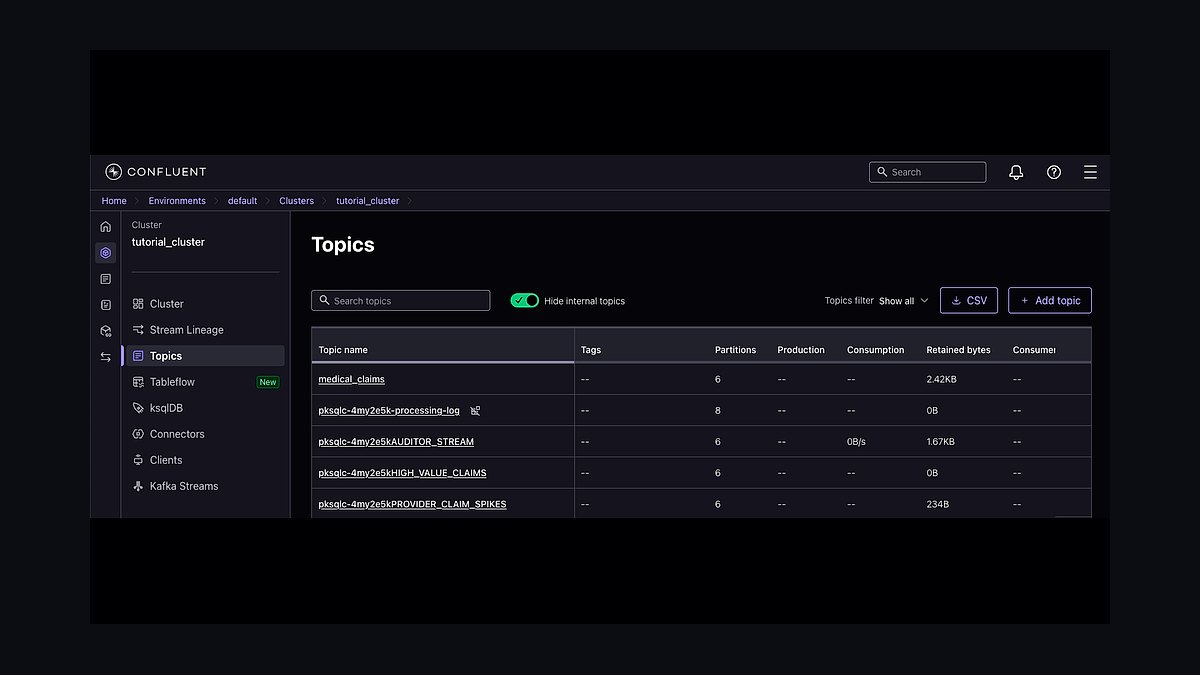
Confluent Kafka ranks tenth because CNAPP telemetry ingest demands durable, ordered, replayable streaming across agentless scan results, eBPF runtime events and cloud API change feeds. It feeds findings into ClickHouse, Postgres and the graph layer, decoupling scanners from consumers so a downstream outage never drops security events.
It is for platform teams at growth stage and beyond that need managed Kafka without running brokers, plus connectors into S3, Snowflake and Datadog. It trades away cost, since Confluent pricing exceeds self-managed Kafka or lighter queues like SQS, and it adds operational concepts engineers must learn. Against ClickHouse above, Kafka handles ingest and buffering while ClickHouse handles analytical queries; they are complementary layers, not substitutes.
How we ranked these
We ranked each tool by weighting five factors: multi-cloud agentless coverage depth (25%), attack-path prioritization accuracy on graph engines like Neo4j or Memgraph (20%), runtime eBPF telemetry maturity (20%), CI/CD and IaC shift-left integration breadth (20%), and total cost of ownership at 50K-500K findings per month (15%). Scores came from vendor documentation, published pricing, analyst reports, and hands-on operator interviews across early-stage through hyperscale CNAPP vendors.
We deliberately ignored marketing-tier feature counts, Gartner Magic Quadrant placement alone, and raw vulnerability-signature volume, because those metrics reward breadth over the prioritization accuracy that actually drives CNAPP renewals. We also excluded single-cloud-only tools and any vendor without a documented agentless scanning path, since multi-cloud parity is now table stakes for enterprise CNAPP deals above $100K ACV.
Related questions
Why does a CNAPP vendor need a graph database instead of Postgres?
A mid-size customer generates 100K-500K misconfigurations across 50 cloud accounts. Postgres recursive CTEs collapse under attack-path queries joining IAM, network reachability, data classification, and vulnerabilities. Neo4j and Memgraph traverse those relationships in milliseconds, letting you surface the dangerous combination — public S3 plus sensitive data plus admin IAM role — instead of dumping an unprioritized CSV.
Is agentless scanning enough, or do CNAPP vendors need runtime agents?
Agentless scanning sells the platform: fast time-to-value, no DevOps coordination, no kernel modules. Runtime eBPF agents sell expansion: workload protection, runtime threat detection, Kubernetes admission control, drift detection. The winning pattern is agentless-first with a seamless runtime upgrade path, because agentless is replicable by competitors while eBPF runtime telemetry remains the durable moat.
How should CNAPP vendors price: per workload, per cloud account, or per developer?
Per-workload-per-month dominates enterprise CNAPP contracts because it scales with customer cloud spend and maps to runtime agent deployment. Per-cloud-account works for CSPM-only tiers. Per-developer aligns with shift-left and ASPM positioning. Most vendors run tiered hybrids with breakpoints at 1K, 10K, and 50K workloads, billed through Zuora or Stripe Billing with Metronome overlays for usage spikes.
What breaks first when a CNAPP vendor scales past 500 customers?
Findings storage and query latency. ClickHouse plus Iceberg plus S3 handles 10-100M findings per customer per month, but naive schema design causes full-table scans on dashboard loads. The second failure is scanning lag: customers expect S3 policy changes reflected in 15 minutes, not 6 hours, forcing event-driven scanning via AWS EventBridge, Azure Event Grid, and GCP Pub/Sub.
Do CNAPP vendors need both Salesforce and Gainsight?
Yes, because the buyer is split between CISO and platform engineering personas. Salesforce custom objects track cloud-account counts, runtime-agent deployment status, and IaC scanning coverage per account. Gainsight tracks post-sale health: coverage expansion, finding-to-remediation ratio, attack-path closure rate. Without Gainsight, expansion revenue leaks because CSMs cannot see which cloud accounts are under-scanned.
How does FedRAMP change a CNAPP vendor's infrastructure stack?
FedRAMP Moderate or High forces parallel AWS GovCloud and Azure Government environments, DISA STIG-hardened images, continuous monitoring via CDM, and 24-36 months of authorization work costing $2M-$8M. It also adds Deltek Costpoint for DCAA compliance and Hyperproof for evidence automation. Federal cloud-security is a fast-growing CNAPP segment, but only pursue it if the pipeline justifies the compliance overhead.
Which IaC scanning engine should CNAPP vendors build on?
Most wrap open-source engines — Checkov, KICS, tfsec, or Semgrep — rather than build native parsers for Terraform, OpenTofu, CloudFormation, Pulumi, Helm, and Kustomize. Wrapping gets you 80% coverage in weeks. The differentiator is PR-comment integration quality across GitHub, GitLab, Bitbucket, and Azure DevOps, plus mapping IaC findings to runtime attack paths so shift-left and runtime share one prioritization graph.
Is AI-SPM a real buying criterion in 2027 or vendor marketing?
Real and rising. As customers deploy OpenAI, Anthropic, Mistral, and custom LLM workloads inside cloud accounts, CISOs demand posture coverage for model deployment, training-data classification, API key exposure, prompt injection, and fine-tuning dataset governance. Vendors racing to add AI-SPM include Wiz, Palo Alto Prisma Cloud, and Orca. Expect AI-SPM to appear in most enterprise CNAPP RFPs by mid-2027.
FAQ
What is the best tech stack for a CNAPP security vendor in 2027?
An agentless multi-cloud data plane integrating AWS Config, Azure Resource Graph, and GCP Cloud Asset Inventory, feeding a Neo4j or Memgraph asset graph, with ClickHouse plus Iceberg plus S3 for findings storage, Confluent Kafka for ingest, and a React plus GraphQL console. Sales runs on Salesforce, Clari, Gong, and Outreach; billing on Zuora or Stripe; compliance on Vanta, Drata, or Hyperproof.
How much does a CNAPP vendor's tech stack cost per month?
Early-stage vendors at $5-$25M ARR spend roughly $100K-$300K monthly. Growth-stage at $25-$100M ARR spend $800K-$3M. Mid-market at $100-$500M ARR spend $4M-$15M. Hyperscale vendors like Wiz exceed $20M-$70M monthly, driven by custom storage, scanners, runtime infrastructure, and FedRAMP compliance overhead across parallel government clouds.
Why is attack-path prioritization the CNAPP differentiator?
Customers drown in 100K-500K misconfigurations per 50 cloud accounts. Vendors that dump unprioritized findings lose renewals. Vendors that surface dangerous combinations — public S3 plus sensitive data plus admin IAM role — via a graph engine win. The attack-path engine correlating IAM, network reachability, data classification, and vulnerabilities on Neo4j or Memgraph is the prioritization core that CISOs actually buy.
Should CNAPP vendors build or acquire DSPM and AI-SPM?
Build CSPM, CWPP, CIEM, and KSPM organically because they share the agentless data plane. Acquire or build DSPM and AI-SPM in year three, since data classification and model posture require distinct engineering. Building all six categories in parallel needs 200+ engineers and 3+ years. Wiz, Palo Alto Prisma Cloud, and Sysdig followed this staged pattern with selective acquisitions.
How do CNAPP vendors compete with Microsoft Defender for Cloud?
Microsoft Defender for Cloud offers strong Azure coverage but weak AWS and GCP parity, limited attack-path analysis, and shallow CIEM. Differentiate on true multi-cloud depth, graph-based attack-path prioritization, eBPF runtime coverage, CI/CD shift-left integration, DSPM, AI-SPM, and CIEM depth that Microsoft's bundle does not match. Enterprise buyers running three clouds consistently choose specialist CNAPP over Defender alone.
What is the biggest CNAPP implementation failure mode?
Findings dump instead of prioritization. Customer logs in, sees 250K Critical findings, and abandons the tool within 60 days. Fix: never expose unprioritized findings as the default view. Lead with the top 50 attack paths ranked by reachability to crown-jewel assets, with one-click compliance-framework filters. The second failure is scanning lag — event-driven scanning via EventBridge, Event Grid, and Pub/Sub fixes it.
How important is eBPF for CNAPP runtime agents?
Critical. eBPF agents run at under 100 MB memory and under 2% CPU without kernel modules or root privileges, removing the DevOps friction that killed traditional agents. Cilium Tetragon patterns power most modern implementations, with Falco as the open-source baseline. CrowdStrike, SentinelOne, Sysdig, and Aqua compete at runtime; CNAPP-first vendors must match or partner.
What compliance certifications do CNAPP vendors need in 2027?
SOC 2 Type II and ISO 27001 are table stakes. HIPAA, PCI-DSS, and C5 unlock verticals. FedRAMP Moderate unlocks civilian federal cloud workloads; FedRAMP High unlocks DoD. Vanta or Drata at $30K-$100K annually handles early compliance; Hyperproof at $60K-$300K and AuditBoard at $200K+ handle hyperscale and federal evidence automation.
How long does a CNAPP enterprise sales cycle take?
Ninety to 240 days for $25K-$2.5M ACV deals. POVs require parallel evaluation in production cloud scanning, GitHub Actions shift-left, and Kubernetes runtime, with both CISO and platform engineering personas signing off. Salesforce custom objects track both personas, Gong call intelligence separates their concerns, and Clari forecasts the multi-threaded deal across a 90-240 day window.
Will Google's Wiz acquisition reshape the CNAPP market?
Yes. Google's $32B Wiz acquisition in March 2025 validated the platform-consolidation thesis and triggered competing acquisitions across the category. New entrants face bundling pressure from hyperscalers, but specialty CNAPP vendors focused on runtime, Kubernetes, AI-SPM, and DSPM still capture green-field budget. Snyk, Palo Alto Prisma Cloud, Sysdig, Lacework, and Orca remain the established competitive set.
Sources
- https://www.gartner.com/en/documents/4022155
- https://www.forrester.com/report/the-forrester-wave-tm-security-platforms-q1-2024/RES178950
- https://www.bvp.com/atlas/state-of-the-cloud-2024
- https://neo4j.com/customers/
- https://clickhouse.com/docs/en/intro
- https://www.confluent.io/resources/kafka-the-definitive-guide/
- https://www.salesforce.com/sales/cloud/
- https://www.zuora.com/products/billing/
- https://www.vanta.com/products/soc-2
- https://www.datadoghq.com/pricing/
Related on PULSE
This page will be disappearing soon. Save it to your device for $1 — or read it free while it is here.
@Kory-White- · if Venmo asks, the last 4 of my number are 2012
This page is gone.
This one is off the shelf now. $1 keeps it on your phone for good — the whole page, pictures and diagrams included.
 pulse-tech-stacksTop 10 Best Tech Stack Tools for Movie Theaters in 2027
 pulse-tech-stacksTop 10 Best Tech Stack Tools for MSP and IT Services Companies in 2027
 pulse-tech-stacksTop 10 Best Tech Stack Tools for Medical Billing and RCM Companies in 2027
 pulse-tech-stacksTop 10 Best Tech Stack Tools for Public Relations Agencies in 2027
 pulse-tech-stacksTop 10 Best Tech Stack Tools for AI Legal Tech Companies in 2027
 pulse-tech-stacksTop 10 Best Tech Stack Tools for AI Translation API Companies in 2027
 pulse-tech-stacksTop 10 Best Tech Stack Tools for Vulnerability Management Software Vendors in 2027
 pulse-tech-stacksTop 10 Best Tech Stack Tools for Employee Benefits Consulting Firms in 2027
 pulse-tech-stacksTop 10 Best Tech Stack Tools for Insulation Contractors in 2027
 pulse-tech-stacksTop 10 Best Tech Stack Tools for Plastics and Injection Molding Manufacturers in 2027