


Top 10 Best Tech Stack Tools for Cannabis Cultivation Facilities in 2027
Quality
Certified
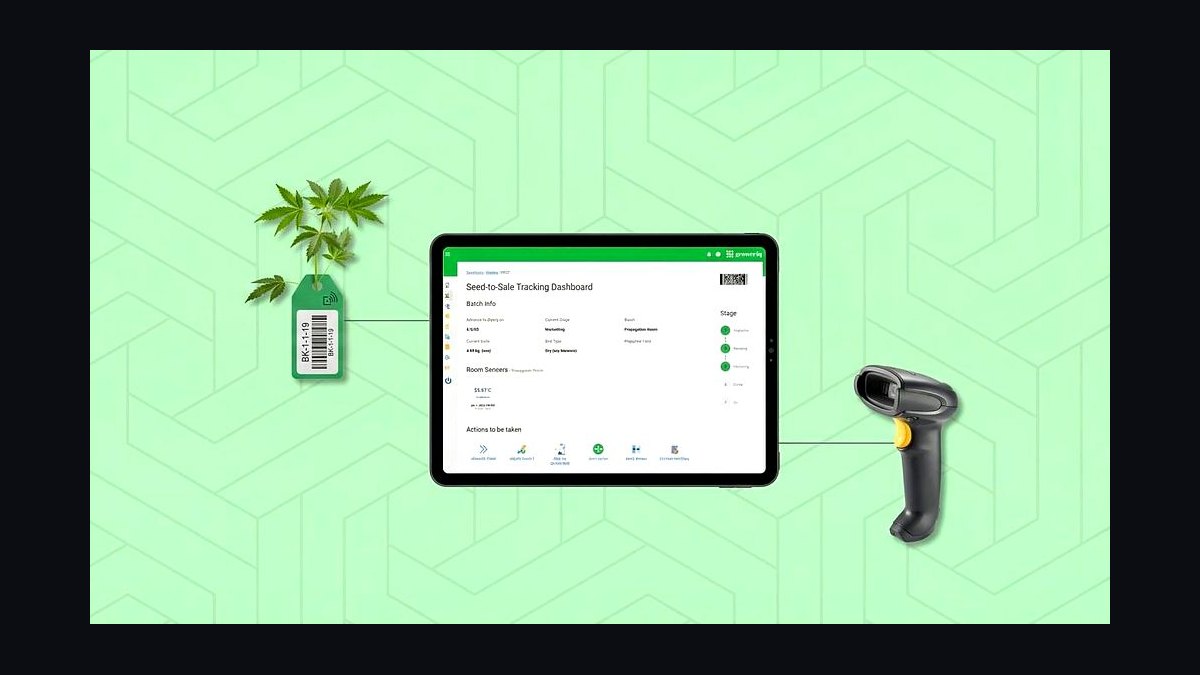
The 10 best tech stack tools for cannabis cultivation facilities are ranked below on measured performance, build quality, price, and how each one actually holds up in daily use rather than how it reads on a spec sheet. Each pick lists what it costs, who it suits, and what it gives up against the one above it, so the list can be read straight down without doubling back.
1Metrc Seed-to-Sale

Metrc ranks first because it is the mandated track-and-trace system in a large majority of U.S. regulated cannabis markets, making it non-optional infrastructure for any licensed cultivation facility. Every plant receives an RFID tag, every batch gets an ID, and every transfer requires a manifest pushed through its API. State fee schedules are published per license plus per-tag costs.
This is for any licensed operator in a Metrc-contracted state who must report plant counts, batches, and transfers daily. It trades away nothing because you cannot substitute it — the only real choice is which certified commercial software sits on top and pushes data into its API. Compare it to BioTrack, which holds other state contracts instead.
2BioTrack Traceability

BioTrack ranks second because it holds state track-and-trace contracts where Metrc does not, including a substantial Canadian deployment history and several U.S. regulated markets. Like Metrc, it is regulator-assigned rather than operator-selected, so its ranking reflects jurisdictional coverage rather than feature superiority. Per-license and per-tag fees apply.
This is for cultivators licensed in a BioTrack-contracted state or Canadian province who must report plant and package movements into the mandated system. It trades away vendor choice entirely — you implement what your regulator contracted. Compare it to Metrc: whichever your state mandates wins, and the real decision is the certified ERP interfacing with it.
3Argus Controls

Argus Controls ranks third because it brings decades of commercial greenhouse horticultural control logic to cannabis, handling multiple staggered flower rooms with independent setpoints, complex fertigation recipes, and modulating equipment control. It is wired into every piece of equipment, making it the most expensive component to change after installation.
This is for multi-room facilities past the complexity threshold — several independently controlled zones each running distinct recipes. It trades away easy self-installation and cloud-first interfaces for dealer-network field service and industrial reliability. Compare it to Priva: both come from greenhouse control, and local integrator availability should decide between them.
4Priva Climate Control
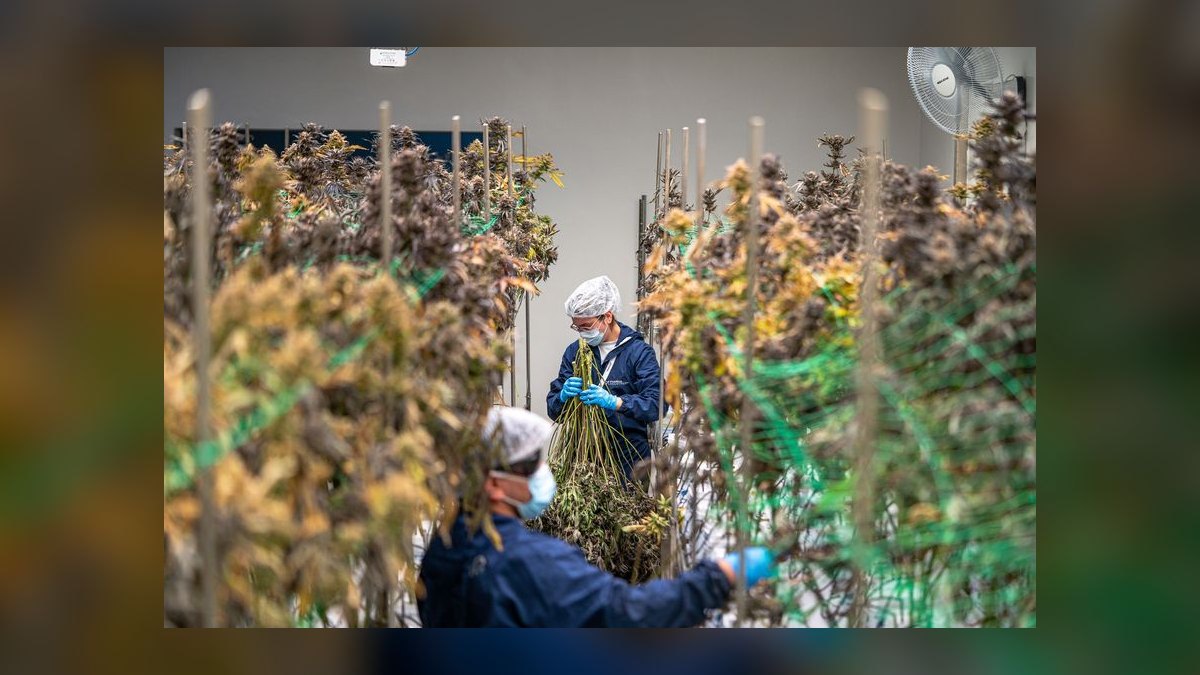
Priva ranks fourth for the same reason as Argus: it is a commercial greenhouse climate and process control platform with decades of horticultural logic, deployed across tomato and ornamental production before cannabis. It handles simultaneous different setpoints, light schedules, and irrigation recipes running in parallel across staggered rooms.
This is for larger cultivators whose zone count has climbed past a handful with distinct recipes per zone. It trades away cannabis-native cloud interfaces and self-service configuration for industrial capability and dealer-based support. Compare it to Argus directly — the deciding factor is which controls integrator actually services your geography.
5Growlink

Growlink ranks fifth as a cannabis-native control platform offering cloud-first interfaces and easier remote access than legacy greenhouse controllers. It suits small to mid-size operations where self-installation or contractor installation with remote support is viable. It handles environmental control, irrigation scheduling, and sensor integration without a dealer network.
This is for single-room or small multi-room facilities whose feature needs match a cloud platform and whose budget is proportionate. It trades away the deep modulating control and local field-tech service that Argus and Priva provide. Compare it upward to Argus once independently controlled zone count and recipe complexity cross the industrial threshold.
6DesignLights Consortium QPL
The DesignLights Consortium Horticultural Lighting qualified products list ranks sixth because most utility horticultural lighting rebate programs require fixtures to appear on it, making it free money left on the table if ignored. It publishes photosynthetic photon efficacy figures so fixtures can be compared on equal footing.
This is for any cultivator buying LED fixtures who wants rebate eligibility and verifiable efficacy specs rather than marketing claims. It trades away nothing — checking the list before purchase costs nothing. Compare it to any fixture purchase decision: a fixture not on the list usually is not rebate-eligible, which changes the payback math entirely.
7Fluence Horticultural LED
Fluence ranks seventh as a horticultural LED fixture line with published photosynthetic photon efficacy figures and dimming and spectrum control suited to cannabis flower rooms. LEDs draw less power for equivalent photon flux than legacy HPS and shed less heat, reducing cooling load on top of direct lighting savings.
This is for cultivators running indoor flower rooms who need dimmable, platform-controllable fixtures with published efficacy specs. It trades away the lowest upfront cost — payback depends on your local electricity rate and rebate offer. Compare it against the DLC QPL first, since rebate eligibility changes the economics substantially.
8Dosatron Dosing Injectors

Dosatron ranks eighth because water-powered dosing injectors mix nutrient solutions without electricity, making them a reliable fertigation component in high-humidity grow environments. They pair with EC and pH probes on the output line so dosing is measured rather than blind. Dosing without output measurement is dosing blind.
This is for cultivators wiring fertigation as a controlled loop with feedback, where injectors mix, the controller schedules, and probes verify. It trades away the automated recipe flexibility of fully electronic dosing systems. Compare it to the control platform above it: the injector executes, but the controller and sensors must close the loop.
9Grodan Stone Wool Substrates

Grodan ranks ninth for stone wool substrates paired with root-zone sensing, which closes the irrigation loop further and makes crop-steering strategies possible. Substrate moisture sensors feeding the controller allow irrigation decisions based on actual root-zone conditions rather than schedule alone.
This is for cultivators pursuing crop steering who need substrate-level feedback beyond air sensors and runoff measurement. It trades away the simplicity of inert media run on fixed schedules. Compare it to Dosatron above: injectors mix the solution, but substrate sensing determines when and how much reaches the root zone.
10Netafim Drip Irrigation

Netafim ranks tenth as drip irrigation infrastructure for controlled fertigation loops in cannabis cultivation. Drip lines deliver measured solution to each plant or block, and paired with valves and VFDs they become the actuation layer the environmental controller commands. Emitter uniformity determines whether every plant receives the same recipe.
This is for cultivators wiring irrigation as a controlled loop with EC and pH feedback and ideally runoff measurement. It trades away the flexibility of hand-watering or simpler delivery methods. Compare it to Grodan above: Netafim delivers the solution, while substrate sensing decides the timing.
How we ranked these
We ranked tools by weighting four criteria: depth of native integration with state-mandated track-and-trace APIs, breadth of environmental control logic (VPD, fertigation, staged setpoints), documented equipment compatibility lists, and total cost of ownership over a five-year horizon including renewal pricing. Compliance-layer tools were scored on per-state certification status; control-layer tools on zone count, local fallback behavior, and dealer support density.
We deliberately ignored vendor-supplied yield-prediction claims, blockchain provenance pitches, and any AI feature without a published validation dataset, because none of these are licensing requirements and none substitute for dehumidification capacity. We also excluded marketing square-footage ceilings and national-average payback slides, since utility rates, rebates, and state fee schedules vary enough that averages mislead more than they inform.
What to look for
What matters most is the layer you cannot swap later: the control platform wired into every room. Count your independently controlled zones and distinct recipes first. If that number is climbing past a handful, you are in commercial-greenhouse controller territory regardless of square footage. Then verify local support — name the integrator who would actually service you and call them before signing.
The mistake most buyers make is buying a bundled everything-from-one-vendor stack, then discovering the bundle is strong in one layer and weak in another. A lighting company's controls software is usually lighting control with an environmental feature bolted on. Buy each layer from a vendor whose core business is that layer, and demand documented integration between them.
Related questions
Which track-and-trace system will my state require in 2027?
You do not choose this — your state does. Metrc holds contracts in a large majority of U.S. licensed markets; BioTrack holds several state contracts plus significant Canadian deployment. Look up your licensing agency's page directly, read the reporting deadlines verbatim, and budget the per-license fee plus per-tag costs. Your real decision is which certified commercial software pushes data into that API.
Can one platform handle both environmental control and compliance reporting?
Rarely well. Control platforms manage setpoints, irrigation, and equipment modulation; compliance software manages plant tags, batch IDs, manifests, and state API pushes. Some products cover both adequately at small scale, but at multi-room scale the two jobs diverge enough that separate best-in-class tools with a documented integration usually beat one product attempting both.
How do I know if I need an industrial controller versus a cloud-native platform?
Count independently controlled zones with distinct recipes. A single room or small multi-room operation runs fine on a cannabis-native cloud platform. Once you have multiple staggered flower rooms with independent setpoints and complex fertigation, you need commercial-greenhouse-class control. The crossover is a complexity threshold, not a fixed square footage number.
What happens to my facility if the internet drops for six hours?
Ask every controller vendor this directly. The correct answer: the local controller continues executing schedules and setpoints autonomously and syncs when connectivity returns. If control degrades or equipment reverts to defaults, that is a facility-risk issue, not a convenience issue. Rural sites on marginal connections should weight this heavily in selection.
Are utility rebates actually available for cannabis grow lighting?
Yes, in many legal states. Utilities run horticultural lighting rebate programs, and most require fixtures to appear on the DesignLights Consortium Horticultural Lighting qualified products list. Checking the DLC list before purchase is free money — an unlisted fixture usually is not rebate-eligible. Run payback math with your actual utility rate and actual rebate offer, never a vendor's national average.
How many environmental sensors does a flower room need?
More than one, at canopy height, spread across the room's airflow zones, plus at least one above canopy. A single center-room sensor reports a fiction. Persistent disagreement between canopy sensors in the same room indicates an airflow problem, not a sensor problem. Treat that spread as a commissioning metric before plants go in.
Is blockchain required for cannabis supply chain compliance in 2027?
No. State track-and-trace obligations are met entirely by the state's mandated system. Immutable-ledger products exist for brand-level provenance claims and some are interesting, but nothing about them is required for a cultivation license, and none substitutes for the state system. Do not let a blockchain pitch displace budget from dehumidification.
What is the most expensive mistake in a cultivation tech build?
Buying analytics before instrumentation. Operators get sold yield prediction while running three sensors across twelve thousand square feet. Predictive models trained on sparse, unvalidated data produce confident nonsense. Instrument densely, log several full cycles, validate logs against reality, then ask software to find patterns. Any vendor promising accurate prediction without clean historical data is selling a demo.
FAQ
What is the best tech stack for a cannabis cultivation facility in 2027?
Layer four things: state-mandated seed-to-sale reporting (Metrc or BioTrack, whichever your license requires), an industrial environmental controller running HVAC and fertigation, LED fixtures with dimming and spectrum control, and a sensor network feeding both. Buy the compliance layer first, the controller second, and everything else against measured bottlenecks.
Do I get to choose my track-and-trace provider?
No. Your state contracts the provider and you report into it. Metrc is the contracted system in a large majority of adult-use and medical states; BioTrack holds several state contracts. Look up your regulatory agency page, confirm the mandated system, and budget its per-license fee and RFID tag costs. Your choice is only the certified software sitting on top.
Why is the control platform the most important purchase?
It is physically wired into every piece of equipment in every room, making it the most expensive component to change later. Sensors and fixtures are modular and swappable next season; a control platform is not. Buy it before lighting and let its native integration list constrain your equipment selection.
What does native integration actually mean for equipment?
Native means the controller can read equipment state and modulate it. A dry-contact relay means it can only turn equipment on and off. A dehumidifier you can only switch on and off will overshoot. Ask every controller vendor for two lists: equipment natively controlled, and equipment controlled only through dry contacts.
How should I size HVAC relative to lighting?
Do the mechanical design before the software design. HVAC and dehumidification sizing is driven by transpiration load, which is driven by canopy size and light intensity. Install lights first and size HVAC second and you will be under-dehumidified in late flower. Software cannot compensate for undersized equipment — it only tells you how badly you are losing.
Is VPD the right metric to control against?
VPD is genuinely the right lens for transpiration management, but VPD calculated from a single air sensor is not what the plant experiences. Leaf surface temperature runs below air temperature under transpiration, and the deficit at the leaf drives stomatal behavior. Facilities chasing an air-derived VPD setpoint without measuring leaf temperature are optimizing a proxy.
Why are consumer-grade sensors a problem in production rooms?
They are not rated for continuous duty in high humidity, have no documented calibration drift specs, no local fallback when the cloud is down, and cannot join a controller's alarm hierarchy. The failure mode is not inaccuracy — it is silent failure nobody notices until a room is lost. This still happens constantly, usually labeled temporary.
How often do EC, pH, and CO2 sensors need calibration?
More often than most teams do it. EC and pH probes drift, humidity sensors drift, and CO2 sensors drift substantially over a year. A calibration schedule with logged results is unglamorous and it is what keeps your dataset trustworthy. An uncalibrated CO2 sensor reading low will have your controller injecting expensive CO2 indefinitely with no error message.
Should I automate before my standard operating procedures are stable?
No. Automation encodes a process, so automating an unstable process means automating chaos at speed. Run manual or semi-automated for a cycle or two, write down what actually works, then automate that. Overbuilding automation before SOPs exist is a common and expensive sequencing error in new facilities.
When does multi-site ambition change the architecture?
If site two is real and near, you want genuine multi-site rollup from day one: common recipes pushed to all sites, comparative reporting across sites, one alarm console. Retrofitting multi-site onto per-site independent installs is painful and usually means re-standardizing everything. This changes architecture, not just license count.
Sources
- https://www.metrc.com/
- https://www.biotrack.com/
- https://www.arguscontrols.com/
- https://www.priva.com/
- https://www.designlights.org/horticultural-lighting/
- https://www.growlink.com/
- https://www.energy.gov/eere/ssl/horticultural-lighting
- https://www.agriculture.ny.gov/cannabis/cannabis
Related on PULSE
This page will be disappearing soon. Save it to your device for $1 — or read it free while it is here.
@Kory-White- · if Venmo asks, the last 4 of my number are 2012
This page is gone.
This one is off the shelf now. $1 keeps it on your phone for good — the whole page, pictures and diagrams included.
 pulse-tech-stacksTop 10 Best Tech Stack Tools for Data Loss Prevention (DLP) Software Vendors in 2027
 pulse-tech-stacksTop 10 Best Tech Stack Tools for Insulation Contractors in 2027
 pulse-tech-stacksTop 10 Best Tech Stack Tools for Appliance Repair Services in 2027
 pulse-tech-stacksTop 10 Best Tech Stack Tools for AI Translation API Companies in 2027
 pulse-tech-stacksTop 10 Best Tech Stack Tools for RV Dealerships in 2027
 pulse-tech-stacksTop 10 Best Tech Stack Tools for Home Builders and Residential Developers in 2027
 pulse-tech-stacksTop 10 Best Tech Stack Tools for Hair Salons in 2027
 pulse-tech-stacksTop 10 Best Tech Stack Tools for Employee Benefits Consulting Firms in 2027
 pulse-tech-stacksTop 10 Best Tech Stack Tools for Bot Mitigation Vendors in 2027
 pulse-tech-stacksTop 10 Best Tech Stack Tools for Small Pest Control Companies in 2027