


Top 10 Best Tech Stack Tools for Specialty Coffee Roasters in 2027
Quality
Certified
The 10 best tech stack tools for specialty coffee roasters are ranked below on measured performance, build quality, price, and how each one actually holds up in daily use rather than how it reads on a spec sheet. Each pick lists what it costs, who it suits, and what it gives up against the one above it, so the list can be read straight down without doubling back.
1Cropster Roast

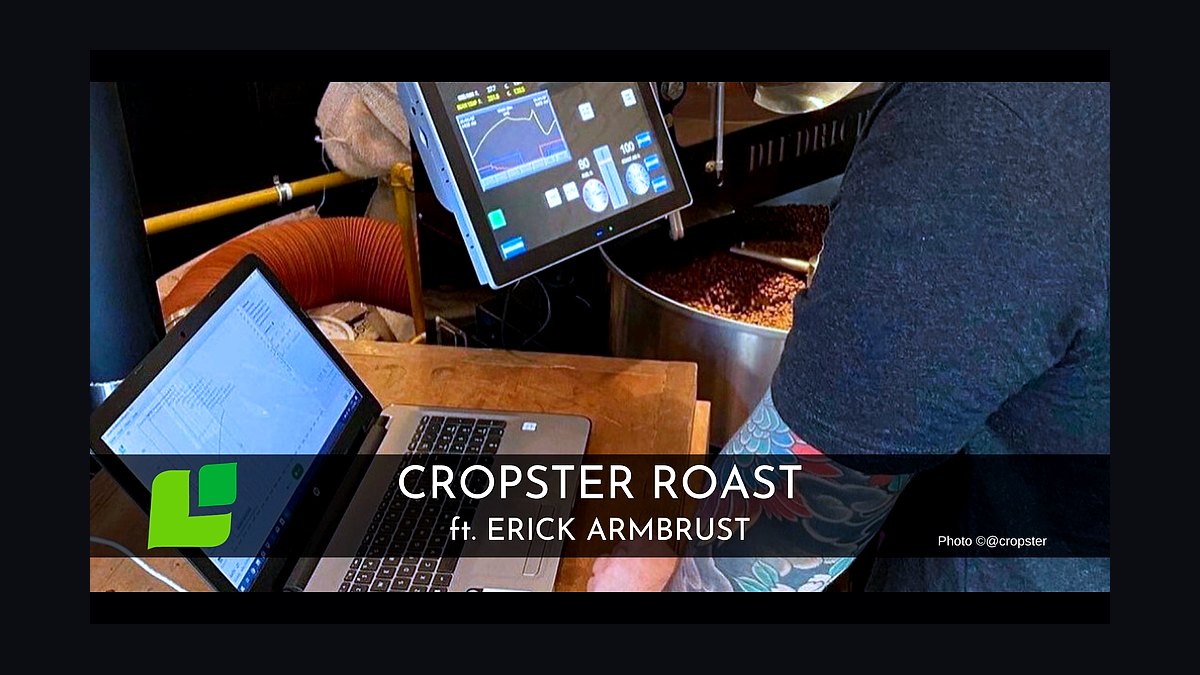
Cropster Roast ranks first because it is the roast-profiling anchor nearly every specialty roastery adopts, logging bean temperature curves, first-crack timing, and development ratio for every batch on one cloud platform. Multi-user plans run from free Artisan-tier up to a few hundred dollars monthly with QC modules, and the data trail defends cupping scores when a wholesale account reports a flavor drift.
It suits roasteries with more than one person roasting or reviewing profiles, where cloud collaboration and QC workflows justify the subscription over free Artisan. The trade-off is cost and internet dependency versus a self-hosted alternative. Compared with Artisan directly below, Cropster adds team access and reporting that a solo roaster may not need yet.
2Artisan Roast Software

Artisan ranks second as the free, open-source roast-profiling tool that small and hobbyist-to-pro roasters self-host, capturing the same bean temperature, first-crack, and development-ratio curves as paid platforms at zero license cost. It runs on a laptop connected to the drum's probe, and the profile log becomes the reference for reproducing a batch weeks later.
It is for one-person roasting operations comfortable configuring software and hardware themselves, and for startups preserving capital before volume justifies Cropster. The trade-off is no cloud sync, no multi-user collaboration, and manual backup responsibility. Compared with Cropster above, it saves hundreds monthly but adds setup friction and no QC workflow layer.
3Cropster Origin

Cropster Origin ranks third because it connects green coffee intake, batch-level inventory, and landed cost per SKU to the roast profiles already logged in Cropster Roast, so every roast automatically decrements green stock and increments finished goods. Plans typically land in the low-to-mid hundreds monthly once lot traceability and multi-warehouse storage are tracked.
It is for roasteries managing several origins with different aging windows and multiple finished formats, where spreadsheets start producing stale counts. The trade-off is another subscription layered onto Cropster Roast, which only pays off once batch volume and SKU count are real. Compared with Craftybase below, it integrates natively with the profiling data most roasters already generate.
4Craftybase Inventory

Craftybase ranks fourth as purpose-built small-batch manufacturing inventory and cost tracking that handles landed cost, lot traceability, and multi-warehouse green storage without the roasting-specific overhead of a full production suite. Pricing typically sits in the low-to-mid hundreds monthly once a roastery tracks cost per batch at the SKU level.
It is for roasters who want inventory and margin visibility but have not committed to the Cropster ecosystem, or who need stronger costing than a spreadsheet provides. The trade-off is no native roast-profiling link, so batch data and inventory data live in separate systems. Compared with Cropster Origin above, it is more flexible for non-coffee production but less integrated with roast logs.
5Shopify B2B Wholesale

Shopify B2B Wholesale ranks fifth because it turns a standard Shopify storefront into a wholesale ordering channel with case pricing, customer-specific catalogs, and net terms, layered onto the same inventory feed that powers direct-to-consumer sales. Base Shopify plus a B2B app commonly runs roughly $100 to $500+ monthly depending on order volume and stacked apps.
It is for roasters whose wholesale accounts are numerous enough that email-and-invoice ordering wastes staff time, but not large enough to justify EDI. The trade-off is that Shopify is retail e-commerce logic, not true B2B ERP, so complex standing orders and tiered pricing need app workarounds. Compared with Bevager below, it keeps wholesale and DTC on one platform.
6Bevager Wholesale Portal
Bevager ranks sixth as a wholesale ordering portal built for beverage producers, giving coffee roasters account-specific pricing, standing orders, and invoicing terms that a retail point-of-sale or standard e-commerce checkout cannot handle. It sits alongside, not inside, the roaster's Shopify storefront and connects to the same inventory feed.
It is for roasters with a defined wholesale book that needs case pricing and recurring order logic without building a custom B2B site. The trade-off is a separate platform to manage and integrate, plus monthly cost that only makes sense once wholesale volume is meaningful. Compared with Shopify B2B Wholesale above, it is more purpose-built for beverage distribution but less unified with DTC.
7QuickBooks Online
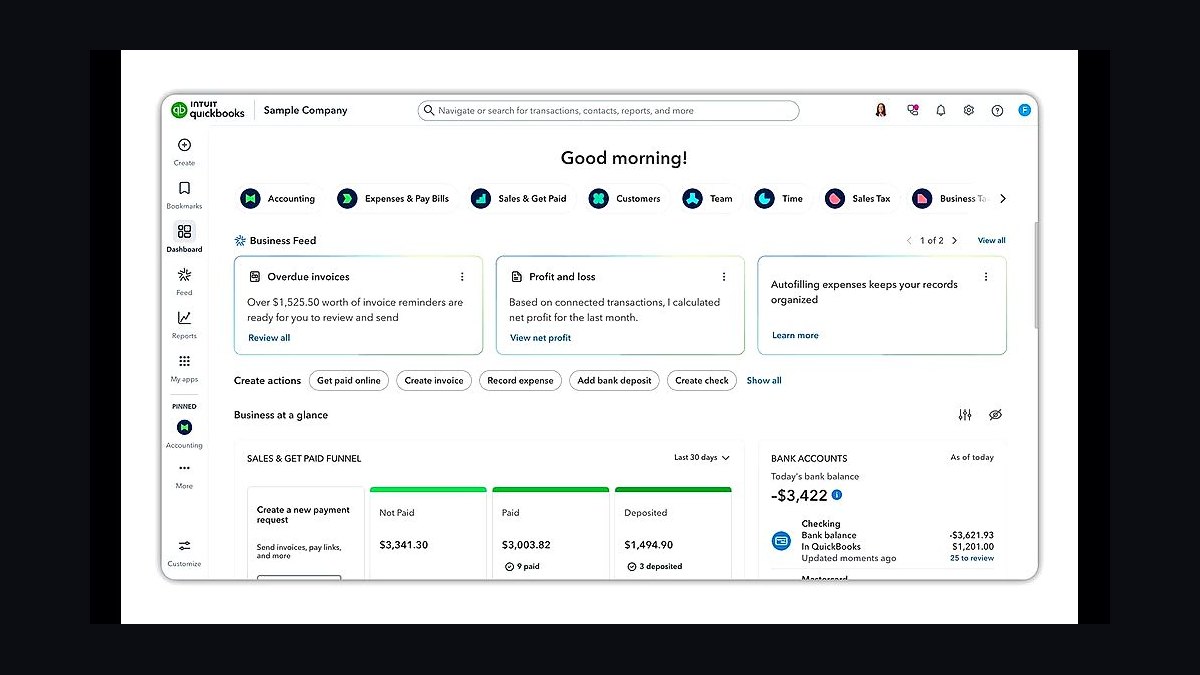
QuickBooks Online ranks seventh because it is the accounting backbone most specialty roasters use instead of a heavier ERP, handling invoicing, bank reconciliation, and expense categorization for under $100 monthly at typical roastery scale. It connects to Shopify and inventory tools so revenue and cost of goods flow in without manual re-entry.
It is for roasteries below several million in annual revenue, where headcount and transaction volume do not justify NetSuite or a full ERP implementation. The trade-off is limited multi-entity and advanced inventory accounting, which becomes a constraint as locations multiply. Compared with NetSuite below, it is cheaper and faster to deploy but caps out sooner.
8Toast POS
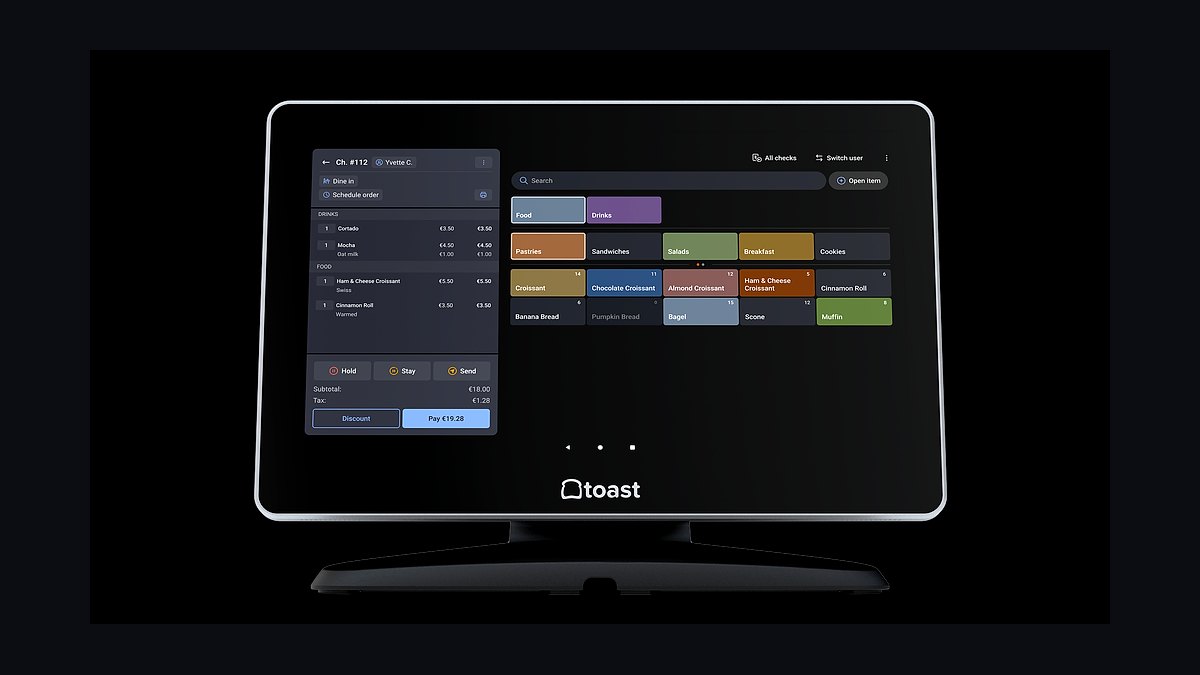
Toast ranks eighth as the full-service point-of-sale platform that anchors a multi-location cafe chain's stack, bundling hardware with back-office reporting across stores so sales, labor cost percentage, and inventory depletion reconcile from one source. A single full-service location commonly runs several hundred to over a thousand dollars monthly once kitchen displays and online ordering are added.
It is for chains past roughly 8-10 units that need deep cross-location reporting and franchise-support features Square cannot match. The trade-off is per-terminal and per-location fees that multiply fast, plus hardware lock-in. Compared with Square for Restaurants below, it costs more but scales further before hitting reporting limits.
9Square for Restaurants
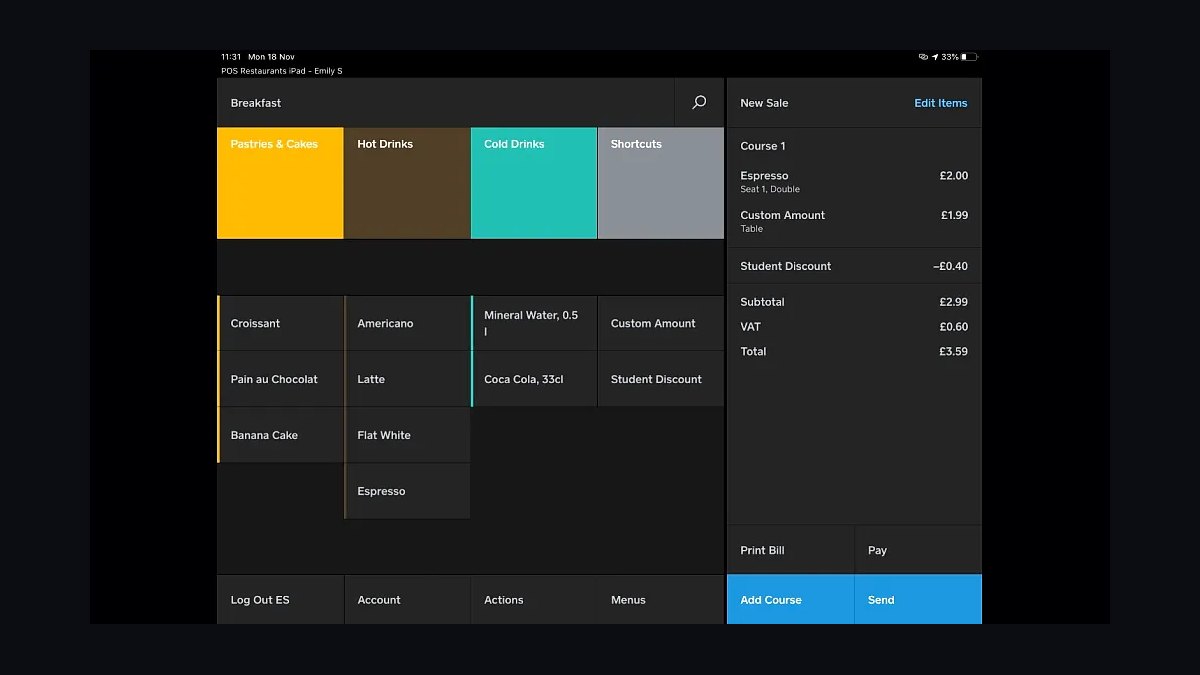
Square for Restaurants ranks ninth because it gives smaller 2-8 unit chains lower upfront hardware cost and simpler onboarding than Toast or PAR, while still handling in-person transactions, online ordering, and basic cross-location reporting. Per-location software fees run leaner, which is why chains gravitate here before scaling past roughly 8-10 units.
It is for cafe groups that need real point-of-sale infrastructure without enterprise per-terminal pricing or a lengthy deployment. The trade-off is shallower cross-location reporting and fewer franchise-support features once store count climbs. Compared with Toast above, it is cheaper and faster to launch but forces a migration as reporting needs deepen.
107shifts Scheduling
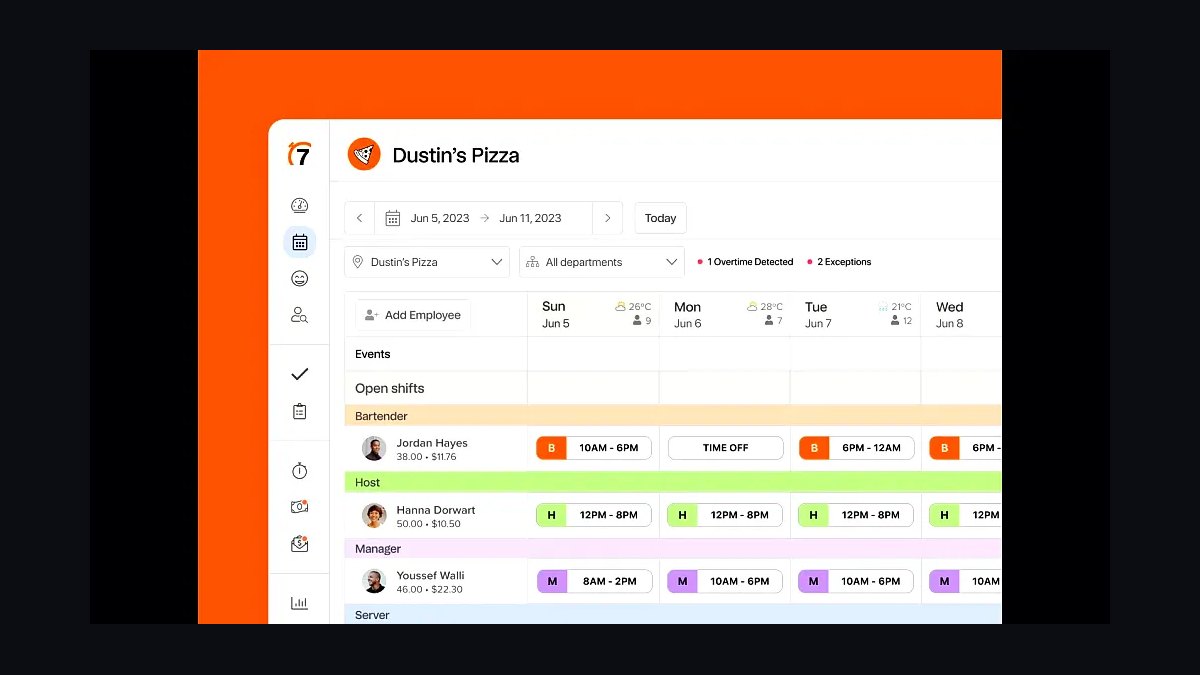
7shifts ranks tenth as labor scheduling and compliance software built for hourly food-and-beverage shift work, tying scheduled hours directly to POS-reported sales so a chain manages labor cost as a percentage of sales in real time. Pricing commonly runs in the low single digits to around $6-$7 per active employee monthly.
It is for multi-location chains where scheduling chaos drives turnover and labor cost swings between stores, and where a shared spreadsheet no longer flags break requirements or overtime automatically. The trade-off is per-employee pricing that adds up across many stores, plus reliance on POS integration for forecast accuracy. Compared with Deputy below, it leans more specifically into restaurant shift patterns.
How we ranked these
We ranked tools by weighting production-critical capability first: roast-profile logging and repeatability, batch-level green and finished inventory tracking, wholesale order handling, and landed-cost visibility. Each tool was scored on fit for small-batch manufacturing, integration depth with e-commerce and accounting, and total monthly cost at realistic roaster volumes. Retail POS strength, loyalty features, and multi-location labor tooling carried little weight unless the roaster also ran storefronts.
We deliberately ignored vendor market share, brand prestige, and enterprise sales polish, because a roastery's bottleneck is production consistency, not procurement politics. We excluded tools requiring six-figure contracts, franchise-management suites, and anything whose core value is per-transaction retail throughput. We also ignored free tiers that lack QC modules, since profile data without traceability rarely survives a wholesale quality complaint.
Related questions
Can a roaster and a cafe chain share the same POS system?
Yes for the retail counter, but the roaster still needs separate production software. POS alone has no roast-profiling, batch-costing, or green-coffee-inventory capability, so it only ever covers the storefront half of a roaster's operation. Sharing hardware is fine; sharing the entire stack is not.
Does a chain need roast-profiling software if it roasts centrally?
Yes, at a lighter tier. Even one central roasting operation feeding multiple stores needs profile logging and batch QC to keep flavor consistent across every location's cups. Without it, a single drifted roast profile silently changes every store's espresso simultaneously, and nobody can trace which batch caused it.
What's the minimum viable stack for a brand-new single-location roaster-cafe hybrid?
Artisan for roasting, a basic Square or Toast plan for the counter, and QuickBooks Online for books. Inventory and loyalty software can wait until volume justifies the added cost. This keeps monthly spend low while still capturing profile data and daily sales, which are the two records you cannot reconstruct later.
How many locations before a chain needs enterprise POS like PAR or Toast Enterprise?
Most operators feel the pinch around 8-10 locations, when manual cross-store reporting in Square-tier tools becomes too slow for weekly decision-making. Below that, lighter POS platforms usually handle multi-location rollups adequately. Above it, franchise reporting, centralized pricing, and deeper labor analytics start paying for themselves.
Should e-commerce or wholesale come first for a new roaster's tech stack?
Whichever channel is the larger revenue driver at launch, but connect both to the same inventory feed from day one. Overselling a limited-batch coffee to wholesale and DTC simultaneously is the most common early roaster mistake, and it is entirely preventable with shared stock counts.
Is Cropster or Artisan better for a new roaster in 2027?
Artisan is free, open-source, and widely used by small and hobbyist-to-pro roasters comfortable self-hosting. Cropster costs more but adds cloud collaboration, QC workflows, and easier multi-user access, which matters once more than one person roasts or reviews profiles. Start free, migrate when collaboration becomes the bottleneck.
Can a small roastery skip inventory software and use spreadsheets?
It is workable below a few dozen SKUs and low batch volume, but most roasters outgrow spreadsheets once managing multiple green origins with different aging windows and multiple finished-good formats at once. Spreadsheets also break silently when two people edit them during a busy roasting week.
Why do multi-location chains need scheduling software instead of a shared spreadsheet?
Scheduling software ties hours directly to sales forecasts and labor-cost targets per location and flags compliance issues like break requirements and overtime automatically. A shared spreadsheet cannot do either and does not scale past a couple of locations without errors. The labor line is usually a chain's largest controllable cost.
FAQ
Is Cropster or Artisan better for a new roaster in 2027?
Artisan is free, open-source, and widely used by small and hobbyist-to-pro roasters who are comfortable self-hosting. Cropster costs more but adds cloud collaboration, QC workflows, and easier multi-user access, which matters once more than one person is roasting or reviewing profiles. Many roasters start on Artisan and migrate later.
Can a small roastery skip inventory software and use spreadsheets?
It is workable below a few dozen SKUs and low batch volume, but most roasters outgrow spreadsheets once they manage multiple green origins with different aging windows and multiple finished-good formats at once. Retail bags, wholesale bulk, and subscription boxes each need separate stock logic that spreadsheets handle poorly.
Why do multi-location chains need scheduling software instead of a shared spreadsheet?
Scheduling software ties hours directly to sales forecasts and labor-cost targets per location and flags compliance issues such as break requirements and overtime automatically. A shared spreadsheet cannot do either and does not scale past a couple of locations without errors. Labor is typically the largest controllable cost line.
Does Toast or Square handle wholesale coffee orders?
No. Both are retail and restaurant point-of-sale platforms built for in-person and online food-and-beverage transactions, not wholesale B2B ordering with case pricing, standing orders, and invoicing terms. That is why roasters use a separate wholesale portal layered alongside their retail POS or e-commerce storefront.
How much should a 5-location cafe chain budget monthly for its core software stack?
Combined POS, scheduling, inventory rollup, and loyalty software commonly lands in the low-to-mid four figures monthly across five locations once per-location fees are totaled. The exact figure depends heavily on which vendors and hardware tier are chosen, plus any per-transaction loyalty or online-ordering fees.
What happens if a roaster picks the chain stack instead by mistake?
It ends up paying for per-location retail features it does not need, such as multi-store labor scheduling and mobile ordering, while still lacking roast-profile logging and batch-cost tracking. Quality control and margin visibility suffer even though the software bill went up. The mismatch compounds as wholesale volume grows.
Do I need separate accounting software for a roastery and a cafe chain?
Both usually run QuickBooks Online or Xero at small scale, but a chain crossing roughly 8-10 locations often moves to QuickBooks Online Advanced or NetSuite for multi-entity rollups. A roaster rarely needs that complexity because it reconciles far fewer bank feeds and P&Ls each month.
How long does a typical POS rollout take across multiple cafe locations?
A single pilot location usually stabilizes in two to four weeks, after which chainwide rollout can proceed store by store. Rushing a simultaneous cutover across every location multiplies the cost of any misconfiguration, since wrong tax rates or modifier pricing hit every transaction at every store at once.
Should loyalty software come before or after inventory software for a chain?
Inventory and POS rollups should come first, because loyalty depends on accurate transaction and customer data flowing from a stable POS. Adding loyalty before POS is proven stable risks mobile orders that a given location's system fails to receive correctly, which damages customer trust more than delaying loyalty would.
What integration should a roaster confirm before buying e-commerce software?
Confirm a native or well-supported connection between the e-commerce platform and the inventory or production software, rather than relying on manual CSV exports. Manual syncing gets skipped during busy roasting weeks and silently produces stale stock counts, which leads directly to overselling limited-batch coffees.
Sources
- https://www.sca.coffee
- https://www.roastmagazine.com
- https://www.perfectdailygrind.com
- https://www.toasttab.com
- https://www.squareup.com
- https://www.cropster.com
- https://artisan-scope.org
- https://www.shopify.com
- https://www.nrn.com
- https://www.restaurantbusinessonline.com
Related on PULSE
This page will be disappearing soon. Save it to your device for $1 — or read it free while it is here.
@Kory-White- · if Venmo asks, the last 4 of my number are 2012
This page is gone.
This one is off the shelf now. $1 keeps it on your phone for good — the whole page, pictures and diagrams included.
 pulse-tech-stacksTop 10 Best Tech Stack Tools for B2B SaaS Companies in 2027
 pulse-tech-stacksTop 10 Best Tech Stack Tools for Email Security Vendors in 2027
 pulse-tech-stacksTop 10 Best Tech Stack Tools for Staffing Agencies in 2027
 pulse-tech-stacksTop 10 Best Tech Stack Tools for Garden Centers and Nurseries in 2027
 pulse-tech-stacksTop 10 Best Tech Stack Tools for AI Music Generation Companies in 2027
 pulse-tech-stacksTop 10 Best Tech Stack Tools for AI Customer Support Companies in 2027
 pulse-tech-stacksTop 10 Best Tech Stack Tools for Plastics and Injection Molding Manufacturers in 2027
 pulse-tech-stacksTop 10 Best Tech Stack Tools for Podiatry Practices in 2027
 pulse-tech-stacksTop 10 Best Tech Stack Tools for Independent Roofing Contractors in 2027
 tkTop 10 Best Tech Stack Tools for Fencing and Deck Contractors in 2027