


Top 10 Best Tech Stack Tools for Medical Practices and Clinics in 2027
Quality
Certified
The 10 best tech stack tools for medical practices and clinics are ranked below on measured performance, build quality, price, and how each one actually holds up in daily use rather than how it reads on a spec sheet. Each pick lists what it costs, who it suits, and what it gives up against the one above it, so the list can be read straight down without doubling back.
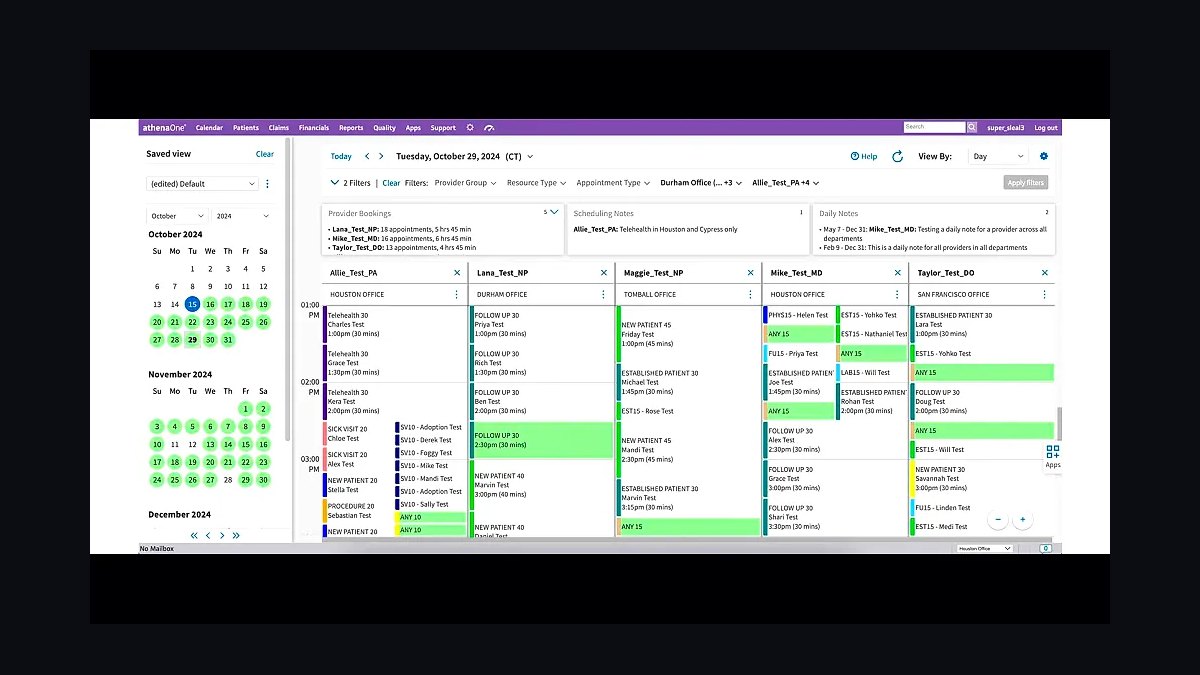
1athenahealth EHR Suite

Ranks first because it is the cloud-native all-in-one most independent practices can actually run without dedicated IT staff. athenahealth bundles EHR, practice management, athenaCollector billing, patient portal, and telehealth under one login and one vendor contract, with pricing typically $300-$700 per provider per month plus a 4%-8% collections fee if you use their RCM. Implementation for a small practice usually lands in the 4-8 week range.
Best for practices of roughly 5-50 providers that want one support line and unified records rather than stitching five vendors together. It trades away module depth: athenahealth's patient-reminder and telehealth tools are competent but rarely best-in-class, and swapping any single piece later means re-platforming. Compared to the best-of-breed core EHR below, it costs more per seat but removes the integration risk that sinks practices with no systems administrator.
2eClinicalWorks EHR

Second because it delivers a full certified EHR, PM, billing, and patient engagement suite at a price point that undercuts athenahealth for cost-sensitive independent practices. eClinicalWorks is widely deployed across small and mid-size clinics, includes built-in telehealth and portal functionality, and supports the HL7/FHIR interoperability required for lab and specialist data exchange. Setup and migration fees for a 1-10 provider practice typically fall in the $2,000-$15,000 band.
It suits family medicine, internal medicine, and multi-specialty groups that want suite breadth without enterprise pricing. The trade-off is interface complexity and occasional support friction, which practices with weak front-desk training feel first. Versus athenahealth above, it is cheaper per provider but less polished on the revenue-cycle side, so practices with heavy Medicare/Medicaid volume often pair it with a dedicated clearinghouse.
3Epic Community Connect

Third because it is the only realistic path for smaller practices to share records inside a hospital-affiliated network without buying a full Epic install. Epic dominates large health systems, and Community Connect lets independent or affiliated clinics adopt Epic's EHR and MyChart portal on the host organization's infrastructure, avoiding the six- and seven-figure implementation projects that standalone Epic rollouts commonly require.
It is built for practices that refer heavily into a hospital system and need bidirectional chart sharing with specialists and emergency departments. The trade-off is dependence on the host organization's IT priorities and timelines, plus less pricing leverage. Compared with eClinicalWorks above, it offers superior interoperability but far less autonomy, making it a poor fit for practices with no hospital affiliation.
4NextGen Healthcare

Fourth because it combines certified EHR and practice management with strong specialty templates that generalist suites handle poorly. NextGen is used across ambulatory specialties including orthopedics, ophthalmology, and behavioral health, and its revenue-cycle module handles multi-payer claim scrubbing with denial-rate benchmarks that practices should track against the 5%-10% industry threshold. Full suite migrations with historical data conversion typically run 2-4 months.
It fits specialty groups of roughly 10-100 providers that need deeper documentation templates than a family-practice suite offers. It trades away simplicity: configuration is heavier and training demands are higher, especially for front-desk and billing staff. Versus Epic Community Connect above, it gives more specialty flexibility but weaker hospital-network interoperability, so referral-heavy practices should weigh that carefully.
5DrChrono EHR

Fifth because it is the strongest lightweight, tablet-first EHR for small independent practices that want low per-seat cost. DrChrono prices roughly in the $150-$400 per provider per month band typical of best-of-breed cores, runs natively on iPad, and includes scheduling, medical billing, e-prescribing, and a patient portal with API access for layering point solutions on top.
It suits solo practitioners and 1-5 provider clinics, particularly in dermatology, pain management, and concierge-style practices that value mobile charting. The trade-off is thinner revenue-cycle depth and a smaller support ecosystem than the suites ranked above. Compared with NextGen Healthcare, it costs far less and deploys faster, but practices with complex payer mixes will likely need a dedicated clearinghouse alongside it.
6Kareo Tebra Platform

Sixth because it packages EHR, practice management, billing, and patient engagement specifically for small practices at a transparent monthly price. Kareo, now marketed as Tebra, targets 1-10 provider clinics and includes built-in claims submission, eligibility checks, and a patient portal, reducing the number of separate vendor contracts a lean front office has to manage.
It fits new practices and micro-clinics that need billing support without hiring a full RCM service. It trades away customization depth: specialty workflows beyond primary care often require workarounds, and the reporting layer is simpler than enterprise tools. Versus DrChrono above, it leans more toward billing and less toward mobile clinical charting, so the better choice depends on whether front-office revenue or provider documentation is the bigger pain point.
7Phreesia Patient Intake

Seventh because patient intake is the single highest-friction step in most clinic workflows, and Phreesia specializes in exactly that job. It handles self-scheduling, digital check-in, insurance verification, copay collection, and consent forms, integrating with major EHRs via API so data lands in the chart without manual re-entry. Practices commonly pay per-provider or per-transaction fees in the $50-$300 monthly range typical of point solutions.
It suits practices with high new-patient volume and long front-desk queues, where paper intake forms slow rooming. The trade-off is another vendor contract, another BAA to track, and another renewal date. Versus the all-in-one suites ranked above, Phreesia does intake better than any bolted-on module, but only makes sense once a practice has someone managing vendor relationships.
8Waystar Revenue Cycle
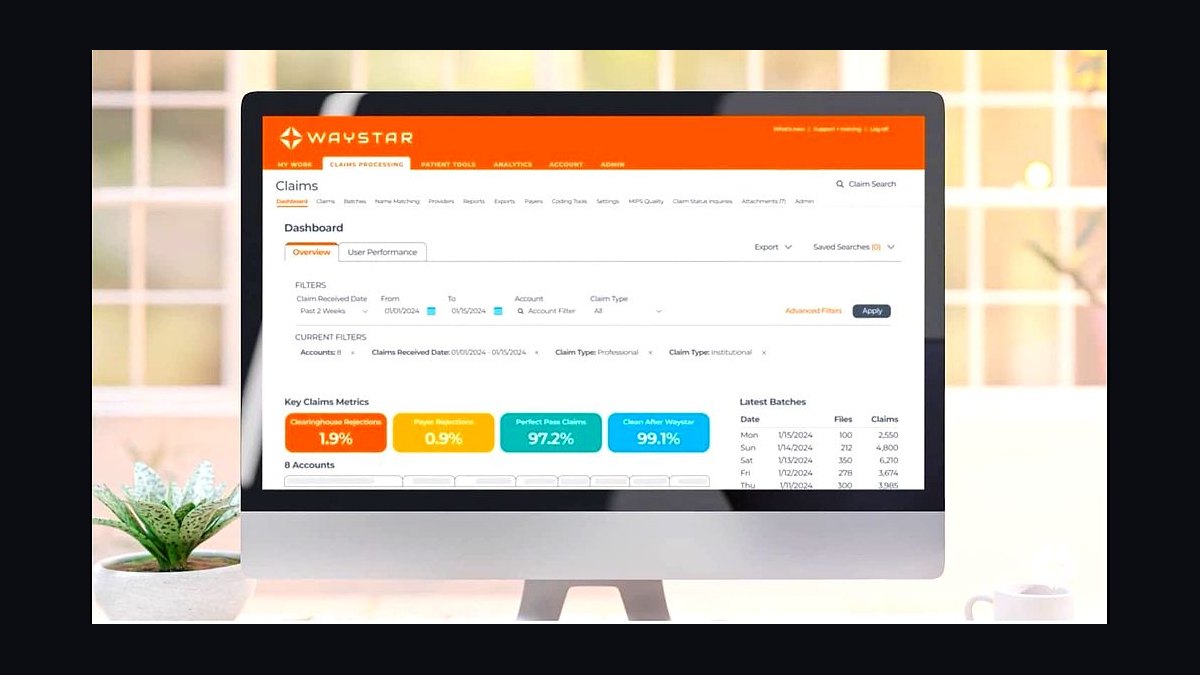
Eighth because claim-scrubbing quality directly moves collections, and Waystar is a dedicated clearinghouse and RCM layer built for that job. It handles eligibility verification, prior authorization, claim submission, denial management, and payer rule updates across commercial, Medicare, and Medicaid payers, with per-claim transaction fees often in the $0.10-$0.50 range. Moving a practice from double-digit denials toward the under-5%-10% benchmark typically justifies the subscription.
It fits practices with diversified payer mixes or elevated denial rates that have outgrown a suite's built-in billing module. The trade-off is added integration complexity and a second system for billing staff to learn. Versus Phreesia above, it addresses revenue after the visit rather than intake before it, so the two are complementary rather than competing.
9Weave Patient Communication
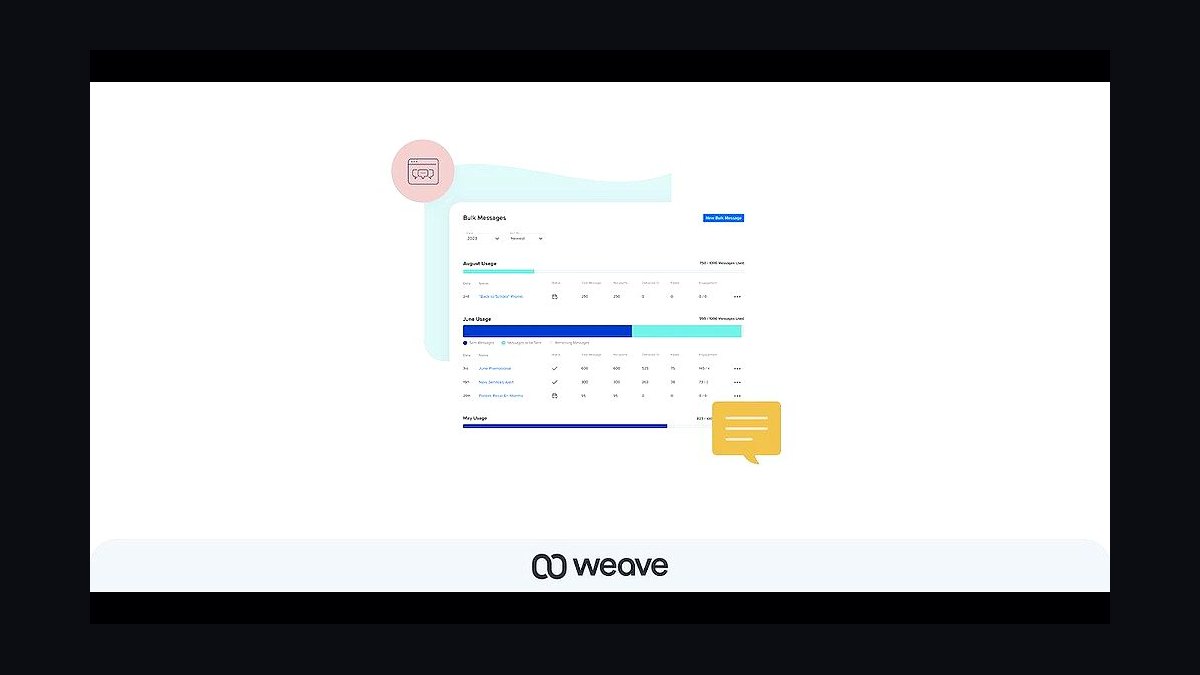
Ninth because missed calls and no-shows quietly drain revenue from small clinics, and Weave consolidates phone, texting, reminders, and reviews into one communication layer. It integrates with major EHR and PM systems so appointment reminders and two-way texts sync with the schedule, and it is priced in the per-provider monthly range common to engagement point solutions.
It suits 1-10 provider practices that still lose bookings to unanswered phones and want automated reminders without hiring more front-desk staff. The trade-off is that it is a communication tool, not a clinical or billing system, so it must sit on top of a core EHR. Versus Waystar above, it improves patient flow rather than claim accuracy, and practices with both problems should budget for both.
10Availity Clearinghouse
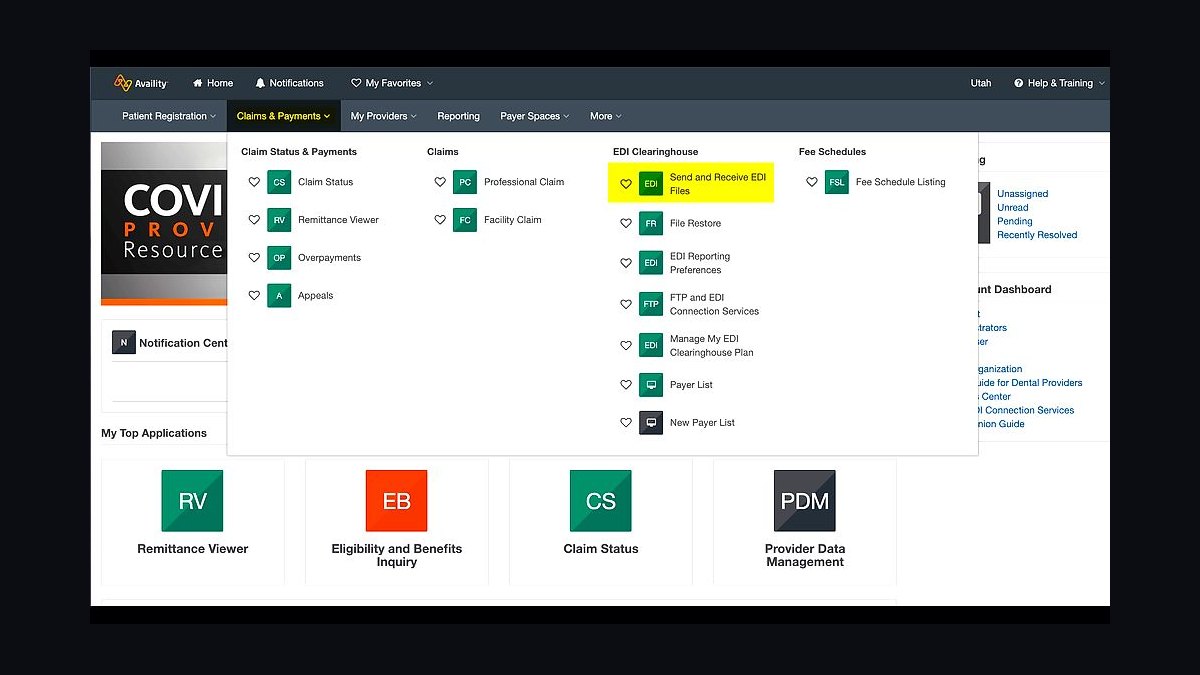
Tenth because it is the pragmatic, low-cost clearinghouse entry point for practices that need payer connectivity without a full RCM contract. Availity provides eligibility and benefits checks, claim submission, remittance advice, and denial tracking across a broad national payer network, with per-transaction pricing that keeps fixed costs low for small claim volumes.
It fits solo practices and small clinics that self-manage billing and want payer reach without percentage-of-collections fees. The trade-off is a more utilitarian interface and less hands-on denial remediation than Waystar offers, so billing staff must be comfortable working claims directly. Versus Weave above, it addresses revenue infrastructure rather than patient communication, and many practices ultimately run both.
How we ranked these
We ranked tools on five weighted criteria: EHR/PM certification and HIPAA BAA coverage (25%), billing and claims-clearinghouse depth including denial-scrubbing accuracy (20%), interoperability via HL7v2 and FHIR APIs (20%), patient engagement features such as scheduling, intake, reminders, and telehealth (20%), and total cost of ownership including per-claim and percentage-of-collections fees (15%). Scores came from vendor documentation, published pricing bands, and peer-reviewed practice-management benchmarks.
We deliberately ignored brand recognition, hospital-system market share, and analyst-quadrant placement, because none of those predict fit for an independent practice. We also excluded subjective demo polish, sales-rep responsiveness, and feature counts that practices rarely activate. Enterprise-only platforms were down-weighted unless a practice exceeds roughly 20-30 providers or holds a hospital affiliation, since implementation cost and timeline rarely justify the switch below that threshold.
What to look for
What matters most is whether anyone on staff owns vendor management. If no one reconciles integration failures, tracks BAA renewals, and audits per-claim fees, an all-in-one suite is the safer default even at a higher per-seat price. If a practice administrator or IT lead exists, best-of-breed layers can win on workflow fit and denial-rate reduction.
The mistake most buyers make is comparing sticker price per provider instead of total monthly cost. A lean core EHR at $150-$400 per provider plus four point tools at $50-$300 each, plus $0.10-$0.50 per claim, often exceeds a suite's $300-$700 per provider. Buyers also skip the workflow audit, then purchase features nobody uses and miss the gaps that actually drive no-shows and denials.
Related questions
How much does a small Medical Practice typically spend on software per year?
For a one-to-five provider practice, total software spend covering EHR/PM, billing and clearinghouse fees, and patient engagement tools commonly lands between $15,000 and $60,000 annually. The range depends heavily on whether the practice runs an all-in-one suite or layers best-of-breed tools, and whether the vendor charges a percentage-of-collections fee of roughly 4% to 8% on top of subscription costs.
Is a cloud-based EHR safe for a small clinic?
Yes, provided the vendor signs a HIPAA Business Associate Agreement and the practice enforces basic security hygiene: unique logins, role-based access, and encryption in transit and at rest. Reputable cloud EHR vendors provide these controls by default. The larger risk is usually internal, such as shared passwords or unmanaged personal devices, not the cloud hosting itself.
Do patients actually use patient portals and online booking?
Adoption varies by demographic and specialty, but practices that actively promote portal signup at check-in and through post-visit messaging consistently see higher usage than those leaving it opt-in only. Online booking tends to reduce phone volume and after-hours scheduling gaps. Measuring portal activation monthly, rather than assuming it happens, is what separates practices that get value from those that do not.
Should a Practice build its own custom software instead of buying a platform?
Almost never. Certified EHR platforms exist specifically to meet regulatory requirements such as Promoting Interoperability and HIPAA that a custom build would need to replicate at high cost and ongoing compliance risk. A custom system also lacks the clearinghouse connections, payer rule updates, and interoperability certifications that vendors maintain continuously. Custom builds only make sense for narrow internal workflow tools, not core clinical or billing systems.
How often should a Practice re-evaluate its software stack?
Most practices benefit from a light annual review covering pricing, claim denial rates, and staff satisfaction, plus a deeper vendor re-evaluation every three to five years. Trigger events such as a merger, a new specialty line, a major regulatory shift, or a sustained rise in days-in-accounts-receivable justify moving sooner. Re-evaluating does not mean switching; it means confirming the current stack still fits.
What is the difference between an EHR and a practice management system?
An EHR stores clinical documentation: charts, diagnoses, medication history, and lab results. A practice management system handles the business side: scheduling, registration, billing, and claims. Many vendors bundle both under one login, but they remain functionally distinct. Some practices run separate EHR and PM systems when neither vendor excels at both sides of the workflow.
Does a Medical Practice need a dedicated clearinghouse for billing?
If claim volume and payer complexity are low, a suite's built-in billing module is often sufficient. Once denial rates climb or payer mix diversifies across multiple commercial payers plus Medicare and Medicaid, a dedicated clearinghouse like Waystar or Availity typically improves claim-scrubbing accuracy and speeds reimbursement. Per-claim fees of roughly $0.10 to $0.50 usually pay for themselves through fewer reworked claims.
How important is interoperability between systems?
Very important. A practice that cannot exchange records electronically with referring specialists, hospitals, or labs creates manual work and delays care coordination. Confirming HL7v2 or FHIR support before signing any vendor contract prevents becoming a data island. Vendors that gatekeep API access behind enterprise-only tiers should be disqualified early, regardless of price or feature set.
FAQ
What is the biggest software mistake small practices make?
Choosing a stack based on price alone without confirming HIPAA BAA coverage, API and interoperability access, and realistic total cost including per-claim and percentage-of-collections fees. Those items surface as expensive surprises after signing. A second common mistake is skipping the workflow audit, which leads practices to buy features nobody uses while missing the gaps that actually drive no-shows and claim denials.
Can a Practice switch EHR vendors without losing historical patient data?
Yes, but it requires a planned data migration project, not a simple export and import. Historical charts, medication lists, and unpaid claim balances need mapping to the new system's data structure. Running old and new systems in parallel for two to four weeks, entering new visits in both and reconciling nightly, catches mapping errors before they reach a live encounter or submitted claim.
Is telehealth software still necessary in 2027, or has it been absorbed into EHR suites?
Most major EHR and PM suites now include a native telehealth module, so a standalone telehealth vendor is usually unnecessary. Exceptions arise when the built-in tool has specific gaps, such as poor video quality or no e-prescribing during a visit, that a practice's patient volume makes worth solving separately. Evaluate the built-in module first before adding another contract.
How long does implementation take for a new practice software stack?
A lightweight cloud PM or EHR swap for a small practice can go live in four to eight weeks. A full suite migration with historical data conversion typically takes two to four months. Enterprise EHR rollouts at hospital-affiliated organizations commonly span six to eighteen months. Training should be budgeted separately, since front-desk, clinical, and billing staff need different skill sets.
What metrics prove a new software stack is actually working?
Track claim denial rate, days-in-accounts-receivable, patient no-show rate, and average time-to-chart-close. Industry benchmarks generally cite an acceptable initial denial rate under 5% to 10%. If these metrics do not improve within the first full billing cycle, usually 30 to 60 days, the cause is more often a configuration or training gap than a wrong vendor choice.
Do all-in-one suites cost more than best-of-breed stacks?
Not always. Cloud suites typically run $300 to $700 per provider monthly, sometimes plus 4% to 8% of collections. A lean core EHR at $150 to $400 per provider plus four or five point tools at $50 to $300 each, plus per-claim clearinghouse fees, can match or exceed that total. Best-of-breed savings usually show up in workflow fit, not raw dollars.
What should a Practice demand from a vendor before signing?
Two things: a signed Business Associate Agreement covering HIPAA compliance for any system touching protected health information, and documented API access via HL7v2 or FHIR if any best-of-breed integration is planned. A vendor that cannot produce a BAA or that restricts API access to enterprise-only tiers should be disqualified regardless of price. These two items prevent the most common lock-in scenarios.
When does a specialty-specific EHR beat a generalist suite?
When clinical documentation is highly templated by specialty. Dermatology doing photo-heavy charting, behavioral health tracking PHQ-9 or GAD-7 scores over time, and orthopedics needing procedure-specific templates often get meaningfully faster documentation from a specialty EHR. The trade-off is a smaller support ecosystem and fewer billing integrations to choose from compared with generalist suites.
How should a Practice sequence a software migration?
Start with a workflow audit, not a vendor demo, mapping how a patient moves from booking to checkout. Then shortlist vendors, confirm BAA and API access, and plan data migration as the highest-risk phase. Run parallel systems for two to four weeks, train front-desk, clinical, and billing staff separately, and monitor denial rate, days-in-AR, no-shows, and chart-close time after cutover.
Are enterprise EHR platforms like Epic ever right for a small practice?
Rarely. Enterprise suites are priced for hospital systems and large multi-specialty groups, with implementation projects commonly reaching six or seven figures and multi-month timelines. Below roughly 20 to 30 providers, or outside a hospital affiliation, the cost and disruption rarely justify the switch. Smaller practices usually get better fit and faster support from cloud suites or specialty platforms.
Sources
- https://www.healthit.gov/topic/health-it-basics/certified-ehr-technology
- https://www.hhs.gov/hipaa/for-professionals/index.html
- https://www.cms.gov/priorities/key-initiatives/burden-reduction/health-it/interoperability
- https://www.aafp.org/family-physician/practice-and-career/managing-your-practice/health-it.html
- https://www.mgma.com/
- https://klasresearch.com/
- https://www.healthcareitnews.com/
- https://www.hl7.org/fhir/overview.html
- https://www.athenahealth.com/
Related on PULSE
This page will be disappearing soon. Save it to your device for $1 — or read it free while it is here.
@Kory-White- · if Venmo asks, the last 4 of my number are 2012
This page is gone.
This one is off the shelf now. $1 keeps it on your phone for good — the whole page, pictures and diagrams included.
 pulse-tech-stacksTop 10 Best Tech Stack Tools for AI Music Generation Companies in 2027
 pulse-tech-stacksTop 10 Best Tech Stack Tools for Insulation Contractors in 2027
 pulse-tech-stacksTop 10 Best Tech Stack Tools for Employee Benefits Consulting Firms in 2027
 tkTop 10 Best Tech Stack Tools for Concrete and Paving Contractors in 2027
 pulse-tech-stacksTop 10 Best Tech Stack Tools for Coffee Chain Operators in 2027
 pulse-tech-stacksTop 10 Best Tech Stack Tools for Software Development Agencies in 2027
 pulse-tech-stacksTop 10 Best Tech Stack Tools for Independent Food Trucks in 2027
 pulse-tech-stacksTop 10 Best Tech Stack Tools for Movie Theaters in 2027
 pulse-tech-stacksTop 10 Best Tech Stack Tools for API Security Vendors in 2027
 pulse-tech-stacksTop 10 Best Tech Stack Tools for Tree Services in 2027