


Should I open or buy a Bennigan's franchise in 2027?
Quality
Certified

Probably not, unless you already operate full-service restaurants, hold roughly $750K liquid against a $1.03M–$3.59M published investment range, and sit in a Texas, Florida, Midwest, or international trade area where the brand still registers. First-time operators should look at the smaller On The Fly hybrid footprint instead of a ground-up Grill & Tavern build.
Two doors into the same brand, and they are not close in risk
The question "should I open or buy a Bennigan's franchise" hides a second question that matters more than the first: which Bennigan's? Legendary Restaurant Brands, the Dallas holding company that also controls Steak and Ale, currently sells two very different products to prospective franchisees, and treating them as one decision is the most common analytical error in this category.
Door one is the full Grill & Tavern. That is a 5,500–6,500 square foot full-service box with a scratch kitchen, a real bar program, a staff in the neighborhood of forty people, and a menu carrying eighty-plus SKUs. The published Item 7 initial investment range runs from roughly $1.03M to $3.59M depending on whether you are building ground-up or converting an existing restaurant. The franchise fee is $35,000, royalty is 4% of gross sales, and the brand marketing fund takes another 1%, with local marketing obligations layered on top. This is a career-scale commitment. You are not buying a job; you are buying a small manufacturing operation that happens to serve food, with a payroll, a liquor license, a health department relationship, and a lease that will likely outlast your enthusiasm.
Door two is Bennigan's On The Fly, the compact hybrid format that the brand has been pushing hardest since its host-kitchen partnership with Franklin Junction. On The Fly strips out the dining room, shrinks or eliminates the bar, and lives inside existing kitchen infrastructure — airports, food halls, host restaurants with spare capacity, ghost-kitchen networks. All-in capital lands in a range roughly a quarter to a third of the full build. There is no forty-person schedule to write. There is often no liquor license to buy, which alone removes one of the single largest and most unpredictable line items in the entire full-service model.
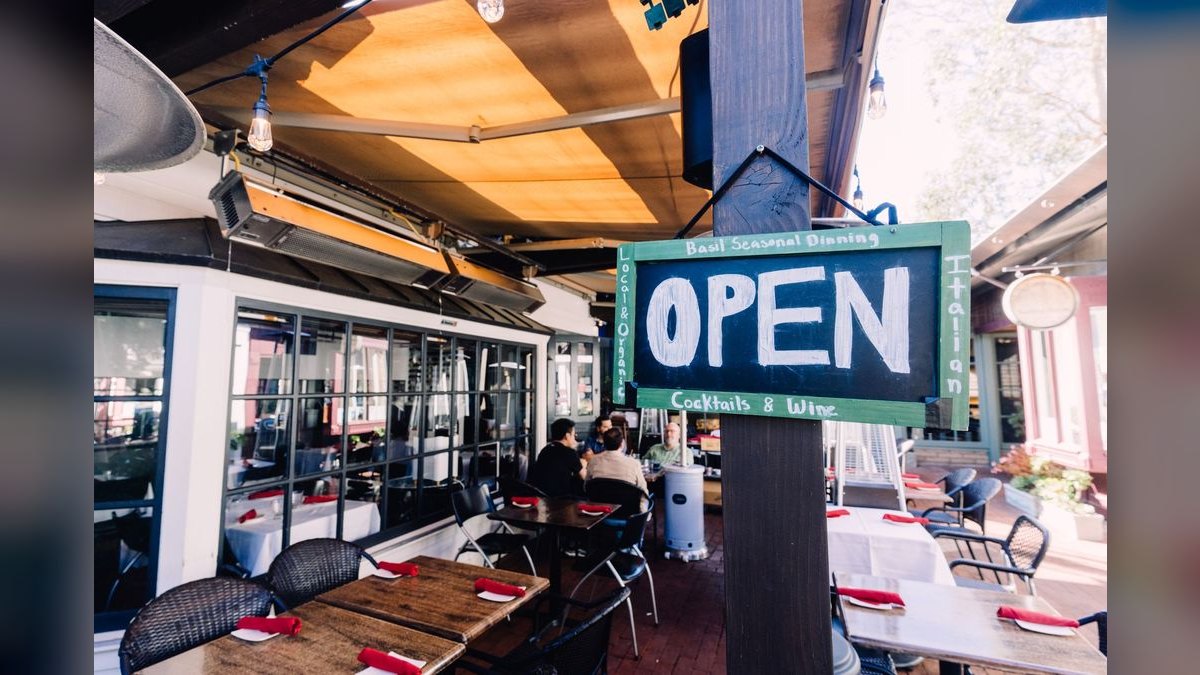
The two doors also differ in what they are exposed to. A Grill & Tavern lives or dies on trade-area traffic, brand recall, and a dining-room experience you control end to end. On The Fly lives or dies on delivery-platform economics, host-kitchen relationships, and someone else's operational discipline in a kitchen you do not own. Neither is inherently safer; they are differently fragile. The full box has a bigger downside and a real ceiling above it. The hybrid has a small downside and a ceiling you will hit fast.
And there is a third door people forget: buy an existing unit rather than open one. Resales exist in every mature franchise system, and buying a seasoned restaurant with two or three years of real P&L history removes the single biggest unknown in the whole exercise — will this location actually do the volume. You pay a multiple of EBITDA instead of a construction bill, you inherit trained staff and an existing liquor license, and you skip the ramp period where a new restaurant burns cash while the market decides whether it cares. The trade is that you inherit the previous operator's problems too, and the reason a unit is for sale is a question you must answer to your own satisfaction before you sign anything.
Who each door actually fits
Multi-unit operators with existing full-service infrastructure are the natural buyers of the full Grill & Tavern, and the reason is arithmetic rather than sentiment. Restaurant-level margin in casual dining is thin enough that fixed-cost leverage decides outcomes. An operator who already runs a commissary, already employs a district manager whose salary can be spread across four units, and already buys liquor at volume pricing converts the same top line into materially better cash flow than a single-unit owner does. The single-unit operator pays retail for everything: retail distribution pricing, retail management overhead, retail insurance. The multi-unit operator pays wholesale on all three. That spread is frequently the difference between a unit that services its debt comfortably and one that does not.
Second-generation conversions are the other structural winner, and 2027 is an unusually good moment for them. The casual-dining shakeout of the mid-2020s — TGI Fridays' Chapter 11, Red Lobster's closure wave, Hooters unit rationalization — dumped a large supply of purpose-built full-service restaurant boxes onto the market. These are boxes with hoods, grease traps, walk-in coolers, three-compartment sinks, HVAC sized for a commercial kitchen, and often grandfathered parking counts and liquor licenses. Every one of those items is a line you do not have to buy. The savings on build-out from taking a second-gen box versus building ground-up is the single largest swing factor inside the published investment range, and it is the main reason that range spans more than $2.5M end to end. If you are seriously evaluating this brand, your first job is not to evaluate the brand. It is to find out what second-gen restaurant real estate is available in your trade area, because that availability determines which end of the investment range you are actually shopping in.
International master franchisees occupy a different logic entirely. American casual dining carries aspirational brand equity in emerging-market urban centers that it has largely lost at home. A mall location in a major Indian or Gulf city is competing in a category where "American grill and tavern" is a positive differentiator, not a nostalgic curiosity. The brand has signed development agreements pointed at exactly these markets. If you are an international operator with mall relationships and local capital, the calculus looks nothing like the calculus facing a suburban US buyer, and you should not let US-centric commentary about the concept's domestic trajectory drive your decision.
Now the losers. First-time restaurant operators lose at the full Grill & Tavern with grim reliability. Full-service scratch kitchens with bar programs are among the hardest operating formats in the industry — the labor model is complex, the inventory has theft exposure on both the food and the liquor side, and the guest experience depends on hourly staff performing consistently during a two-hour dinner rush. First-year failure rates in restaurants generally are meaningful; for first-time operators in full-service formats they are worse. If your restaurant experience is enthusiasm plus a spreadsheet, the full box will teach you an expensive lesson.
Absentee owners lose too, and the franchise agreement generally says so explicitly. Most full-service systems require the franchisee or a designated principal operator to be materially involved in day-to-day operations, and the operational reason is sound: labor cost discipline, liquor shrink control, and guest-experience supervision are not delegable to a general manager you visit monthly. Casual dining does not have a passive-ownership mode. If you want passive, you want a different asset class entirely — a triple-net lease on a restaurant building, not the restaurant inside it.
Operators in markets with no brand history lose on marketing cost. The brand's historical strength was Texas, the Southeast, and the Midwest. Opening in a market that never had one means you are paying to build awareness from zero while competing against national chains with continuous ad presence — and you are paying that cost out of a unit-level P&L that has maybe nine cents of margin per revenue dollar to work with. Do not open a legacy nostalgia brand in a market with no nostalgia to draw on unless your trade area is thick with transplants from markets that do.
A decision framework you can actually run
The failure mode in franchise evaluation is falling in love with the concept before testing the arithmetic. Run the gates in order and let each one have real veto power.
The gate that does the most work is the last one. Build your pro forma at a downside average unit volume, not at the system average, and certainly not at the new-prototype average. The published financial performance representation shows a meaningful gap between new-prototype revenue and legacy-restaurant revenue, and the honest planning assumption is that your unit performs somewhere between them rather than at the top. If the deal only works at the prototype number, you do not have a deal — you have a hope with a construction budget attached.
The brand-recall gate deserves more respect than most buyers give it. Awareness is not a soft factor in casual dining; it is a direct substitute for marketing spend. In a market where the name means something, a well-run opening pulls trial traffic on curiosity alone and the operator's job is retention. In a market where it means nothing, the operator is running a startup with a franchise fee attached, buying every first visit. That difference can be six figures in year-one marketing, spent out of a margin that cannot absorb it.
The second-gen gate is worth running before you contact anyone at the franchisor. Walk your trade area, pull the closed-restaurant listings, and talk to a commercial broker who specializes in restaurant real estate. If there are three vacant full-service boxes within your target radius, your capital requirement drops dramatically and your timeline compresses by months. If there are none, you are looking at ground-up construction, entitlements, and a build calendar that will run longer than the contractor tells you.
What the numbers look like on each path
Start with the published disclosure figures, because those are the only ones with a regulatory obligation behind them. The initial franchise fee is $35,000 for a single unit, with multi-unit development agreements typically carrying discounted per-unit fees. Ongoing royalty is 4% of gross sales, and the brand marketing fund adds 1%. Local marketing obligations are additional and operator-funded. The total initial investment range disclosed in Item 7 runs from approximately $1,027,075 to $3,588,244.
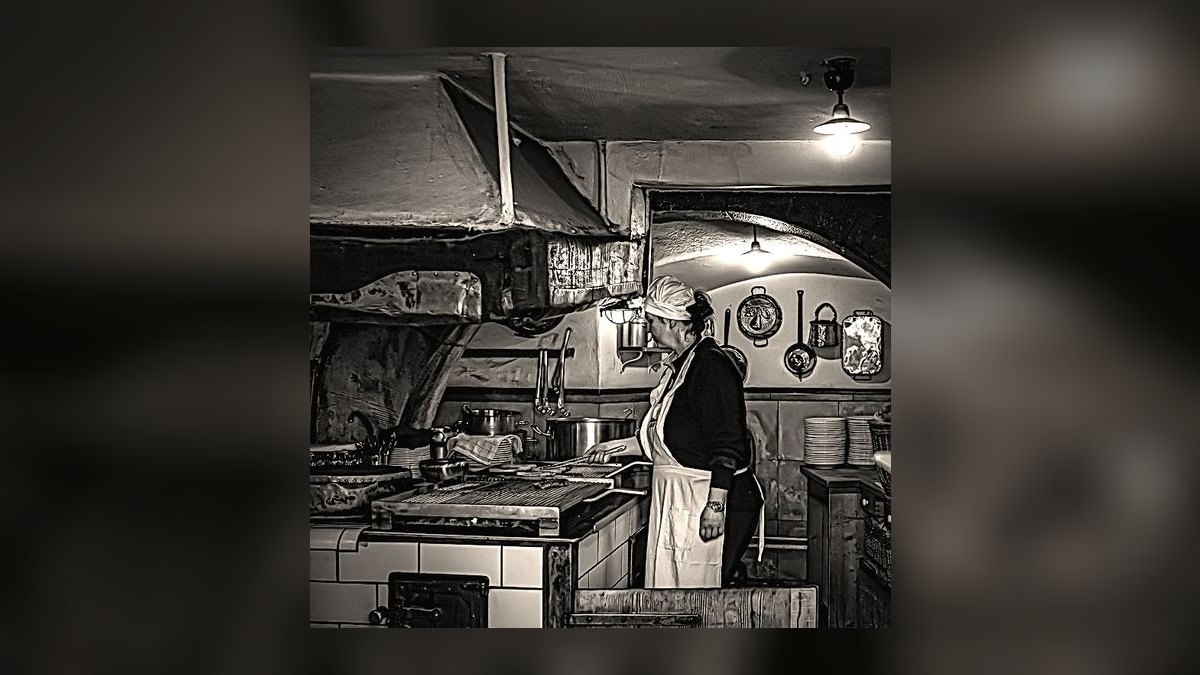
That range is wide for a reason, and understanding the reason is most of the analysis. The construction and leasehold-improvement line is the dominant variable. A second-generation conversion inherits the expensive infrastructure — exhaust hoods, fire suppression, grease interceptor, floor drains, upgraded electrical service, kitchen-grade HVAC — and can land near the bottom of the range. A ground-up build on raw land pays for all of it, plus site work, plus a longer carry period during construction, and lands near the top.
The other genuinely unpredictable line is the liquor license, which is not a franchise cost at all but a jurisdictional one. In license-quota states, the cost of acquiring a transferable full liquor license on the secondary market can run into six figures and occasionally into the mid-six figures. In open-license states, the same permission costs a few thousand dollars and a background check. This single variable can swing your total capital requirement by more than the entire FF&E budget, and it is determined entirely by which side of a county line you build on. Resolve it before you sign a lease, not after.
On revenue: the brand's published financial performance representation showed new-prototype average gross revenue around $2.41M against roughly $1.66M for legacy restaurants. Treat those as bookends rather than forecasts. A well-sited new build in a market with real brand affinity plausibly plans in the $2.0M–$2.6M band; a marginal site in a cold market should be planned against the legacy number.
Casual-dining restaurant-level EBITDA margins in the segment generally run in the high single digits to low teens as a percentage of sales. Apply that to a $2.2M unit and you get roughly $175K–$265K of restaurant-level cash flow before corporate overhead and before debt service. That is the number that has to cover your loan payment, your own compensation if you are drawing one, and your reserve. On a $2.0M all-in build financed conventionally, payback lands in the five-to-seven-year range — slower than quick-service, faster than fine dining.
The critical nonlinearity: margins compress hard as volume falls, because most of the cost structure is fixed. Rent does not shrink when traffic drops. The minimum crew required to open the doors, staff the line, and cover the floor does not shrink proportionally either. A unit doing $1.7M is not doing 77% of the profit of a unit doing $2.2M — it is doing far less, and it can easily be doing none. This is why the downside stress test is the whole ballgame. Model $1.7M. If the unit cannot service debt at $1.7M, you are underwriting a business that only works if everything goes right.
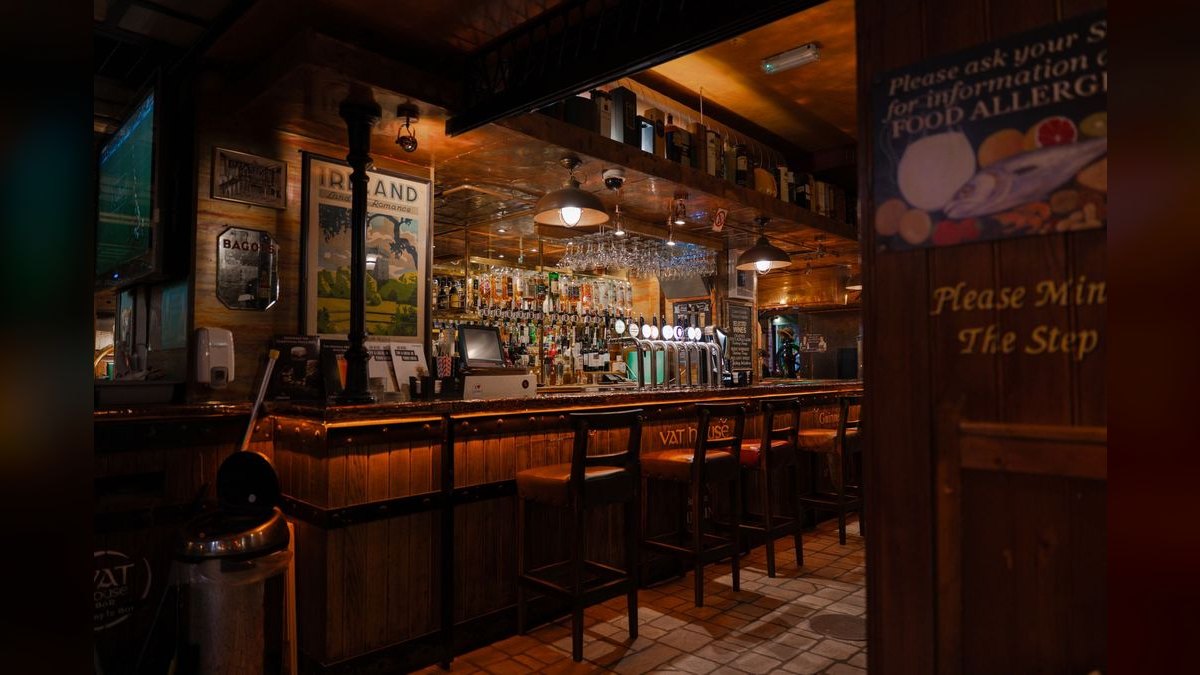
Now price the alternatives against that. On The Fly runs a small fraction of the full build, carries no dining room labor, and typically avoids the liquor license question entirely. Its margins on paper are thinner in percentage terms once delivery-platform commissions are deducted, but the capital at risk is an order of magnitude smaller and the exit is far less painful. Buying an existing unit trades construction risk for a purchase multiple; established restaurant franchise units commonly transact at low-to-mid single-digit multiples of EBITDA, meaning a unit throwing off $220K might price in the high six figures — comparable capital to a build, but with a known revenue history and immediate cash flow instead of a twelve-month ramp. Going independent saves the 5% of gross that royalty and brand marketing consume — on a $2M unit that is roughly $100K a year, real money — but you forfeit supply contracts, training infrastructure, opening support, and whatever brand pull exists. That trade only favors independence when the operator brings a decade of GM experience and a concept with genuine local appeal.
On financing: expect lenders to require more equity than they did in the low-rate era. Restaurant lending tightened following elevated default activity in the segment, and SBA 7(a) restaurant deals now commonly want meaningfully more owner equity than the 20% that was routine a few years ago. Work with a lender that specializes in franchise restaurant credits rather than your local commercial bank — the specialists understand the collateral profile, price accordingly, and close faster. Rollover-for-business-startups structures remain available for buyers funding equity from retirement accounts, though they carry compliance obligations worth reviewing with a tax advisor before you commit.
Sequencing the ninety days from inquiry to signature
The evaluation has a natural order, and running it out of order is how people end up emotionally committed before they have seen a single number they did not generate themselves.
Self-qualification first. Before contacting anyone, write down your actual liquid position, your total net worth, your credit score, and your restaurant operating history in plain sentences. Franchisors publish minimum net worth and liquidity requirements in the FDD, and there is no benefit to discovering three months in that you do not clear them.
Request the FDD early and read it in the right order. The Franchise Rule obligates the franchisor to deliver the disclosure document within a set period of your request, and the document is the most useful thing you will receive in this entire process. Read Item 7 for the investment range, Item 5 and 6 for fees, Item 19 for any financial performance representation, Item 15 for personal-participation obligations, Item 17 for renewal and transfer terms, Item 20 for unit counts, turnover, and the franchisee contact list, and Item 21 for financial statements. The unit-count tables in Item 20 tell you how many franchises opened, closed, transferred, and were terminated over recent years. A system with heavy closures and transfers is telling you something the marketing deck is not.
Hire a franchise attorney, not your general business lawyer. Franchise agreements have their own conventions and their own traps — territory definitions, transfer conditions, personal guarantees, post-term non-competes, dispute-resolution venue. A specialist review of the FDD and the lease is a low four-figure to mid four-figure expense against a seven-figure commitment. Skipping it is not thrift; it is negligence.
Make the Item 20 calls, and weight the former franchisees heavily. Call at least half a dozen current operators and every former operator you can reach. Ask specific questions with numeric answers: what is your actual annual volume, what did your build genuinely cost against the estimate, what is your prime cost as a percentage of sales, how responsive is franchisor support, and would you sign again knowing what you know. Current franchisees have some incentive to be positive. Former ones have none, which makes them the most valuable calls on the list. Several unprompted "no" answers is not a data point to reconcile — it is the answer.
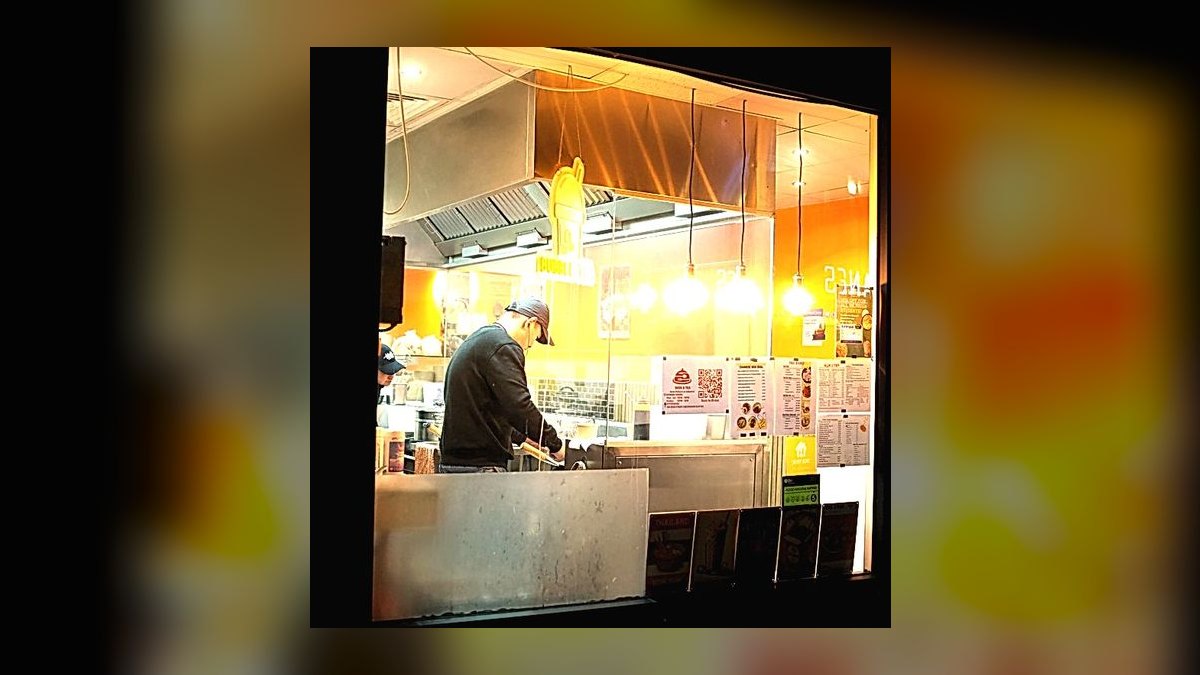
Visit units for full operating days, not lunch. Arrive before prep, stay through the dinner rush, and stay for closeout. Watch the kitchen during the peak hour. Sit at the bar and count covers. Talk to servers about turnover and about how many hours they actually get. A restaurant looks fine at 2pm. It reveals itself at 7pm on a Friday.
Build the pro forma from your own market data. Do not accept the franchisor's model. Use your actual rent comps, your market's actual wage rates, your county's actual liquor license cost, your utility rates, your insurance quotes. Then run three cases: the prototype case, a realistic mid case, and the downside case at legacy-level volume. Underwrite to the downside.
Then decide. Discovery Day is where the franchisor evaluates you and where you meet the leadership you will be working with for a decade. Go, ask hard questions about development pipeline and support staffing, and then either sign with financing lined up or walk away without apology. A clean walk-away costs you the attorney fee and some travel. A bad signature costs you the next ten years.
One broader note worth carrying into any franchise decision, not just this one: the concept matters less than the operator and the site. Strong operators make mediocre concepts work in great locations. Weak operators fail with great concepts in great locations. Before you spend months evaluating a brand, spend a week honestly evaluating whether you are the person who can run a forty-person full-service restaurant six days a week for five years. If the answer is no, the right move is not a different brand. It is a different format — or a couple of years running someone else's restaurant first.
Related questions
How long until a new casual-dining franchise breaks even?
Plan on twelve to twenty-four months to reach stabilized volume, and five to seven years to return the initial capital on a full-service build. Second-generation conversions and resales reach positive cash flow considerably faster because they skip construction carry and much of the ramp period.
Is buying an existing franchise unit safer than opening a new one?
Usually, yes. You inherit real revenue history, trained staff, and an existing liquor license, which removes the largest unknowns. The trade is that you also inherit deferred maintenance, staffing problems, and whatever caused the seller to exit — so diligence shifts from site selection to operational forensics.
What is the single biggest hidden cost in a full-service restaurant franchise?
The liquor license in quota jurisdictions, followed closely by build-out overruns on ground-up construction. Both routinely exceed initial estimates by wide margins and both are determined by local conditions rather than anything the franchisor controls.
Can I own a restaurant franchise passively?
Not in full-service casual dining. Most agreements require the franchisee or a designated principal to be involved in daily operations, and the economics require it regardless — labor discipline and inventory control degrade quickly without ownership presence on site.
Does a smaller hybrid format make sense for a first-time operator?
It is the better entry point. Lower capital at risk, no dining-room labor model, usually no liquor license, and a far cheaper exit if the concept does not land in your market. The ceiling is lower, but so is the hole you can fall into.
FAQ
What is the total investment to open a Bennigan's franchise?
The published Item 7 range runs from roughly $1,027,075 to $3,588,244 for a full Grill & Tavern. Where you land inside that range is driven almost entirely by whether you convert an existing restaurant box or build ground-up, and by what a liquor license costs in your jurisdiction. The compact On The Fly hybrid format requires substantially less capital.
What are the ongoing fees?
A 4% royalty on gross sales plus a 1% contribution to the brand marketing fund, with additional operator-funded local marketing obligations. The initial franchise fee is $35,000 for a single unit. The combined ongoing burden is typical for casual dining, but at 5%-plus of gross it puts real pressure on margin at below-average volumes.
How much can a unit realistically earn?
The brand's published financial performance representation showed new-prototype average gross revenue around $2.41M against roughly $1.66M for legacy units. At segment-typical restaurant-level EBITDA margins in the high single digits to low teens, a $2.2M unit generates roughly $175K–$265K before corporate overhead and debt service.
Which markets suit this brand best?
Historically Texas, the Southeast, and the Midwest, where the name still carries recall. Internationally, the brand has development activity in South Asia, the Gulf, and Latin America, where American casual dining reads as aspirational rather than nostalgic. Markets with no history of the brand require materially higher launch marketing.
Should a first-time operator do this at all?
Not the full-service build. Full-service scratch kitchens with bar programs are among the hardest formats in the industry, and first-time operator failure rates reflect that. The realistic paths for a newcomer are the hybrid format, buying an established unit with proven volume, or spending two years managing someone else's restaurant first.
How do I verify any of these numbers myself?
Request the current Franchise Disclosure Document directly from the franchisor. Federal rules require delivery within a defined window after your request. Items 5, 6, 7, 19, 20, and 21 contain the fees, investment range, any financial performance representation, unit-count history, and audited financials. Everything else, including this page, is commentary on that document.
Sources
- Federal Trade Commission — Franchise Rule compliance guidance and FDD disclosure requirements: https://www.ftc.gov/business-guidance/resources/franchise-rule-compliance-guide
- U.S. Small Business Administration — 7(a) loan program terms and eligibility: https://www.sba.gov/funding-programs/loans/7a-loans
- National Restaurant Association — State of the Restaurant Industry research and operator cost data: https://restaurant.org/research-and-media/research/
- Nation's Restaurant News — casual-dining segment coverage and unit economics reporting: https://www.nrn.com/
- Restaurant Business Online — segment performance and franchising analysis: https://www.restaurantbusinessonline.com/
- Restaurant Dive — industry news covering closures, expansions, and franchise development: https://www.restaurantdive.com/
- FSR Magazine — full-service restaurant industry coverage: https://www.fsrmagazine.com/
- International Franchise Association — franchise ownership research and buyer education: https://www.franchise.org/
- U.S. Bureau of Labor Statistics — food services employment and wage data: https://www.bls.gov/iag/tgs/iag722.htm
Related on PULSE
This page will be disappearing soon. Save it to your device for $1 — or read it free while it is here.
@Kory-White- · if Venmo asks, the last 4 of my number are 2012
This page is gone.
This one is off the shelf now. $1 keeps it on your phone for good — the whole page, pictures and diagrams included.
 franchiseShould I open or buy a Stanley Steemer franchise in 2027?
 franchiseShould I open or buy a Take 5 Oil Change franchise in 2027?
 franchiseShould I open or buy a Bojangles franchise in 2027?
 franchiseShould I open or buy an Orangetheory Fitness franchise in 2027?
 franchiseShould I open or buy a Cinnabon franchise in 2027?
 franchiseShould I open or buy a Dunkin' franchise in 2027?
 franchiseShould I open or buy a Pizza Hut franchise in 2027?
 franchiseShould I open or buy a Roto-Rooter franchise in 2027?
 franchiseShould I open or buy an Anytime Fitness franchise in 2027?
 franchiseShould I open or buy a Jeremiah's Italian Ice franchise in 2027?