


Should I open or buy a Sylvan Learning (re-do) franchise in 2027?
Quality
Certified
Probably not — unless you can self-fund the full $239K build, you live in a high-income suburb with under-served competition, and you have a personal background in K-12 education or instructional management. Sylvan Learning's 2025 FDD (the most recent available for 2027 planning) puts the total initial investment at $107,922 to $239,012, with a $36,900 franchise fee, an 11% royalty, and a 5% advertising fee — a combined 16% top-line drag that hammers net margin in a labor-heavy business. Average gross sales were $386,112 in FY2024, but breakeven typically lands in months 24-36, and conservative Year-1 cash flow runs negative $40K to negative $90K once you pay W-2 teachers, rent, and that 16% to corporate. AI tutoring (Khan Igon, ChatGPT, MagicSchool) is the real threat to the in-person brick-and-mortar model by 2028.
The Real Numbers
The investment math for a Sylvan Learning center is publicly disclosed in the 2025 Item 7 and Item 19 tables. Below is the operator-grade breakdown a prospective franchisee should run before signing the franchise agreement. Numbers reflect a single-territory suburban center, ~1,800-2,400 sq ft, serving K-12 supplemental academic instruction.
| Line Item | Low | High | Source |
|---|---|---|---|
| Initial Franchise Fee | $36,900 | $36,900 | 2025 FDD Item 5 |
| Real Estate / Site Prep | $15,000 | $75,000 | 2025 FDD Item 7 |
| 3 Months' Rent + Deposit | $4,000 | $15,500 | 2025 FDD Item 7 |
| Furniture, Fixtures, Equipment | $13,000 | $28,000 | 2025 FDD Item 7 |
| Computers + SylvanSync Tablets | $8,500 | $14,000 | 2025 FDD Item 7 |
| Signage + Branding | $3,500 | $9,500 | 2025 FDD Item 7 |
| Initial Marketing (Grand Opening) | $10,000 | $20,000 | 2025 FDD Item 7 |
| Training Travel + Living | $1,400 | $2,400 | 2025 FDD Item 7 |
| Insurance + Licenses | $1,500 | $4,500 | 2025 FDD Item 7 |
| Working Capital (3 mo) | $14,000 | $33,000 | 2025 FDD Item 7 |
| TOTAL Initial Investment | $107,922 | $239,012 | 2025 FDD Item 7 |

Ongoing fees are the part most operators underestimate. Royalty = 11% of gross sales. Brand fund / advertising = 5% of gross sales. That is 16 cents off every revenue dollar before you pay a single hourly teacher, the rent, or yourself. Liquid capital required = $75,000 minimum. Net worth minimum = $150,000. Veterans get a 5% franchise-fee discount (~$1,845 off).
Item 19 — what franchisees actually make: Per the 2025 FDD, average gross sales = $386,112 for FY2024 across reporting centers. Historical 2022 FDD showed 308 territories open ≥ 1 year averaged $364,695, with a top performer at $1,652,866 and a subset of 25 territories open ≥ 2 years averaging $751,373. EBITDA margins typically run 8-14% for centers grossing $300-500K (the median range), driven down by labor at ~55% of revenue (teachers, center director, assessor) and that 16% combined royalty + ad fee.
Payback math: At $386K gross × 11% EBITDA = ~$42K/year operator cash flow post-debt-service. On a $173K mid-point investment, payback runs 4.1 years. Real-world breakeven (cash-flow positive month) is 24-36 months for new-build centers, faster (12-18 months) for resales of healthy units. The SBA loan default rate of 0.5% is below the franchise industry average — a positive signal for unit-level survivability, though it does not measure profitability.
Who Wins With This Business
You win if you check these boxes:

- You have a personal background in K-12 education, instructional design, or school administration — Sylvan is a teaching business, not a retail business, and operators with classroom credibility close more parent consultations.
- You are buying into a suburban market with median household income > $90K, where parents view tutoring as discretionary essential spend, not luxury.
- You are buying a resale of an existing profitable center ($75-150K cash flow already proven) rather than building greenfield — 75% of the financial risk evaporates when you inherit a running book of students.
- You have $200K+ liquid so you can self-fund the build without an SBA loan eating $15-25K/year in debt service for the first decade.
- You can be the owner-operator for 18-24 months minimum — absentee ownership at this revenue level collapses margins because labor cost balloons (you replace yourself with a $65K/year director).
- You are in a market under-served by Mathnasium, Kumon, and Huntington — competitive density of < 2 competitors within a 5-mile radius is the threshold.
- You have patience for a 36-month ramp and emotional stamina for the seasonality (summer slowdown, August surge, January re-enrollment, May test-prep spike).
Who Loses With This Business
You lose if any of these apply:

- You are buying as a financial investment with no education background — you cannot effectively sell academic assessments to parents, the highest-leverage activity in the entire business.
- You are leveraged 80%+ on an SBA loan, paying $1,400/month debt service against a Year-1 negative cash position. That is how Sylvan franchisees end up in personal bankruptcy.
- Your market has 3+ direct competitors within 5 miles (Mathnasium, Kumon, Huntington, Tutor Doctor, plus a robust independent tutor scene) and median household income under $75K.
- You believe AI tutoring tools (Khanmigo, ChatGPT, MagicSchool, Duolingo Max) won't structurally compress the in-person tutoring market over the next 5 years — the AI tutors segment is growing at 30.5% CAGR, projected $2.75B in 2026 to $17.72B by 2033 (Grand View Research).
- You expect passive income from day one. First-18-month operator-hours = 50-60/week.
- You are in a state with rising minimum wage > $17/hr without a matched ability to raise the $50-65/hr customer price point — labor margin compresses fast.
2027 Market Conditions
Three structural forces define the Sylvan Learning operating environment heading into 2027:
1. Post-pandemic learning-loss spending is normalizing. Federal ESSER funds (~$190B total) that fueled the 2021-2024 tutoring boom fully expired September 2024. School districts are no longer the second-largest customer for supplemental tutoring; the business is back to pure parent-pay. Center traffic from district-contracted students is down 30-50% in many markets versus 2023 peak.

2. AI tutoring is real, free or near-free, and improving monthly. Khan Academy's Khanmigo ($4/month family plan), ChatGPT Edu, MagicSchool, and Duolingo Max are now functional homework helpers for grades 4-12. GenAI in education spending grew 67% YoY into 2026 (HolonIQ). Parents under 45 are increasingly comfortable substituting $40/month AI tools for $3,200/year Sylvan packages in non-test-prep use cases.
3. The in-person brand stays defensible — for now — in three niches: (a) structured ADHD / learning-difference accommodation where human teachers outperform AI; (b) high-stakes test prep (SAT, ACT, ISEE, SSAT) where parents want a credentialed proctor and structured drill cycles; (c) parent-facing accountability — the value Sylvan sells is not just tutoring, it's the social contract that drives the kid to a building twice a week. The brick-and-mortar moat is shrinking but not gone.
Industry growth headline: The after-school tutoring market is forecast at $38.5B in 2026, growing to $42.1B in 2027 (360 Research Reports). But offline share is expected to shed 5-8 points to online and AI alternatives by 2027.
The 90-Day Decision Tree

Days 1-15 — Self-Diagnostic. Run your personal financial statement honestly. Confirm $200K+ liquid and $300K+ net worth excluding primary residence. If you are inside those numbers but stretched, stop here — Sylvan is not the business for thin balance sheets. Inventory your direct K-12 instructional experience (teaching, school administration, district consulting). Score yourself out of 10 — under a 6, you should be a passive investor in a different category.
Days 16-30 — Market Validation. Pull Esri Tapestry replacement demographic data for your target 5-mile trade area (use SimplyAnalytics or Claritas PRIZM). Confirm median household income > $90K, % households with children 5-17 > 22%, and competitive density < 2 Mathnasium/Kumon/Huntington locations. Drive the trade area at 3:30 PM on a Tuesday — count cars in competitor lots.
Days 31-50 — FDD Deep Read + Validation Calls. Get the current 2026 or 2027 Sylvan FDD directly from corporate (not a broker). Read Item 7 (costs), Item 19 (financials), Item 20 (system size + transfers/terminations), and Item 21 (audited financials). Pay specific attention to Item 20 outlet tables — count closures and transfers over the last 3 years. Then call 8-10 current franchisees unprompted (not Sylvan's curated list). Ask: actual Year-1 EBITDA, actual ramp timeline, what surprised you, would you do it again.
Days 51-70 — Site + Resale Search. Contact a franchise resale broker (FranchiseGator, BizBuySell, FBA Network) and ask for all Sylvan listings nationwide. Compare a resale at $250-450K (turnkey, cash-flowing) to a greenfield at $173K mid-point + 36-month ramp risk. For most operators, a healthy resale at 2.5-3x EBITDA is the better trade.
Days 71-90 — Legal + Financial Close-Out. Hire a franchise attorney ($3-5K flat fee, not your real estate lawyer) to review the franchise agreement. Get a CPA who has audited tutoring centers to model your 5-year cash flow at 80% / 100% / 120% of Item 19 average gross sales. Only sign if all three downside cases (slow ramp, AI-tutoring compression, recession) leave you above zero by month 30.
Alternative Plays
If the Sylvan numbers don't pencil, the K-12 supplemental education category has cleaner unit economics in adjacent franchises:

- Mathnasium — narrower scope (math only), ~$112-149K total investment, 9% royalty + 2% ad, average gross revenue ~$405K per 2024 FDD. Lower royalty drag, simpler operations, faster ramp.
- Kumon — $73-145K investment, no traditional royalty (per-student fee structure ~$33-39/subject/month to corporate), highly systematized worksheet model. Brand equity in math + reading among Asian-American parents is unmatched.
- Code Wiz / theCoderSchool / Code Ninjas — coding-focused, $80-200K, riding the only K-12 tutoring niche AI cannot fully displace (hands-on project mentoring).
- Tutor Doctor — in-home model, no real estate, $80-130K investment, $0 build-out, lower margin ceiling but lower downside.
- Independent operator — start your own un-branded tutoring practice for $8-25K, keep the 16% royalty + ad fee. You give up the Sylvan name and the SylvanSync platform, but in markets where the brand doesn't carry a premium, the math is dramatically better.
- Real estate play — at the $240K Sylvan all-in cost, consider whether a small commercial property + cash-flowing tenant produces equivalent risk-adjusted returns with zero operational drag.
FAQ
What is the total investment needed to open a Sylvan Learning franchise?
The total initial investment ranges from $107,922 to $239,012, including a $36,900 franchise fee. This covers build-out, equipment, and initial marketing, but you'll need additional working capital to cover negative cash flow in the first year.
How long does it take to break even? Breakeven typically occurs between months 24 and 36, but many franchisees see negative cash flow of $40,000 to $90,000 in Year 1 due to teacher salaries, rent, and the combined 16% royalty and advertising fee.
What are the ongoing fees? You pay an 11% royalty and a 5% advertising fee on gross sales—a total of 16% of revenue before any other expenses. This significantly reduces net margins in a labor-intensive business.
Is AI tutoring a threat to Sylvan Learning? Yes, by 2028, AI tools like Khan Academy, ChatGPT, and MagicSchool are expected to disrupt the in-person tutoring model. Families may opt for cheaper or more flexible online options, potentially reducing demand for brick-and-mortar centers.
What kind of location is best for a Sylvan franchise?
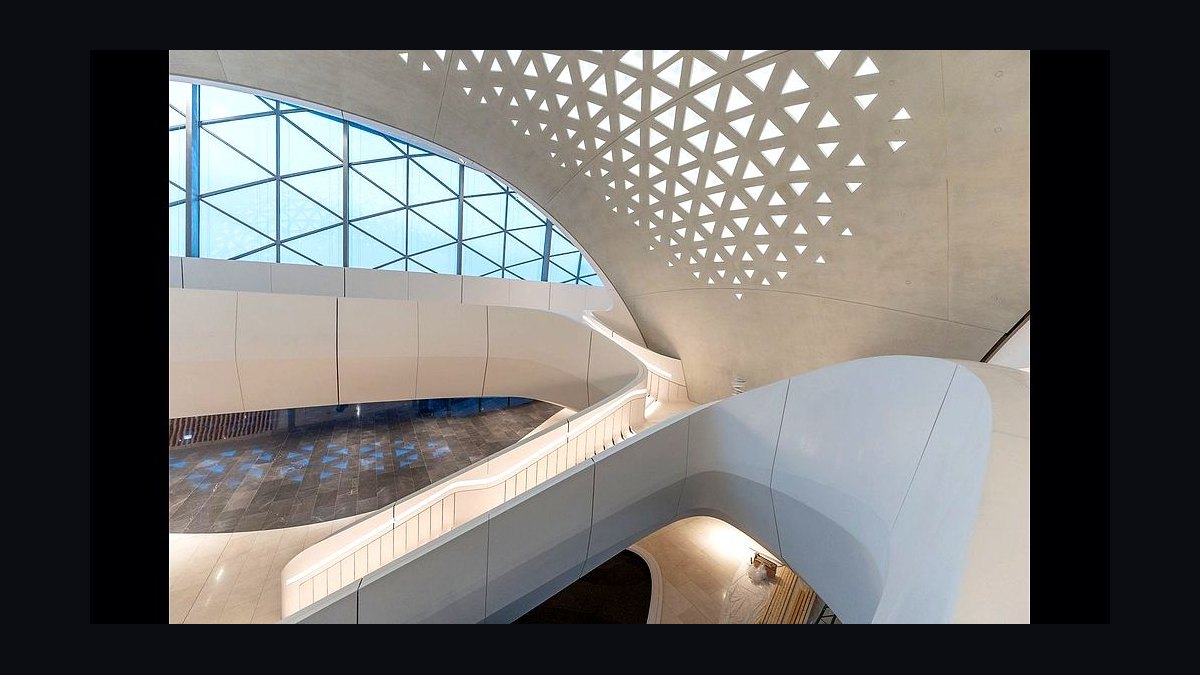
High-income suburbs with underserved competition are ideal. You'll need a market where families can afford premium tutoring and where no other Sylvan or similar center already dominates.
Do I need a background in education to succeed? A personal background in K-12 education or instructional management is strongly recommended. Without it, you'll struggle to manage teachers, curriculum, and parent expectations effectively.
Bottom Line
Sylvan Learning is a marginal franchise for new buyers in 2027 and a strong franchise for a narrow operator profile. The numbers — $107-239K investment, 16% combined royalty + ad fee, $386K average gross sales, 8-14% EBITDA, 4-year payback, 24-36 month breakeven — sit at the lower-middle band of the franchise universe. The structural threat from AI tutoring growing at 30.5% CAGR is real and will compress same-center sales over the next 5-7 years in non-test-prep use cases. If you are an educator with $200K+ liquid buying a healthy resale in a high-income, low-competition suburb, the brand still earns its place. If you are a financial investor running an SBA loan into a greenfield buildout, this is a slow-bleed business. The 90-day decision tree above exists to separate those two operators.
Sources
- Sylvan Learning Official Franchise Site — Cost of Investment
- Franchise Chatter — Sylvan Learning 2025 Review (FDD Item 7 + 19 detail)
- Vetted Biz — Sylvan Learning Cost & Profit Exposed (2025)
- 1851 Franchise — Sylvan Learning Costs, Fees, Profit 2026
- Sharpsheets — Sylvan Learning FDD, Profits & Costs 2025
- Entrepreneur Franchise Directory — Sylvan Learning
- Grand View Research — AI Tutors Market Report 2033
- 360 Research Reports — After-School Tutoring Market
- Peersense — Sylvan Learning FDD $37K Fee $108K-$239K Total (2026)
- Franchise Direct — Sylvan Learning FDD
- IFPG — Sylvan Learning Franchise 2026 Requirements
- U.S. Department of Education — ESSER Funds Expiration September 2024
Related on PULSE
- Should I open or buy a The Learning Experience franchise in 2027?
- Should I open or buy a GradePower Learning franchise in 2027?
- Should I open or buy an Eye Level Learning franchise in 2027?
- Should I open or buy a Huntington Learning Center franchise in 2027?
- Should I open or buy a Title Boxing Club (re-do) franchise in 2027?
- Should I open or buy a Burn Boot Camp (re-do) franchise in 2027?
This page will be disappearing soon. Save it to your device for $1 — or read it free while it is here.
@Kory-White- · if Venmo asks, the last 4 of my number are 2012
This page is gone.
This one is off the shelf now. $1 keeps it on your phone for good — the whole page, pictures and diagrams included.
 franchiseShould I open or buy a Jiffy Lube franchise in 2027?
 franchiseShould I open or buy a Bojangles franchise in 2027?
 franchiseShould I open or buy a Kumon franchise in 2027?
 franchiseShould I open or buy a Firehouse Subs franchise in 2027?
 franchiseShould I open or buy a Drybar franchise in 2027?
 franchiseShould I open or buy a Panera Bread franchise in 2027?
 franchiseShould I open or buy a Primrose Schools franchise in 2027?
 franchiseShould I open or buy a Planet Fitness franchise in 2027?
 franchiseShould I open or buy a Bahama Breeze franchise in 2027?
 franchiseShould I open or buy an Ace Hardware franchise in 2027?