


Should I open or buy a Church's Texas Chicken franchise in 2027?
Quality
Certified
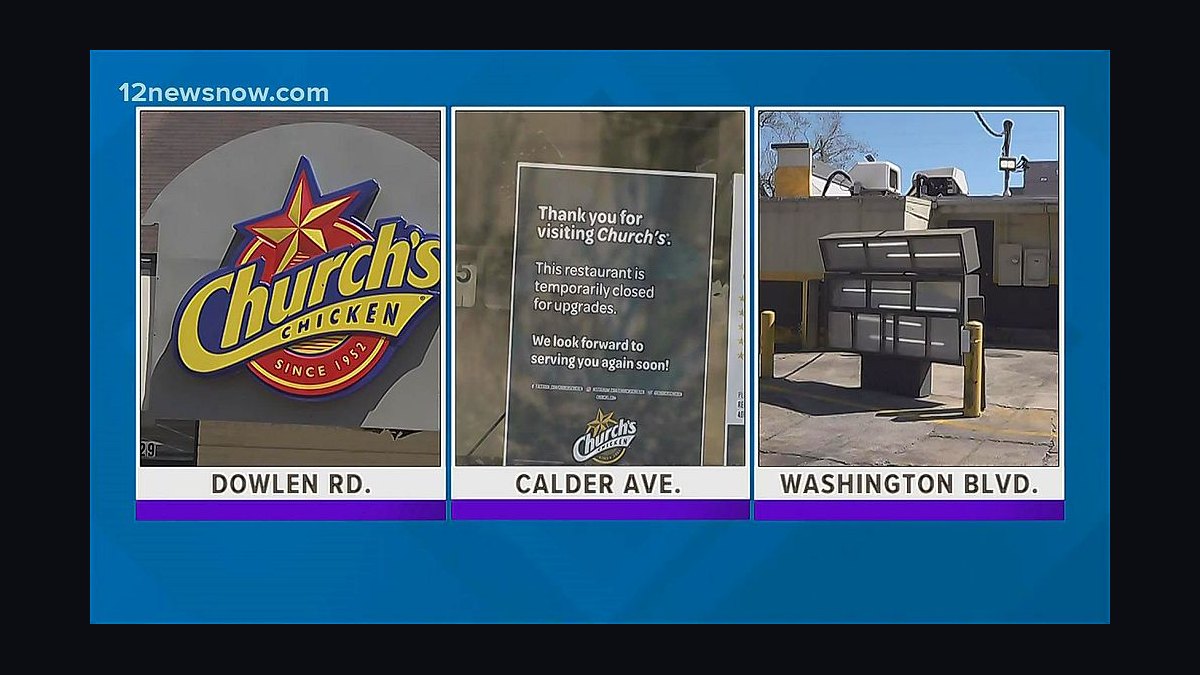
Buying a Church's Texas Chicken franchise in 2027 makes sense for a capitalized, ideally multi-unit QSR operator with $700,000-$1,500,000 available, strong drive-thru execution, and real discipline around volatile chicken and labor costs. It's a poor fit for undercapitalized, first-time, single-unit buyers in weak locations who can't absorb the value segment's thin margins and the ongoing chicken-sandwich-war pressure from larger competitors.
A Concrete Scenario That Frames the Problem
Picture two prospective buyers evaluating the same Church's Texas Chicken opportunity in a mid-sized Texas metro in early 2027. Buyer A already operates three Popeyes locations, has a trained regional manager, and wants to add a complementary value-chicken brand to the portfolio to spread back-office overhead — payroll processing, regional marketing, supply relationships — across a fourth unit. Buyer B is a first-time franchise owner with $300,000 in savings, no restaurant management experience, and a dream of leaving a corporate job behind.
Buyer A's math works because the incremental unit doesn't have to carry its own general manager salary alone; shared systems absorb part of the fixed cost, and an experienced operator already knows how to run a high-volume drive-thru line during a lunch rush. Buyer B's math is far riskier: the same $700,000-$1,500,000 Item 7 investment has to support one location with no safety net. If the site underperforms — grossing $750,000 instead of the $900,000-$1,400,000 mature-unit range — there's no second unit to subsidize losses while the business stabilizes.
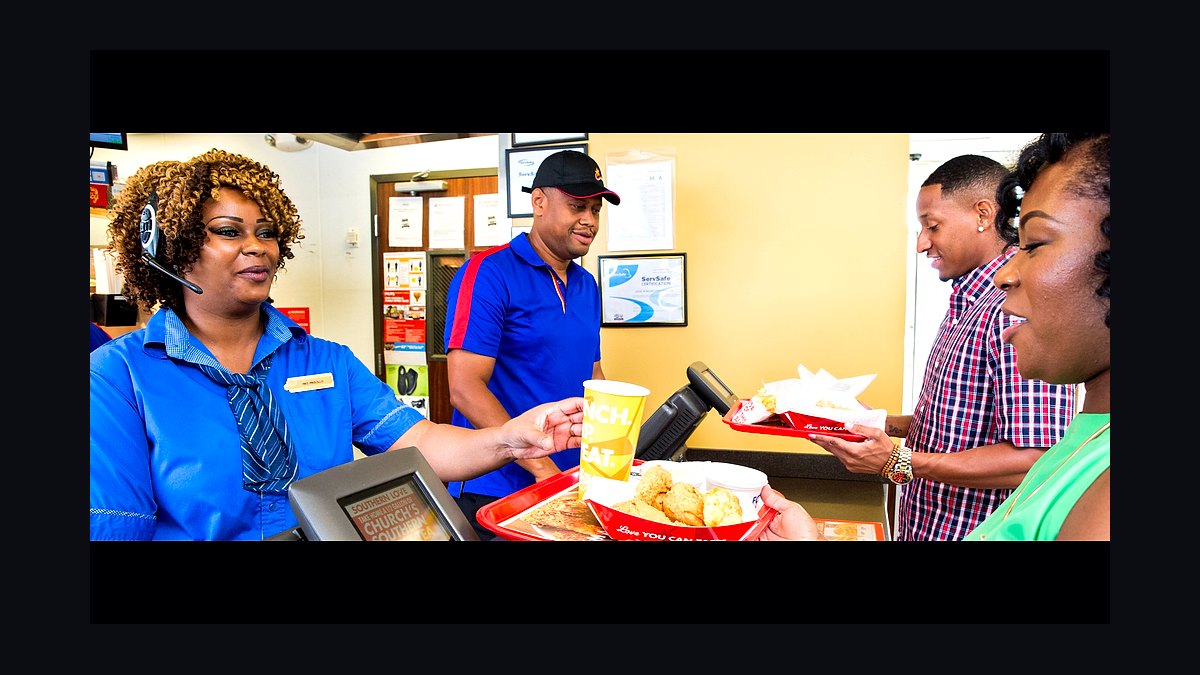
This scenario is the core tension inside the brand. Church's rewards operational scale and cost discipline, and it punishes single-unit buyers who treat the franchise fee as the hard part and day-to-day operations as the easy part. The same logic extends to adjacent decisions a buyer faces alongside the franchise-or-not question: whether to lease an existing closed restaurant shell versus build new, whether to buy a struggling existing Church's unit at a discount and turn it around versus open fresh, and whether to pair the franchise with a second QSR brand on the same pad site to share a kitchen or drive-thru lane. Each of those adjacent paths changes the risk profile in the same direction — more operating experience and more capital cushion consistently outperform enthusiasm and a single location. Anyone asking whether to open or buy a Church's Texas Chicken franchise in 2027 needs to honestly place themselves on this spectrum, with real numbers rather than optimism, before running any other analysis.
How the Mechanism Actually Works
Every Church's Texas Chicken unit runs on a layered margin squeeze, and understanding each layer separates a franchisee who thrives from one who barely survives. Gross sales start the chain, but Church's and the franchisee both draw from the same pool before any profit exists. The royalty (around 5% of gross) and the advertising fee (another roughly 5%) come off the top regardless of profitability — together claiming close to 10% of revenue before the operator pays a single supplier or employee. That split is standard across the QSR category, but it bites harder at a value-priced brand like Church's because the average ticket is lower than at a premium concept, so the same percentage represents a thinner absolute dollar cushion.
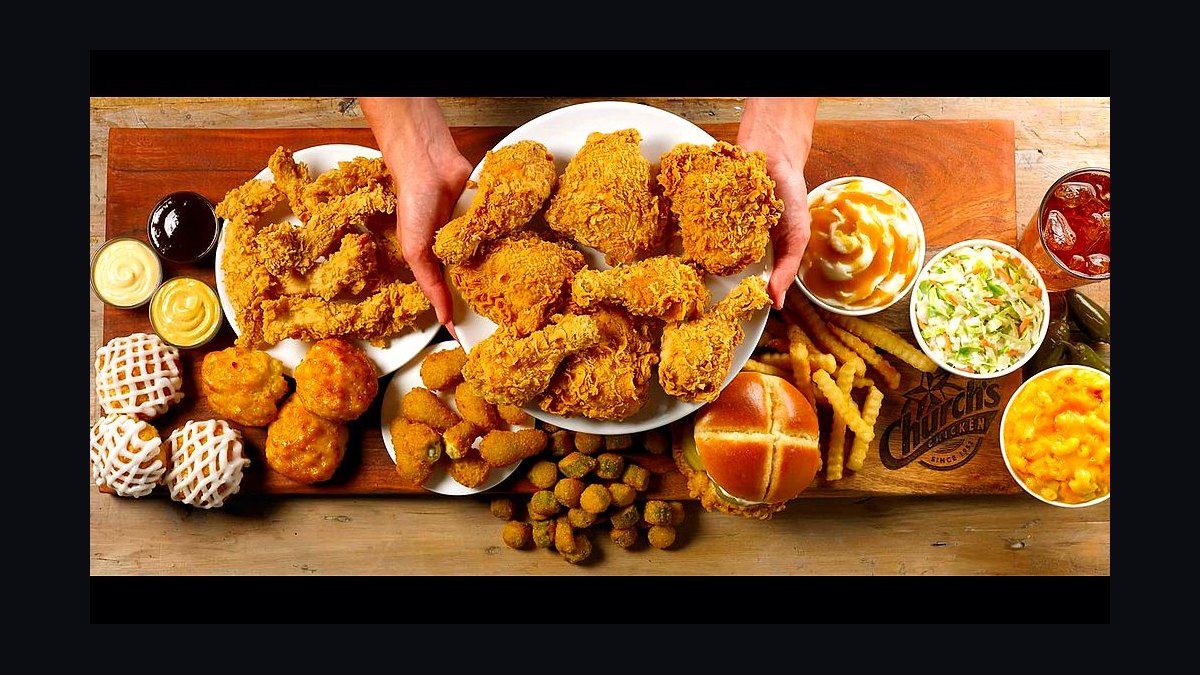
Next comes food cost, swinging roughly 30%-36% of sales because chicken — the brand's single core input — is a volatile commodity. Prices rose sharply in 2022, eased back in 2024, and climbed again through 2025 and into 2026, and a franchisee locked into a $5-$7 value combo menu has almost no pricing power to pass a commodity spike through without undercutting the brand's whole value proposition. Labor is the third and often largest line, consuming 32%-38% of sales as minimum wages climb in many states, particularly where $15-$18/hour has become the baseline QSR crew wage. After royalty, ad fee, food, and labor are subtracted, what remains covers rent, utilities, insurance, and finally owner earnings — which is why the realistic range narrows to $90,000-$220,000 per unit even on $900,000-$1,400,000 in gross sales.
This same mechanism is why multi-unit scale matters so much in this segment: fixed costs like rent, insurance, and a general manager's salary don't scale linearly with sales, so an operator who can push volume per location, or who can spread a regional manager and a shared commissary relationship across three or four units, keeps a materially larger share of every incremental dollar than a single-unit owner facing the same cost percentages. The mechanism rewards disciplined scheduling, tight portion control, and waste reduction at the unit level, and it rewards scale and shared overhead at the portfolio level — a franchisee ignoring either half of that equation is leaving money on the table before the doors even open.
Real Numbers, Ranges, and Benchmarks for 2027
The current FDD remains the authoritative source for Item 7 figures, and the numbers break down as follows. The franchise fee runs $15,000-$25,000. Buildout and leasehold improvements are the largest single line at $350,000-$850,000, with freestanding drive-thru formats landing at the high end and in-line or end-cap strip-center spaces running closer to $700,000-$1,000,000 total investment. Equipment and fryers add $180,000-$380,000, signage and decor another $25,000-$80,000, initial inventory $10,000-$25,000, initial marketing $15,000-$40,000, training and travel $10,000-$30,000, and working capital for the first three months $60,000-$150,000. Altogether, total Item 7 investment lands at roughly $700,000 to $1,500,000, and most franchisors — Church's included — expect $250,000-$400,000 in liquid capital on top of financing, with multi-unit operators generally preferred over first-timers during franchisee approval.

On the revenue side, mature units gross $900,000-$1,400,000 annually, translating to owner earnings of $90,000-$220,000 after royalty (≈5%), advertising fee (≈5%), food cost (30%-36%), and labor (32%-38%). Rent as a percentage of sales typically runs 6%-9%, and anything meaningfully above 10% becomes dangerous once stacked on the 10% combined royalty-and-ad-fee burden. Drive-thru performance is a critical benchmark: over 60% of Church's sales flow through the drive-thru window, so an in-line location without one can realistically expect only $700,000-$900,000 in gross sales rather than the $1,000,000+ a well-sited freestanding unit can hit.
The brand also requires periodic reinvestment — a $75,000-$150,000 remodel or image refresh every 7-10 years under the current FDD, with Church's rolling out a brighter-interior, digital-menu-board prototype that newer franchisees should budget against when evaluating an existing unit's remodel timeline. On financing, SBA 7(a) loans commonly cover a meaningful share of the build-out and equipment costs for an established brand like Church's, though lenders still underwrite against the same $250,000-$400,000 liquid capital benchmark and a strong personal financial statement, and loan terms tightened somewhat through 2025-2026 as commercial lending standards for restaurant concepts generally firmed up. On the resale side, well-performing units — gross above $1.2 million with favorable lease terms — have traded at 2.5x-3.5x annual seller's discretionary earnings in 2025-2026, while underperforming units under $900,000 in gross sales often sell at only 1x-1.5x SDE or struggle to sell at all, which is a useful benchmark for anyone considering buying an existing location rather than building new.

Trade-Offs and Alternatives in the Fried-Chicken Segment
Church's Texas Chicken sits in a specific slot on the fried-chicken capital spectrum, and evaluating it honestly means comparing it against the alternatives a buyer would otherwise consider. Against Popeyes and KFC — larger, more heavily marketed fried-chicken franchises with stronger recent same-store sales momentum — Church's offers a lower entry cost and faster approval process, but it trades away brand velocity; Popeyes in particular has ridden chicken-sandwich-war momentum to outsized unit volumes that Church's hasn't matched. Against Chick-fil-A, the comparison almost doesn't hold: Chick-fil-A's franchise fee is a notably low $10,000, but the brand controls real estate and build-out directly, requires an operator-only ownership model with no multi-unit scaling, and total investment commonly exceeds $2 million once Chick-fil-A's corporate-funded buildings are accounted for — a fundamentally different financial structure, not a cheaper one. Raising Cane's franchises only in limited, selective circumstances, which makes Church's simply more accessible to an outside operator trying to buy into fried chicken at all.
The more interesting trade-off sits between Church's and smaller or faster-growing tender concepts like Slim Chickens or Huey Magoo's, which often carry lower build-out costs and faster unit-volume growth but lack Church's decades of brand recognition and 800+ unit global footprint across 22 countries — a real asset when negotiating with landlords or lenders who want proof of staying power. Wingstop represents another alternative entirely: a wing-focused, largely carryout-and-delivery model with a different labor and real-estate profile than Church's drive-thru-heavy format, and worth a look for a buyer whose target market skews toward off-premise ordering through third-party delivery apps rather than in-car drive-thru traffic. A ghost-kitchen or delivery-only format under a sub-brand like Champs Chicken can also make sense below the $500,000 mark for a buyer who wants exposure to the category without the full real-estate risk, though it sacrifices the dine-in and drive-thru brand visibility that drives a large share of Church's walk-up volume.
For a buyer with the operational chops but no appetite for any franchise fee or royalty structure, an independent value-chicken concept remains an option — full control over menu and pricing, but none of the brand recognition, supply-chain relationships, or site-selection support that Church's corporate real estate team provides. The honest trade-off for most buyers comes down to this: Church's offers moderate capital and genuine brand equity in exchange for operating inside a segment with less margin cushion than premium chicken brands and tighter competitive pressure than smaller emerging concepts face before they scale.
Common Pitfalls and How to Avoid Them

The single most common mistake new Church's franchisees make is overpaying for a site because the franchisor's real estate team signed off on it. Corporate site-selection support is useful, but the financial risk of a bad location sits entirely with the franchisee, not with Church's — so every buyer should independently verify traffic counts, run a competitor map, and pull demographic data (ideally 30,000+ residents within a 3-mile radius for a value-positioned concept) before committing to a lease. A second frequent pitfall is choosing an in-line location without a drive-thru to save on build-out cost, not realizing over 60% of system-wide sales move through that window; operators who skip it routinely land $200,000-$300,000 below what a freestanding unit would generate annually, which can be the entire difference between a profitable and a marginal location.
A third pitfall is underestimating labor-cost creep. Church's kitchens are simpler than a rotisserie-based competitor like KFC, but a franchisee still needs 8-12 employees per shift, and rising minimum wages in several states have pushed labor to 32%-38% of sales. Franchisees who don't proactively adopt self-order kiosks (a $15,000-$25,000 retrofit), trim unprofitable late-night hours, or cross-train staff across front- and back-of-house roles tend to get squeezed hardest when a minimum-wage increase lands mid-lease. A fourth pitfall is treating chicken as a stable input cost rather than a volatile commodity — prices swung sharply in 2022 and have moved unpredictably since, and a value menu priced at $5-$7 per combo leaves almost no room to pass a spike through to customers, so franchisees need a cash buffer specifically earmarked for commodity swings, not just general working capital.
A fifth, less obvious pitfall is skipping delivery-platform economics entirely. Third-party delivery commissions of 15%-30% per order can quietly erode margin on a value-priced menu faster than on a premium one, because the commission is a larger share of a smaller ticket; franchisees who lean on delivery for incremental volume need to model that channel separately rather than assuming it carries the same margin as drive-thru or counter sales. Finally, many buyers forget to ask when an existing unit's last remodel happened; buying a franchise without checking this can mean facing a forced $75,000-$150,000 capital call within one to three years of closing, which catches undercapitalized buyers completely off guard and can stall a unit's cash flow right when it's needed to service acquisition debt.
Related questions

What's the difference between Church's Texas Chicken and Church's Chicken?
They're the same brand under different regional names — "Church's Texas Chicken" is used in the brand's home Texas market and internationally, while "Church's Chicken" is used elsewhere in the U.S. The FDD, fees, and unit economics are shared across both names.
How long does it take to open a Church's Texas Chicken franchise from signing to opening day?
Based on typical FDD timelines and operator interviews, expect roughly 130-160 days from lease signing to grand opening, covering site buildout, equipment installation, staff hiring, and training.
Can I finance a Church's Texas Chicken franchise with an SBA loan?
Yes, Church's Texas Chicken is commonly financeable through SBA 7(a) loans given its long operating history, though lenders still require the $250,000-$400,000 liquid capital benchmark and a strong personal financial statement.
Is Church's Texas Chicken franchising internationally as well as in the U.S.?
Yes — the brand operates 800+ units across 22 countries, and some buyers use a U.S. territory as a stepping stone before pursuing international development rights in other markets.
How does Church's remodel cycle compare to other QSR brands?
A 7-10 year cycle at $75,000-$150,000 is roughly in line with mainstream QSR brands, though some premium chicken concepts refresh more frequently and at higher cost, while smaller emerging brands may have no formal remodel requirement yet.
FAQ
What total investment do I need to open a Church's Texas Chicken franchise in 2027?
Total investment typically ranges from $700,000 to $1,500,000 depending on format — freestanding with a drive-thru costs more than an in-line or end-cap space. This includes the $15,000-$25,000 franchise fee, construction, equipment, signage, and initial working capital, and actual costs vary by market and local real estate pricing.
How much can I expect to earn from a Church's Texas Chicken franchise? Mature units generally generate $900,000-$1,400,000 in annual gross sales, with owner earnings after royalties, advertising fees, food, and labor typically landing between $90,000 and $220,000 per unit. Profitability depends heavily on drive-thru volume, location strength, and how tightly the operator controls food and labor cost.
What are the ongoing fees for a Church's Texas Chicken franchise? Franchisees pay a royalty of approximately 5% of gross sales and an advertising fee of approximately 5% of gross sales, for a combined ongoing fee burden near 10% of revenue — standard for the QSR category. Some markets may layer on additional local marketing cooperative contributions.
Is Church's Texas Chicken a good brand for a first-time franchisee? It can work for a first-timer with restaurant management experience or a strong hired management team, but the value-priced segment leaves little room for cost-control mistakes. First-time owners without operational experience face a steeper learning curve managing thin margins than they would at a premium-priced concept.
How does Church's Texas Chicken compete against Popeyes, KFC, and Chick-fil-A? Church's differentiates on value pricing and bone-in chicken rather than matching the premium positioning or sandwich-war marketing spend of Popeyes or Chick-fil-A. It competes primarily on affordability and drive-thru convenience in price-sensitive neighborhoods rather than on brand buzz.
What's the biggest risk specific to owning a Church's Texas Chicken franchise in 2027? The biggest risk is being a single, low-volume unit in the value segment when chicken commodity costs or local labor rates spike, since the brand's $5-$7 combo pricing leaves almost no room to pass increased costs to customers without abandoning the value positioning that drives its traffic in the first place.
Sources
- https://www.churchschicken.com
- https://www.entrepreneur.com/franchises/churchstexaschicken/334765
- https://www.ibisworld.com
- https://www.statista.com
- https://www.qsrmagazine.com
- https://www.franchise.org
- https://www.usda.gov
- https://www.franchisebusinessreview.com
Related on PULSE
- Should I open or buy a Church's Chicken franchise in 2027?
- Should I open or buy a Texas Roadhouse franchise in 2027?
- Best chicken and wings franchises to buy in 2027
- Should I open or buy a Dave's Hot Chicken franchise in 2027?
- Should I open or buy a Champs Chicken franchise in 2027?
- Should I open or buy a Hot Chicken Takeover franchise in 2027?
This page will be disappearing soon. Save it to your device for $1 — or read it free while it is here.
@Kory-White- · if Venmo asks, the last 4 of my number are 2012
This page is gone.
This one is off the shelf now. $1 keeps it on your phone for good — the whole page, pictures and diagrams included.
 franchiseShould I open or buy an Anytime Fitness franchise in 2027?
 franchiseShould I open or buy a Jeremiah's Italian Ice franchise in 2027?
 franchiseShould I open or buy a Roto-Rooter franchise in 2027?
 franchiseShould I open or buy a McAlister's Deli franchise in 2027?
 franchiseShould I open or buy a Culver's franchise in 2027?
 franchiseShould I open or buy a Big O Tires franchise in 2027?
 franchiseShould I open or buy a Bruster's Real Ice Cream franchise in 2027?
 franchiseShould I open or buy a Domino's franchise in 2027?
 frShould I open or buy a McDonald's franchise in 2027?
 franchiseShould I open or buy a Dairy Queen franchise in 2027?