


Should I open or buy a The Toasted Yolk Cafe franchise in 2027?
Quality
Certified
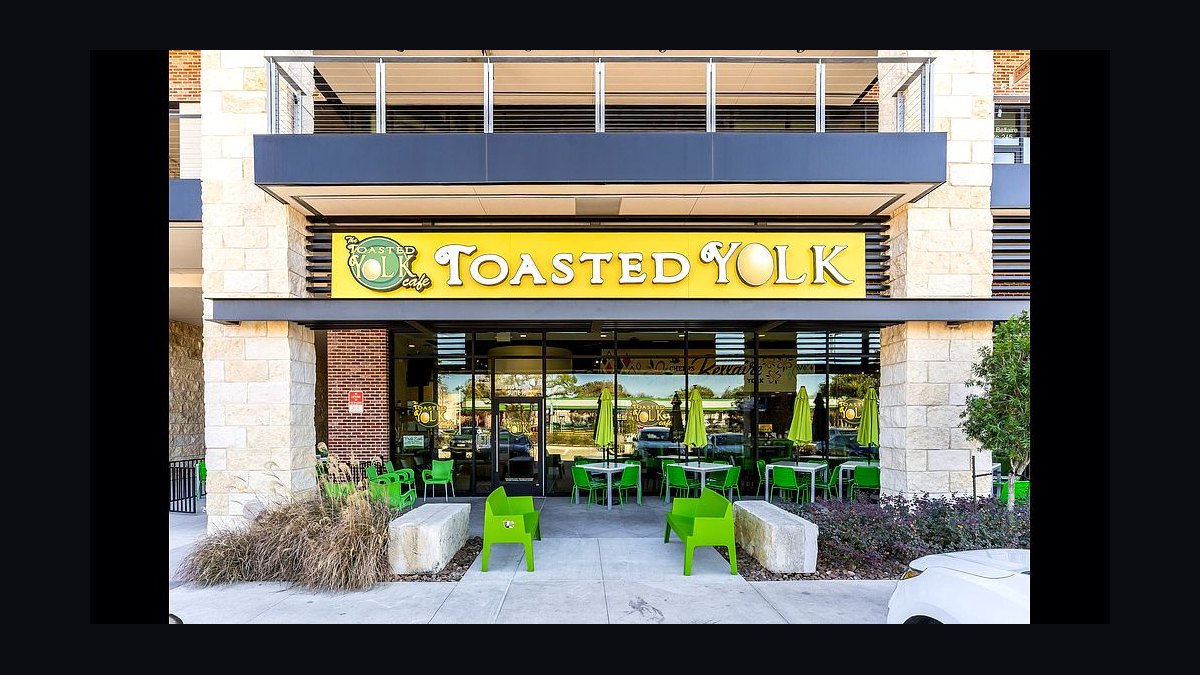
Yes, but only if you understand what you are actually choosing between: a new-build The Toasted Yolk Cafe versus buying an existing resale unit versus staying independent. A new franchise unit works best for operators with $700,000-$1,300,000 in capital who want a daytime-only, brunch-driven concept with a bar; a resale can shortcut the ramp-up if the numbers and lease are sound.
New Build vs. Resale vs. Staying Independent
Anyone asking whether to open a The Toasted Yolk Cafe franchise is really weighing three distinct paths, and each carries a different risk profile, timeline, and capital structure. The first path is a new-build franchise unit — signing with the franchisor, securing a raw or second-generation restaurant space, and building out a full-service breakfast-brunch-lunch café from the studs (or near it). This is the path most people picture when they think "franchise," and it is the one the 2026 FDD's Item 7 figures describe: roughly $700,000 to $1,300,000 all-in, a $40,000-$45,000 franchise fee, and 12-24 months from signed agreement to grand opening depending on permitting and construction timelines in your market.
The second path is buying an existing, operating Toasted Yolk location from a current franchisee who is exiting — a resale. Resales are less common in a brand with roughly a decade of franchising history and a footprint still concentrated in Texas and the Gulf South, but they do surface, typically listed through business brokers, franchise resale marketplaces, or word-of-mouth within the franchisee network. A resale changes the math dramatically: instead of paying $700K+ to build something from nothing, you're paying a multiple of trailing cash flow (commonly 2.5x-4x seller's discretionary earnings in full-service restaurant resales) plus assuming or renegotiating the existing lease. If a unit nets $250,000 annually, a resale might run $625,000-$1,000,000 — comparable to new-build cost, but you inherit a trained staff, an established weekend-brunch customer base, and a proven site, which removes most of the ramp-up risk that eats the first 12-18 months of a new unit's life.

The third path is not franchising at all — opening an independent brunch café that borrows Toasted Yolk's playbook (daytime-only hours, chef-driven Southern menu, a bar program) without paying the franchise fee or the 5%-6% ongoing royalty. This path trades brand recognition, supply-chain relationships, training infrastructure, and site-selection support for full creative and financial control. An independent operator keeps 100% of what would otherwise go to royalty and ad fund contributions — often $85,000-$130,000 a year on a $1.7M-gross unit — but takes on 100% of the marketing, menu R&D, and vendor-negotiation burden that the franchisor otherwise absorbs.
A fourth, adjacent option worth naming: opening a unit of a competing breakfast/brunch franchise — Another Broken Egg Cafe, Eggs Up Grill, Keke's Breakfast Cafe, Broken Yolk Cafe, or Sunny Street Cafe — where the underlying daytime-only, brunch-forward economics are similar but the specific menu positioning, territory availability, or Item 19 disclosures might fit your target market better. This matters because franchise availability is often the deciding factor: if Toasted Yolk has no open territory in your target metro but Eggs Up Grill does, the "which concept" question can be settled by geography before economics even enter the conversation.
How to Decide Between a New Unit and a Resale
The decision between building new and buying a resale (or going independent) comes down to four filters, applied in sequence: available capital and liquidity, risk tolerance for the ramp-up period, your operational experience level, and territory/site availability in your target market. A first-time restaurant operator with $250,000-$350,000 in liquid capital and no full-service hospitality background is generally better served by a new-build franchise unit, because the franchisor's training program, opening support team, and standardized systems compensate for inexperience in a way that a resale's "figure it out from day one" reality does not. An experienced multi-unit restaurant operator, by contrast, is often better served by a resale or even a multi-unit development deal, because they can absorb an underperforming location's turnaround without needing the franchisor's hand-holding — and a resale skips the 6-12 month period where a brand-new unit is still building its weekend-brunch regulars from zero.

Territory and site availability often override the theoretical preference. Toasted Yolk's franchise development team typically wants to see three to five candidate sites before approving a location, because the daytime-only model lives or dies on morning and midday foot traffic patterns that a nighttime-oriented site simply won't deliver. If your target trade area has no available territory, or the available real estate doesn't fit the 2,800-3,500 square foot footprint with patio potential, the "new build vs. resale" question becomes moot — you either wait for territory to open, look at an adjacent metro, or shift to a competing concept with availability. Risk tolerance also matters at a psychological level that spreadsheets don't capture: some operators sleep better building a unit exactly to their spec even if it costs more and takes longer, while others would rather inherit someone else's imperfect-but-functioning business than spend 15 months in construction and pre-opening limbo with no revenue.

The Investment and Return Numbers for Each Path
| Line Item | New-Build Unit | Resale Unit (typical) |
|---|---|---|
| Upfront cost | $700,000-$1,300,000 (Item 7) | 2.5x-4x SDE, often $625,000-$1,000,000 |
| Franchise/transfer fee | $40,000-$45,000 | Transfer fee, usually 25%-50% of the initial fee |
| Time to first revenue | 12-24 months | Immediate (day of close) |
| Royalty | ~5%-6% of gross | ~5%-6% of gross (unchanged) |
| Ad fund | ~2%-3% of gross | ~2%-3% of gross (unchanged) |
| Mature annual gross | $1,200,000-$2,200,000 | Verify seller's trailing 12 months directly |
| Owner earnings | $150,000-$350,000 | Depends heavily on existing lease and labor setup |
The new-build path's biggest hidden cost isn't in the Item 7 table at all — it's the opportunity cost of the 12-24 months where you're paying rent, paying down a construction loan, and drawing no owner income while the unit builds its customer base. A resale, by contrast, front-loads its risk into the purchase price and the due-diligence period: you need audited or at minimum tax-return-verified trailing financials, a clean health-inspection history, an assumable or renegotiable lease with enough term left to justify the purchase price, and honest conversations with current staff about turnover and morale. Independent operation removes the royalty and ad-fund line entirely — worth $85,000-$130,000 a year on a $1.7M unit — but that money has to be redirected into marketing, menu development, and vendor negotiation that the franchisor would otherwise handle, and most first-time independent operators underestimate how much time and money that actually costs.
Food cost sits at 28%-33% of revenue and labor at 30%-35% across all three paths, since the operational reality of a full-service, bar-equipped, brunch-driven kitchen doesn't change based on how you acquired the unit — combined prime cost of 60%-68% before rent, royalty, and marketing is the number every path has to beat. The bar program (mimosas, Bloody Marys, craft cocktails) adds an estimated 15%-25% to average unit volume compared to a dry breakfast concept, but it also adds fixed costs — TABC or equivalent state liquor certification for staff, liquor liability insurance running $3,000-$6,000 annually, and a beverage-cost line that needs its own tracking discipline regardless of which acquisition path you chose.
Building, Staffing, and Opening on a Realistic Timeline
If you choose the new-build path, the sequencing matters as much as the capital. The first 25 days should go entirely to reading the current FDD line by line — Items 5, 6, 7, 19, and 20 specifically — because Item 19 (financial performance representations) is the only place the franchisor is legally permitted to show you real unit economics, and Item 20 tells you how many units have closed or transferred, which is the single best predictor of how durable the system actually is in your target region. Days 26 through 50 should be spent calling at least eight existing franchisees, ideally a mix of units open under three years and units open over five, asking specifically about weekend labor availability, actual bar mix as a percentage of check average, and net profit after paying themselves a market-rate general-manager salary (many franchisees quietly work the GM role themselves and overstate "owner earnings" by omitting what it would cost to replace them).
Days 51 through 70 are for site and demand validation — pulling daytime population density data, checking co-tenancy (a strong site sits near gyms, grocery anchors, or medical/office campuses that generate steady 7am-2pm traffic), and confirming the lease rate fits your pro forma ($25-$45 per square foot in suburban markets, $50-$70+ in dense urban cores). Days 71 through 130 cover construction, kitchen and bar equipment installation, and the licensing sequence — liquor licensing timelines vary enormously by state and municipality, and TABC-equivalent certification for bar staff needs to be scheduled well before opening, not treated as a last-minute checkbox. Days 131 through 160 are opening and the critical work of building weekend brunch traffic specifically, since a Toasted Yolk unit that opens strong on weekday breakfast but weak on Saturday-Sunday brunch is leaving the majority of its potential AUV on the table. For a resale, this entire 160-day sequence compresses to essentially the closing date, which is precisely why resale buyers must do proportionally more diligence upfront rather than learning the business in real time.
Delivery and takeout now account for 15%-25% of sales at most locations regardless of acquisition path, which means dedicated pickup staging and digital-ordering integration are not optional line items to defer — they need to be built into the initial buildout or, for a resale, audited as part of what you're actually buying. Franchisees who skip this and treat delivery as an afterthought typically see slower ticket times cannibalize their dine-in brunch rush, which is the opposite of what the daytime-only model is supposed to deliver.
Related questions

Should I buy an existing Toasted Yolk location or build a new one?
A resale skips the 12-24 month ramp-up and inherits trained staff and an established customer base, but requires rigorous financial and lease diligence. A new build costs a similar amount but gives you full control over site selection and layout from day one.
How does the bar program change the investment math?
The bar adds 15%-25% to average unit volume but requires liquor liability insurance ($3,000-$6,000 annually) and state beverage-certified staff, adding both revenue and fixed cost regardless of whether you open new or buy resale.
Is an independent brunch café a better option than franchising?
Going independent saves the 7%-9% combined royalty and ad-fund contribution but shifts marketing, menu development, and vendor negotiation entirely onto you — a real cost that first-time independent operators frequently underestimate.
What should I ask current franchisees before signing?
Ask about actual weekend labor availability, bar sales as a percentage of check average, and true net profit after pricing in a market-rate general manager salary, since many owner-operators understate labor cost by working the GM role themselves.
How long does it take to open a new Toasted Yolk unit?
Budget 12-24 months from FDD review to grand opening, driven mainly by construction permitting, kitchen/bar equipment lead times, and liquor licensing timelines, which vary significantly by state and municipality.
FAQ
What is the typical total investment to open a The Toasted Yolk Cafe franchise? The total investment ranges from roughly $700,000 to $1,300,000, including a franchise fee of $40,000 to $45,000. This covers build-out, kitchen and bar equipment, and initial inventory, though actual costs depend heavily on location size and local construction rates.
Is buying a resale unit cheaper than opening a new one? Not necessarily. Resales typically trade at 2.5x-4x seller's discretionary earnings, which can land anywhere from $625,000 to $1,000,000 or more depending on the unit's performance — comparable to new-build cost, but with revenue starting immediately instead of after 12-24 months of construction.
How much can I expect to earn as an owner? Mature units typically generate annual gross revenue between $1,200,000 and $2,200,000, with owner earnings often in the $150,000 to $350,000 range. This varies significantly based on labor management, local competition, and whether you're paying a market-rate GM or working that role yourself.
What are the operating hours and lifestyle benefits? The cafes operate daytime-only hours, typically 7am to 3pm, avoiding late-night and dinner shifts entirely. This improves staffing predictability and owner quality of life compared to full-day restaurant concepts, though weekend brunch remains the busiest and most operationally demanding period.
Do I need prior restaurant experience to open a franchise unit? Most franchisees benefit from food-service or business-management experience, though the franchisor provides structured training and opening support that can offset inexperience on a new-build unit. A resale, by contrast, offers far less margin for learning on the job.
What's the biggest risk specific to the resale path versus new build? The biggest resale risk is inheriting problems you can't see in a walkthrough — an unfavorable lease with little term remaining, deferred equipment maintenance, or a staff culture in decline — which is why verified trailing financials and an independent lease review are non-negotiable before closing.
Sources
- https://www.toastedyolkcafe.com
- https://www.entrepreneur.com/franchises
- https://www.franchisedirect.com
- https://www.ibisworld.com
- https://www.statista.com
- https://www.nrn.com
- https://www.qsrmagazine.com
- https://www.franchisebusinessreview.com
- https://www.franchise.org
Related on PULSE
- Should I open or buy a Broken Yolk Cafe franchise in 2027?
- Should I open or buy a Just Love Coffee Cafe franchise in 2027?
- Should I open or buy a Sunny Street Cafe franchise in 2027?
- Should I open or buy a Keke's Breakfast Cafe franchise in 2027?
- Should I open or buy a 85C Bakery Cafe franchise in 2027?
- Should I open or buy a Taziki's Mediterranean Cafe franchise in 2027?
This page will be disappearing soon. Save it to your device for $1 — or read it free while it is here.
@Kory-White- · if Venmo asks, the last 4 of my number are 2012
This page is gone.
This one is off the shelf now. $1 keeps it on your phone for good — the whole page, pictures and diagrams included.
 franchiseShould I open or buy an Orangetheory Fitness franchise in 2027?
 franchiseShould I open or buy a UPS Store franchise in 2027?
 franchiseShould I open or buy a Panera Bread franchise in 2027?
 franchiseShould I open or buy an Auntie Anne's franchise in 2027?
 franchiseShould I open or buy a Wingstop franchise in 2027?
 franchiseShould I open or buy a Hand and Stone Massage franchise in 2027?
 franchiseShould I open or buy a Merry Maids franchise in 2027?
 franchiseShould I open or buy a Bahama Breeze franchise in 2027?
 franchiseShould I open or buy a Pizza Hut franchise in 2027?
 franchiseShould I open or buy a FACE FOUNDRIÉ franchise in 2027?