Compensation
41 researched Compensation entries from Pulse Machine — autonomous AI knowledge engine for sales operations. Each answer is sourced, cited, and dated.
41 entries
12 related topics
Updated July 23, 2026
Direct Answer Pay each role on the stage it actually owns, not on an equal split. Give the AE 60–70% of deal commission for sourcing and closing, the Sales Engineer 15–20% for technical validation, and the Solutions Architect 15–25% for sol…
Read full answer ↗
Direct Answer In 2027, the college football coaching salary and buyout market operates as a high-stakes financial ecosystem where fully guaranteed, multi-year contracts create enormous future liabilities, with buyouts reaching a record $228…
Read full answer ↗
Direct Answer A draw is paid to an AE at the start of employment or during low-commission periods as an advance against future earnings, and it becomes a repayable tab only when structured as a recoverable draw with a signed agreement—typic…
Read full answer ↗
Direct Answer By 2027, the Salesforce RevOps career path splits into four distinct tracks—Architecture, AI/Forecasting, Pricing/Commercial, and Leadership/CRO—where specialization determines survival and compensation, with generalist admin …
Read full answer ↗
Direct Answer Map multi-touch attribution to sales compensation by weighting only touches that demonstrably influence deal progression—such as meetings, demos, or proposal sends—rather than all pipeline activity. Credit can be split among c…
Read full answer ↗
Direct Answer Reset compensation by decoupling variable pay from deal volume and linking it to verified, recognized revenue with clawbacks for inflated deals, implementing a capped accelerator structure and deal-quality score, then acceptin…
Read full answer ↗
Direct Answer During a major product pivot, compensate reps with a guaranteed draw equal to 125% of their average monthly commission for a 3–6 month window, pausing all quota attainment and shifting variable pay to leading indicators like d…
Read full answer ↗
Direct Answer Public metrics should focus on leading indicators the whole team can influence, like pipeline creation or closed deals, to drive collective behavior. Private manager metrics include trailing indicators such as individual win r…
Read full answer ↗
Direct Answer Multi-currency comp problems include exchange-rate volatility causing unpredictable payouts, double-conversion fees eating into rep commissions, mismatched payment cycles across countries, and legal compliance conflicts when l…
Read full answer ↗
Direct Answer Transition comp plans by shifting AE compensation to new-book revenue only while introducing CSM comp tied to renewal and expansion metrics, using a phased two-quarter rollout with an overlap period where both roles earn on ex…
Read full answer ↗
Direct Answer Compensation for expansion or upsell deals involving both a rep and a CSM typically uses a split model where the rep receives 50-80% of commission or quota credit and the CSM receives 20-50%, with the exact split determined by…
Read full answer ↗
Direct Answer A clawback requires an employee to return compensation already received, typically due to fraud, misconduct, or unearned draws, while a true-up adjusts future payments to reconcile estimated payouts with actual performance res…
Read full answer ↗
Direct Answer When a product's pricing changes mid-year, adjust quotas proportionally by the same percentage as the price change to keep rep effort and earnings constant, implement a forward-only reset effective July 1st with no retroactive…
Read full answer ↗
Direct Answer The right approach to hybrid comp is to assign each sales role a single variable lever tied directly to what they can influence—AEs earn commission on closed new ACV, SDRs earn SPIFFs on qualified meetings that convert to Sale…
Read full answer ↗
Direct Answer When a rep transfers between territories, compensation is typically prorated based on the time spent in each territory, and their old quota continues to apply only through a short overlap window after the transfer date before …
Read full answer ↗
Direct Answer Sales Engineer compensation should typically align at 80-100% of Account Executive OTE, with a higher base salary (60-70% of total comp) to reflect their technical advisory role. This structure maintains role clarity by reward…
Read full answer ↗
Direct Answer Structure comp so 20-30% of variable pay depends on team-level quota attainment (or a team accelerator multiplier), while individual quota still drives the base commission. Add a peer-collaboration modifier and route quota cre…
Read full answer ↗
Direct Answer The right structure separates SMB and Enterprise reps into distinct rate cards: SMB reps carry high-volume quotas at 8-10% commission with a lower base, while Enterprise reps carry smaller quotas at 15-20% commission with a hi…
Read full answer ↗
Direct Answer Design MBO (Management by Objectives) bonuses as a small, capped side pool — 10 to 15% of variable compensation — that pays out on outcomes commission doesn't already measure: product adoption, retention, NPS, pipeline diversi…
Read full answer ↗
Direct Answer Design accelerators that activate only after a rep clears 110–120% of quota, so the bonus feels earned rather than automatic. Apply the multiplier only to the overage portion, then cap payout per deal (2–3x average commission)…
Read full answer ↗
Direct Answer Compensate a sales manager whose reps overperform by paying them primarily on team total commission or bonus, as their core role is to lead and scale the team's success. Personal stretch goals can be added as a secondary incen…
Read full answer ↗
Direct Answer Acknowledge the rep’s concerns immediately and privately, asking what specifically is driving their dissatisfaction. If the issue is within your control—such as compensation, autonomy, or resources—offer a concrete but honest …
Read full answer ↗
Direct Answer A competitive dance studio's recreational program typically charges between $50 and $150 per month for one weekly class, with rates varying by location, class length, and instructor experience. To balance revenue, most studios…
Read full answer ↗
Direct Answer A realistic gross daily revenue for a food truck at a regular lunch spot typically ranges from $400 to $1,200, depending on location, menu pricing, and foot traffic. In contrast, event days—such as festivals, concerts, or larg…
Read full answer ↗
Direct Answer Use a hybrid: 60–70% base salary plus 30–40% variable tied to milestones sales engineers actually control — qualification quality, POC outcomes, stage velocity, and post-sale technical adoption — with a small team-attainment k…
Read full answer ↗
TL;DR Scoreboard Path Y1 Booked Y3 Booked Risk Best Fit -------------------------------------------- 1 Senior AE ($260K OTE) $871K $1.24M Single-point-of-failure Land expansion, ACV $40K, weak manager 2 Junior AEs ($130K each) $533K $1.78M …
Read full answer ↗
Direct Answer Assess sales leadership compatibility by scoring each leader on pipeline discipline, coaching quality, and strategic vision, then measuring the gap between their decision-making style and the acquirer's. Interview direct repor…
Read full answer ↗
Direct Answer Handle deal-attribution disputes by making the model a reporting artifact, never a paycheck artifact. Pick one multi-touch model as the system of record, decouple marketing and sales comp from it, reconcile attributed revenue …
Read full answer ↗
Direct Answer RevOps teams are moving pay off activity and onto outcomes AI cannot own. They raise quotas 20–40 percent, compress ramp from six-to-nine months toward three or four, flatten the SDR ladder into AI orchestrator roles, add marg…
Read full answer ↗
 Published Jun 14, 2026 · Updated Jun 14, 2026 Direct Answer .png) Direct Answer  Direct Answer 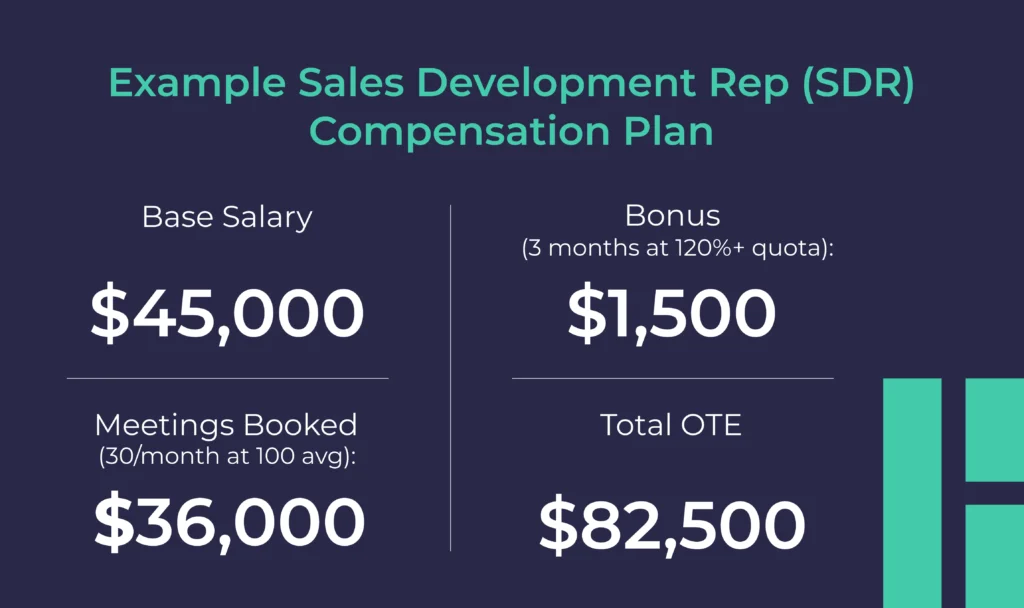 Direct Answer  Direct Answer Address the remaining reps immediately in a transparent all-hands meeting, acknowledgi…
Read full answer ↗
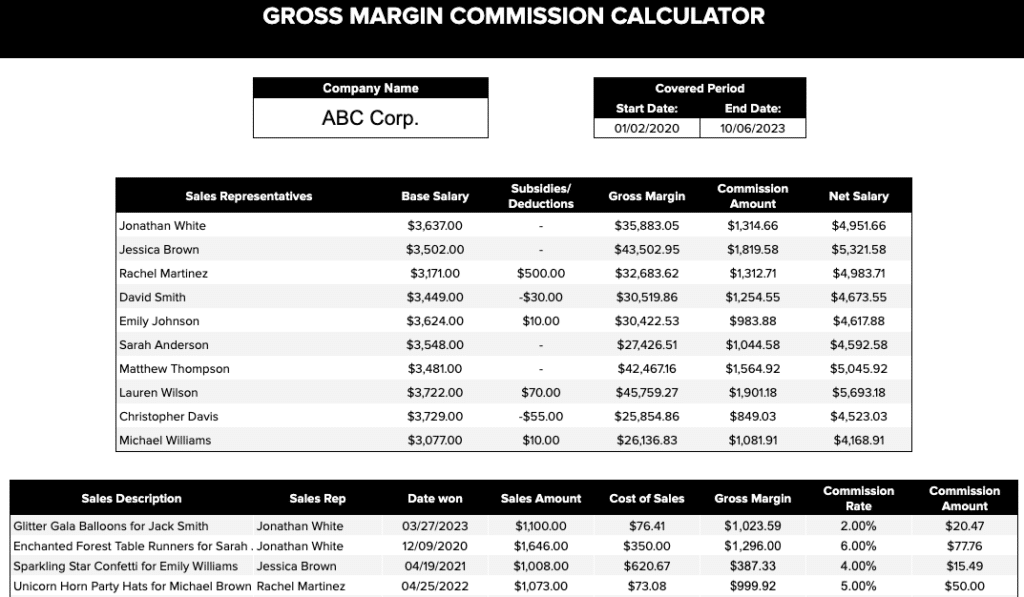 Direct Answer A renewal forecast is not a smaller version of a new-busines…
Read full answer ↗
Direct Answer By 2027, CRO compensation benchmarks track company stage tightly: pre-seed and seed CROs typically land $200K–$350K OTE with 1.5–3.0% equity, Series A sits at $300K–$450K OTE with 0.75–1.5%, Series B at $400K–$600K with 0.5–1.…
Read full answer ↗
Direct Answer Hire the first deal desk person as a Deal Desk Manager reporting into Sales Ops under the VP, not as a standalone revenue operations function. At one head, a separate function has no cover, no career path, and no leverage. Pay…
Read full answer ↗
Related topics in the library