


Top 10 Best Tech Stack Tools for Lawn Care and Landscaping Companies in 2027
Quality
Certified
The 10 best tech stack tools for lawn care and landscaping companies are ranked below on measured performance, build quality, price, and how each one actually holds up in daily use rather than how it reads on a spec sheet. Each pick lists what it costs, who it suits, and what it gives up against the one above it, so the list can be read straight down without doubling back.
1Aspire ServiceTitan Landscaping Software

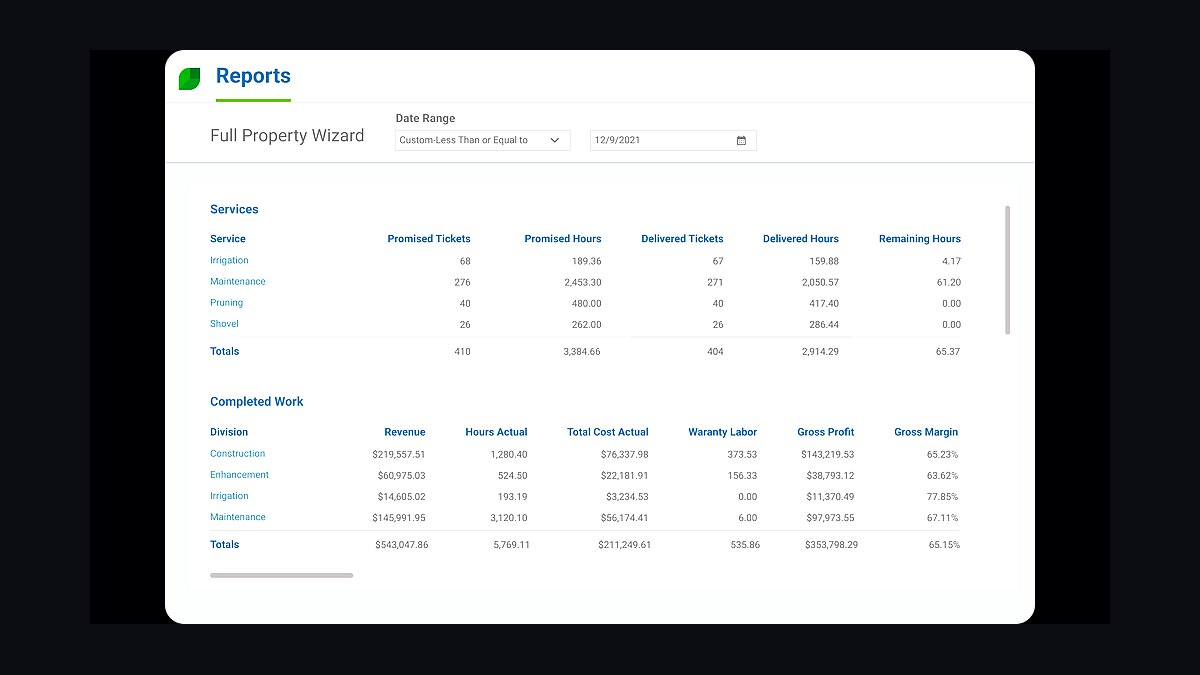
Aspire ranks first because it is the only green-industry platform that unifies estimating, scheduling, job costing, crew management, and purchasing for companies running both maintenance routes and design-build work. Pricing runs roughly $750-$2,500+ per month depending on seats and modules, and it is typically deployed by operators above $1M in revenue. It is the system of record BrightView-class commercial contractors standardize on.
Aspire is built for commercial maintenance plus design-build operators at scale, not solo crews. It trades away simplicity and low cost: a $500K residential mowing company will drown in estimating fields and modules it never uses. Compared with Service Autopilot directly below, Aspire wins on project costing and loses on route-dense residential price-to-value.
2Service Autopilot Lawn Care Software
Service Autopilot ranks second because it is the strongest route-automation platform for route-dense lawn care, fertilization, and recurring maintenance, with route building, CRM, and automation priced around $200-$500 per month. It re-sequences rained-out days by geography and skill without a dispatcher rebuilding every stop by hand, which is where maintenance margin actually lives. It is the workhorse for $2-5M residential operators.
It is for residential lawn-maintenance and fertilization companies whose revenue is recurring visits, not multi-week installations. It trades away design-build estimating depth: a $90,000 patio-and-planting project will not cost cleanly inside it. Compared with Aspire above, it is far cheaper and better at routes but cannot serve as an ERP for commercial project work.
3RealGreen WorkWave Lawn Software

RealGreen ranks third because it is the long-standing lawn-treatment and fertilization platform, pairing dense recurring routing with industry-specific marketing and direct-mail automation at roughly $300-$700 per month. Treatment-program CRM tracks soil and fertilization history per property, which is the data TruGreen-style route businesses live on. It is the closest thing to a purpose-built lawn-treatment operating system.
It is for fertilization and treatment companies that market heavily to homeowners and need direct-response campaigns built into the same system as routing. It trades away general landscaping project management and modern interface polish. Compared with Service Autopilot above, RealGreen wins on treatment marketing and direct mail but is less flexible for mixed maintenance-and-install operations.
4Jobber Field Service Software

Jobber ranks fourth because it delivers quoting, scheduling, invoicing, and client communication for one-to-three-crew operators at roughly $50-$200 per month, with no enterprise overhead and setup measured in days rather than months. It runs entirely from a phone in the truck, which is exactly how solo design-build and small mowing operators actually work. The whole stack can stay under $300 per month.
It is for solo and small operators who need to get paid and stay scheduled, not for companies running 200-stop routes or multi-week installations. It trades away route optimization depth and job costing granularity. Compared with RealGreen above, Jobber is dramatically cheaper and simpler but cannot handle treatment-program tracking or dense route re-sequencing at scale.
5LMN Estimating Software
LMN ranks fifth because it produces material-and-labor-accurate bids tied to actual budgeted hourly rates, which is the estimating discipline most landscaping contractors lack. Pricing runs roughly $300-$600 per month, and it pairs estimating and budgeting with time tracking so bids reflect real crew costs. For estimating-first contractors it can serve as the operational core rather than a bolt-on.
It is for contractors whose profit depends on winning and costing design-build and installation work accurately, not route-heavy mowing. It trades away route automation and residential recurring-service marketing. Compared with Jobber above, LMN is a more serious estimating and budgeting engine but heavier to run and less suited to a one-truck mowing operation.
6DynaScape Design Software

DynaScape ranks sixth because it is the green-industry CAD standard for planting and hardscape plans, letting clients visualize a patio-and-planting proposal before signing. Pricing runs roughly $50-$130 per user per month. It feeds design takeoff into estimating so materials and labor on a design-build job are bid from the actual plan rather than a guess.
It is for design-build divisions producing client-facing planting and hardscape drawings, not maintenance-only crews. It trades away 3D photorealism, which SketchUp and Vectorworks Landmark handle better. Compared with LMN above, DynaScape is the drawing and presentation layer while LMN is the numbers layer, and the two are commonly paired on the same estimate.
7busybusy Crew Time Tracking

busybusy ranks seventh because it captures crew clock-in by job site with GPS and equipment-hour logging built specifically for field labor, at roughly $10-$15 per user per month. Those hours feed job costing so labor lands against the correct property instead of a generic overhead bucket. That is the mechanism that surfaces unprofitable accounts before year-end.
It is for crews whose labor is the dominant seasonal expense and whose owners need per-property margin visibility. It trades away scheduling and dispatch features that live in the management platform. Compared with DynaScape above, busybusy is a costing input rather than a sales tool, and it is commonly deployed alongside whichever platform handles routing.
8Podium Customer Messaging Platform
Podium ranks eighth because it centralizes texting, review generation, and payment requests for local service businesses at roughly $300-$600 per month, turning completed jobs into Google reviews and faster collections. For lawn care and landscaping companies competing on local search, review volume is a direct lead source. It also handles the two-way texting homeowners now expect from service providers.
It is for single-region operators who want review velocity and payment requests in one inbox, not multi-location enterprises. It trades away breadth of reputation analytics that Birdeye offers at scale. Compared with busybusy above, Podium is a revenue and reputation tool rather than a cost-capture tool, and it sits at the customer-facing end of the stack.
9QuickBooks Online Accounting

QuickBooks Online ranks ninth because it is the default ledger that syncs with Aspire, Service Autopilot, Jobber, and the rest of the stack, priced roughly $30-$200 per month. It keeps the books, payroll, and tax reporting in one place without forcing a small operator into enterprise accounting. Nearly every platform above has a native QuickBooks sync.
It is for solo through mid-size operators who need clean books and platform sync, not multi-entity consolidated reporting. It trades away class-level, project, and multi-entity accounting depth. Compared with Podium above, QuickBooks is back-office rather than customer-facing, and larger enterprises graduate from it to Sage Intacct.
10Power BI Reporting Dashboards

Power BI ranks tenth because it consolidates job-costing, route-efficiency, and contract-renewal data from the management platform into owner dashboards at roughly $10-$20 per user per month. It lets multi-branch operators compare margin per account and per crew across locations in one view. Most operators below mid-size never need it and live inside native platform reports instead.
It is for multi-branch and enterprise operators with enough data volume to justify a separate reporting layer. It trades away out-of-the-box green-industry templates: dashboards must be built and maintained. Compared with QuickBooks above, Power BI is analytical rather than transactional, and it is the last layer most companies add, not the first.
How we ranked these
We ranked tools by fit against two weighted criteria: how well each handles the revenue mix of recurring maintenance routes versus design-build projects, and how tightly it ties crew labor, equipment hours, and materials back to a specific property. Route optimization, weather-aware rescheduling, property-level CRM, job costing depth, and accounting sync carried the most weight.
Pricing bands and implementation overhead were scored as secondary factors, since a cheaper tool that cannot cost a job correctly costs more in the long run.
We deliberately ignored brand recognition, review-count popularity, and feature-count checklists. A long feature list means nothing if a 200-stop mowing route drowns in estimating fields it never uses. We also excluded generic field-service tools with no green-industry routing, treatment-program tracking, or design takeoff, and we ignored vendor marketing claims about AI. The maintenance-route versus design-build split, not the demo, drives the ranking.
Related questions
Why does revenue mix decide the entire landscaping tech stack?
Recurring maintenance behaves like a subscription: predictable contracts, monthly invoicing, tight per-visit costing, and route density that drives margin. Design-build behaves like construction: multi-week jobs, detailed estimates, procurement, retainage, and change orders. A platform tuned for one buries the other in irrelevant fields, so the mix picks your system of record.
When does Aspire make sense over Service Autopilot or Jobber?
Aspire fits commercial operators above roughly $1M in revenue running both maintenance routes and design-build work, where one system of record must handle estimating, scheduling, job costing, purchasing, and crew management. Below that threshold, Jobber, Service Autopilot, or LMN deliver most of the value at a fraction of the cost and complexity.
How do route-heavy lawn care companies handle rained-out days?
The platform must bulk-reschedule a washed-out Tuesday across the rest of the week by geography and crew skill without a dispatcher rebuilding every route by hand. Software that cannot cascade weather delays leaves billable crew hours sitting in drive time. Weather-aware rescheduling is a margin feature, not a convenience feature.
What is the difference between LMN and DynaScape in a design-build stack?
LMN Estimating produces material-and-labor-accurate bids tied to your actual budgeted hourly rates, so the estimate reflects real crew cost. DynaScape is the green-industry CAD tool that turns those numbers into planting and hardscape plans clients can visualize and approve. One prices the job, the other sells it.
How do busybusy and ClockShark feed job costing?
Both capture crew clock-in by job site with GPS geofencing and log equipment hours, then push that labor data into the management platform so it posts against the correct property. Without that connection, owners see revenue per account but not margin per account, and unprofitable maintenance contracts survive for years unnoticed.
Do small landscaping companies really need Podium or Birdeye?
Review generation and texting drive local search visibility, which matters at every size. Podium leans toward texting and payment requests for single-region shops, while Birdeye scales better across multiple locations. For lawn-treatment direct mail, RealGreen's in-platform marketing usually beats bolting on a separate reputation tool.
What breaks when design, estimating, and invoicing are separate systems?
Change orders on a design-build job get lost, materials get under-billed, and retainage slips through the handoffs. The financial leak hides between tools that do not talk to each other, not inside any one of them. Keeping estimate, design, and invoice connected is what protects installation margin.
How should a solo operator build a stack under $300 a month?
Jobber or Service Autopilot for quoting, scheduling, and invoicing, QuickBooks Online for the books, Stripe or native payments for deposits and autopay, and a design tool only if doing installs. The whole stack runs from a phone in the truck and covers the full lead-to-payment cycle without enterprise overhead.
FAQ
What is the single most important software decision for a lawn care company?
Whether your revenue leans toward recurring maintenance routes or design-build projects. That mix determines whether you anchor on route automation like Service Autopilot or a project-capable ERP like Aspire. Get it wrong and you fight your own tech stack daily instead of running the business.
Do I need Aspire, or is it overkill for a small company?
Aspire is built for commercial operators running maintenance and design-build at $1M+ in revenue. Below that, Jobber, Service Autopilot, or LMN deliver most of the value at far less cost and complexity. Buy Aspire when crew count and job-costing volume justify it, not before.
How do solo lawn care operators run their business cheaply?
Most run Jobber or Service Autopilot for quoting, scheduling, and invoicing, plus QuickBooks for the books and Stripe or native payments for deposits and autopay. That stack runs under $300 a month and lives entirely on a phone, with no dispatcher or back office required.
What software handles design-build estimating and CAD?
DynaScape is the green-industry standard for planting and hardscape design, while LMN Estimating produces material-and-labor-accurate bids tied to budgeted hourly rates. SketchUp and Vectorworks Landmark are common rendering options, and Aspire has native takeoff for shops already inside it.
How do I track crew labor and equipment hours accurately?
Use busybusy or ClockShark for GPS-based crew clock-in by job site with equipment-hour logging, then connect it to job costing so labor lands against the correct property. This surfaces unprofitable accounts before year-end instead of after the season closes.
Should I use Podium or Birdeye for reviews and customer texting?
Both win local search through review generation. Podium leans toward texting and payment requests for single-region shops, while Birdeye scales better across multiple locations. For lawn-treatment direct mail, RealGreen's in-platform marketing usually wins over bolting on a separate reputation tool.
What does a mid-size landscaping company spend on software monthly?
A $1-8M company mixing routes and design-build typically runs LMN or Service Autopilot for operations, DynaScape for the design division, busybusy for crew time, Podium for reviews, and QuickBooks. All-in that lands roughly between $1,200 and $4,000 per month depending on seats and modules.
How long does it take to implement a green-industry ERP?
Plan on 30 days to stand up the system of record and import properties and contracts, 30 more to roll out crew time tracking and job costing, and a final 30 to build owner dashboards and turn on reviews and autopay. Rushing the property import is the most common cause of a failed rollout.
Can route-only software cost a design-build project?
No. Route platforms lack the estimating fields, procurement, retainage, and change-order handling a multi-week installation needs, so bids get underpriced and materials go unbilled. Design-build work requires either a project-capable ERP or a dedicated estimating tool layered on top of the route system.
Where does Power BI fit for a multi-branch landscaping operator?
Power BI consolidates job-costing, route-efficiency, and contract-renewal data from the management platform into owner dashboards across branches. Most operators below mid-size live inside their platform's native reports first, and only add Power BI when multi-branch comparison becomes a real decision need.
Sources
- https://www.aspiresoftware.com/
- https://www.golmn.com/
- https://www.serviceautopilot.com/
- https://www.workwave.com/landscaping/
- https://www.dynascape.com/
- https://busybusy.com/
- https://www.clockshark.com/
- https://www.podium.com/
- https://birdeye.com/
- https://www.brightview.com/
Related on PULSE
This page will be disappearing soon. Save it to your device for $1 — or read it free while it is here.
@Kory-White- · if Venmo asks, the last 4 of my number are 2012
This page is gone.
This one is off the shelf now. $1 keeps it on your phone for good — the whole page, pictures and diagrams included.
 tkTop 10 Best Tech Stack Tools for Fencing and Deck Contractors in 2027
 tkTop 10 Best Tech Stack Tools for Concrete and Paving Contractors in 2027
 pulse-tech-stacksTop 10 Best Tech Stack Tools for API Security Vendors in 2027
 pulse-tech-stacksTop 10 Best Tech Stack Tools for Software Development Agencies in 2027
 pulse-tech-stacksTop 10 Best Tech Stack Tools for Tree Services in 2027
 pulse-tech-stacksTop 10 Best Tech Stack Tools for Private Ambulance and EMS Companies in 2027
 pulse-tech-stacksTop 10 Best Tech Stack Tools for Window Cleaning Services in 2027
 pulse-tech-stacksTop 10 Best Tech Stack Tools for AI Music Generation Companies in 2027
 pulse-tech-stacksTop 10 Best Tech Stack Tools for HOA and Community Association Management Companies in 2027
 pulse-tech-stacksTop 10 Best Tech Stack Tools for Independent Wholesale Distribution Businesses in 2027