


Top 10 Best Tech Stack Tools for Telehealth Providers in 2027
Quality
Certified
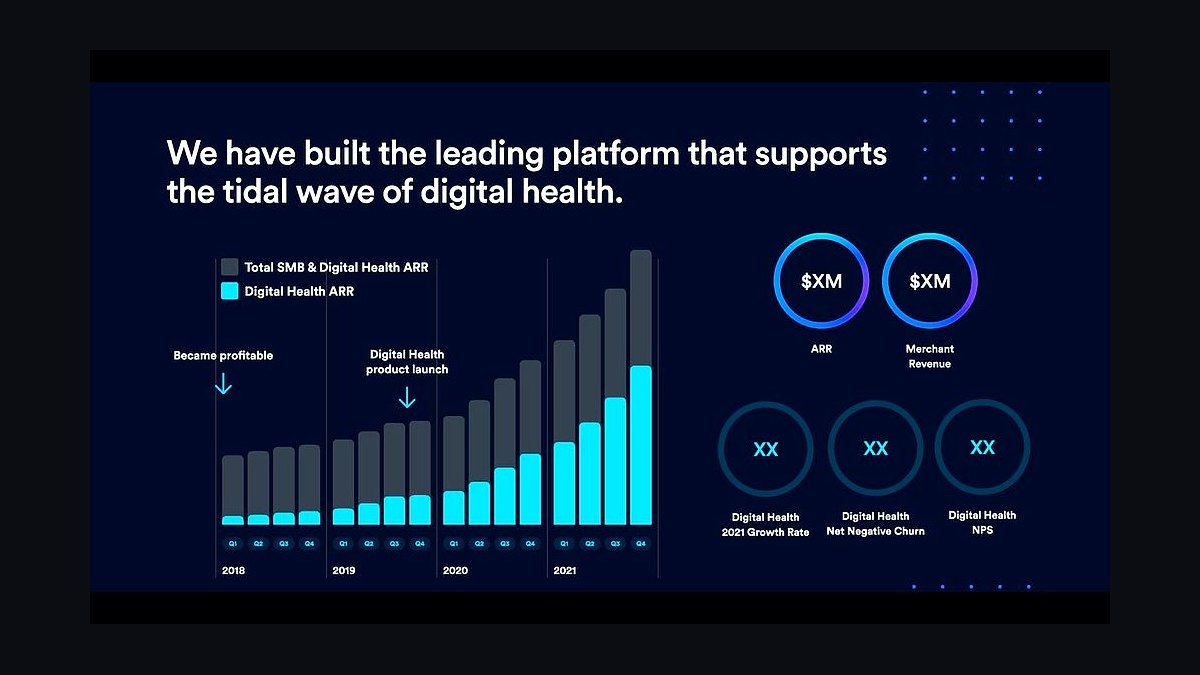
The 10 best tech stack tools for telehealth providers are ranked below on measured performance, build quality, price, and how each one actually holds up in daily use rather than how it reads on a spec sheet. Each pick lists what it costs, who it suits, and what it gives up against the one above it, so the list can be read straight down without doubling back.
1Healthie Virtual Care Platform

Healthie ranks first because it is the only major platform built around async and subscription care rather than retrofitted from an office EHR. It bundles scheduling, HIPAA video, charting, care plans, and billing in one system at roughly $99 per provider per month on the Essentials tier. Its API lets DTC brands build a custom front end on top.
It suits virtual-first clinics and cash-pay DTC brands that want one system of record instead of five integrations. The trade-off is a lighter longitudinal chart than a traditional primary-care EHR, so complex chronic-care groups may outgrow it. Elation is the direct alternate when a heavier chart matters more than async workflow.
2Elation Health EHR

Elation ranks second for groups that want a heavier longitudinal primary-care chart than Healthie offers while still supporting virtual visits. It is purpose-built for primary care with strong problem lists, medication history, and visit-to-visit continuity. Pricing is custom-quoted, typically landing in the low hundreds per provider per month.
It fits hybrid and virtual primary-care groups managing chronic conditions across many visits. The trade-off is that async intake and subscription billing are weaker than Healthie, so DTC brands often need extra tooling. athenahealth sits below it for groups billing heavily through insurance.
3Zoom for Healthcare

Zoom for Healthcare ranks third as the reliability and scale leader for a dedicated, BAA-covered video room layered onto the EHR. It runs roughly $15 to $25 per host per month with a signed BAA, and handles large group sessions and high visit volume that native EHR rooms struggle with. It is the safest pick when video uptime is revenue-critical.
It suits scaling groups that need a standalone video layer separate from charting. The trade-off is an extra integration and no chart context inside the call, so smaller clinics often stay on their EHR's built-in room. Doxy.me is the cheaper browser-based alternate directly below it.
4Doxy.me Telehealth Video

Doxy.me ranks fourth because it delivers browser-based, HIPAA-compliant video with no patient download at $0 to $50 per provider per month. It is the standby for smaller clinics that want a working video room today without procurement friction. Patients join from a link, which keeps no-show friction low.
It suits lean virtual clinics and solo practitioners prioritizing cost over advanced features. The trade-off is fewer enterprise controls, no large-group sessions, and lighter analytics than Zoom for Healthcare above it. Mend and eVisit bundle waiting-room workflow for higher-volume groups that outgrow it.
5Medallion Credentialing Platform

Medallion ranks fifth because multi-state licensing and credentialing is operational survival, not paperwork. It tracks every clinician's licenses, automates state-by-state applications and renewals, and runs payer credentialing so visits route to a clinician licensed in the patient's state. Pricing typically runs $200 to $400 per provider per year plus platform fees.
It suits scaling groups treating patients across many states where a lapsed renewal silently shuts off revenue. The trade-off is real annual cost and onboarding effort that a single-state clinic does not need. Verifiable is the API-first alternate below it for teams that want primary-source verification embedded in their own systems.
6DoseSpot E-Prescribing

DoseSpot ranks sixth as the embeddable e-prescribing engine most telehealth platforms integrate, riding the Surescripts network to send prescriptions to any pharmacy nationwide. It handles EPCS with identity proofing and two-factor signing, which is mandatory for controlled substances. Pricing is usage-based, commonly $50 to $150 per provider per month plus per-transaction fees.
It suits any telehealth provider prescribing medication, especially those shipping controlled substances across state lines. The trade-off is that it is a component, not a platform, so it must be wired into the EHR and pharmacy workflow. Photon Health is the newer API-first alternate for teams that want more control.
7Truepill Pharmacy Fulfillment

Truepill, now part of LetsGetChecked, ranks seventh as the API-first fulfillment leader for DTC brands that ship medication to the patient's door. It adjudicates, fills, packages, and ships, often white-labeled in your brand, with costs structured per fill plus drug cost and integration fees. It removes the need to build pharmacy operations early.
It suits cash-pay telehealth companies with recurring medication plans and predictable volume. The trade-off is per-fill cost that compresses margin at scale, and less control over patient experience than owning a pharmacy. Alto and Curexa are the mail-order alternates below it, while Capsule serves same-day fulfillment.
8Stripe Subscription Billing

Stripe ranks eighth because cash-pay telehealth lives on recurring subscriptions, and Stripe handles the card rails at roughly 2.9% plus $0.30 per charge. It is the default payment infrastructure for DTC brands, with broad developer tooling and reliable uptime. Paired with Recharge, it manages plan changes, dunning, and membership logic.
It suits DTC and membership-model telehealth companies billing patients directly rather than insurers. The trade-off is that Stripe is payments, not subscription logic, so Recharge at around $99 per month plus transaction fees is usually required on top. Insurance-billing groups instead lean on their EHR's claims module or a partner like Candid Health.
9Northbeam Attribution Platform

Northbeam ranks ninth because paid acquisition drives patient volume for cash-pay telehealth, and sloppy attribution makes spend scale losses instead of revenue. It provides multi-touch attribution so you know true cost-per-acquisition across Meta, Google, and other channels. Pricing runs roughly $1,000 to $4,000 per month depending on spend.
It suits scaling DTC telehealth brands spending meaningfully on performance marketing. The trade-off is cost and setup complexity that below meaningful spend does not justify, where native UTM tracking in your analytics tool is enough. Triple Whale is the e-commerce-native alternate for teams already in that ecosystem.
10Power BI Reporting

Power BI ranks tenth as the affordable default for pulling visit volume, conversion, CAC, retention, clinician utilization, and per-state economics into dashboards. It runs about $14 per user per month, far below enterprise BI alternatives, and connects to most data sources a telehealth company already uses. It gives operators a single view of unit economics.
It suits early and mid-stage telehealth companies that need reporting without a dedicated data team. The trade-off is that it requires someone to model the data, and it sits on top of a warehouse rather than replacing one. Looker is the alternate above it for larger platforms with warehouse infrastructure and analysts.
How we ranked these
We scored each tool on five weighted criteria: fit for virtual-first care delivery (30%), integration depth with the core EHR and e-prescribing rails (25%), multi-state licensing, credentialing, and compliance support (20%), total cost of ownership at 10, 50, and 200 clinicians (15%), and implementation speed to first billable visit (10%). Scores came from vendor documentation, published pricing, and operator interviews.
We deliberately ignored brand recognition, conference sponsorships, and feature-count checklists. A long feature list does not help a clinic that cannot route a patient to a state-licensed clinician or fill a prescription. We also excluded legacy inpatient EHRs and any tool without a signed BAA, since those cannot legally carry protected health information in a telehealth workflow.
Related questions
What is the single most important layer in a telehealth tech stack?
The virtual-care platform that doubles as the EHR. It handles intake, scheduling or async routing, video, charting, the patient queue, and billing. If that system is down, the clinic does not exist. Choose it first, then design every other layer around its API and data model rather than bolting telehealth onto a legacy chart.
Do I need a separate video tool if my EHR already includes video?
Usually no. Healthie and Elation ship HIPAA-compliant video inside the platform, which keeps the visit, chart, and billing in one record. Add Zoom for Healthcare or Doxy.me only when you need higher host capacity, breakout rooms, group visits, or a BAA-covered room that runs independently of the EHR during outages.
How do multi-state licensing platforms actually work?
Tools like Medallion and Verifiable track every clinician license, automate state applications and renewals, and run payer credentialing. They feed a routing engine that matches each patient to a clinician licensed in that patient's state. Without this, expanding marketing into a new state can silently generate non-billable, non-compliant visits.
Is DoseSpot required, or can I e-prescribe directly?
You can integrate Surescripts directly, but most telehealth platforms embed DoseSpot because it handles EPCS identity proofing, two-factor signing, and state controlled-substance rules out of the box. Building that yourself takes months and carries DEA compliance risk. Photon Health is a newer API-first alternative worth evaluating.
When should a telehealth company build custom infrastructure instead of buying?
Build only when visit volume and a differentiated workflow justify the engineering cost, typically past 75 clinicians or when your care model does not fit any packaged platform. Below that, white-label infrastructure from OpenLoop, Wheel, or SteadyMD plus a packaged EHR is faster and cheaper than a custom build.
How much should an early virtual clinic budget for software?
A single-specialty clinic with one to ten clinicians can run on roughly $1,000 to $3,500 per month in platform spend. That covers Healthie, a video layer, DoseSpot, Stripe, and QuickBooks, plus per-visit and per-fill costs. Licensing is often handled manually or on an entry tier until multi-state expansion begins.
What is the most common reason telehealth stacks fail at scale?
Licensing and credentialing lagging visit volume. Companies launch paid acquisition in a new state before clinicians are credentialed there, or let a renewal lapse, which shuts off revenue and creates compliance exposure. Automated license tracking plus a state-match routing engine prevents the most expensive and most common failure.
Does attribution software matter for a cash-pay telehealth brand?
Yes, once paid spend is meaningful. Northbeam or Triple Whale shows true cost-per-acquisition across channels, which is the only way to know whether blended CAC is below lifetime value. Below roughly $10,000 per month in media spend, native UTM tracking in your analytics tool is usually sufficient.
FAQ
What is the best tech stack for a telehealth provider in 2027?
Healthie as the virtual-care platform and EHR for most virtual-first clinics, with Elation as the alternate for heavier longitudinal charts. Around that core: Zoom for Healthcare or Doxy.me for video, DoseSpot for cross-state e-prescribing, Medallion for licensing and credentialing, a pharmacy fulfillment partner, and Stripe plus Recharge for subscription billing.
How is a telehealth stack different from an in-person clinic stack?
In a physical clinic the EHR is one system among rooms, staff, and equipment. In telehealth the platform is the clinic. It handles intake, scheduling or async routing, video, charting, the queue, and billing. That concentration means you pick the virtual-care platform first and design everything else around it.
Which telehealth platform is best for async-first care?
Healthie, because it was designed around async and subscription care rather than retrofitted from an office EHR. Its native forms branch on answers and attach to the chart, and its API lets DTC brands build a custom front end. Pair it with Formsort when you need high-conversion intake funnels for paid acquisition.
What does a telehealth stack cost per month at each stage?
Early clinic: roughly $1,000 to $3,500 in platform spend. Scaling DTC company: commonly $15,000 to $50,000 per month before media and drug cost of goods. Large platform: $75,000 to $250,000-plus per month, with clinician supply, fulfillment COGS, and media as the largest lines.
Do telehealth providers need a separate pharmacy fulfillment partner?
Only if you ship medication to patients. DTC brands use API-first fulfillment like Truepill, now part of LetsGetChecked, or Alto and Curexa for mail-order. The pharmacy adjudicates, fills, packages, and ships, often white-labeled in your brand. Costs are per-fill plus drug cost and integration fees.
How does e-prescribing work across state lines?
DoseSpot rides the Surescripts network to send prescriptions to any pharmacy nationwide and handles EPCS identity proofing and two-factor signing. Your routing engine must still ensure the prescribing clinician is licensed in the patient's state, and your protocols must respect each state's controlled-substance and telehealth rules.
What compliance rules govern a telehealth tech stack?
HIPAA across every vendor, with signed BAAs. The Ryan Haight Act and DEA rules govern controlled substances and EPCS. State telehealth laws set what can be prescribed asynchronously and which clinicians may treat which patients. Every system in the stack must produce an auditable record at thousands of visits per day.
Should I use a white-label infrastructure provider instead of building?
Yes, if you are a startup without a differentiated clinical workflow. OpenLoop, Wheel, and SteadyMD supply licensed clinician networks, credentialing, visit workflow, and e-prescribing APIs. You run Stripe, Formsort, and marketing on top. Building the clinical layer yourself only pays off past significant visit volume.
What reporting layer do telehealth operators actually use?
Power BI is the affordable default at about $14 per user per month for visit volume, conversion, CAC, retention, clinician utilization, and per-state economics. Looker sits on a warehouse for larger platforms. Metabase is the open-source middle ground. All three pull from the EHR plus billing and attribution data.
When should a telehealth company move off QuickBooks?
When you need multi-entity consolidation, subscription revenue recognition, or departmental reporting that QuickBooks cannot produce cleanly. That usually happens as you scale past a few dozen clinicians or add multiple legal entities. Sage Intacct is the common next step, at low-to-mid four figures per month.
Sources
- https://www.healthie.com/
- https://www.elationhealth.com/
- https://www.dosespot.com/
- https://www.medallion.co/
- https://www.verifiable.com/
- https://www.surescripts.com/
- https://www.zoom.com/en/products/healthcare/
- https://stripe.com/
- https://www.klaviyo.com/
- https://powerbi.microsoft.com/
Related on PULSE
This page will be disappearing soon. Save it to your device for $1 — or read it free while it is here.
@Kory-White- · if Venmo asks, the last 4 of my number are 2012
This page is gone.
This one is off the shelf now. $1 keeps it on your phone for good — the whole page, pictures and diagrams included.
 pulse-tech-stacksTop 10 Best Tech Stack Tools for Window Cleaning Services in 2027
 pulse-tech-stacksTop 10 Best Tech Stack Tools for RV Dealerships in 2027
 pulse-tech-stacksTop 10 Best Tech Stack Tools for B2B SaaS Companies in 2027
 pulse-tech-stacksTop 10 Best Tech Stack Tools for Staffing Agencies in 2027
 pulse-tech-stacksTop 10 Best Tech Stack Tools for Insulation Contractors in 2027
 pulse-tech-stacksTop 10 Best Tech Stack Tools for Email Security Vendors in 2027
 pulse-tech-stacksTop 10 Best Tech Stack Tools for Land Surveying Firms in 2027
 pulse-tech-stacksTop 10 Best Tech Stack Tools for AI Music Generation Companies in 2027
 pulse-tech-stacksTop 10 Best Tech Stack Tools for Podiatry Practices in 2027
 pulse-tech-stacksTop 10 Best Tech Stack Tools for Independent Wholesale Distribution Businesses in 2027