


Top 10 Best Tech Stack Tools for Tax Preparation Services in 2027
Quality
Certified
The 10 best tech stack tools for tax preparation services are ranked below on measured performance, build quality, price, and how each one actually holds up in daily use rather than how it reads on a spec sheet. Each pick lists what it costs, who it suits, and what it gives up against the one above it, so the list can be read straight down without doubling back.
1Drake Tax Software

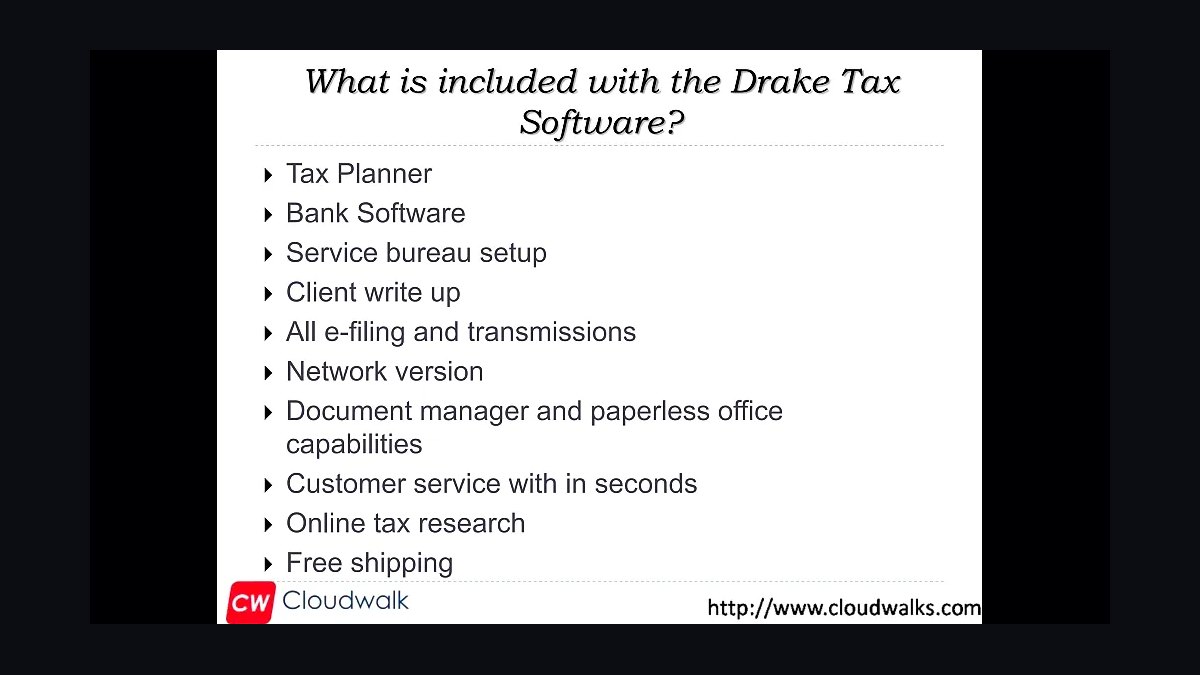
Drake Tax ranks first because it is the dominant prep engine for high-volume retail tax offices, pairing keystroke-driven data entry with native bank-product integration. Its unlimited package has historically sat in the low-to-mid four figures per year per office, with a pay-per-return tier at a few hundred dollars plus a per-return charge for practices under roughly 100 returns.
Drake is for the walk-in, EITC-heavy volume shop doing 1,200 to 3,000 returns where refund transfer uptake exceeds 40 percent. It trades away the deep entity diagnostics and multi-state basis handling that UltraTax and CCH Axcess provide, so complex partnership or S-corp work will fight the software. Compared to Intuit ProConnect directly below, Drake is cheaper at scale but weaker on cloud access and remote preparer workflows.
2Intuit ProConnect Tax

ProConnect Tax ranks second as the cloud-based prep engine that spans both stack camps, priced per return with volume discounts rather than a flat unlimited license. It handles 1040 work plus a meaningful share of Schedule C, rental, and multi-state complexity, and it removes desktop IT maintenance while enabling remote preparers. Updates push automatically, which matters when the IRS issues mid-season form changes.
ProConnect suits the advisory-adjacent firm doing 200 to 600 returns with higher average fees and clients who pay by card or ACH at delivery. It trades away the raw keystroke speed and offline resilience that desktop engines like Drake offer in a high-volume storefront, and per-return pricing gets expensive fast above roughly 1,500 returns. Against Lacerte below, ProConnect is lighter on complex business-return diagnostics but far easier to run without dedicated IT.
3TaxDome

TaxDome ranks third because it consolidates four separate stack layers — client portal, intake organizer, KBA-compliant 8879 e-signature, and light CRM — into one per-user-per-year subscription with meaningful multi-seat and annual-prepay discounts. It includes scheduling with service-type routing for drop-off, sit-down, and virtual appointments, which many offices otherwise buy from Calendly or Acuity. Automated text and email sequences handle appointment reminders and refund-funded notifications.
TaxDome is for the hybrid tax-plus-bookkeeping shop that needs one platform to serve two very different workflows across season and off-season without a second subscription. It trades away the modular flexibility that Canopy offers if you only need portal and document management, and its CRM depth is lighter than a dedicated tool. Against Canopy directly below, TaxDome is priced to replace more tools but sells as a bundle rather than à la carte.
4Canopy

Canopy ranks fourth as the modular practice-management platform, letting offices buy only the portal and document management they need or add transcripts, notices, and time-and-billing as the firm grows. It includes KBA-compliant e-signature for Form 8879, with a per-KBA-transaction cost on top of the subscription because the identity-verification query is a paid third-party lookup. Modular pricing is cheaper than bundled alternatives if you genuinely need only two or three modules.
Canopy suits the advisory-adjacent firm with complex client communication needs and a longer consultative workflow across 200 to 600 returns. It trades away the all-in-one convenience of TaxDome, since stacking modules can exceed a single bundled subscription once you add transcripts and billing. Against Liscio below, Canopy is broader in scope but heavier to configure, while Liscio is lighter and more client-communication focused.
5UltraTax CS

UltraTax CS ranks fifth as the enterprise-tier prep engine for firms where business entities, multi-state filings, and complex basis tracking exceed roughly 25 percent of the book. It is typically quoted as a multi-module bundle rather than list price and lands materially higher than independent-shop options, but the diagnostics and entity handling justify the multiple.
UltraTax is for the fee-paid advisory firm doing partnership, S-corp, and multi-state returns where each return carries more judgment and client back-and-forth. It trades away the low entry cost and pay-per-return flexibility that Drake and ProConnect offer smaller practices. Against CCH Axcess Tax directly below, UltraTax is comparable in depth, and the choice usually comes down to which vendor's bundle and prior-year conversion your firm already knows.
6CCH Axcess Tax

CCH Axcess Tax ranks sixth as the cloud-native enterprise engine, delivering the same complex-return depth as UltraTax CS with centralized visibility across multiple offices and locations. It is quoted as a multi-module bundle and priced for firms running ten-plus preparers, where one scoreboard for returns filed, funding rate, and preparer productivity justifies the platform cost. Cloud architecture removes per-office server maintenance and handles updates automatically.
CCH Axcess is for the multi-office operation with complex entity work and a need for centralized reporting across locations. It trades away the desktop keystroke speed that single high-volume storefronts often still prefer, and the bundle pricing is hard to justify below roughly 800 returns. Against Lacerte below, CCH Axcess is stronger on multi-office cloud visibility, while Lacerte sits at the top of Intuit's range for complex work and integrates more tightly with ProConnect and ProSeries.
7Lacerte Tax

Lacerte ranks seventh as Intuit's top-tier desktop engine for complex work, sitting above ProSeries and ProConnect in the Intuit line for entity handling and multi-state diagnostics. It suits firms that want Intuit ecosystem integration with deeper business-return capability than ProConnect provides, and it runs on desktop for offices that prefer local data and offline resilience. Pricing sits at the top of Intuit's range.
Lacerte is for the established firm doing complex 1040s plus a meaningful share of partnership and S-corp returns, typically 400 to 1,000 returns with higher average fees. It trades away the cloud access and remote-preparer flexibility that ProConnect offers, and it is more expensive than Drake for a pure volume book. Against UltraTax CS above, Lacerte is comparable in depth, and the choice usually comes down to Intuit ecosystem familiarity versus Thomson Reuters.
8Crosslink Tax Software

Crosslink ranks eighth as the prep engine built specifically for bank-product-heavy operations, quoted per office rather than per return and designed around refund transfer and refund advance volume. It prioritizes data-entry speed and native bank integration, so refund transfer applications launch inside the return rather than requiring re-keying taxpayer identity and banking data. This eliminates the transposed account numbers and failed fundings that plague mismatched software and bank partners.
Crosslink is for the retail volume shop doing 1,200 to 3,000 returns where refund transfer uptake exceeds 40 percent and bank incentives are a genuine revenue line. It trades away the complex entity diagnostics and multi-state depth that UltraTax and CCH Axcess provide, so business-return-heavy books will fight it. Against Drake above, Crosslink is more specialized for bank-product volume, while Drake offers broader appeal across both volume and moderate-complexity shops.
9Liscio

Liscio ranks ninth as the client-communication-focused practice-management platform, built around secure messaging, mobile-friendly document exchange, and a client experience that feels closer to a modern app than a traditional portal. It handles KBA-compliant e-signature for Form 8879 and structured document request lists, with pricing per user per year and multi-seat discounts. The mobile-first design drives higher client adoption than desktop-heavy portals.
Liscio is for the advisory firm with a smaller, higher-touch client base where communication quality matters more than raw throughput across 200 to 600 returns. It trades away the breadth of TaxDome and Canopy, since it is lighter on CRM automation, scheduling, and time-and-billing. Against Canopy above, Liscio is simpler to deploy and more client-friendly, but it lacks the modular depth for firms that need transcripts and notices management.
10QuickBooks Online Plus

QuickBooks Online Plus ranks tenth as the default firm accounting system, priced monthly at the Plus tier with payroll as a separate add-on that matters because seasonal staff generate W-2s and the office issues 1099-NECs to contract preparers. It handles the office's own books, quarterly estimates, and recurring billing rails via ACH or card, distinct from any client bookkeeping the firm sells. It also serves as the accounting system for the hybrid tax-plus-bookkeeping model.
QuickBooks Online Plus is for the firm that intends to sell year-round bookkeeping and payroll services to smooth the seasonal revenue cliff after April. It trades away the lower entry cost of Wave for solo preparers, though the migration cost from Wave later is real. Against Wave below the list, QuickBooks is more expensive but supports the contractor 1099s, payroll, and multi-client bookkeeping that a growing firm needs.
How we ranked these
We ranked each tool on five weighted criteria: IRS e-file reliability and acknowledgement speed (25%), native bank-product integration for refund transfers and advances (20%), multi-preparer throughput and concurrent access at peak volume (20%), practice-management depth including intake, portal, and KBA e-signature (20%), and total three-year cost of ownership including renewal pricing (15%). Scores came from vendor documentation, current-year integration certifications, and operator-reported season performance.
We deliberately ignored vendor market share, brand recognition, and feature-count checklists, because breadth rarely predicts how a tool behaves in the fourteen-week crush. We also excluded marketing claims about AI and automation that lack verifiable production deployments, and we ignored year-one promotional pricing, since year-three renewal cost is what an office actually lives with. Consumer-grade products were excluded entirely because they are not licensed for paid preparation.
What to look for
What matters most is fit against your client mix, not feature breadth. If more than 40% of clients would take a refund transfer, buy the tax engine and bank partner as one matched decision, because re-keying identity and routing data at peak volume is where rejected fundings and furious clients originate. If your returns skew complex, pay the premium for entity and multi-state diagnostics instead.
The mistake most buyers make is purchasing the wrong camp's stack. A shop serving EITC-heavy walk-in traffic that buys enterprise software and skips bank integration ends up with an expensive tool and nothing to sell. A firm doing partnership returns on a high-volume 1040 engine fights the software all season. Diagnose your four inputs before taking a single demo, and confirm the integration is current-year certified, not merely "has an API."
Related questions
Can I use consumer software like TurboTax to prepare client returns?
No. Consumer products are licensed for preparing your own return, not for paid preparation, and they lack multi-preparer access, e-file batching, bank-product integration, and preparer diagnostics. Paid preparation requires professional software and an active EFIN. Using consumer tools for client work also voids the license and exposes the preparer to penalties.
Do I have to offer bank products?
No, but for retail volume clients refund transfers are often why they pay a preparer instead of filing free. If your clients pay out of pocket without complaint, skip bank products and invest in practice management and payment collection instead. If most clients cannot pay until the refund arrives, bank integration becomes your first purchase, not your fifth.
How many returns justify unlimited software licensing over pay-per-return?
The crossover typically lands around 100 returns, though it varies by engine and tier. Below that, pay-per-return keeps fixed costs low and lets you test volume before committing. Above it, unlimited licensing usually wins because per-return charges compound quickly. Ask each vendor for three-year renewal pricing, since year-one discounts distort the comparison.
Is a client portal actually required, or is email good enough?
Email attachments are not an acceptable channel for taxpayer documents under the FTC Safeguards Rule. A portal provides encrypted transport, structured intake, document request lists, and self-serve status, which also cuts front-desk phone volume during the highest-revenue weeks. The portal is a compliance layer, not a convenience feature, and it improves return quality through better organizers.
What is KBA and why does it matter for Form 8879?
Knowledge-based authentication verifies a signer's identity through third-party data questions before a remote signature is accepted. IRS rules require KBA for remotely signed 8879s, and most practice-management platforms include compliant e-sign with a per-transaction identity-verification cost on top of the subscription. Skipping KBA invalidates the signature and jeopardizes your e-file authorization.
Can one practice-management platform handle both volume and advisory workflows?
Yes, and the hybrid tax-plus-bookkeeping model depends on it. The platform must support fast seasonal intake and review queues alongside longer consultative engagements without forcing a second subscription. TaxDome and Canopy both attempt this, though Canopy sells modularly, which is cheaper if you only need portal and document management and pricier if you want transcripts, notices, and billing.
How much should a small office budget for security and compliance?
A managed WISP and IT provider bundling endpoint protection, security-awareness training, and documented policy runs in the low hundreds of dollars per month for a small office. The free path uses the IRS Publication 5708 WISP template plus a password manager, enforced MFA, and encrypted storage. The free path is legitimate only if you actually implement the controls.
When should I start building the stack before filing season?
Ninety days out, in three thirty-day phases. First lock the tax software and bank partner together, renew PTINs, and verify EFIN status. Second stand up portal, intake, KBA e-signature, scheduling, and payment rails. Third implement the WISP, train staff, provision named logins, and run a full dry-run return before opening day.
FAQ
What is the best tech stack for a tax preparation service in 2027?
It centers on professional tax software with IRS e-file, such as Drake, Intuit ProConnect/ProSeries, or Crosslink, paired with a natively integrated bank-product partner for refund transfers. Add TaxDome or Canopy for intake, portal, and 8879 e-signature, QuickBooks for firm books, and a written information security plan. The right combination depends on your client mix and return volume.
Should I choose Drake, ProConnect, or Crosslink?
Drake suits high-volume 1040 shops wanting unlimited licensing at a predictable price. ProConnect fits cloud-first practices priced per return with volume discounts. Crosslink is built specifically for bank-product-heavy operations and is quoted per office. Get quotes from two engines in your camp and ask about multi-year renewal pricing, because year-three cost is what you actually live with.
How do refund transfers and refund advances differ?
A refund transfer deducts the preparer's fee from the client's refund when it funds, so the client pays nothing at the desk. A refund advance is a loan against an expected refund, underwritten by the bank, not the office. Advances are the strongest acquisition lever in retail tax, but approval rates and advance ceilings depend on your program tier and volume history.
What percentage of clients should trigger a bank-product strategy?
If more than 40% of your clients would take a refund transfer if offered, you are a volume shop and bank integration is your first purchase. Below 15%, bank products are a distraction and you should optimize for practice management and payment collection instead. The honest answer to that question determines which stack camp you belong in.
How many returns per preparer changes the software decision?
Above roughly 400 returns per preparer per season, keystroke efficiency and concurrent multi-user access dominate, because a two-second-per-screen difference compounds into dozens of hours. Below 250, workflow and review quality dominate, since each return carries more judgment and client back-and-forth. Match the engine to your realistic per-preparer throughput, not your busiest day.
When do I need UltraTax, CCH Axcess, or Lacerte?
When more than about 25% of returns involve business entities, multi-state filing, or complex basis tracking. Those engines carry deeper diagnostics and entity handling that justify the price multiple. Below that threshold, a 1040-optimized engine is faster and cheaper. Buying enterprise software for a simple 1040 book wastes money and slows preparers down.
What does the IRS require for remote 8879 signatures?
Remote signing of Form 8879 requires knowledge-based authentication under IRS rules. Compliant e-signature is included in TaxDome and Canopy, usually with a per-KBA-transaction cost on top of the subscription, because the identity-verification query is a paid third-party lookup. The 8879 must be signed before transmission, and email attachments are not an acceptable transport channel.
What happens if my EFIN lapses or is suspended?
EFIN suspension mid-season ends the business for that year. You cannot transmit returns, which means clients do not get refunds and you cannot collect fees. Renew PTINs for every preparer, keep the EFIN active and correctly reflecting your current business structure and address, and implement the WISP controls that prevent a reportable breach and EFIN review.
Do I need a written information security plan?
Yes. The FTC Safeguards Rule requires a written information security plan for tax preparers handling taxpayer data. It must document MFA, encryption at rest and in transit, role-based access, incident response, and annual training. The IRS Publication 5708 template is a legitimate starting point, but only if you actually implement the controls rather than filing the document.
How should a multi-office operation handle reporting?
Single offices should live inside native dashboards in the tax software and practice-management tool. Once you run three or more locations and need one scoreboard for returns filed, funding rate, average fee, preparer productivity, and advance take rate, Power BI or Looker Studio over exported data is the cheap answer at roughly ten dollars per user per month. Build it before season, not during.
Sources
- https://www.irs.gov/tax-professionals/efin-application-and-requirements
- https://www.irs.gov/pub/irs-pdf/p5708.pdf
- https://www.ftc.gov/business-guidance/privacy-security/safeguards-rule
- https://www.irs.gov/tax-professionals/paid-preparer-tax-return-preparer-due-diligence-checklist
- https://www.irs.gov/individuals/identity-protection-personal-identification-number-pin
- https://www.drakesoftware.com/products/drake-tax
- https://proconnect.intuit.com/tax/
- https://www.taxdome.com/
- https://www.canopytax.com/
- https://quickbooks.intuit.com/online/
Related on PULSE
This page will be disappearing soon. Save it to your device for $1 — or read it free while it is here.
@Kory-White- · if Venmo asks, the last 4 of my number are 2012
This page is gone.
This one is off the shelf now. $1 keeps it on your phone for good — the whole page, pictures and diagrams included.
 pulse-tech-stacksTop 10 Best Tech Stack Tools for Public Relations Agencies in 2027
 pulse-tech-stacksTop 10 Best Tech Stack Tools for Bot Mitigation Vendors in 2027
 pulse-tech-stacksTop 10 Best Tech Stack Tools for Land Surveying Firms in 2027
 pulse-tech-stacksTop 10 Best Tech Stack Tools for HVAC Equipment Distributors in 2027
 pulse-tech-stacksTop 10 Best Tech Stack Tools for Home Builders and Residential Developers in 2027
 pulse-tech-stacksTop 10 Best Tech Stack Tools for Hair Salons in 2027
 pulse-tech-stacksTop 10 Best Tech Stack Tools for Independent Wholesale Distribution Businesses in 2027
 pulse-tech-stacksTop 10 Best Tech Stack Tools for Self-Storage Operators in 2027
 pulse-tech-stacksTop 10 Best Tech Stack Tools for Hardware Security Module (HSM) Vendors in 2027
 pulse-tech-stacksTop 10 Best Tech Stack Tools for AI Observability Platform Companies in 2027