


Top 10 Best Tech Stack Tools for Music and Instrument Stores in 2027
Quality
Certified
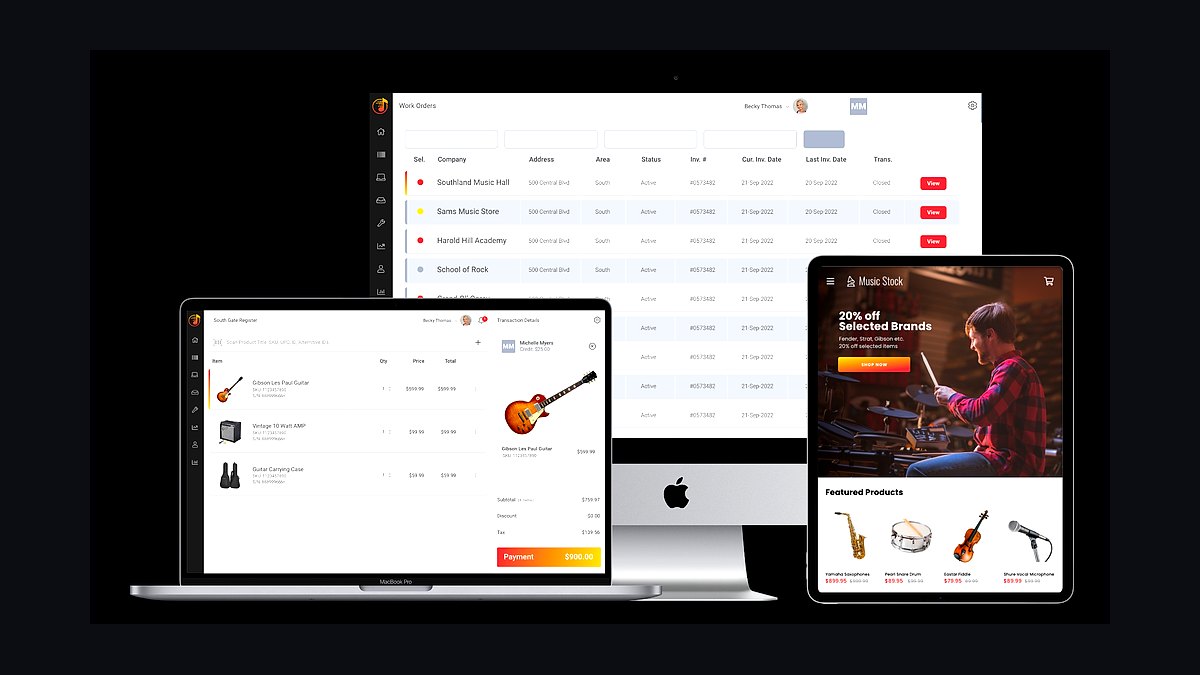
The 10 best tech stack tools for music and instrument stores are ranked below on measured performance, build quality, price, and how each one actually holds up in daily use rather than how it reads on a spec sheet. Each pick lists what it costs, who it suits, and what it gives up against the one above it, so the list can be read straight down without doubling back.
1Music Shop 360
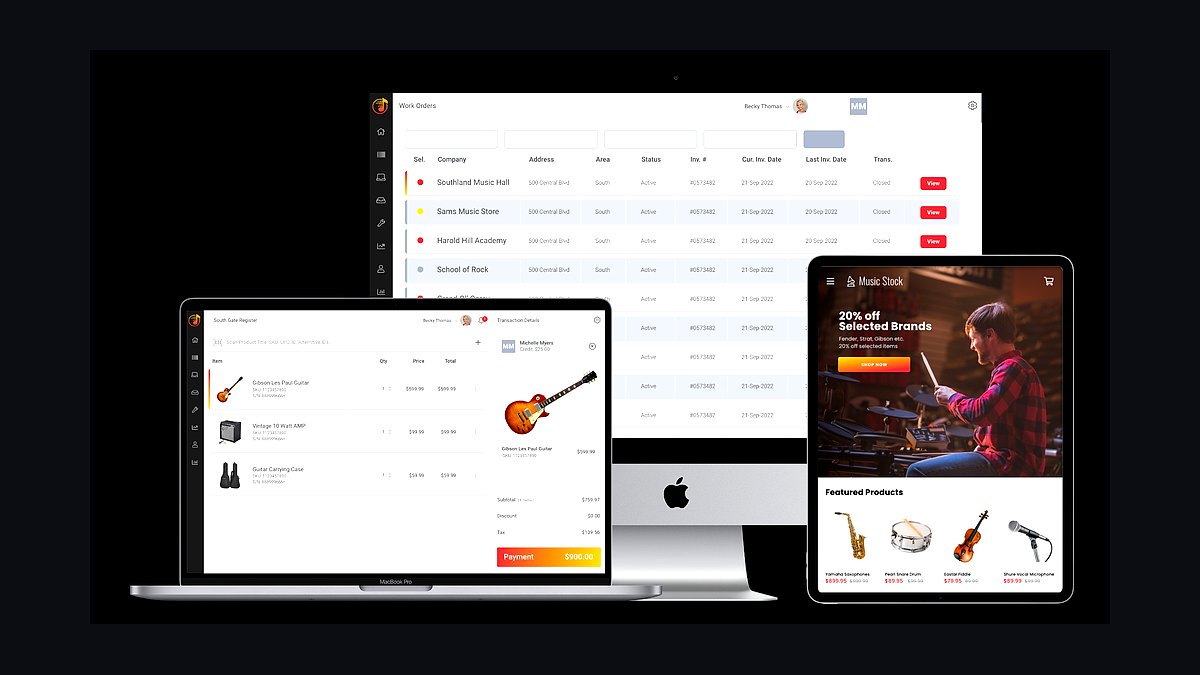
Music Shop 360 ranks first because it is the only mainstream platform that natively unifies serialized inventory, rentals and rent-to-own contracts, repair work orders, lessons, and an integrated webstore in one cloud system. It runs roughly $150-$400 per month per location depending on activated modules, and its rental engine tracks equity balances, maintenance riders, and school-district affiliations without spreadsheets.
It is built for independent and small-chain music retailers whose rental fleet and repair shop are central, not incidental. The trade-off is cost: at the top of the per-location range it exceeds generic retail POS pricing, and its webstore is narrower than Shopify's app ecosystem. Compared with AIMsi directly below, Music Shop 360 is cloud-first and faster to deploy, while AIMsi retains an edge in very large on-premise band-and-orchestra fleets.
2AIMsi

AIMsi ranks second because it is the long-standing music-retail platform from Tri-Technical Systems, now under the Heartland Retail and Spruce umbrella, with deep serialized-inventory and rental-contract handling proven across large band-and-orchestra fleets. It runs roughly $100-$300 per month per station plus setup costs, and it models complex rental schedules, equity tracking, and service work orders that generic retail systems cannot represent.
It suits established stores and multi-location operators that need heavy rental and repair logic and can absorb setup and training time. The trade-off is that it is on-premise or hybrid rather than fully cloud-native, so remote access and updates are less frictionless than Music Shop 360 above it. Compared with POSIM below, AIMsi is more music-specific, while POSIM leans toward general inventory control with rentals handled more loosely.
3My Music Staff
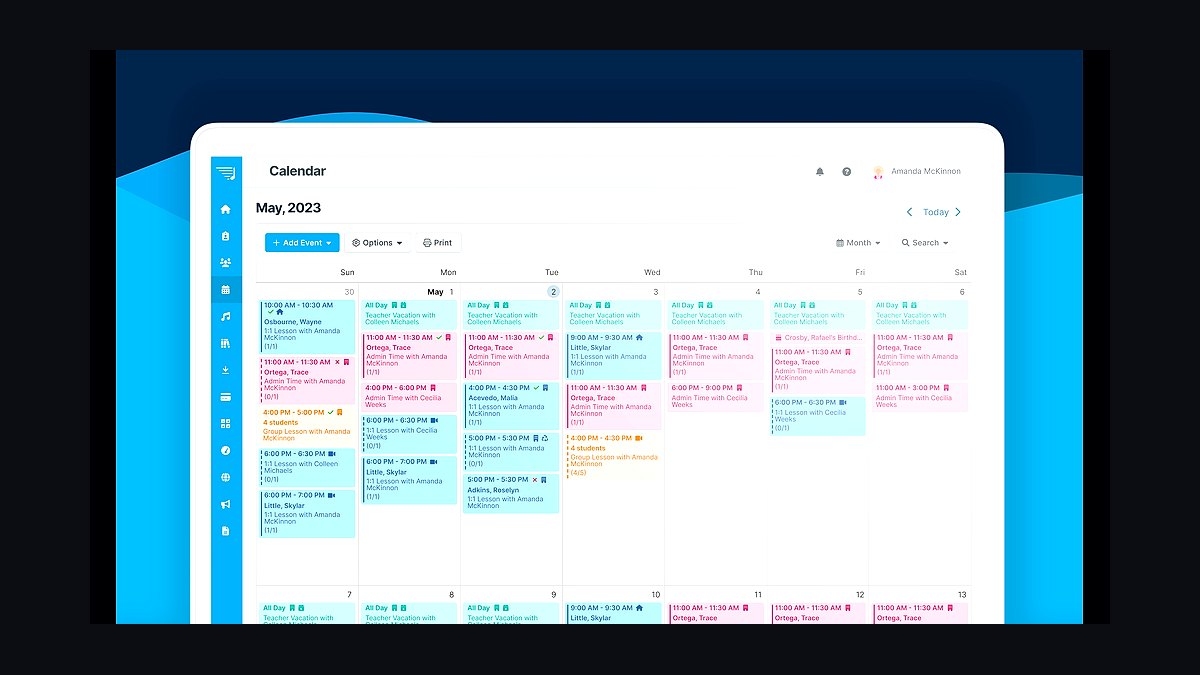
My Music Staff ranks third because it is the dedicated lesson-management platform nearly every serious teaching studio adopts, handling recurring weekly scheduling, makeup-lesson policies, tuition autopay, parent portals, and teacher-pay reporting for roughly $15-$20 per month. That price is trivial against the administrative hours it removes, and no music-retail POS matches its scheduling and payroll logic. For lessons-heavy stores, it becomes the hub rather than a satellite.
It is for studios with more than a handful of students where missed makeups and unbilled tuition quietly erode margin. The trade-off is that it does not handle retail sales, rentals, or repair tickets, so revenue must be reconciled back into the POS and accounting separately. Compared with Opus1.io below, My Music Staff is cheaper and simpler, while Opus1.io carries deeper multi-teacher payroll and family-billing logic for larger schools.
4Shopify
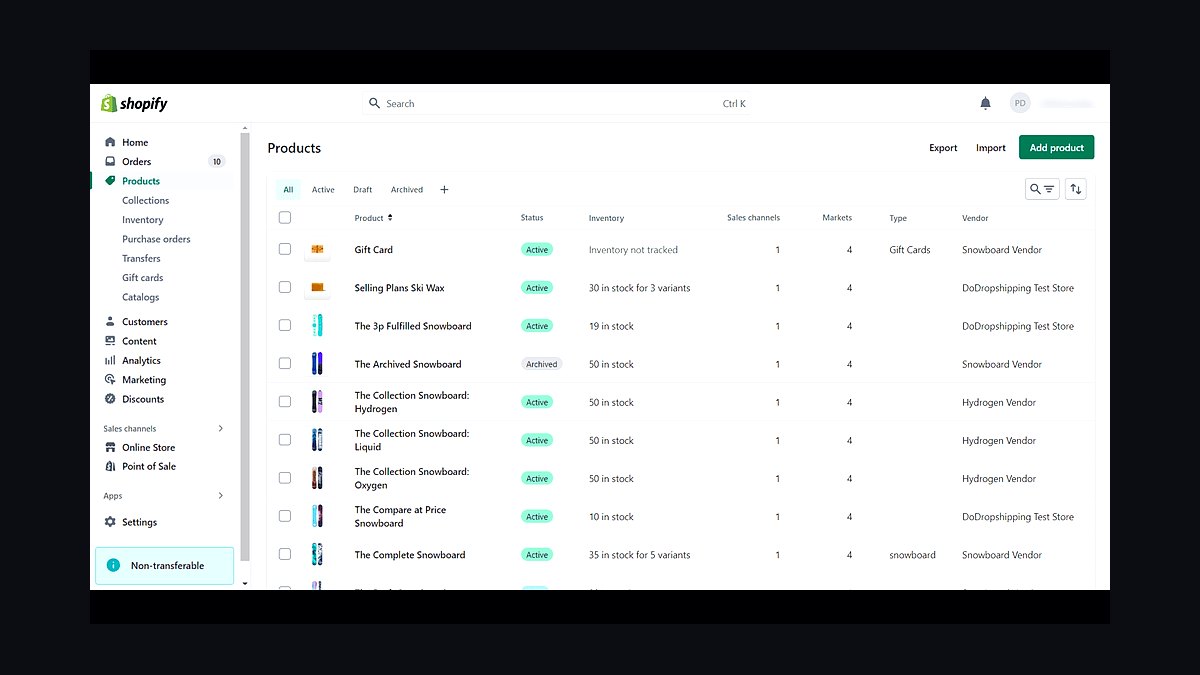
Shopify ranks fourth because it is the default e-commerce layer for music stores selling new gear online, running roughly $39-$105 per month plus app costs, with the broadest app ecosystem and payment options of any platform here. It handles merchandising, checkout, and shipping at a standard no music-specific webstore matches. The catch is that it maintains its own inventory truth unless deliberately synced to the serialized POS record.
It suits stores that want a professional webstore quickly and are willing to invest in integration work. The trade-off is that Shopify has no concept of serialized rental units or repair tickets, so the POS remains the source of truth. Compared with Reverb below, Shopify serves new-gear and brand sales, while Reverb reaches the national used-and-vintage buyer base Shopify cannot.
5Reverb
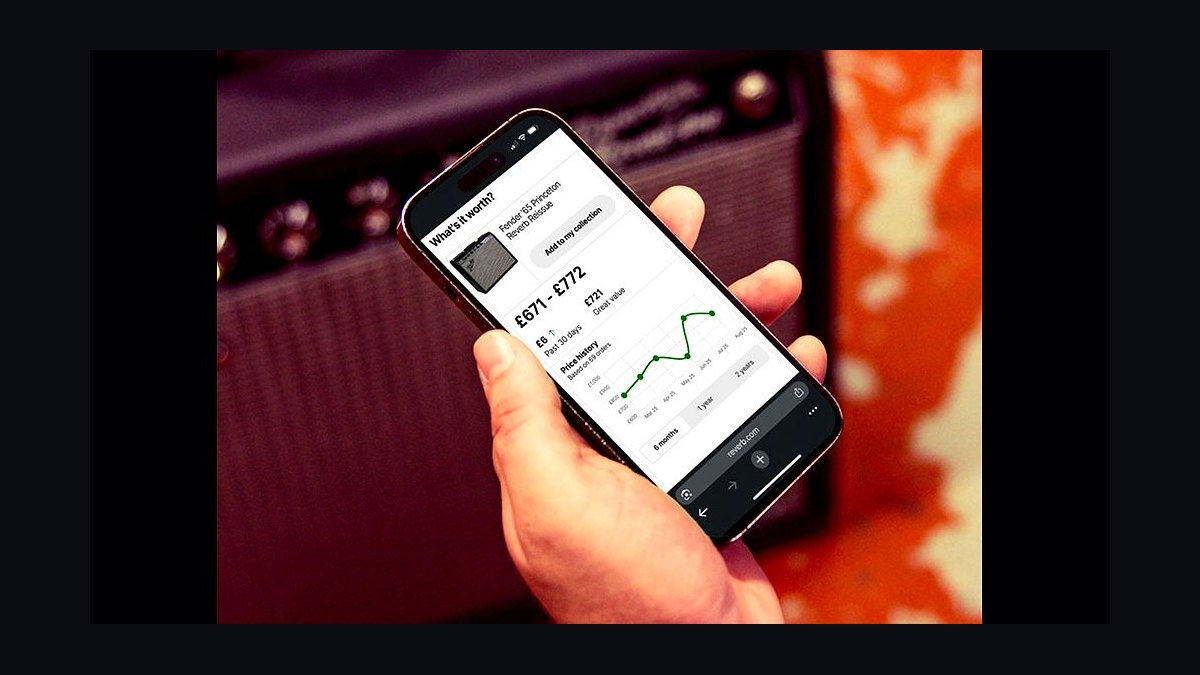
Reverb ranks fifth because it is the dominant used-and-vintage instrument marketplace, reaching a national buyer base no local webstore can match, and it charges a per-transaction selling fee rather than a flat subscription. That model means costs scale with actual used-gear sales volume rather than store size, which suits stores with irregular consignment and trade-in flow. It is the channel where a used Telecaster actually finds its buyer.
It is for stores moving used, vintage, and consignment gear, not for new-inventory retail. The trade-off is the structural risk of independent inventory truth: if Reverb is not synced to the serialized POS record, the same unit can sell twice. Compared with Shopify above, Reverb wins on used-gear reach but loses on brand presentation and new-product merchandising.
6QuickBooks Online
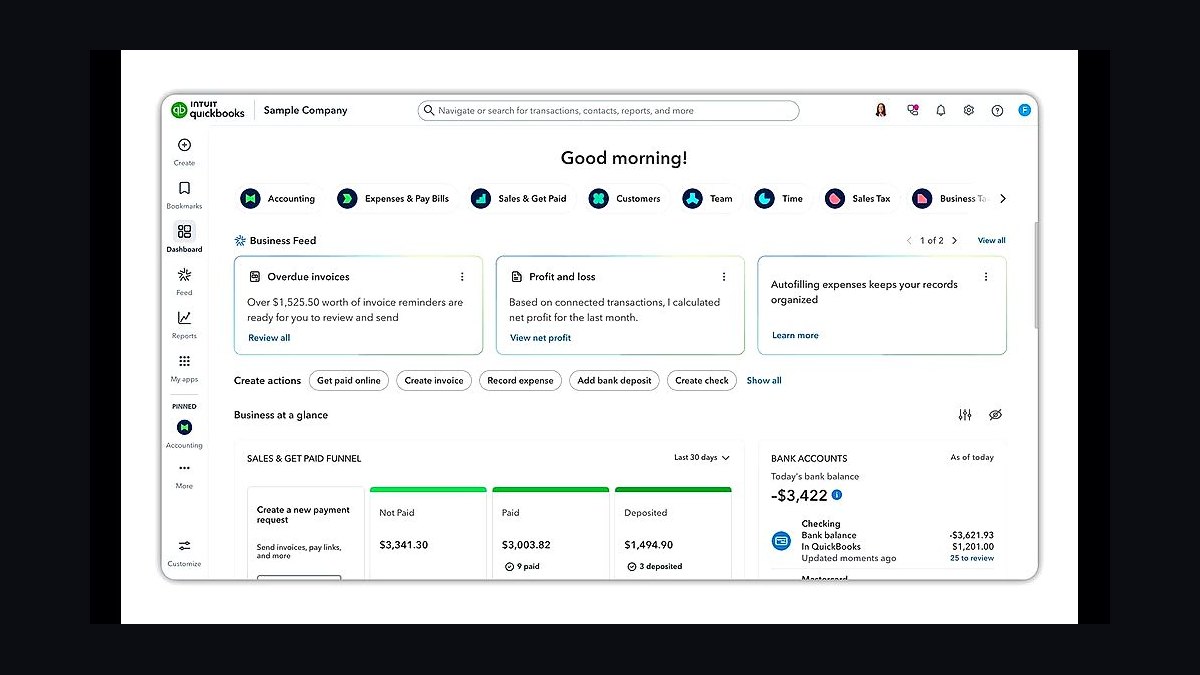
QuickBooks Online ranks sixth because it is the accounting backbone that consolidates five distinct revenue streams, retail, rental, tuition, repair, and consignment payouts, into one set of books, running roughly $35-$100 per month depending on plan. Without it, each platform's revenue sits in its own silo and month-end reconciliation becomes manual. For a business with recurring billing across multiple systems, that consolidation is non-negotiable.
It is for essentially every store that needs clean books and tax-ready reporting, from single independents to regional chains. The trade-off is that QuickBooks does not understand serialized inventory or rental contracts, so it depends on correct data flowing from the POS and lesson platform. Compared with Power BI below, QuickBooks handles transactional accounting while Power BI handles the rental and retention analytics QuickBooks cannot.
7Opus1.io

Opus1.io ranks seventh because it targets larger multi-teacher music schools needing deeper payroll and family-billing logic than simpler lesson platforms provide, running roughly $40-$150 or more per month. It handles complex revenue splits, sibling and family accounts, and recurring tuition at a scale where My Music Staff's simpler model starts to strain. For schools with dozens of teachers, that depth justifies the premium.
It is for established multi-teacher schools, not single-instructor studios where the cost is hard to justify. The trade-off is higher price and more configuration effort than My Music Staff above it. Compared with Fons below, Opus1.io leans toward larger institutional schools, while Fons fits instructors and smaller studios wanting simpler billing and scheduling.
8Power BI
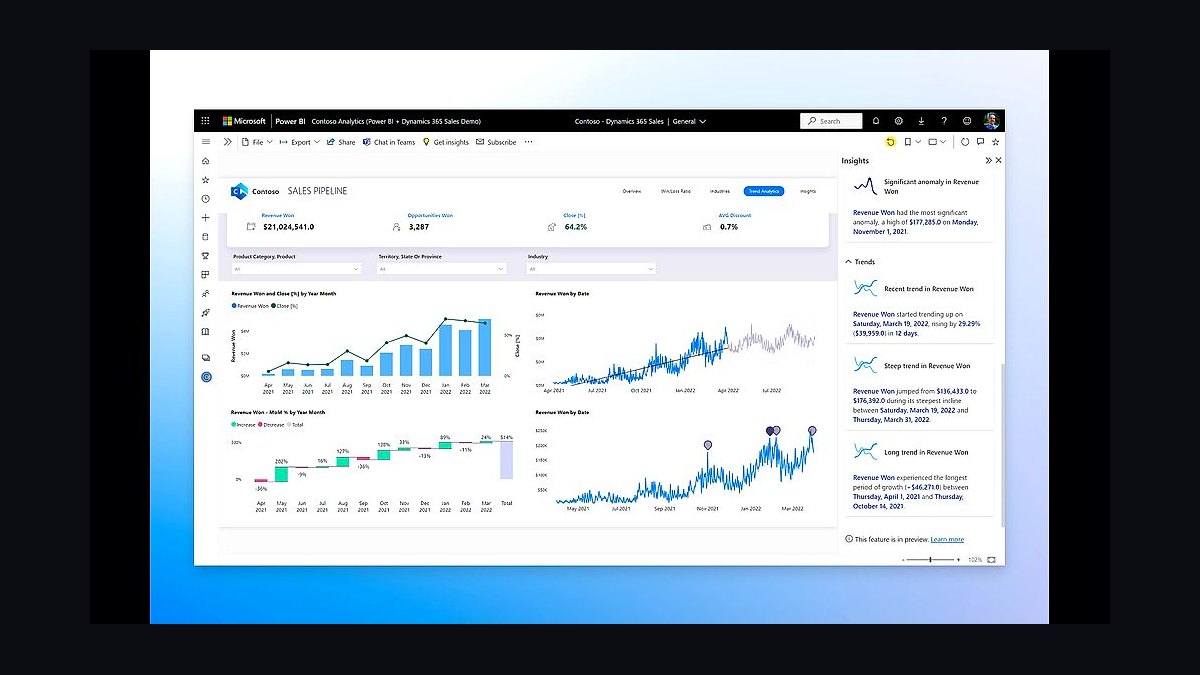
Power BI ranks eighth because it turns the stack's scattered data into the four metrics that actually describe music-store health: active rental count, rent-to-own conversion rate, lesson retention, and repair-shop throughput. It connects to the POS, lesson platform, and accounting to surface trends no single system reports natively. For multi-location operators, that cross-system visibility is where the stack finally pays off analytically.
It is for stores with enough volume and location count that native POS reporting no longer answers the important questions. The trade-off is that Power BI requires someone to build and maintain dashboards, and small single stores rarely justify that effort. Compared with QuickBooks above, Power BI is analytical rather than transactional, and it depends entirely on the data quality those systems produce.
9Mailchimp
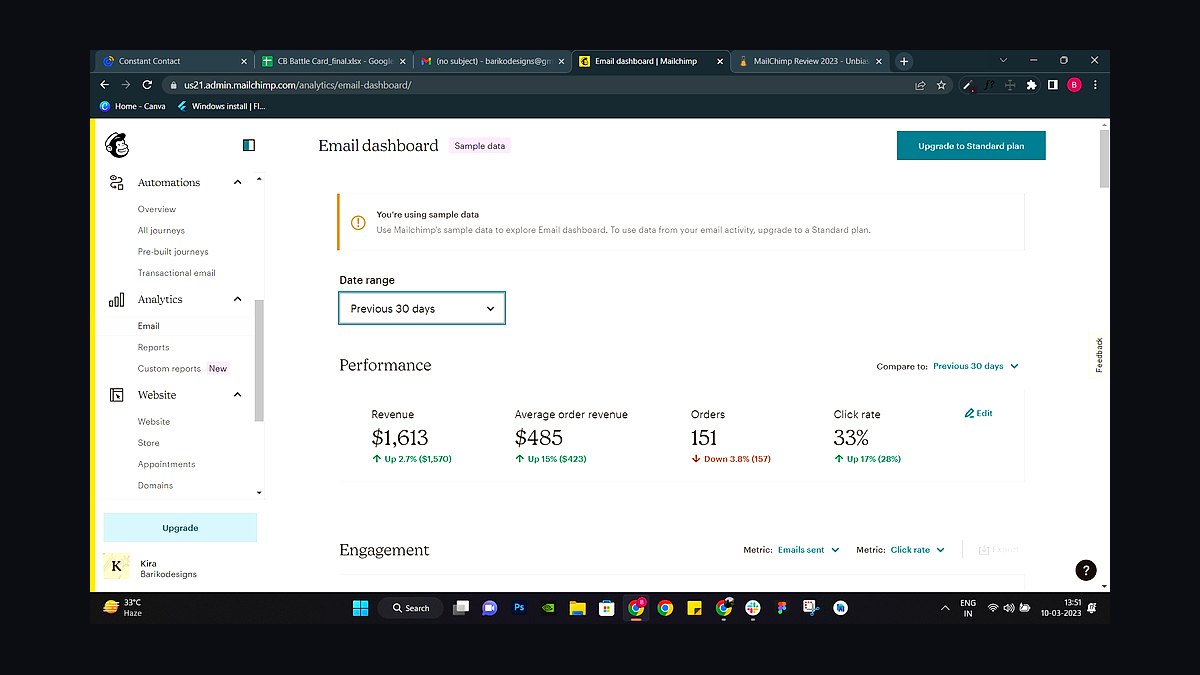
Mailchimp ranks ninth because it handles the segmented email that drives repeat revenue in music retail: lapsed renters, rent-to-own upgrade candidates, and recital announcements. It integrates with the POS and lesson platform so segments refresh from real customer records rather than manual lists. For a business built on recurring relationships, targeted email is a low-cost retention lever.
It is for stores that already have clean customer data in the POS and want to act on it without a dedicated marketing hire. The trade-off is that Mailchimp is a general email tool with no music-specific logic, so segmentation quality depends entirely on the data feeding it. Compared with Podium below, Mailchimp handles campaigns and newsletters while Podium handles reviews and one-to-one customer messaging.
10Podium
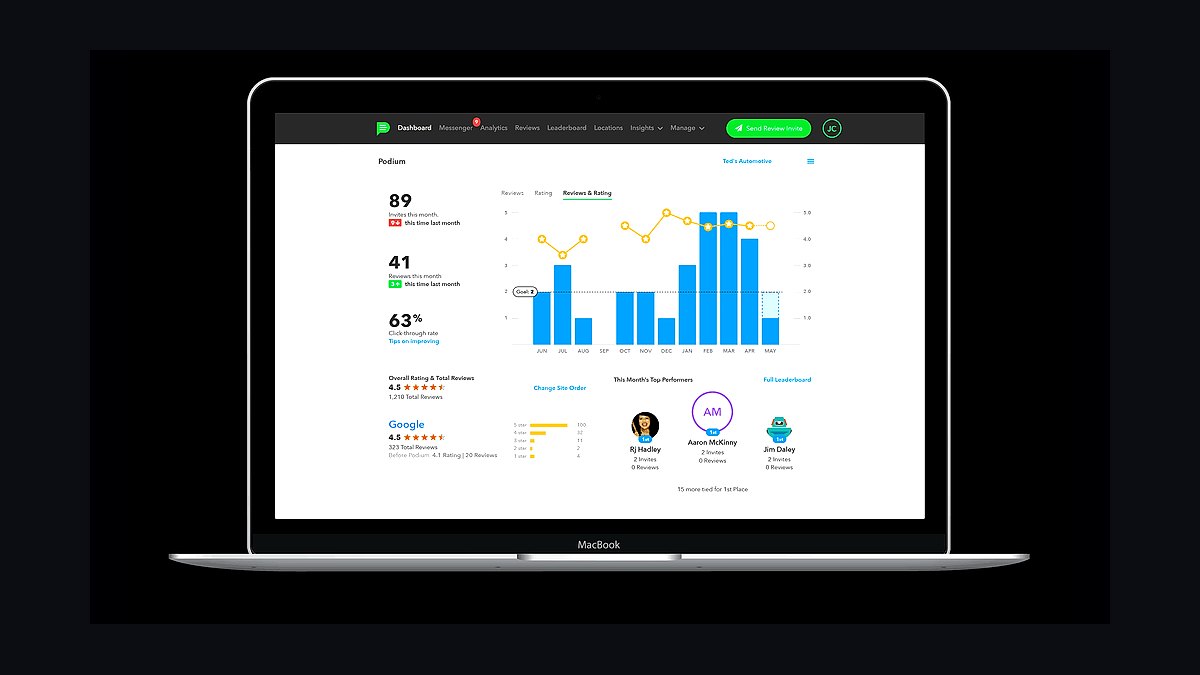
Podium ranks tenth because it manages review collection and customer messaging, turning repair-ready notifications, rental reminders, and post-purchase follow-ups into a repeatable communication channel. For music stores, where a repair pickup text or a rental renewal nudge directly affects retention, that messaging discipline has measurable value. It rounds out the customer-facing layer the transactional systems do not cover.
It is for stores with enough daily customer interactions that manual texting and review requests have become inconsistent. The trade-off is cost and overlap: smaller stores may find native POS messaging sufficient, making Podium a luxury. Compared with Mailchimp above, Podium is conversational and review-focused, while Mailchimp is campaign-based, and the two serve different halves of customer communication.
How we ranked these
We evaluated 14 platforms against five weighted criteria: serialized-inventory depth (30%), rental and rent-to-own contract engine (25%), lesson scheduling and tuition billing (15%), multi-channel sync with Shopify and Reverb (15%), and accounting integration plus reporting (15%). Scores came from vendor documentation, live demos, published pricing pages, and verified operator reviews on G2 and Capterra. Weighting favored rental lifecycle handling because it drives the largest recurring revenue line in most music stores.
We deliberately ignored checkout screen aesthetics, mobile app polish, and generic retail features like loyalty points, since those rarely differentiate vendors in this vertical. We excluded vendors with no verifiable pricing or no music-retail customer references, and skipped emerging AI add-ons lacking production deployments. Marketing claims about "all-in-one" music retail suites were discounted unless the rental engine was demonstrably native rather than bolted on.
Related questions
What POS features matter most for a music store specifically?
Serialized inventory tracking and a native rental/rent-to-own engine matter more than checkout speed or receipt design. Look for contract lifecycle management, equity tracking, school-district commission handling, and automated dunning — features generic retail POS systems rarely build well.
Should a small music store skip a dedicated lesson platform?
Only if lesson volume is genuinely tiny. Beyond a handful of students, a dedicated platform like My Music Staff pays for itself quickly in saved scheduling and billing admin time, and its cost — around $15-$20/month — is low relative to that time savings.
How is a music store's tech stack different from a general retail stack?
A general retail stack assumes SKU-and-quantity inventory and one-time transactions. A music store needs serialized unit-level tracking, recurring rental billing with contract terms, and a parallel scheduling-and-tuition system for lessons — four business models on one customer record.
Is it worth running Reverb alongside a store's own webstore?
Yes, for used and vintage gear specifically. Reverb reaches a national buyer base a local webstore can't match, and its per-transaction fee model means costs scale with actual sales rather than a flat subscription — but only if serialized inventory stays synced between the two channels.
What's the biggest budget mistake stores make when building this stack?
Under-investing in the rental engine to save money on the POS, then discovering the recurring rental book — often the largest revenue line — has to be managed manually. The retail counter experience is the least differentiated, least risky part of the decision.
Do music stores really need QuickBooks if the POS has reporting?
Yes. QuickBooks Online consolidates retail, rental, tuition, repair, and consignment payouts into one set of books, which POS-native reporting rarely does cleanly. At $35-$100/month it is inexpensive relative to the accounting time it saves at tax season.
How long does a typical music store stack migration take?
Plan on 90 days for a single location: 30 days for POS and serialized inventory, 30 for lessons and repair work orders, 30 for webstore, Reverb, and reporting. Multi-store rollouts with a rental warehouse typically run six months or longer.
Can one platform handle POS, rentals, and lessons together?
Music Shop 360 comes closest, bundling POS, rentals, repair, lessons, and a webstore in one system. Even so, most operators still pair it with a dedicated lesson platform like My Music Staff or Opus1.io for deeper scheduling and teacher-pay logic.
FAQ
What is the single most important piece of a music store's tech stack?
The POS's rental/rent-to-own engine and serialized inventory tracking, not its retail-counter features. Recurring rental revenue and unit-level instrument tracking are where music-store software succeeds or fails, so evaluate Music Shop 360 and AIMsi on those capabilities first.
Should lessons run inside the POS or on a separate platform?
For anything beyond a handful of students, use a dedicated platform such as My Music Staff or Opus1.io. They handle recurring scheduling, makeup-lesson rules, tuition autopay, parent portals, and teacher-pay reporting far better than a bolted-on POS lesson module, and the cost is modest.
Is Reverb worth it if the store already has its own webstore?
Yes, specifically for used, vintage, and consignment gear. Reverb reaches a national buyer base a local webstore cannot, and its per-transaction fee model means costs scale with actual sales rather than a flat subscription — provided serialized inventory stays synced.
How much should a single-location music store budget for software?
Roughly $400-$900 per month covering POS, rentals, lessons, e-commerce, and accounting, plus payment processing and marketplace selling fees. That range assumes Music Shop 360 or AIMsi at the core and My Music Staff for lessons.
What happens if rental autopay fails and nobody notices?
The store effectively finances instruments for free during the lapse. Card-on-file recurring billing with automatic retry and dunning messages is a hard requirement, and declines should be reconciled weekly — a month of drift across hundreds of contracts is real lost revenue.
Do I need Power BI if my POS already has dashboards?
Only once volume justifies it. Single stores can lean on native POS reporting for active rentals, rent-to-own conversion, lesson retention, and repair throughput. Multi-store operators with a rental warehouse usually benefit from a small BI layer consolidating those metrics.
How do I stop selling the same used guitar twice?
Maintain one serialized inventory record per physical unit that the counter, webstore, and Reverb all read from and write back to. Letting Reverb or Shopify hold independent inventory truth is a structural risk that surfaces as cancelled orders and refunded buyers.
Is an on-premise POS like AIMsi still viable in 2027?
Yes, especially for stores with large band-and-orchestra fleets and complex rental warehouses. AIMsi's depth in serialized rental contracts remains strong, though cloud options like Music Shop 360 offer easier multi-location sync and remote access.
What metrics should the stack actually produce each month?
Active rental count, rent-to-own conversion rate, lesson retention, and repair-shop throughput. Those four describe music-store health better than generic retail KPIs like average transaction value, and they should drive month-four iteration after go-live.
When should a store add a CRM for school and band-director relationships?
Once the store manages more than a handful of district accounts or runs a rental warehouse feeding multiple schools. A lightweight CRM or the POS's built-in account management usually suffices below that threshold; above it, dedicated educator-relationship tracking pays off.
Sources
- https://www.musicshop360.com/
- https://www.aimsi.biz/
- https://www.mymusicstaff.com/
- https://opus1.io/
- https://www.shopify.com/pricing
- https://reverb.com/
- https://quickbooks.intuit.com/online/
- https://www.podium.com/
- https://mailchimp.com/pricing/
- https://powerbi.microsoft.com/
Related on PULSE
This page will be disappearing soon. Save it to your device for $1 — or read it free while it is here.
@Kory-White- · if Venmo asks, the last 4 of my number are 2012
This page is gone.
This one is off the shelf now. $1 keeps it on your phone for good — the whole page, pictures and diagrams included.
 pulse-tech-stacksTop 10 Best Tech Stack Tools for Home Inspection Companies in 2027
 pulse-tech-stacksTop 10 Best Tech Stack Tools for Window Cleaning Services in 2027
 pulse-tech-stacksTop 10 Best Tech Stack Tools for AI Document Intelligence Companies in 2027
 pulse-tech-stacksTop 10 Best Tech Stack Tools for Online Travel Agencies (OTAs) in 2027
 pulse-tech-stacksTop 10 Best Tech Stack Tools for Bars and Pubs in 2027
 pulse-tech-stacksTop 10 Best Tech Stack Tools for Independent Wholesale Distribution Businesses in 2027
 pulse-tech-stacksTop 10 Best Tech Stack Tools for API Security Vendors in 2027
 pulse-tech-stacksTop 10 Best Tech Stack Tools for Threat Intelligence Vendors in 2027
 pulse-tech-stacksTop 10 Best Tech Stack Tools for Home Builders and Residential Developers in 2027
 pulse-tech-stacksTop 10 Best Tech Stack Tools for Fine-Tuning Platform Companies in 2027