


Top 10 Best Tech Stack Tools for SIEM Vendors in 2027
Quality
Certified
The 10 best tech stack tools for siem vendors are ranked below on measured performance, build quality, price, and how each one actually holds up in daily use rather than how it reads on a spec sheet. Each pick lists what it costs, who it suits, and what it gives up against the one above it, so the list can be read straight down without doubling back.
1ClickHouse Cloud
ClickHouse Cloud ranks first because it is the highest-performance storage backend for SIEM vendors at petabyte scale, with hot storage at $0.30-$1/GB/month and sub-second query latency on billions of events. Modern SIEMs including Vector run it as the primary analytics tier, and it handles the bursty 10-100x ingestion spikes ransomware events create without re-architecting. Its columnar engine is purpose-built for the log-search workload SIEM customers actually run.
It is for early and growth-stage SIEM vendors who need speed and unit economics before committing to Iceberg migrations. It trades away the cheapest cold-storage tier — S3 at $0.023/GB/month beats it past multi-year retention — so vendors often pair it with Iceberg for cold data. Directly below, Apache Iceberg + Trino wins on raw cost at hyperscale but loses on query performance.
2Apache Iceberg + Trino
Apache Iceberg + Trino ranks second because it delivers the most flexible cost structure at petabyte scale, storing data on S3 at $0.023/GB/month with on-demand Trino compute. It is the backend most SIEM vendors migrate toward past $50M ARR when Snowflake storage costs start eating 60% of gross margin. The open table format avoids vendor lock-in and supports multi-engine query access across the same data.
It is for mid-market and hyperscale SIEM vendors with engineering capacity to run and tune Trino clusters. It trades away operational simplicity — Snowflake requires far less SRE attention — and query latency on hot data is slower than ClickHouse Cloud above it. Below it, Confluent Kafka handles the ingest layer that feeds this storage tier.
3Confluent Kafka
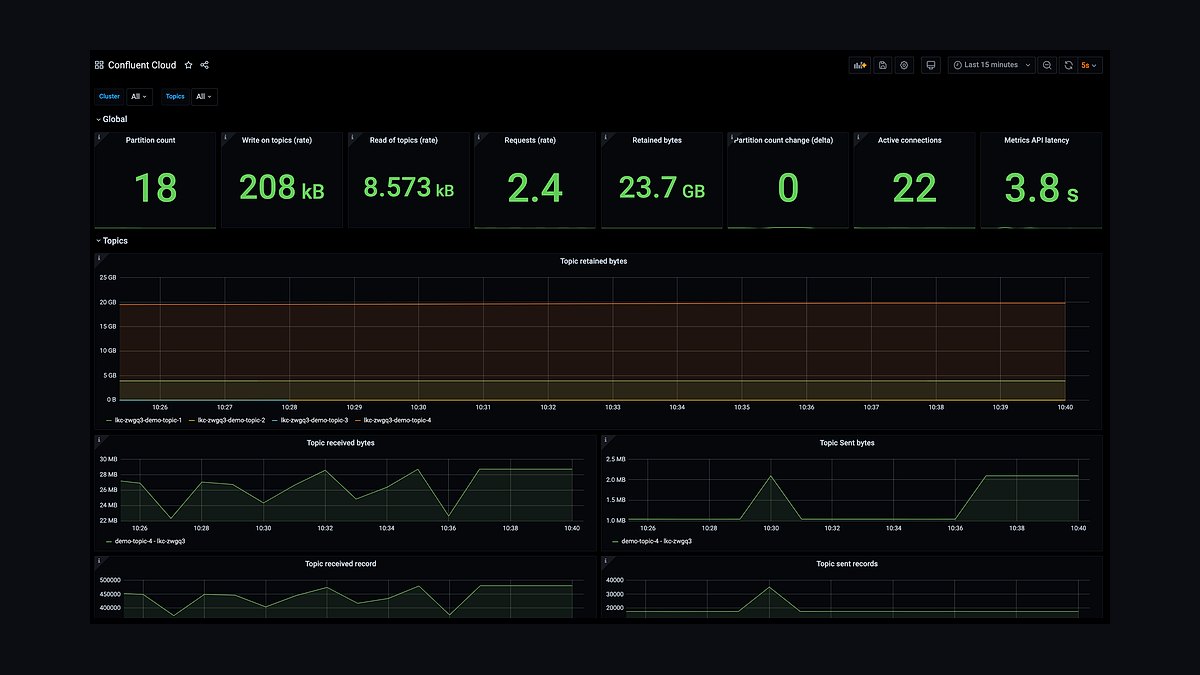
Confluent Kafka ranks third because it is the ingest backbone that every serious SIEM vendor relies on to absorb HTTP Event Collector, Syslog, Fluentd, and agent traffic at scale. Confluent Cloud runs roughly $0.11/GB written plus storage on enterprise tiers, and it handles the bursty 10-100x volume spikes that customer ransomware incidents generate. Redpanda is the rising high-performance alternate.
It is for SIEM vendors whose ingestion pipeline is the product's front door and cannot afford message loss. It trades away cost at scale — self-hosted Amazon MSK is cheaper but operations-heavy — so vendors under $25M ARR often start on MSK. It sits directly above the storage backend, feeding ClickHouse Cloud or Iceberg + Trino.
4Salesforce Sales Cloud
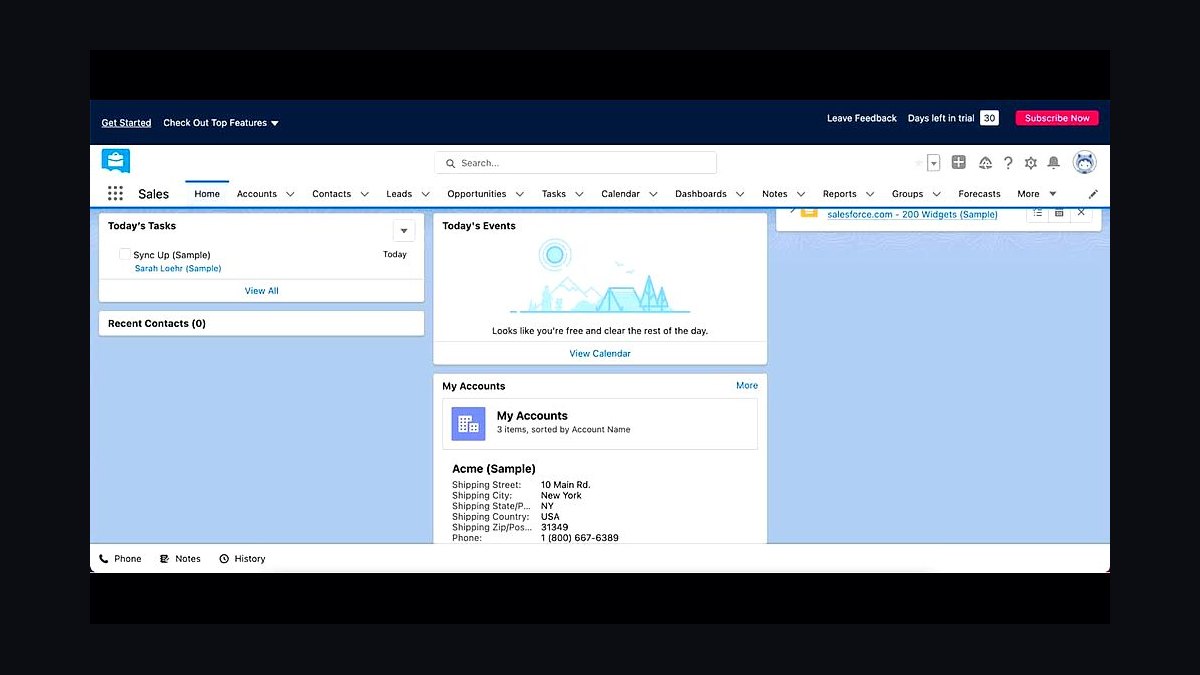
Salesforce Sales Cloud ranks fourth because SIEM deals run $50K-$5M ACV with 6-18 month cycles and technical buyers, and Salesforce Enterprise at $165/user/month is the only CRM that supports the custom objects for POC status, ingestion-volume estimates, and connector readiness. It is the analyst-validated default for high-growth software companies crossing $10M ARR.
It is for SIEM vendors with enterprise sales motions and multi-stakeholder deal cycles involving security architects and CISOs. It trades away simplicity and cost — HubSpot Enterprise wins under $50M ARR — and requires admin investment. It pairs directly with Clari below it for forecast accuracy on complex pipeline.
5Clari
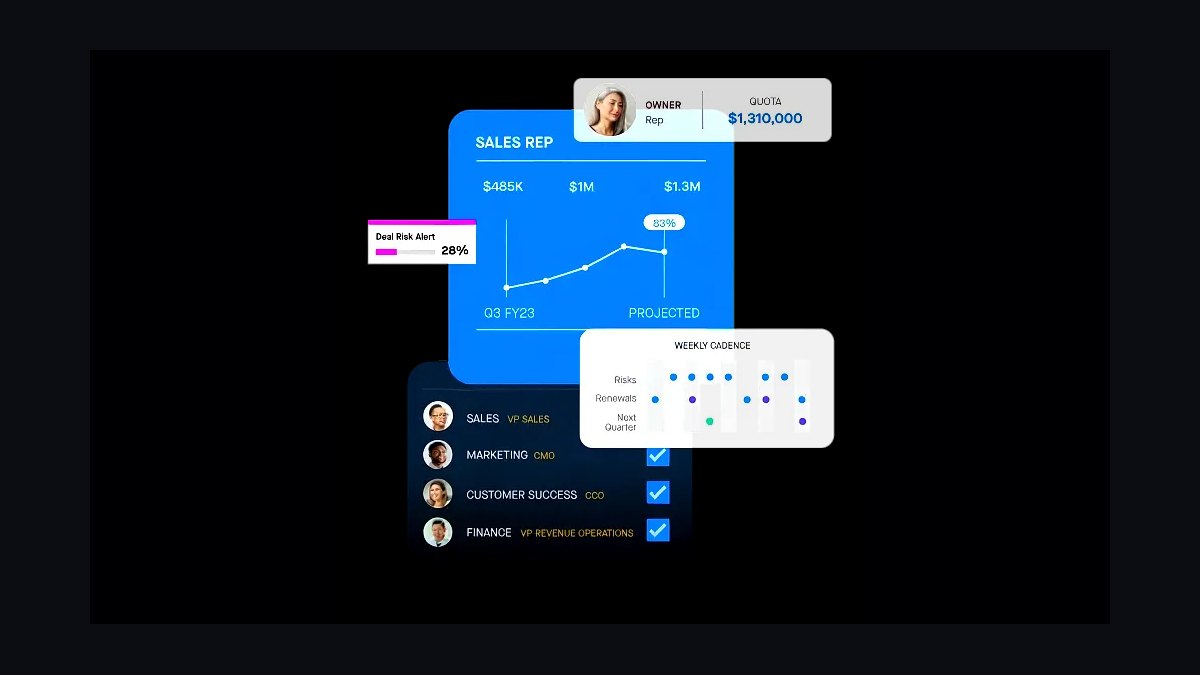
Clari ranks fifth because SIEM forecast accuracy collapses without it — deals slip on POC extensions and ingestion-volume renegotiations that spreadsheets cannot track. At $80-$130/user/month it surfaces pipeline risk against historical SIEM deal patterns and gives revenue leaders a weekly forecast they can defend to the board. It integrates natively with Salesforce Sales Cloud above it.
It is for SIEM vendors past $25M ARR with a dedicated revenue operations function. It trades away affordability for smaller teams — sub-$20M ARR vendors rarely justify the seat cost — and requires clean CRM hygiene to deliver value. Below it, Gong captures the call intelligence that feeds Clari's deal-risk signals.
6Gong
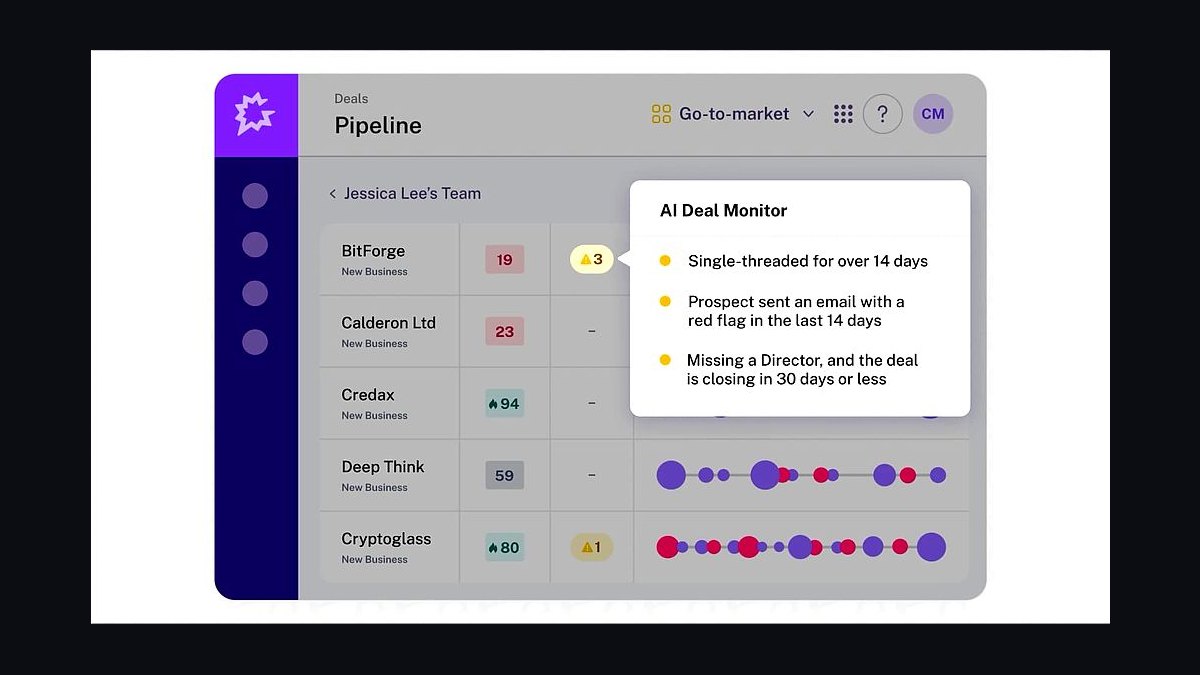
Gong ranks sixth because SIEM sales cycles hinge on technical discovery calls where ingestion-volume estimates, connector readiness, and detection-content gaps get surfaced verbally and never logged. At $1,600/user/year it transcribes and analyzes those calls, feeding competitive intel and coaching data back into the sales motion. It is the call-intelligence standard for enterprise SaaS.
It is for SIEM vendors with field sales teams running complex multi-call cycles. It trades away budget — smaller vendors often skip it until $30M ARR — and its value depends on rep adoption and call volume. It sits below Clari, which consumes its signals for forecast modeling, and above Outreach for sequencing.
7Zuora
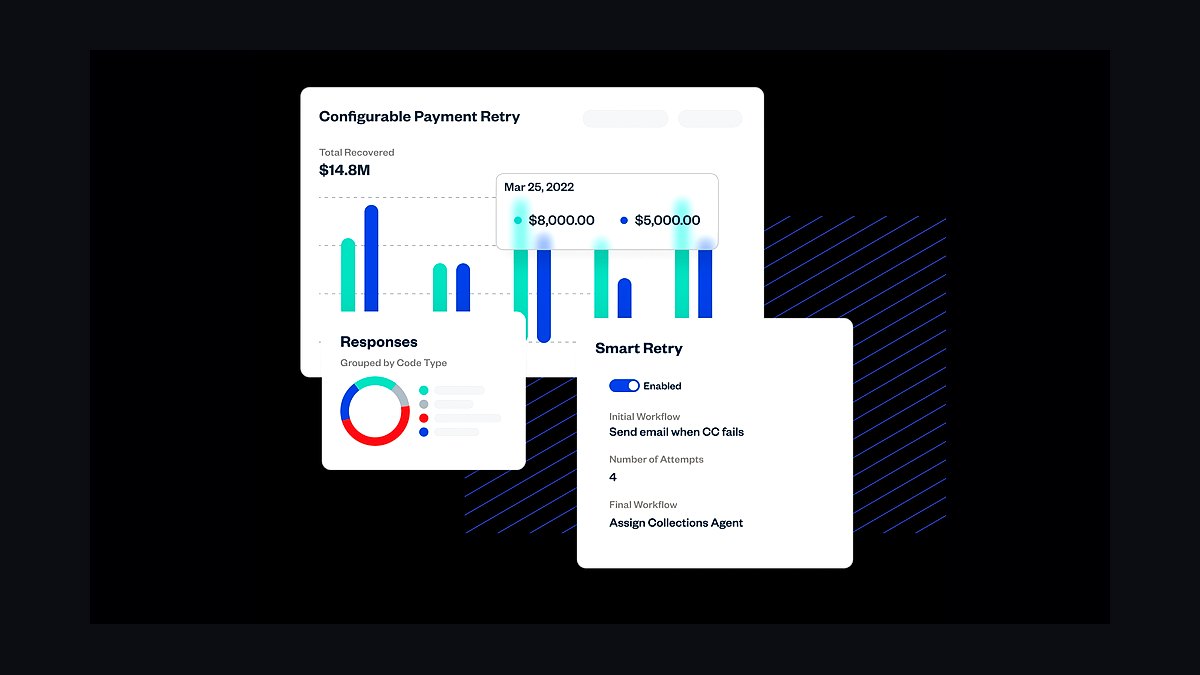
Zuora ranks seventh because usage-based SIEM pricing on GB/day, EPS, and active assets requires metering infrastructure that generic billing tools cannot handle at enterprise contract complexity. At $200K-$1M/year it manages multi-year ramps, tier discounts, and overage billing across thousands of accounts. It is the SaaS standard for consumption-coupled revenue.
It is for mid-market and hyperscale SIEM vendors with complex contract structures and revenue recognition needs. It trades away cost and implementation speed — Stripe Billing wins under $50M ARR — and requires a dedicated billing engineer. Below it, NetSuite handles the ERP and revenue recognition layer that Zuora feeds.
8NetSuite
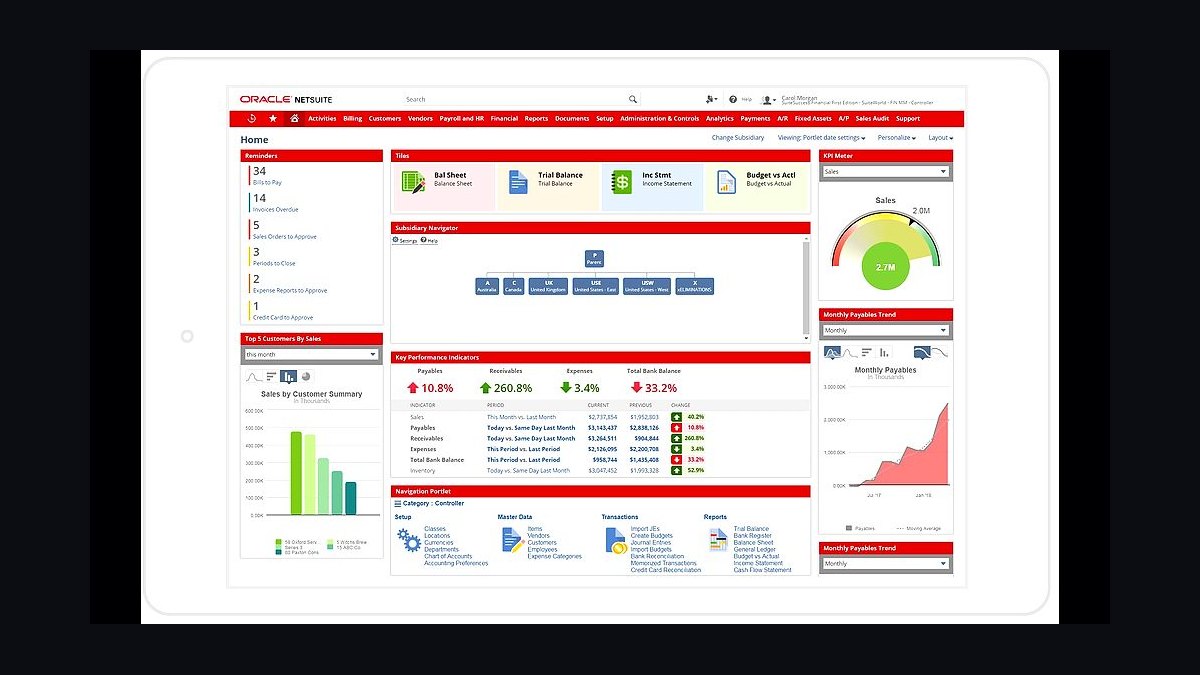
NetSuite ranks eighth because SIEM vendors need ERP that handles multi-entity revenue recognition, deferred revenue schedules, and consumption-based billing reconciliation at $50K-$500K/year. It is the SaaS accounting standard and integrates with Zuora above it and Avalara for multi-jurisdiction tax. Revenue recognition on usage-based contracts is genuinely hard without it.
It is for SIEM vendors past $25M ARR with auditor-grade revenue reporting requirements. It trades away affordability and implementation speed — QuickBooks or Sage Intacct serve smaller vendors — and needs a dedicated finance systems owner. It sits below Zuora in the billing-to-revenue flow and above Gainsight in the back-office stack.
9Gainsight
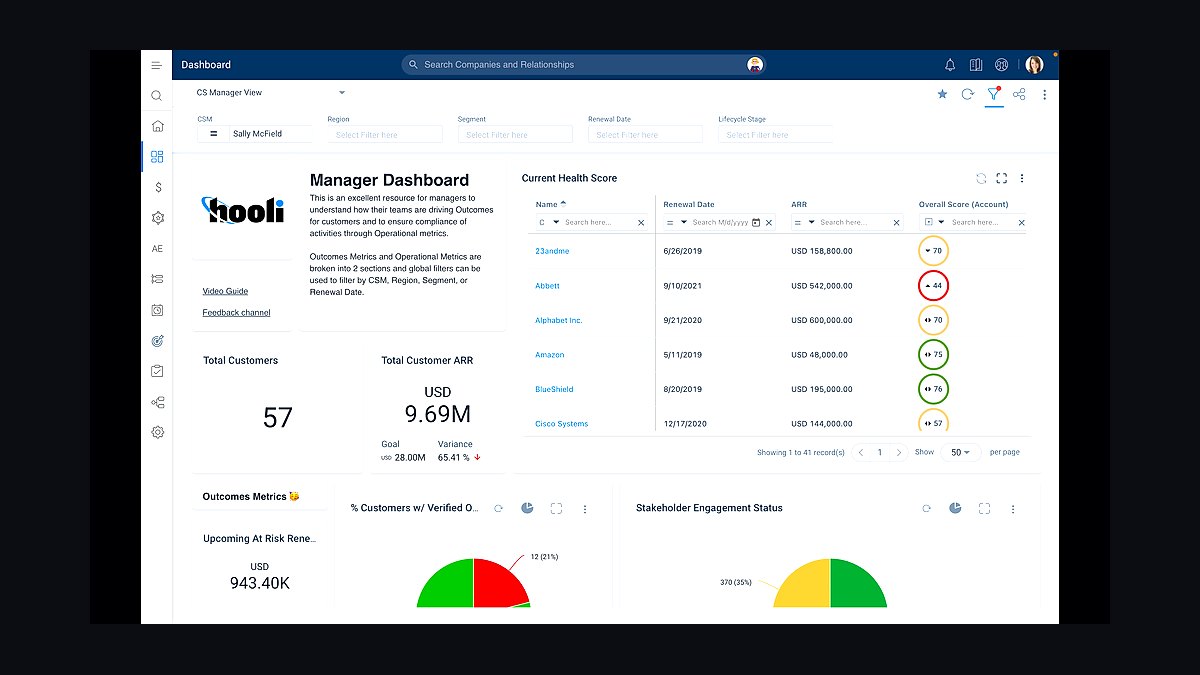
Gainsight ranks ninth because SIEM churn is driven by ingestion-tier utilization and detection-content engagement, and at $100K-$500K/year it tracks customer health across those signals before renewal conversations start. It surfaces accounts approaching overage risk so CS can proactively rightsize tiers rather than surprise customers with invoices. It is the customer-success standard for usage-based SaaS.
It is for SIEM vendors with 200+ customers and a dedicated CS organization. It trades away cost and setup time — Catalyst or Vitally serve smaller books — and its value depends on clean product telemetry. Below it, Pendo instruments the in-product behavior that feeds Gainsight's health scores.
10Vanta
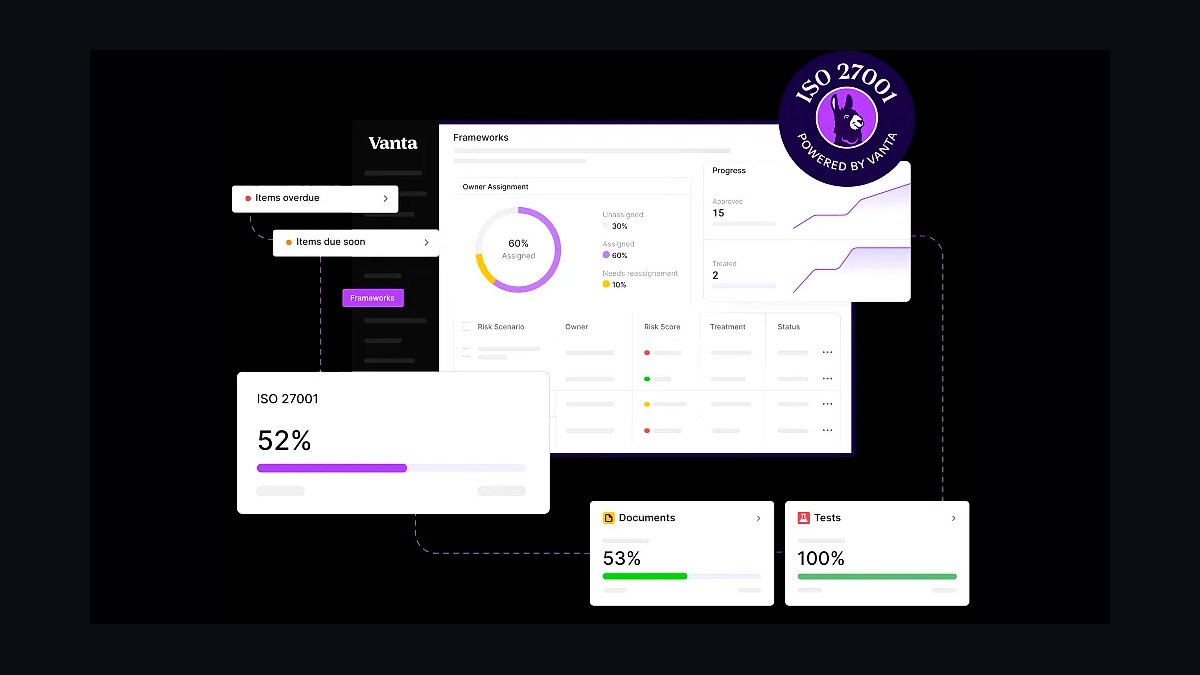
Vanta ranks tenth because SIEM vendors carry a uniquely heavy compliance load — SOC 2 Type II, ISO 27001, HIPAA, PCI-DSS, and often FedRAMP — and at $30K-$100K/year it automates continuous evidence collection across that breadth. It is the fastest path to first SOC 2 for a SIEM vendor and integrates with the AWS infrastructure most run on. Drata and Hyperproof are the direct alternates.
It is for early and growth-stage SIEM vendors pursuing their first enterprise certifications. It trades away depth for FedRAMP and multi-framework audits — Hyperproof and AuditBoard handle those — so vendors past $100M ARR often run both. It sits below Gainsight in priority but gates every enterprise deal above it.
How we ranked these
We ranked each tool on four weighted criteria: fit for high-volume telemetry pipelines (35%), integration depth with the SIEM product surface and billing metering (25%), total cost of ownership at 10x current ingestion scale (25%), and compliance and audit readiness for SOC 2, ISO 27001, and FedRAMP (15%). Scores came from vendor documentation, published pricing, analyst reports, and operator interviews.
We deliberately ignored brand recognition, Gartner quadrant placement alone, and feature-count comparisons. A tool can lead a category and still be wrong for a SIEM vendor whose unit economics hinge on storage cost per gigabyte and metering reconciliation. We also excluded tools with no verifiable public pricing or no documented API for usage-based billing, because both are disqualifying at scale.
What to look for
What matters most is whether the tool survives your 10x ARR scenario. A storage backend that looks cheap at 5 TB/day can consume 60% of gross margin at 500 TB/day. Metering accuracy matters more than dashboard polish, because a customer who sees 8 TB/day in product and 12 TB/day on the invoice churns immediately. Integration depth beats feature breadth every time.
The mistake most buyers make is optimizing for the current stage instead of the next two. They pick Snowflake for simplicity at $5M ARR, then face an 18-month migration to Iceberg at $50M ARR. Or they buy HubSpot because Salesforce feels heavy, then rebuild the entire CRM motion at $30M ARR. Model unit economics at 10x scale before committing.
Related questions
Why does storage backend choice matter more for SIEM vendors than for other SaaS?
SIEM vendors store 10 GB to 50 TB per day per customer with multi-year retention SLAs. Storage and compute is the single largest cost line, often 40-60% of gross margin at scale. Snowflake at $2-$4 per credit is simple but expensive; Iceberg on S3 at $0.023/GB/month is cheap but operationally heavy. The choice defines unit economics for the entire business.
How do SIEM vendors meter usage-based pricing without breaking customer trust?
Build the metering layer once with immutable audit logs, expose the exact metered series inside the product UI, and reconcile the billing extract against the product extract on every invoice cycle. Customers churn fast when product shows 8 TB/day and the invoice shows 12 TB/day. Metronome, Zuora, and Stripe Billing all support metered events, but reconciliation logic is yours to build.
Is detection content really more important than the search engine?
Yes. Customers can run Elastic or OpenSearch for free if all they want is search. They pay SIEM vendors for curated Sigma rules, MITRE ATT&CK-mapped analytics, and behavioral detections shipped weekly. Content engineering teams of 5-30 people with their own CI/CD pipeline and regression tests against Atomic Red Team are the differentiation. The search engine is table stakes.
What does FedRAMP actually cost a SIEM vendor in time and money?
Plan for 24-36 months, a 3PAO engagement, a parallel GovCloud boundary, and $2M-$8M in direct compliance cost. Add an engineering tax of 15-25% on every feature because controls must be built into infrastructure-as-code from day one. Most vendors only pursue FedRAMP when federal pipeline justifies $20M+ ARR potential. Hyperproof and A-LIGN carry the continuous monitoring load.
Should early-stage SIEM vendors use HubSpot or Salesforce?
Under $50M ARR with ACVs below $100K, HubSpot Enterprise is faster to deploy and cheaper. Above $50M ARR with $250K+ ACVs, 6-18 month cycles, and technical buyers, Salesforce Sales Cloud plus Clari and Gong wins on forecast accuracy and POC tracking. The migration cost between them is real, so pick based on where you will be in 24 months, not today.
How many platform engineers per detection-content engineer is healthy?
At scale, healthy SIEM vendors run 3-5 platform engineers per content engineer. Content is high-leverage and small teams of skilled threat researchers ship the differentiation. Early-stage vendors over-rotate into platform engineering; mature vendors under-invest in content. Aim for content engineering at 15-25% of total R&D headcount, with its own release cadence separate from core product.
Do SIEM vendors need a custom query language like Splunk SPL?
Only with a 3-5 year engineering investment and a clear differentiation thesis. Sumo Logic, Devo, Panther, and Hunters ship SQL-first or KQL-style languages and let users skip the custom-DSL learning curve. Investigator UX, query performance, and result rendering matter more than language exoticism. Custom DSLs mostly create hiring and onboarding friction.
What product analytics tooling do SIEM vendors actually need?
Pendo or Heap at $25K-$300K/year shows which detections get acknowledged, which dashboards investigators actually use, where they get stuck, and which features predict expansion. Gainsight tracks account health across ingestion-tier utilization, MAU, and support volume. Together they let CS get ahead of churn instead of reacting to renewal risk 60 days out.
FAQ
What is the best storage backend for a SIEM vendor in 2027?
Iceberg plus S3 plus Trino wins on unit economics past roughly $50M ARR, with storage at $0.023/GB/month and flexible on-demand compute. Snowflake wins for time-to-market under $25M ARR. ClickHouse Cloud is the high-performance middle path at $0.30-$1/GB/month for hot storage. Most growing vendors plan a Snowflake-to-Iceberg migration around $30-$50M ARR.
How does a SIEM vendor handle bursty ingestion during a customer incident?
Confluent Kafka or Amazon MSK absorbs bursts because a ransomware event can spike a customer's volume 10-100x normal. Redpanda is the high-performance alternate gaining ground. The streaming layer must buffer, replay, and backpressure without dropping events, because dropped telemetry during an incident is a contractual and reputational failure. Size for peak, not average.
What compliance certifications does a SIEM vendor actually need?
SOC 2 Type II and ISO 27001 are table stakes. Add HIPAA, PCI-DSS, FedRAMP for federal, IRAP for Australia, C5 for Germany, and CMMC for DoD work. The compliance footprint is wider than almost any other SaaS category. Vanta or Drata at $30K-$100K/year handles continuous evidence; Hyperproof at $60K-$300K/year carries the deeper FedRAMP workstream.
How should a SIEM vendor price premium detection content packs?
Most vendors include base content in all tiers and charge for premium packs such as threat-actor packs, vertical-specific packs, and cloud-deep packs at $25K-$300K/year. Some bundle MDR-style human content tuning as a premium service tier. Release cadence, weekly to monthly, is itself a competitive vector and should be published to customers.
What is the biggest failure mode for SIEM vendor stacks?
Choosing the wrong storage backend early. Picking Snowflake for simplicity at $5M ARR and discovering storage eats 60% of gross margin at $50M ARR means a 6-18 month migration. Model unit economics at 10x current ARR before committing. Many vendors hedge with a two-tier hot and cold split from day one to preserve optionality.
How do SIEM vendors reconcile product telemetry with billing invoices?
Build the metering layer once with immutable audit logs, expose the exact metered series in the product UI, and reconcile billing extracts against product extracts every invoice cycle. Metronome, Zuora, and Stripe Billing all support metered events, but the reconciliation logic is yours. Trust collapses the first time product and invoice disagree.
What does a growth-stage SIEM vendor spend monthly on software and cloud?
A $25M-$100M ARR SIEM vendor running Iceberg plus S3 plus Trino, Confluent Kafka, Salesforce Enterprise plus Clari plus Gong plus Outreach, Zuora plus NetSuite, Gainsight plus Pendo, and Vanta plus Hyperproof should plan roughly $500,000-$2M per month all-in. Customer infrastructure cost dominates the line item at every stage.
Do SIEM vendors need Gainsight and Pendo together?
Yes, they answer different questions. Gainsight tracks account health across ingestion-tier utilization, MAU, and support volume for CS. Pendo instruments product analytics to show which detections get acknowledged, which dashboards investigators use, and where they get stuck. Together they let CS get ahead of churn instead of reacting 60 days before renewal.
How long does it take to stand up a detection-content R&D pipeline?
Days 1-30 to stand up Git plus GitHub Actions with regression testing against Atomic Red Team and Caldera. Days 31-60 to wire rule design in Jira and Confluence with VirusTotal and Recorded Future context. Days 61-90 to ship signed rule packs to customers on a weekly cadence. Tooling cost stays under $5,000/month; the real cost is headcount.
What is the right 30/60/90 plan for a new SIEM vendor stack?
Days 1-30 pick the storage backend and stand up Confluent Kafka for ingest with one real customer's data end-to-end. Days 31-60 wire detection-content CI/CD and deploy Salesforce plus Clari plus Gong plus Stripe or Zuora. Days 61-90 wire metering with audit reconciliation, roll out Gainsight and Pendo, and build ARR dashboards in Looker.
Sources
- https://www.gartner.com/en/documents/4027155
- https://www.forrester.com/research/
- https://www.bvp.com/atlas/state-of-the-cloud-2026
- https://docs.confluent.io/cloud/current/billing/index.html
- https://iceberg.apache.org/docs/latest/
- https://clickhouse.com/docs/en/cloud/manage/billing
- https://www.salesforce.com/sales/pricing/
- https://www.zuora.com/products/billing/
- https://www.vanta.com/products/soc-2
- https://www.hyperproof.app/
Related on PULSE
This page will be disappearing soon. Save it to your device for $1 — or read it free while it is here.
@Kory-White- · if Venmo asks, the last 4 of my number are 2012
This page is gone.
This one is off the shelf now. $1 keeps it on your phone for good — the whole page, pictures and diagrams included.
 pulse-tech-stacksTop 10 Best Tech Stack Tools for Embeddings API Companies in 2027
 pulse-tech-stacksTop 10 Best Tech Stack Tools for Independent Driving Schools in 2027
 pulse-tech-stacksTop 10 Best Tech Stack Tools for Window Cleaning Services in 2027
 pulse-tech-stacksTop 10 Best Tech Stack Tools for HOA and Community Association Management Companies in 2027
 pulse-tech-stacksTop 10 Best Tech Stack Tools for AI Legal Tech Companies in 2027
 pulse-tech-stacksTop 10 Best Tech Stack Tools for Fine-Tuning Platform Companies in 2027
 pulse-tech-stacksTop 10 Best Tech Stack Tools for Independent Wholesale Distribution Businesses in 2027
 pulse-tech-stacksTop 10 Best Tech Stack Tools for Home Builders and Residential Developers in 2027
 pulse-tech-stacksTop 10 Best Tech Stack Tools for Hardware Security Module (HSM) Vendors in 2027
 pulse-tech-stacksTop 10 Best Tech Stack Tools for Public Relations Agencies in 2027