


Top 10 Best Tech Stack Tools for AI Eval Platform Companies in 2027
Quality
Certified
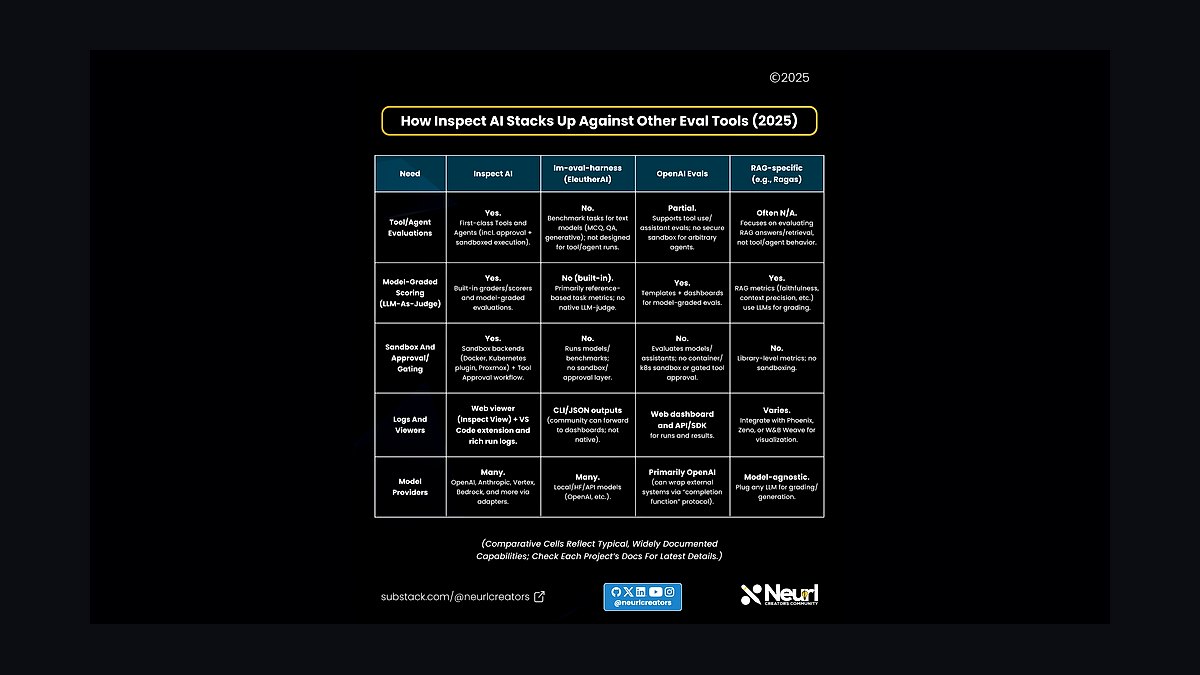
The 10 best tech stack tools for ai eval platform companies are ranked below on measured performance, build quality, price, and how each one actually holds up in daily use rather than how it reads on a spec sheet. Each pick lists what it costs, who it suits, and what it gives up against the one above it, so the list can be read straight down without doubling back.
1Inspect AI Eval Framework
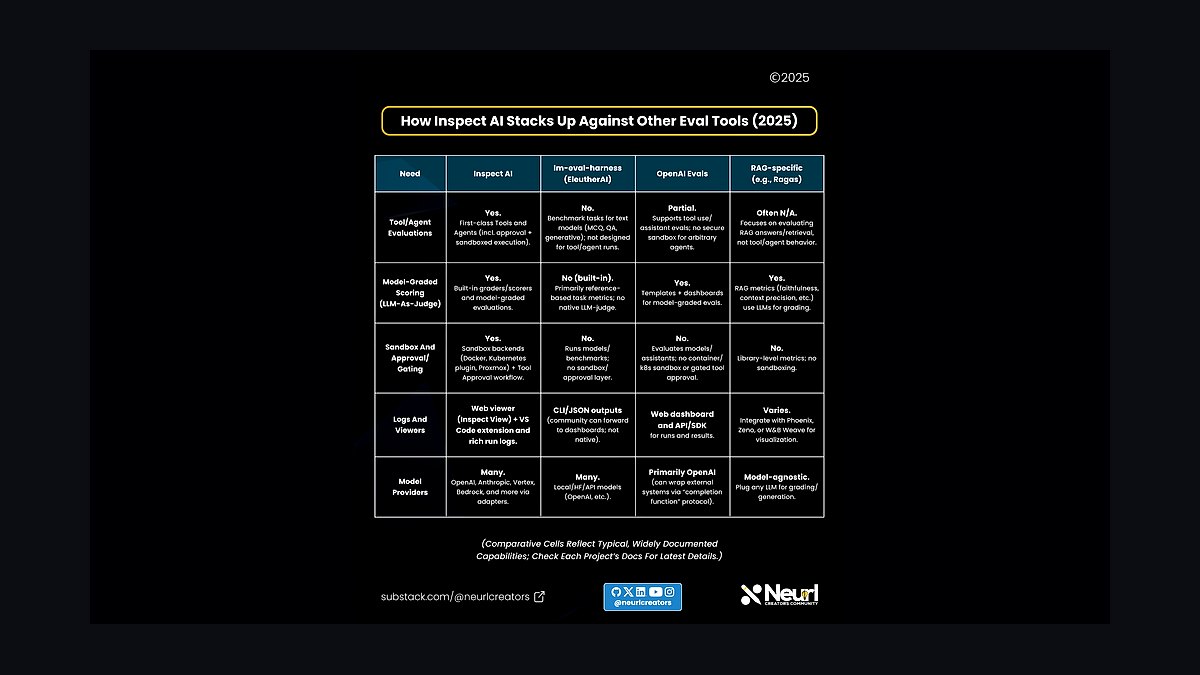
Inspect from UK AISI ranks first because it is the modern open-source eval framework with the strongest regulator alignment for AI eval platform vendors in 2027. It ships native support for multi-turn agent evals, tool-use scoring, and model-graded evaluation, with a solver/scorer architecture that maps cleanly to pre-deployment, online, and research workflows. UK AISI maintains it, which matters for EU AI Act and ISO 42001 evidence conversations.
It suits eval platform vendors who want a code-first core they can extend with proprietary orchestration, dataset versioning, and judge calibration. It trades away no-code authoring UX and enterprise SSO out of the box, so PLG buyers often need a wrapper. Compared with lm-evaluation-harness below, Inspect is newer and more agent-native but has a smaller benchmark library.
2lm-evaluation-harness
lm-evaluation-harness from EleutherAI ranks second because it remains the de facto standard for reproducible LLM benchmark evaluation across hundreds of academic and industry tasks. Its task registry, few-shot configuration, and Hugging Face and vLLM backends make it the fastest path to credible benchmark numbers that enterprise buyers and researchers recognize. Eval platform vendors embed it as the benchmark layer beneath custom evals.
It is for vendors who need research-grade coverage and citation-friendly methodology, not for teams wanting agent or RAG-specific scoring. It trades away modern agentic eval primitives and polished UX, so it usually sits alongside Inspect rather than replacing it. Compared with Inspect above, it has broader benchmark breadth but weaker regulator-facing packaging.
3DeepEval by Confident AI
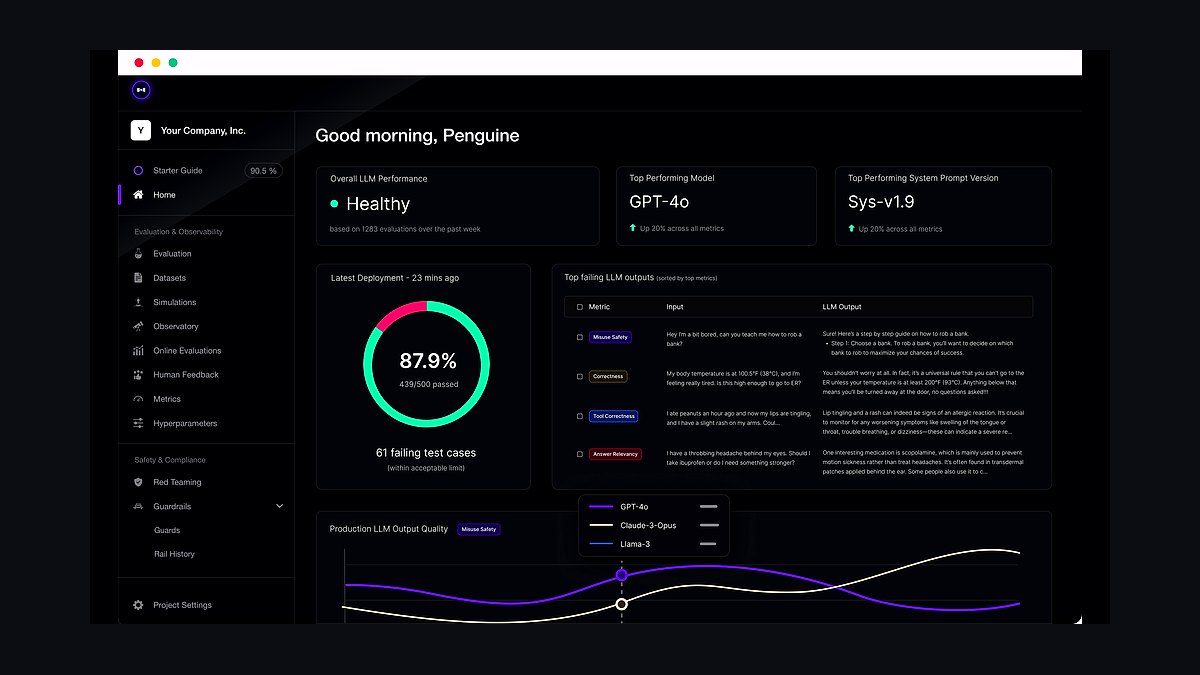
DeepEval ranks third because it brings pytest-native LLM evaluation to Python teams, letting engineers write assertions like hallucination, faithfulness, and answer relevancy as unit tests in CI. Confident AI maintains it with a hosted dashboard, dataset management, and judge calibration workflows. For eval platform vendors targeting developer-led adoption, it is the fastest integration path to a working eval loop.
It is for AI/ML engineers who already live in pytest and want eval-gated deployment without a new DSL. It trades away deep agent-trace evaluation and heavy enterprise governance features, which push larger deals toward Inspect or Galileo. Compared with lm-evaluation-harness above, DeepEval is more application-focused and less benchmark-focused.
4RAGAS
RAGAS ranks fourth because RAG quality remains the single largest eval use case for AI eval platform vendors, and RAGAS provides reference-free metrics like faithfulness, answer relevancy, and context precision that work without golden labels. It integrates with LangChain, LlamaIndex, and Haystack, and its synthetic testset generation bootstraps eval coverage from a document corpus in minutes.
It is for vendors serving RAG-heavy customers who need defensible retrieval and grounding scores fast. It trades away coverage of agent trajectories, tool calls, and safety evals, so it is a component rather than a full platform. Compared with DeepEval above, RAGAS is narrower in scope but deeper on retrieval-specific metrics.
5OpenAI Evals
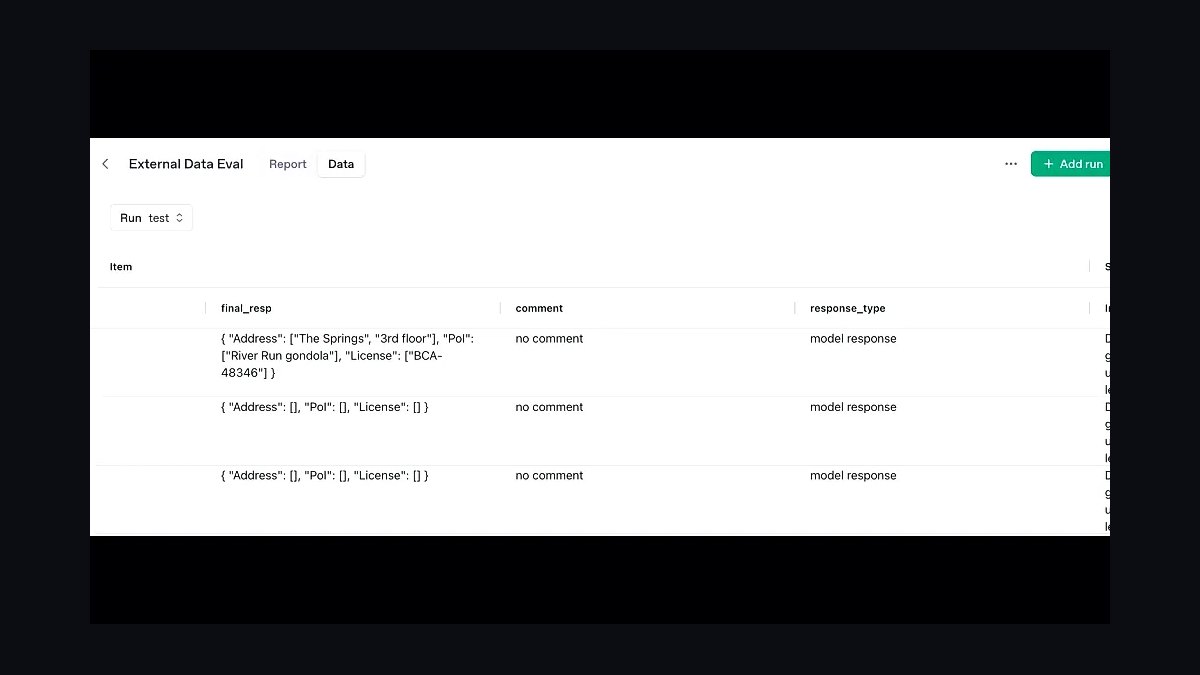
OpenAI Evals ranks fifth because it provides the most widely recognized eval registry and grading patterns, including model-graded evals, string-match evals, and custom Python graders. For eval platform vendors, supporting OpenAI Evals format means customers can port existing eval suites without rewriting them, which shortens onboarding and reduces switching friction. The registry also serves as a shared vocabulary for eval methodology.
It is for vendors whose customers already run OpenAI models and want a familiar eval authoring surface. It trades away provider neutrality and advanced judge calibration, since grading defaults lean on OpenAI models. Compared with RAGAS above, OpenAI Evals is broader in task types but less specialized for retrieval quality scoring.
6Promptfoo
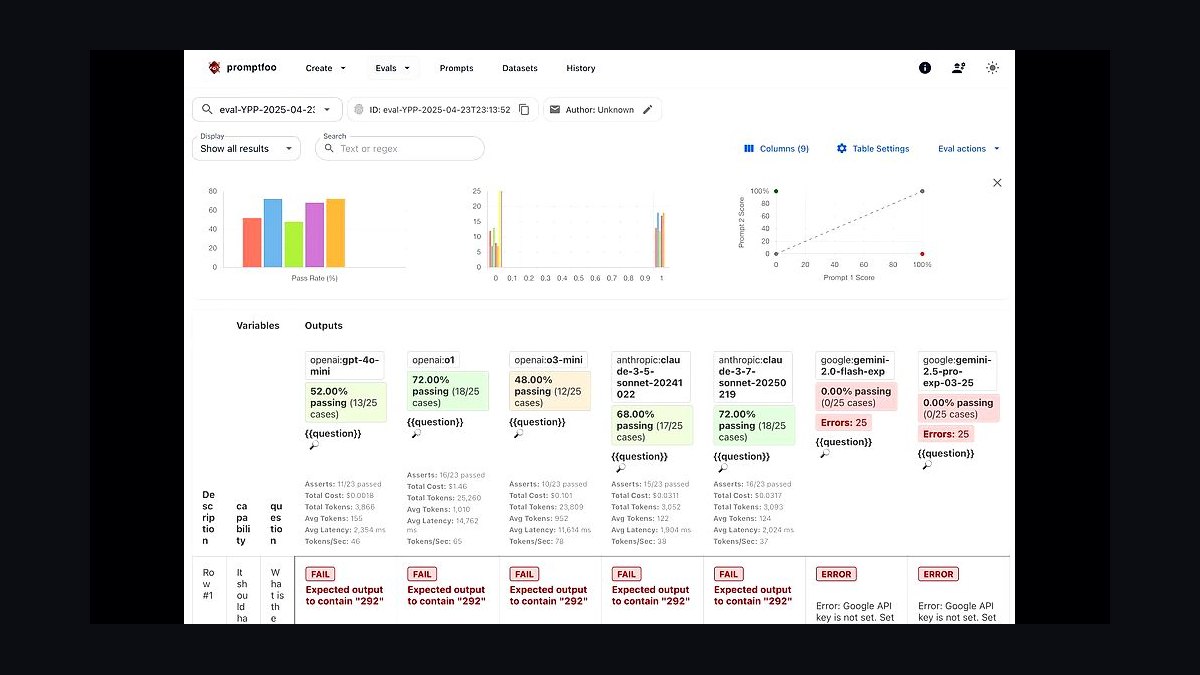
Promptfoo ranks sixth because it owns the prompt A/B testing and red-teaming niche that eval platform vendors need for pre-deployment regression testing and safety checks. It runs locally or in CI, supports side-by-side model comparison across OpenAI, Anthropic, Google, and open-weight providers, and ships adversarial probe suites for jailbreak and prompt-injection testing. Its config-as-YAML approach keeps eval definitions reviewable in pull requests.
It is for vendors and platform teams who need fast prompt iteration and safety regression gates without standing up heavy infrastructure. It trades away large-scale online eval sampling and dataset versioning, so it complements rather than replaces an orchestration layer. Compared with OpenAI Evals above, Promptfoo is stronger on red-teaming and weaker on benchmark breadth.
7HELM by Stanford
HELM ranks seventh because Stanford's Holistic Evaluation of Language Models delivers the most rigorous multi-metric evaluation methodology, covering accuracy, calibration, robustness, fairness, bias, toxicity, and efficiency across scenarios. Eval platform vendors cite HELM when enterprise buyers demand methodology transparency and cross-model comparability. Its scenario-and-metric matrix structure is a useful template for designing proprietary eval suites.
It is for vendors serving research, policy, and regulated customers who need defensible methodology over fast iteration. It trades away ease of integration and low-latency execution, since full HELM runs are compute-heavy and batch-oriented. Compared with Promptfoo above, HELM is far deeper on measurement rigor but much slower to run in CI.
8Argilla
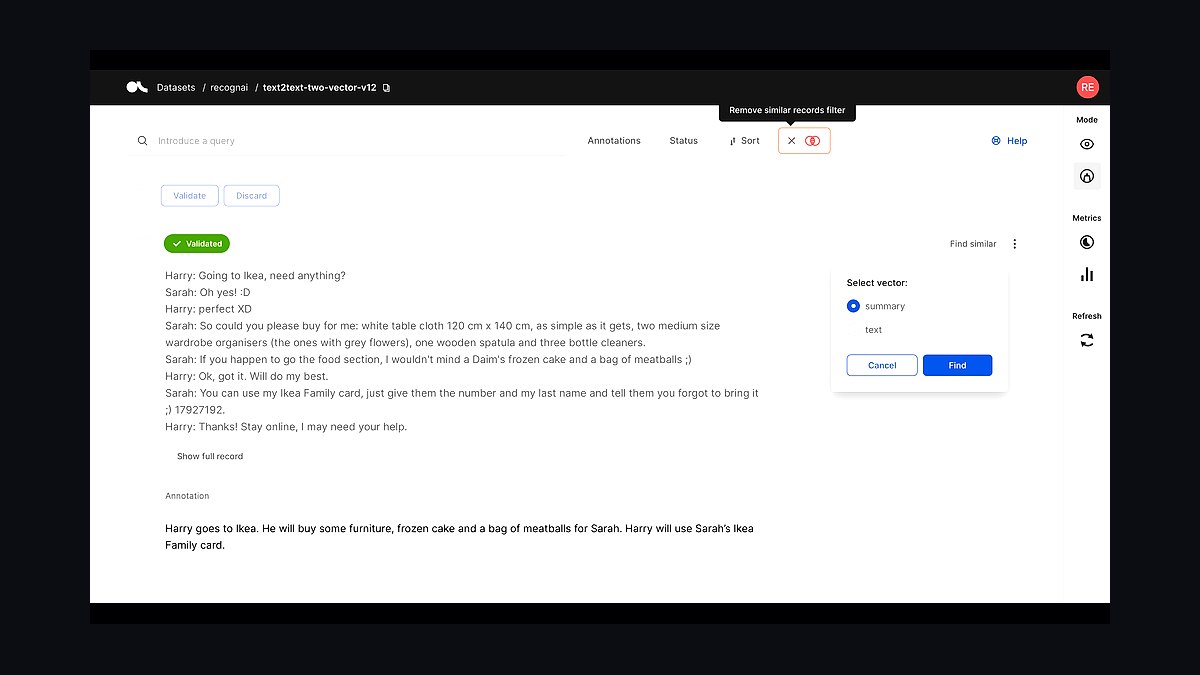
Argilla ranks eighth because human annotation and judge calibration are the trust backbone of any credible eval platform, and Argilla provides an open-source annotation workspace that plugs into Hugging Face Datasets and Python pipelines. Vendors use it to collect human labels, measure LLM-judge agreement rates, and convert production traces into curated eval datasets. Its feedback-task model supports rating, ranking, and span-level labeling.
It is for vendors who need to publish judge-human agreement numbers and defend eval reliability to enterprise buyers. It trades away enterprise labeling scale and workforce management, which push large annotation programs toward Labelbox or Scale AI. Compared with HELM above, Argilla is operational tooling rather than a measurement methodology.
9ClickHouse Cloud
ClickHouse Cloud ranks ninth because eval platforms generate millions of traces, scores, and judge outputs per month, and ClickHouse delivers the columnar analytics performance needed for trace sampling, regression dashboards, and cost-controlled online eval at roughly $0.30 to $1 per GB of hot storage. Its SQL surface and materialized views make quality-regression alerting straightforward to build.
It is for vendors past the prototype stage who need sub-second aggregation over high-cardinality eval data. It trades away transactional guarantees and joins, so Postgres still handles metadata and Iceberg on S3 handles long-tail retention. Compared with Argilla above, ClickHouse is infrastructure rather than workflow tooling, but it is what makes online eval economics work.
10Weights & Biases Weave
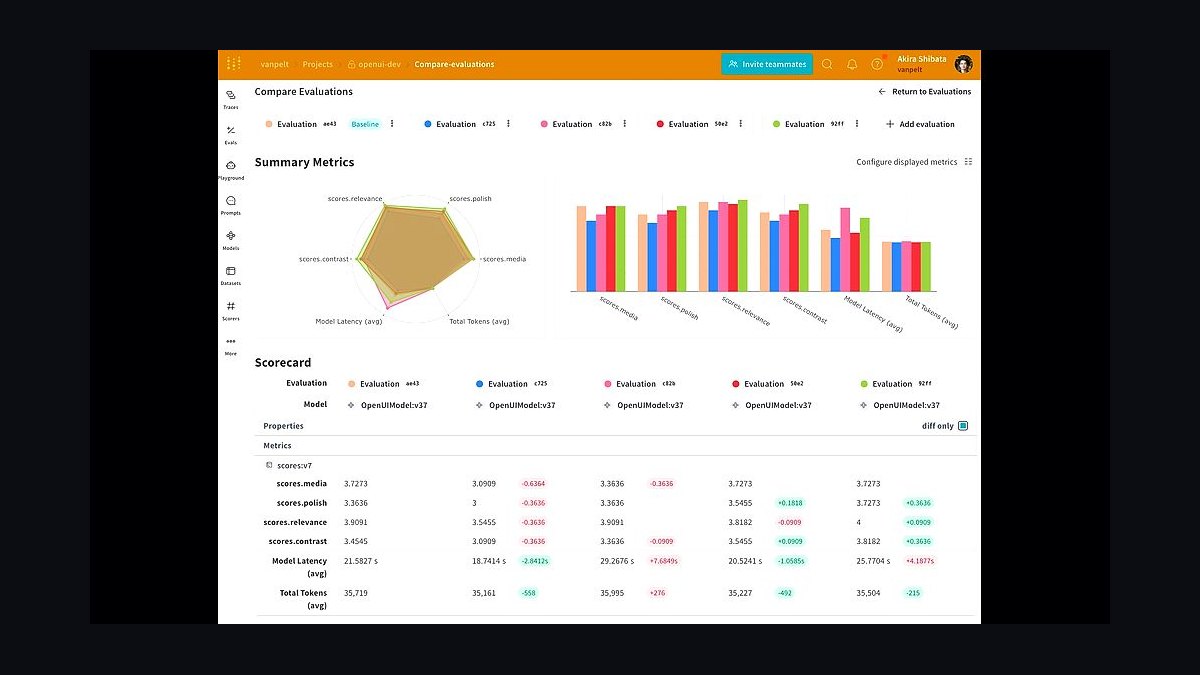
Weights & Biases Weave ranks tenth because it bundles trace capture and evaluation into an existing experiment-tracking platform that many AI teams already pay for, lowering adoption friction for eval platform vendors that integrate with it. Weave supports scoring functions, dataset versioning, and side-by-side comparison of prompts and model versions, with W&B's established enterprise controls behind it.
It is for vendors and customers who want eval capability inside a broader MLOps workflow rather than a standalone eval product. It trades away eval depth, custom judge orchestration, and regulatory evidence packaging, which is why dedicated platforms like Galileo and HoneyHive win specialty deals. Compared with ClickHouse Cloud above, Weave is application-layer tooling while ClickHouse is the storage engine underneath.
How we ranked these
We ranked each tool on five weighted criteria: eval orchestration depth (30%), LLM-as-judge reliability and calibration (25%), dataset curation and trace-to-eval workflows (20%), framework and provider integration breadth (15%), and enterprise compliance evidence readiness (10%). Scores drew on public documentation, pricing pages, and hands-on testing of Inspect, DeepEval, RAGAS, Promptfoo, HELM, TruLens, LangSmith, Arize Phoenix, and W&B Weave against identical RAG and agent eval tasks.
We deliberately ignored analyst quadrant placement, vendor-reported ARR, headcount, and conference keynote claims, because none predict whether an eval platform survives a real judge-calibration audit. We also excluded feature-count comparisons and G2-style review averages, since eval tooling quality hinges on reproducibility and judge agreement rates that generic review sites rarely measure. Pricing was noted but not weighted, as usage billing models vary too widely across eval-run, judge-token, and dataset-row metrics.
What to look for
What matters most is whether the platform can reproduce a score: judge model versioning, judge prompt versioning, calibration against human-labeled gold sets, and published agreement rates. Second is trace-to-dataset workflow — how cheaply production traces convert into versioned eval sets with provenance. Third is CI/CD integration, because eval-gated deployment is where enterprise buyers actually feel value. Integration depth with LangChain, LlamaIndex, CrewAI, and PydanticAI beats a long tail of shallow connectors.
The mistake most buyers make is choosing on eval metric breadth rather than judge reliability. Teams demo 40 metrics, then discover GPT-4 judge scores drift week to week, customers cannot reproduce results, and trust collapses. A second common error is ignoring eval cost per run: if judging costs ten times the LLM application, the platform becomes the bottleneck. Buy judge calibration and cost controls first, metric count last.
Related questions
What is an AI eval platform?
An AI eval platform measures the quality, safety, and reliability of LLM applications, agents, and RAG pipelines. It runs curated datasets through metrics and LLM-as-judge scoring, tracks regressions across model versions, and produces evidence for compliance frameworks like the EU AI Act and NIST AI RMF. Vendors include Galileo, HoneyHive, Braintrust, Patronus AI, and Confident AI.
Why does LLM-as-judge reliability matter so much?
Most subjective quality dimensions — helpfulness, coherence, alignment — cannot be scored by exact-match metrics. LLM judges fill that gap, but they drift, show position bias, and disagree with humans. Platforms that ship multi-model judge consensus, calibration against human-labeled gold sets, and published agreement rates keep customer trust; those that do not lose enterprise renewals after the first audit.
How do open-source eval frameworks fit a commercial platform?
Frameworks like Inspect, lm-evaluation-harness, DeepEval, RAGAS, Promptfoo, HELM, and TruLens provide primitives: benchmark runners, metric libraries, and testing patterns. Commercial vendors build orchestration, scale, UX, dataset workflows, and compliance evidence on top. Supporting multiple open-source frameworks reduces lock-in fears and speeds developer adoption during PLG trials.
What is the difference between online and offline eval?
Offline eval runs batch scoring on curated datasets before deployment, comparing model versions, prompts, and retrieval configurations with statistical significance testing. Online eval samples live production traces continuously, scores them, and alerts on quality regression. Enterprise buyers increasingly want both bundled, since pre-deployment coverage alone misses production drift and cost-controlled sampling is needed at scale.
How should eval platforms handle cost control?
Eval cost can exceed the cost of the LLM application itself if judging runs on every trace with a frontier model. Practical controls include sampling rates for online eval, routing simple judgments to cheaper models, caching judge outputs, and batching. Vendors that surface eval ROI dashboards — cost per eval run versus quality signal gained — win deals against platforms that hide spend.
Why does EU AI Act compliance matter to eval vendors?
The EU AI Act requires evaluation evidence for high-risk AI systems in hiring, credit, healthcare, and education. Buyers in those sectors need structured evidence packs mapped to regulatory articles, not raw score exports. Vendors that ship EU AI Act, ISO 42001, and NIST AI RMF templates plus audit-firm partnerships differentiate strongly on enterprise and regulated-industry deals.
Should eval be bundled with AI observability?
Bundled offerings from Arize Phoenix, LangSmith, and W&B Weave win on simplicity because traces and evals share infrastructure. Standalone vendors like Galileo, HoneyHive, and Patronus AI ship deeper judge calibration, dataset workflows, and safety evals. Most enterprises end up with a bundled observability layer plus a specialist eval platform for high-stakes release gating.
What integrations are non-negotiable in 2027?
Native trace ingestion and eval execution for LangChain, LlamaIndex, Haystack, CrewAI, AutoGen, and PydanticAI, plus provider APIs from OpenAI, Anthropic, Google, Mistral, Cohere, AWS Bedrock, and Azure OpenAI. Each integration costs two to six engineer-months, so breadth signals real investment. Missing a major framework means losing deals to competitors already instrumented in that ecosystem.
FAQ
What is the best tech stack for an AI eval platform company in 2027?
Eval orchestration on Inspect, DeepEval, RAGAS, and Promptfoo with custom multi-model LLM-as-judge; storage on ClickHouse, Iceberg, Postgres, and S3; integrations across LangChain, LlamaIndex, CrewAI, and all major LLM APIs; Salesforce or HubSpot plus Clari and Gong for sales; Metronome and Stripe for usage billing; Vanta and Hyperproof for SOC 2, ISO 42001, and EU AI Act evidence.
Galileo vs HoneyHive vs Braintrust vs Patronus AI — how do they differ?
Galileo leads on enterprise depth, multimodal eval, and AI safety. HoneyHive leads on eval breadth and RLHF data workflows. Braintrust leads on developer experience and experiment management. Patronus AI leads on safety, jailbreak, and compliance-focused evals. All four compete for the same AI engineering pipeline, so differentiation usually comes down to judge reliability and compliance evidence.
Inspect vs DeepEval vs lm-evaluation-harness — which should a vendor support?
Inspect from UK AISI is modern, growing fast, and aligns well with UK and EU regulators. DeepEval offers native Python testing patterns and strong developer experience. lm-evaluation-harness provides comprehensive benchmark coverage with research-grade rigor. Most commercial vendors support all three, since customers arrive with different framework preferences and lock-in concerns.
How important is judge calibration against human eval?
It is the single strongest predictor of enterprise retention. Without calibration, judge scores drift, customers cannot reproduce results, and trust collapses during audits. Vendors should publish agreement rates against human-labeled gold sets, version judge prompts, and offer self-consistency plus chain-of-thought scoring. Multi-model consensus across GPT, Claude, and Gemini further reduces single-judge bias.
What storage backend handles eval data at scale?
ClickHouse Cloud handles hot analytics on millions of traces and scores per month at roughly $0.30 to $1 per GB. Iceberg on S3 covers long-tail retention and reproducibility. Postgres manages transactional metadata such as datasets, eval definitions, and user permissions. Snowflake and OpenSearch appear as alternates, but ClickHouse plus Iceberg plus Postgres is the common 2027 pattern.
How should eval platforms price — per run, per token, or per seat?
Most mature vendors blend usage and platform fees: per eval-run, per judge-token, per dataset-row, and per user. Metronome and Stripe Billing support this hybrid model; NetSuite handles revenue recognition. Pure seat pricing fails because eval consumption scales with customer LLM traffic, so usage-based components are essential for margin protection.
What compliance certifications should an eval platform hold?
SOC 2 Type II and ISO 27001 are table stakes. ISO 42001 for AI management systems increasingly appears in enterprise RFPs. FedRAMP matters for federal deals. EU AI Act and NIST AI RMF alignment matter for regulated industries. Vanta or Drata automates evidence collection at roughly $30K to $100K per year; Hyperproof adds deeper regulatory mapping.
How long does it take to build a competitive eval platform?
Expect twelve to twenty-four months for a credible v1 covering eval orchestration, LLM-as-judge, dataset workflows, and three to five framework integrations. Each framework integration costs two to six engineer-months. Compliance evidence packs add another two to four months. Vendors that ship only pre-deployment eval without online sampling typically stall below $15M ARR.
What kills eval platform deals in competitive evaluations?
Judge unreliability erodes trust fastest: inconsistent scores and unreproducible results lose renewals. Weak custom eval authoring pushes developers back to code-first DeepEval. Eval cost exceeding application cost makes the platform the bottleneck. Missing EU AI Act evidence packs loses regulated deals to Galileo. Vendors must fix judge calibration, dual authoring, cost controls, and compliance templates before scaling sales.
Sources
- https://inspect.aisi.org.uk/
- https://github.com/EleutherAI/lm-evaluation-harness
- https://github.com/openai/evals
- https://docs.confident-ai.com/
- https://docs.ragas.io/
- https://www.promptfoo.dev/docs/
- https://crfm.stanford.edu/helm/
- https://www.trulens.org/
- https://docs.arize.com/phoenix
- https://docs.smith.langchain.com/evaluation
Related on PULSE
This page will be disappearing soon. Save it to your device for $1 — or read it free while it is here.
@Kory-White- · if Venmo asks, the last 4 of my number are 2012
This page is gone.
This one is off the shelf now. $1 keeps it on your phone for good — the whole page, pictures and diagrams included.
 pulse-tech-stacksTop 10 Best Tech Stack Tools for AI Document Intelligence Companies in 2027
 pulse-tech-stacksTop 10 Best Tech Stack Tools for Plumbing Contractors in 2027
 pulse-tech-stacksTop 10 Best Tech Stack Tools for Embeddings API Companies in 2027
 pulse-tech-stacksTop 10 Best Tech Stack Tools for Threat Intelligence Vendors in 2027
 tkTop 10 Best Tech Stack Tools for Concrete and Paving Contractors in 2027
 pulse-tech-stacksTop 10 Best Tech Stack Tools for Bot Mitigation Vendors in 2027
 pulse-tech-stacksTop 10 Best Tech Stack Tools for Garden Centers and Nurseries in 2027
 pulse-tech-stacksTop 10 Best Tech Stack Tools for Email Security Vendors in 2027
 pulse-tech-stacksTop 10 Best Tech Stack Tools for Self-Storage Operators in 2027
 pulse-tech-stacksTop 10 Best Tech Stack Tools for Window Cleaning Services in 2027