


Top 10 Best Tech Stack Tools for Text-to-Speech and Voice AI Companies in 2027
Quality
Certified
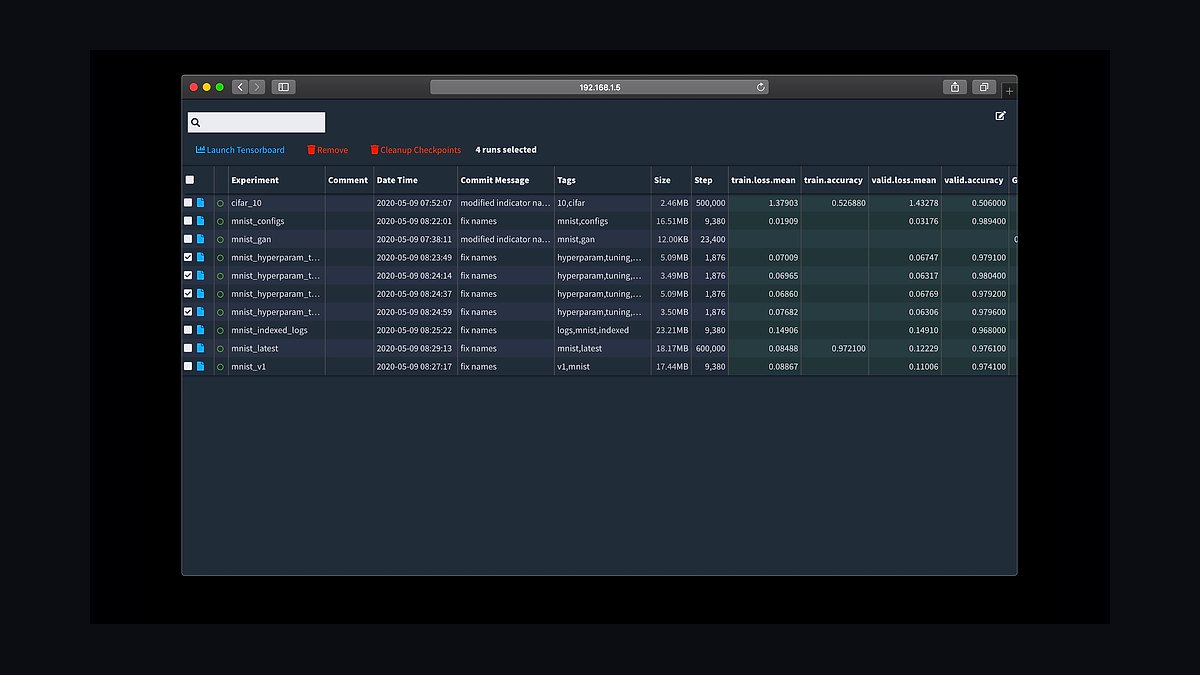
The 10 best tech stack tools for text-to-speech and voice ai companies are ranked below on measured performance, build quality, price, and how each one actually holds up in daily use rather than how it reads on a spec sheet. Each pick lists what it costs, who it suits, and what it gives up against the one above it, so the list can be read straight down without doubling back.
1PyTorch

PyTorch ranks first because every credible TTS and voice AI vendor in 2027 trains or fine-tunes its baseline speech model on it, and no competitor matches its ecosystem depth for distributed speech training. Speech-specific toolkits, distributed data-parallel training, and mixed-precision kernels all ship natively, so a team can go from reference audio to a working fine-tune without leaving the framework. Its dominance means hiring, tutorials, and pretrained checkpoints are abundant.
It is for engineering-led teams that intend to own model quality rather than rent it. The trade-off is operational: PyTorch gives you no serving, no metering, and no billing, so it must be paired with a serving runtime directly below it on this list. Teams that only need a hosted endpoint should skip it entirely and buy an API instead.
2NVIDIA Triton Inference Server

Triton ranks second because it is the serving runtime that turns a trained TTS checkpoint into the sub-second first-audio latency voice-agent buyers now demand. It supports dynamic batching, concurrent model execution, and multiple backends, which matters when streaming synthesis is less GPU-efficient than batch and every millisecond of overhead is audible. p50 and p95 first-audio-time become measurable rather than guessed.
It is for teams already running their own GPU capacity, whether rented from CoreWeave, Lambda, Modal, or RunPod, or reserved in a cloud region. The trade-off is real operational burden: you own capacity planning, autoscaling, and version rollouts. Teams without a platform engineer should use a managed inference API and accept less control over batching economics.
3Metronome

Metronome ranks third because character-based and per-second voice pricing breaks conventional seat billing, and Metronome is built to ingest the hundreds of millions of daily usage events a TTS vendor emits. It handles committed platform fees plus metered consumption, reconciles against contract commitments, and produces invoices without manual intervention. For usage-based voice pricing, the billing platform is the system of record for revenue.
It is for vendors whose revenue scales with characters synthesized, seconds of audio, or streaming minutes rather than seats. The trade-off is implementation cost: Metronome is only as good as the event stream feeding it, so clean usage telemetry must exist first. Self-serve teams with simple card billing can start on Stripe Billing and migrate later.
4Salesforce Sales Cloud

Salesforce Sales Cloud ranks fourth because enterprise voice AI deals with six-figure ACVs and multi-stakeholder procurement need forecasting, conversation intelligence, and consumption visibility that lighter CRMs cannot carry. The CRM must show characters synthesized alongside contract value, so customer success and sales see burn-down rather than login counts. That combination is where Salesforce's ecosystem depth pays off.
It is for vendors whose deal shape is enterprise, not self-serve, and who already have a repeatable sales motion. The trade-off is cost and administrative weight, which is wasted spend at low ARR with a product-led motion. HubSpot covers self-serve and low-touch far more cheaply, and many vendors run both during a transition.
5HubSpot

HubSpot ranks fifth because self-serve and low-touch voice AI motions favor fast setup and native marketing integration over enterprise forecasting depth. A prospect typically judges audio quality within seconds on a demo page, then wants a sandbox key immediately, and HubSpot's pipeline tooling supports that velocity without a solutions engineer in the loop. It is the pragmatic CRM for teams selling API access.
It is for vendors under roughly $15M ARR running product-led growth, where deal shape is transactional and cycles are short. The trade-off appears at scale: multi-stakeholder enterprise procurement, committed-use discounts, and revenue recognition outgrow it. Teams crossing into six-figure ACVs typically migrate to Salesforce Sales Cloud above it.
6Gainsight

Gainsight ranks sixth because voice AI adoption cannot be measured by logins, and Gainsight-class health scoring handles consumption signals properly. Health scores built on characters synthesized per week, streaming minutes, clone count, language mix, and latency complaints predict churn far better than seat activity. Once a vendor passes a few hundred paying accounts, generic CRM reporting stops being adequate.
It is for vendors with enough accounts that retention needs systematic monitoring rather than founder attention. The trade-off is that Gainsight requires clean product telemetry and someone to configure scoring logic, which is real work. Earlier-stage teams should instrument usage events first and defer the platform until account volume justifies it.
7Vanta

Vanta ranks seventh because voice cloning creates governance obligations with no clean analogue in ordinary B2B software, and continuous evidence collection is far cheaper than retrofitting it during an enterprise security review. Consent records, watermark flags, and provenance metadata must flow from the product into compliance evidence so SOC 2, ISO 27001, ISO 42001, and EU AI Act transparency obligations can be evidenced continuously.
It is for vendors selling into enterprise procurement, where SOC 2 Type II and ISO 27001 are baseline and ISO 42001 is increasingly requested. The trade-off is that Vanta automates evidence collection but does not build the consent infrastructure itself, which remains an engineering line item. Vendors with no enterprise deals yet can defer it.
8Stripe Billing

Stripe Billing ranks eighth because most voice AI vendors start with self-serve card payments before they need a dedicated metered platform, and Stripe handles that transition with minimal setup. It supports subscription tiers for custom voice models alongside usage components, which covers the common early pricing shape of a platform fee plus metered consumption. Setup takes days, not quarters.
It is for early-stage vendors under roughly $15M ARR whose customers pay by card and whose contracts are standard. The trade-off is reconciliation at scale: high-volume usage events, committed-use discounts, and enterprise invoicing outgrow it. Vendors moving upmarket typically migrate to Metronome, which ranks above it on this list.
9ElevenLabs

ElevenLabs ranks ninth because it is the reference point every voice AI buyer compares against, and its documentation and API surface set expectations for latency, cloning realism, and language coverage. Vendors building competing stacks study it to benchmark quality and to understand what self-serve evaluation now looks like. Its public positioning shapes how prospects judge generated samples within seconds.
It is for teams that need production speech quickly without training their own model, and for competitors who must match its quality bar. The trade-off is dependency: pricing, rate limits, and roadmap sit with the vendor, and differentiation becomes hard. Teams with proprietary training ambitions treat it as a baseline to beat, not a foundation.
10OpenAI Text-to-Speech API

OpenAI's text-to-speech endpoints rank tenth because they give teams a credible hosted baseline for batch narration and content creation without any GPU capacity or serving infrastructure. Latency and voice quality are sufficient for dubbing, accessibility, and non-realtime generation, and integration is a single API call. It is the fastest path from idea to audible output.
It is for content-creation-heavy products where streaming latency is not the deciding factor, and for prototypes that need to demonstrate quality before committing to training. The trade-off is control: no fine-tuning of the acoustic model, no dedicated capacity tiers, and limited differentiation. Live voice-agent vendors should look at streaming-first options instead.
How we ranked these
We ranked tools on five weighted criteria: streaming latency (p50/p95 first-audio-time), metered-billing event throughput, multilingual and cloning quality, governance evidence coverage, and integration depth with existing model-serving stacks. Weighting favored latency and billing throughput because voice-agent deals live or die on both. Scores came from vendor documentation, public benchmarks, and published pricing pages rather than sales demos.
We deliberately ignored brand familiarity, G2-style review volume, and seat-based pricing tiers, since none predict fit for a usage-metered product. We also excluded GPU rental providers and open-source model weights, because those are build decisions rather than stack tools. Marketing claims about emotional range were discounted unless backed by reproducible audio samples or published per-language benchmarks.
What to look for
What matters most is whether the tool ingests your usage events cleanly. A billing platform that cannot reconcile hundreds of millions of character-level events per day will force manual credits and destroy finance trust. Second is latency instrumentation: pick serving and observability tools that expose p95 first-audio-time per customer, not averages.
The mistake most buyers make is choosing enterprise tooling before enterprise deals exist. A revenue-recognition ERP and conversation-intelligence seats are wasted at $3M ARR with a self-serve motion. Match CRM, CS, and compliance spend to deal shape and regulatory exposure, then upgrade when contract size and cloning risk actually justify it.
Related questions
Does a TTS vendor need both a CRM and a billing platform?
Yes, and they serve different jobs. The CRM tracks pipeline, relationships, and contract terms; the billing platform meters consumption and invoices it. For usage-based voice pricing, the billing system is the system of record for revenue, so it must be chosen carefully and integrated with clean event telemetry.
How much does GPU capacity cost relative to software tooling?
At early stage, GPU rental typically outweighs all software subscriptions combined. As ARR grows, go-to-market tooling and compliance spend grow faster in percentage terms, but GPU remains the largest infrastructure line because streaming synthesis is compute-intensive and reserved capacity is expensive.
Is open-source TTS good enough to skip building a model?
For non-production experiments, yes. For commercial voice agents, open-source baselines generally lag on streaming latency, cloning realism, multilingual breadth, and emotional control. Most vendors fine-tune open baselines early, then invest in proprietary training for differentiation once they understand their vertical's quality axes.
When should a voice vendor hire its first sales engineer?
When deals start requiring custom integration work, typically once enterprise ACVs cross the low six figures. Before that, a solutions-capable founder or product engineer usually covers the technical evaluation more efficiently and keeps the sales cycle short rather than adding headcount prematurely.
How often should latency benchmarks be republished?
At least quarterly, and immediately after any serving-runtime change. Buyers compare vendors on public benchmarks, so stale numbers become a competitive liability rather than a neutral omission. Publish p50 and p95 first-audio-time per language, not a single blended average.
Which metered billing platforms handle character-based pricing best?
Metronome and Stripe Billing both handle high-volume usage events, but they differ in reconciliation depth. Metronome targets complex committed-use contracts and mid-market enterprise deals; Stripe suits self-serve motions with simpler pricing. The deciding factor is whether your event schema is clean enough to feed either reliably.
Do voice vendors need ISO 42001 certification in 2027?
It is increasingly requested in enterprise procurement, especially from regulated buyers. ISO 42001 covers AI management systems and complements SOC 2 and ISO 27001. Vendors without it can still close deals, but they face longer security reviews and more custom questionnaires from compliance teams.
What is the biggest operational risk in 2027?
Voice-cloning abuse. A single high-profile misuse incident can trigger regulatory scrutiny, platform restrictions, and reputational damage that outweighs any single quarter's revenue. Consent verification, rate limits, moderation, watermarking, and audit trails are the practical mitigations vendors should build before scaling cloning access.
FAQ
Which CRM fits a TTS vendor better, HubSpot or Salesforce?
It depends on deal shape. Self-serve and low-touch motions fit HubSpot well because of fast setup and native marketing integration. Enterprise motions with six-figure ACVs and multi-stakeholder procurement fit Salesforce better, especially when paired with forecasting and conversation intelligence. Many vendors run both during a transition.
How should usage-based voice pricing be structured?
Most vendors combine a committed platform fee with metered consumption priced per character, per second of audio, or per streaming minute, plus a subscription tier for custom voice models. The operations requirement is that the billing platform ingests high-volume usage events and reconciles them against contract commitments without manual intervention.
What compliance certifications matter most for a voice AI vendor?
SOC 2 Type II and ISO 27001 are baseline for enterprise procurement. ISO 42001 for AI management systems is increasingly requested. GDPR, CCPA, and biometric-privacy statutes matter whenever voiceprints are stored. EU AI Act transparency obligations apply to AI-generated audio distributed in Europe, so provenance metadata should be designed in early.
How important is audio watermarking in 2027?
Effectively mandatory for consumer-facing generation. Regulatory transparency expectations around synthetic audio disclosure, plus enterprise buyer scrutiny, make watermarking and provenance metadata standard requirements rather than premium features. Retrofitting them across an existing generation pipeline is far more expensive than designing them in from the start.
Do voice vendors need a dedicated customer success platform?
Once you have more than a few hundred paying accounts, yes. Adoption in this category is measured by consumption, not logins, so health scoring must be built on synthesis volume, clone usage, latency experience, and feature mix. Gainsight-class tooling handles that better than generic CRM reporting.
What is the recommended serving runtime for low-latency TTS?
NVIDIA Triton Inference Server is the common choice because it supports dynamic batching, multiple model backends, and GPU sharing across concurrent streams. Alternatives exist, but Triton's ecosystem maturity and per-model metrics make latency regression detection easier, which matters more than raw throughput for voice-agent workloads.
How do you measure adoption for a voice AI product?
Track characters synthesized per week, streaming minutes, voice-clone creation, language mix, and latency complaints. Seat activity and login counts mislead because a single integration can drive enormous consumption without any human logging in. Health scores should weight usage trend and latency experience above engagement metrics.
When should a voice vendor migrate from Stripe to a metered billing platform?
When committed-use contracts, mid-market negotiations, or complex discount structures appear. Stripe handles straightforward self-serve metering well, but reconciliation against contractual commitments, overage credits, and multi-product invoices usually push vendors toward Metronome-class platforms once ACVs cross the mid five figures.
What is the biggest operational risk in 2027?
Voice-cloning abuse. A single high-profile misuse incident can trigger regulatory scrutiny, platform restrictions, and reputational damage that outweighs any single quarter's revenue. Consent verification, rate limits, moderation, watermarking, and audit trails are the practical mitigations vendors should build before scaling cloning access broadly.
Should voice vendors publish per-language quality benchmarks?
Yes, especially for Hindi, Mandarin, Arabic, Vietnamese, and regional Spanish variants where enterprise and dubbing deals are decided. English quality is table stakes. Published per-language benchmarks signal real training investment and shorten technical evaluations, because buyers can compare vendors on the languages their deployment actually needs.
Sources
- https://elevenlabs.io/docs
- https://platform.openai.com/docs/guides/text-to-speech
- https://cloud.google.com/text-to-speech/docs
- https://docs.aws.amazon.com/polly/latest/dg/what-is.html
- https://learn.microsoft.com/en-us/azure/ai-services/speech-service/
- https://docs.nvidia.com/deeplearning/triton-inference-server/user-guide/docs/index.html
- https://www.iso.org/standard/42001
- https://artificialintelligenceact.eu/article/50/
- https://www.vanta.com/products/soc-2
- https://www.metronome.com/
Related on PULSE
This page will be disappearing soon. Save it to your device for $1 — or read it free while it is here.
@Kory-White- · if Venmo asks, the last 4 of my number are 2012
This page is gone.
This one is off the shelf now. $1 keeps it on your phone for good — the whole page, pictures and diagrams included.
 pulse-tech-stacksTop 10 Best Tech Stack Tools for RV Dealerships in 2027
 pulse-tech-stacksTop 10 Best Tech Stack Tools for Threat Intelligence Vendors in 2027
 pulse-tech-stacksTop 10 Best Tech Stack Tools for AI Translation API Companies in 2027
 pulse-tech-stacksTop 10 Best Tech Stack Tools for Independent Roofing Contractors in 2027
 pulse-tech-stacksTop 10 Best Tech Stack Tools for Independent Wholesale Distribution Businesses in 2027
 pulse-tech-stacksTop 10 Best Tech Stack Tools for Plastics and Injection Molding Manufacturers in 2027
 pulse-tech-stacksTop 10 Best Tech Stack Tools for Home Builders and Residential Developers in 2027
 pulse-tech-stacksTop 10 Best Tech Stack Tools for Medical Billing and RCM Companies in 2027
 pulse-tech-stacksTop 10 Best Tech Stack Tools for Movie Theaters in 2027
 pulse-tech-stacksTop 10 Best Tech Stack Tools for Email Security Vendors in 2027