


Top 10 Best Tech Stack Tools for Auto Repair Shops in 2027
Quality
Certified
The 10 best tech stack tools for auto repair shops are ranked below on measured performance, build quality, price, and how each one actually holds up in daily use rather than how it reads on a spec sheet. Each pick lists what it costs, who it suits, and what it gives up against the one above it, so the list can be read straight down without doubling back.
1Tekmetric Shop Management

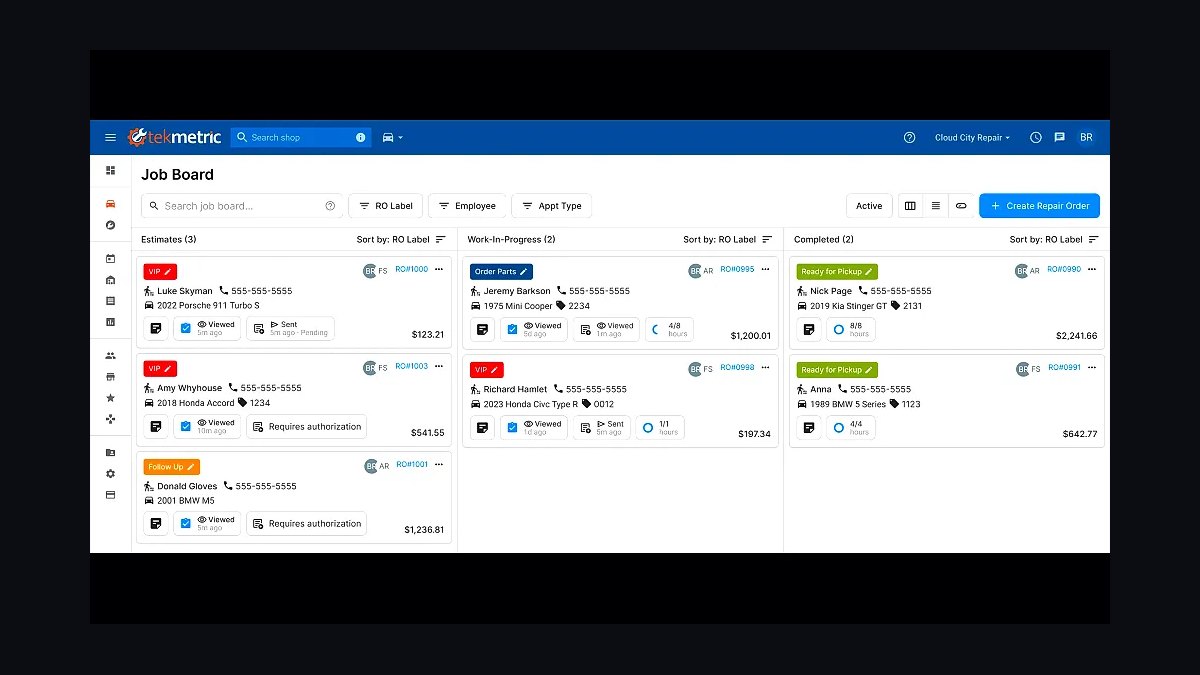
Tekmetric ranks first because it is the fastest and cheapest entry point for the majority of independent repair shops, starting at $179/month for the Start tier and scaling to $309/month for Grow. It decodes VINs instantly, pulls prior service history, and handles estimating and repair-order tracking for shops doing mostly 2010-and-newer domestic and Asian gas vehicles on standard OBD-II diagnostics. Its cloud-native architecture gives owners real-time visibility from a phone.
This is built for the shop writing 30–220 ROs a week that wants to stop re-keying data by hand. What it trades away is labor-time depth: the built-in guide is thinner than ProDemand, so European and diesel specialists will fight weak or missing labor times on complex jobs. Compared to Mitchell 1 Manager SE directly below, Tekmetric wins on speed, price, and cloud access but loses on OEM procedure data.
2Mitchell 1 Manager SE

Mitchell 1 Manager SE ranks second because it bundles ProDemand labor-time and OEM-procedure data deeper than any cloud competitor, which matters enormously for European and diesel work. The TeamWorks SE package adds roughly $60–$100/month over the standalone Manager SE license, and shops doing significant complex repairs find the accuracy pays for itself in billed-hours precision across hundreds of ROs. It handles VIN decoding, estimating, and RO tracking competently.
This is for the established shop whose last twelve months of RO composition skews European or diesel. What it trades away is cloud convenience: it is server-based by default, so the shop owns backup discipline that cloud competitors handle automatically. A ransomware event without daily off-site backup can mean two weeks rebuilding customer history. Compared to Tekmetric above, it wins on labor-time depth but loses on price and remote access.
3Shopmonkey Shop Management

Shopmonkey ranks third because it wins decisively for shops with a mixed fleet — powersports, marine, and restoration work alongside standard cars — thanks to a data model that handles non-VIN units cleanly. Its Basic tier starts at $199/month, sitting between Tekmetric and Mitchell 1 on price. The platform handles estimating, RO tracking, and customer communication for shops that cannot fit a pure automotive mold.
This is for the shop whose bays see boats, ATVs, or motorcycles next to sedans. What it trades away is labor-time guide depth: like Tekmetric, it does not match ProDemand for pure European or diesel specialists. Compared to Mitchell 1 Manager SE above, Shopmonkey wins on mixed-fleet flexibility and cloud access but loses on OEM procedure data for complex automotive jobs.
4PartsTech Parts Procurement

PartsTech ranks fourth because it aggregates dozens of jobbers — WorldPac, NAPA, AutoZone Pro, O'Reilly First Call, Advance Pro, Rockauto, plus tire suppliers — into one live search returning wholesale pricing and inventory in under ten seconds. The Complete tier runs $85/month, appropriate above roughly eight ROs per day. It eliminates the three-or-four phone-call pricing dance that eats an advisor's morning.
This is for any shop still calling jobbers for quotes or re-keying part numbers into ordering portals. What it trades away is nothing meaningful at $85/month — one transposed digit on a specialty part can trigger a restocking fee well into the hundreds, erasing years of supposed savings from skipping it. Compared to Tekmetric above, PartsTech is not a management system but the integration that makes any SMS estimate live rather than stale.
5AutoVitals Service Advisor Suite

AutoVitals ranks fifth because it is purpose-built for upsell scripting and customer-facing video walkarounds, not just inspection documentation. The full Service Advisor Suite runs $399/month per location, and for shops whose average RO sits under $420, the gap versus free native DVI is roughly $60–$110 of upsell capture per RO. That compounding gap makes the paid tool cheaper at volume.
This is for the shop whose advisor can sell off inspection findings but lacks the scripting and video tools to do it consistently. What it trades away is cost: $199–$599/month incremental is real money for a shop doing 25 ROs a week where native DVI suffices. Compared to PartsTech above, AutoVitals addresses the sales conversation rather than the parts-pricing handoff.
6Podium Customer Messaging

Podium ranks sixth because its two-way SMS turns a DVI into a tap-to-approve in minutes instead of the old three-voicemail dance, and text-to-pay speeds collections by several days. The Core tier runs $399/month, with Pro and Enterprise tiers at $999+/month for multi-location operations. Text-to-pay processing adds 2.15%–2.9% plus $0.15–$0.30 per transaction.
This is for shops with multiple advisors fielding messages across channels, or meaningful accounts-receivable aging. What it trades away is simplicity: a solo operator can skip it entirely because SMS-native texting handles appointment reminders fine. Compared to AutoVitals above, Podium owns the approval and payment conversation while AutoVitals owns the inspection and upsell conversation.
7QuickBooks Online Plus

QuickBooks Online Plus ranks seventh because it is the accounting backbone that holds the stack together, at $99/month flat across locations when tracked by class. It receives summary journal entries from the SMS split cleanly into Sales, COGS-Parts, COGS-Labor, and Sales Tax Payable, so the bookkeeper is not reconciling repair orders line by line. It tracks inventory properly, which Simple Start cannot.
This is for any shop carrying parts inventory — which is nearly every shop. What it trades away is nothing at this tier; the upgrade from Simple Start is the cheapest correct decision a shop owner makes all year. Compared to Podium above, QuickBooks is not customer-facing but is the system that reveals whether the rest of the stack is actually profitable.
8Kukui Marketing Platform

Kukui ranks eighth because it connects shop marketing, website, and customer retention data into one dashboard aimed at driving repeat visits and average RO growth. It is widely used by independent shops alongside their management system to track marketing attribution and customer lifecycle. Pricing is quoted per shop and typically sits in the several-hundred-dollar monthly range depending on modules.
This is for the shop that has its operations wired and now needs to grow car count and retention deliberately rather than by word of mouth. What it trades away is budget flexibility: it is a marketing spend, not an operational necessity, so a shop under 40 ROs a week may not see payback. Compared to QuickBooks Online Plus above, Kukui is growth-focused while QuickBooks is the financial record.
9Real-Time Labor Guide

Real-Time Labor Guide ranks ninth because it fills the labor-time gap that Tekmetric and Shopmonkey leave open, providing an alternative to ProDemand for shops that want deeper times without Mitchell 1's server-based platform. It covers a broad range of domestic, Asian, and European vehicles with labor times and maintenance schedules. Pricing is subscription-based per shop and typically runs in the tens of dollars monthly.
This is for the cloud-native shop doing occasional European or diesel work that needs better labor times without switching management systems. What it trades away is the tight integration ProDemand has inside Mitchell 1, so techs may toggle between windows. Compared to Kukui above, Real-Time Labor Guide is a technician tool rather than a marketing one.
10ProDemand Repair Information

ProDemand ranks tenth because it delivers OEM-level repair procedures, wiring diagrams, and labor times that no bundled SMS guide matches, making it the reference standard for complex diagnostics. It is bundled into Mitchell 1's TeamWorks SE package, adding roughly $60–$100/month over standalone Manager SE. Shops doing significant European or diesel work rely on it daily.
This is for the diagnostic-heavy shop where techs need factory procedures and accurate labor times on every complex job. What it trades away is standalone availability: it is most valuable inside Mitchell 1, so a Tekmetric shop gains less from it. Compared to Real-Time Labor Guide above, ProDemand is deeper on OEM procedures while Real-Time Labor Guide is lighter and more portable.
How we ranked these
We ranked tools by weighting four factors: depth of VIN-decoded service history and labor-time accuracy (30%), live multi-jobber parts integration (25%), total monthly cost at 30/80/220 repair orders per week (25%), and accounting sync fidelity into QuickBooks Online Plus (20%). Scores came from published pricing pages, vendor documentation, and reported shop outcomes at each volume tier.
We deliberately ignored brand familiarity, sales-demo polish, and feature-count checklists, because those correlate poorly with whether an advisor actually stops re-keying data. We also excluded generic field-service platforms built for plumbing or HVAC, since they lack VIN decoding, state-mandated estimate authorization, and technician productivity tracking that repair shops require daily.
What to look for
The decision hinges on your last twelve months of repair order composition, not on price or brand familiarity. A shop doing mostly 2010-and-newer domestic and Asian gas vehicles gets the fastest, cheapest path from Tekmetric. European and diesel specialists need ProDemand's labor-time depth inside Mitchell 1. Mixed powersports, marine, or restoration work points to Shopmonkey's non-VIN data model.
The mistake most buyers make is choosing the shop management system on headline subscription price, then discovering the labor-time guide is too thin for their actual work or the parts integration isn't live. A second common error: skipping PartsTech to save $85/month while continuing to hand-key part numbers, where one transposed digit on a specialty part triggers a restocking fee that erases years of savings.
Related questions
Do I need PartsTech if my shop management system already has a parts catalog?
Most SMS-native catalogs cover fewer jobbers and lack live multi-vendor price comparison. PartsTech aggregates dozens of suppliers into one search, which is the feature that actually saves the advisor time and protects parts margin on every repair order.
Can a solo-operator shop skip Podium entirely?
Yes — SMS-native texting handles transactional messages like appointment reminders fine. Podium earns its cost mainly through text-to-pay and a unified multi-channel inbox, which matter more once a shop has multiple advisors fielding customer messages.
Is Shopmonkey worth it if I only work on cars?
Not particularly — Tekmetric is faster and cheaper for a pure car-only shop. Shopmonkey's advantage is specifically handling non-VIN units like boats or powersports, which a car-only shop never needs.
How long does switching shop management systems take?
Budget 30–45 days for a full migration including jobber account reconnection and staff training, based on the rollout cadence most shops report — rushing it risks losing service history continuity.
Does the shop management system replace a separate labor-time guide?
Not always. Tekmetric and Shopmonkey include labor-time estimates, but shops doing significant European or diesel work typically still need ProDemand or the Real-Time Labor Guide for accuracy the bundled data doesn't match.
What's the minimum viable stack for a brand-new one-bay shop?
A shop management system, a parts catalog integration, and QuickBooks Online Plus cover the essentials. DVI and dedicated texting software can wait until repair order volume justifies the incremental monthly cost.
Does switching shop management systems risk losing customer history?
Only if the migration is done without a proper data-import service. Most major systems offer paid migration support that pulls customer, vehicle, and repair order history out of the old database rather than starting from zero.
How important is mobile access for a shop owner who isn't always on-site?
Very — cloud-native systems like Tekmetric and Shopmonkey give owners real-time visibility into repair orders, technicians, and revenue from a phone, which server-based systems can't match without additional remote-access setup.
FAQ
Does the shop management system replace the need for a separate labor-time guide?
Not always. Tekmetric and Shopmonkey include labor-time estimates, but shops doing significant European or diesel work typically still need ProDemand or the Real-Time Labor Guide for accuracy the bundled data doesn't match.
What's the minimum viable stack for a brand-new one-bay shop?
A shop management system, a parts catalog integration, and QuickBooks Online Plus cover the essentials. DVI and dedicated texting software can wait until repair order volume justifies the incremental cost.
Does switching shop management systems risk losing customer history?
Only if the migration is done without a proper data-import service. Most major systems offer paid migration support that pulls customer, vehicle, and repair order history out of the old database rather than starting from zero.
How important is mobile access for a shop owner who isn't always on-site?
Very — cloud-native systems like Tekmetric and Shopmonkey give owners real-time visibility into repair orders, technicians, and revenue from a phone, which server-based systems can't match without additional remote-access setup.
Should a shop wait until it's bigger to add a DVI tool?
No — even a one-bay shop benefits from photo documentation for liability protection and customer trust, and the SMS-native DVI tools are typically included at no extra cost.
Is a text-to-pay feature actually necessary, or is it a nice-to-have?
For shops carrying meaningful accounts-receivable aging, text-to-pay meaningfully speeds up collection — often shaving several days off average time-to-payment compared to mailed invoices or in-person-only payment.
How much should a single-location shop budget monthly for its full stack?
A one-to-three location shop running 80–220 repair orders weekly typically lands near $1,330/month for one location, covering the management system, PartsTech Complete, AutoVitals, Podium Core, and QuickBooks Online Plus.
Is Mitchell 1 Manager SE still worth choosing over cloud-native competitors?
Yes, for European and diesel specialists — ProDemand's labor-time and OEM-procedure depth beats any cloud competitor. The trade-off is server-based hosting, which means the shop owns daily off-site backup discipline.
Why does QuickBooks Online Simple Start fail shops with parts inventory?
Simple Start has no inventory tracking, so every part purchase books as a flat expense with zero work-in-progress visibility. A shop can sit on thousands of dollars of unbilled parts and never see it on a P&L.
When should review-request automation fire after a repair order closes?
Wait roughly 24 hours after closed-and-paid. Firing immediately catches customers still processing sticker shock, which produces two-star reviews that then sit on Google permanently.
Sources
- https://www.tekmetric.com/pricing
- https://www.shopmonkey.io/pricing
- https://www.mitchell1.com
- https://www.partstech.com
- https://www.autovitals.com
- https://www.podium.com/pricing
- https://quickbooks.intuit.com/pricing/
- https://www.kukui.com
- https://www.ratchetandwrench.com
- https://www.napaonline.com
Related on PULSE
This page will be disappearing soon. Save it to your device for $1 — or read it free while it is here.
@Kory-White- · if Venmo asks, the last 4 of my number are 2012
This page is gone.
This one is off the shelf now. $1 keeps it on your phone for good — the whole page, pictures and diagrams included.
 pulse-tech-stacksTop 10 Best Tech Stack Tools for Small Pest Control Companies in 2027
 pulse-tech-stacksTop 10 Best Tech Stack Tools for Bot Mitigation Vendors in 2027
 pulse-tech-stacksTop 10 Best Tech Stack Tools for Home Inspection Companies in 2027
 pulse-tech-stacksTop 10 Best Tech Stack Tools for Plumbing Contractors in 2027
 pulse-tech-stacksTop 10 Best Tech Stack Tools for Pilates Studios in 2027
 pulse-tech-stacksTop 10 Best Tech Stack Tools for Window Cleaning Services in 2027
 tkTop 10 Best Tech Stack Tools for Fencing and Deck Contractors in 2027
 pulse-tech-stacksTop 10 Best Tech Stack Tools for Self-Storage Operators in 2027
 pulse-tech-stacksTop 10 Best Tech Stack Tools for AI Music Generation Companies in 2027
 pulse-tech-stacksTop 10 Best Tech Stack Tools for Commercial HVAC Contractors in 2027