


Top 10 Best Tech Stack Tools for Sneaker Resellers in 2027
Quality
Certified
The 10 best tech stack tools for sneaker resellers are ranked below on measured performance, build quality, price, and how each one actually holds up in daily use rather than how it reads on a spec sheet. Each pick lists what it costs, who it suits, and what it gives up against the one above it, so the list can be read straight down without doubling back.
1PostgreSQL for Sneaker Resale

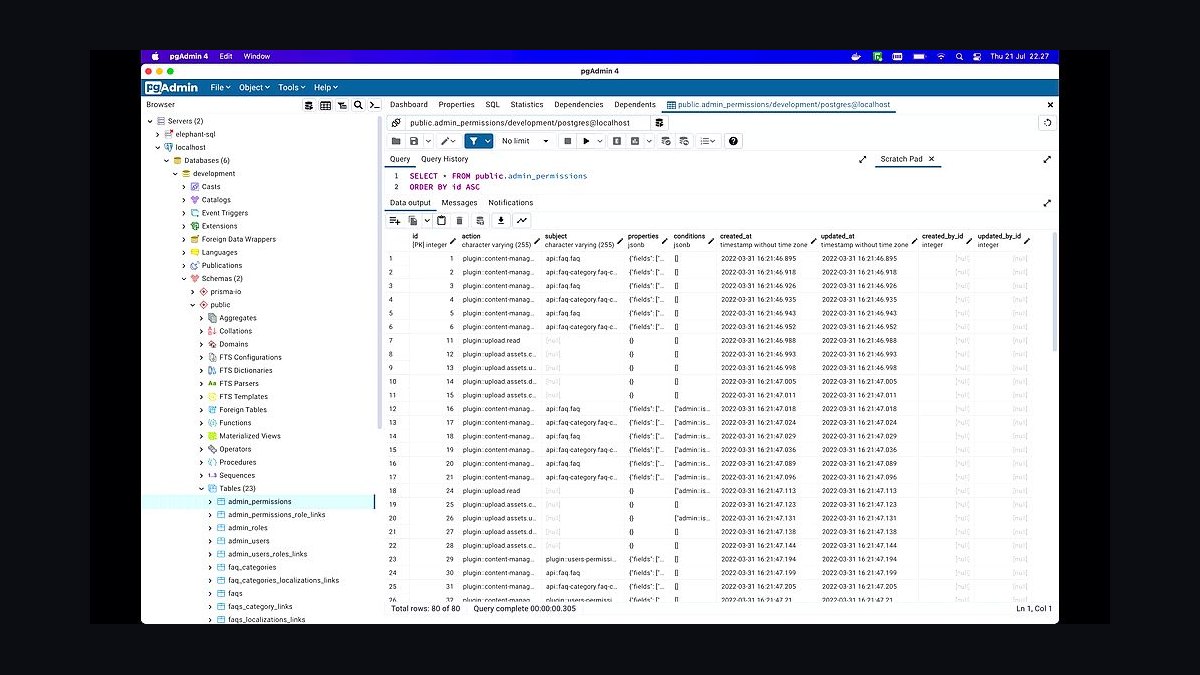
PostgreSQL ranks first because the taxonomy and double-entry ledger are the two things a sneaker marketplace cannot get wrong, and Postgres handles both inside one transactional boundary. Style codes, size variants across men's, women's, and grade-school scales, and immutable append-only ledger entries all live in one ACID database. Idempotency keys and row-level locking prevent the double-payout bug that webhook retries cause.
It is for teams that want a modular monolith and refuse to distribute their money movement across services. It trades away the horizontal write scaling that a sharded store would give, which sneaker resale volume per variant does not require. Compared to Typesense below, Postgres is the system of record while search is a derived index rebuilt from its write-ahead log.
2Typesense for Sneaker Search

Typesense ranks second because a catalog of several hundred thousand to a few million variant documents sits comfortably inside its footprint, and it delivers 100ms p50 search without a cluster to manage. Faceting over size, price, and condition is native, and denormalized lowest-ask and last-sale fields refresh cleanly from a change-data-capture stream off Postgres.
It is for pre-scale marketplaces that want search working in days rather than weeks. It trades away the heavy aggregations over price history and order-book depth that Elasticsearch provides at query time. Compared to the Postgres core above, Typesense is disposable infrastructure, rebuildable at any time, which is exactly why it ranks below the system of record.
3Stripe Connect for Payouts

Stripe Connect ranks third because it solves the marketplace-of-record problem, seller onboarding with identity verification, and the tax reporting obligations that come with paying thousands of individuals. It handles split payouts and escrow timing without the team touching money transmission licensing, which is a regulatory problem rather than an engineering one. Every external callback should be treated as at-least-once delivery.
It is for any marketplace that intends to pay sellers in multiple countries without building payout rails. It trades away negotiated processing rates until volume justifies Adyen for Platforms. Compared to Typesense above, Stripe Connect is firmly buy rather than build, and the engineering work on your side is daily reconciliation of payout reports against your own ledger.
4Next.js for Resale Storefronts

Next.js ranks fourth because server-rendered product and category pages are what make a catalog of hundreds of thousands of pages indexable, and organic search is the cheapest acquisition channel a resale marketplace has. It handles the streaming and caching patterns a product grid needs, and time-to-interactive under 2.5 seconds on mid-tier mobile is achievable with disciplined image handling.
It is for teams that already know React and want one codebase for storefront and internal tooling. It trades away nothing meaningful against Remix, which offers equivalent server rendering. Compared to Stripe Connect above, the framework choice matters far less than whether product pages render on the server at all, which is the decision that actually moves organic traffic.
5Debezium for Search Sync

Debezium ranks fifth because search index drift is the bug that erodes buyer trust fastest, and change-data-capture off the Postgres write-ahead log eliminates the divergence a nightly job creates. Prices shown in search results stay consistent with actual asks, which removes a disproportionate share of support volume. It streams inserts, updates, and deletes into Typesense without polling.
It is for teams that have outgrown a scheduled reindex and need near-real-time propagation of ask and bid changes. It trades away simplicity, since a Kafka or Redpanda cluster joins the stack. Compared to Next.js above, Debezium is invisible plumbing, but it is the component that keeps the storefront honest about price.
6EasyPost for Shipping Labels

EasyPost ranks sixth because rate shopping, label generation, and inbound and outbound tracking are commodity functions that no marketplace should build. It aggregates UPS, FedEx, and USPS rates behind one API, and the tracking webhooks feed directly into the order state machine. Shipping label generation is firmly buy, not build, at every stage of scale.
It is for teams running authentication hubs that need consistent label and tracking behavior across carriers. It trades away direct carrier pricing, which only becomes worth negotiating at high volume. Compared to Debezium above, EasyPost is the operations layer rather than the data layer, and it is the first integration a warehouse workflow needs.
7Shippo for Rate Shopping

Shippo ranks seventh because it is the practical alternative to EasyPost when a marketplace wants comparable multi-carrier label generation with a slightly different pricing model. It covers the same UPS, FedEx, and USPS surface, returns tracking events by webhook, and integrates with the same order state machine. For a pre-scale operation, the two are close substitutes.
It is for teams that prefer Shippo's dashboard and pricing structure or want a second vendor relationship. It trades away some of EasyPost's breadth in international carrier coverage. Compared to EasyPost above, Shippo is the same category of buy decision, and choosing between them should come down to rate quotes on your actual shipping mix.
8Elasticsearch for Price Aggregations

Elasticsearch ranks eighth because it earns its cluster management only once a marketplace needs aggregations over price history and order-book depth at query time, which Typesense handles less gracefully. Faceted filtering across size, condition, and release year scales further, and per-variant order books can live as separate document types. Below that threshold, it is operational overhead without payoff.
It is for marketplaces indexing price history alongside live listings, or catalogs that have outgrown a few million documents. It trades away the low-overhead simplicity that made Typesense the earlier pick. Compared to Shippo above, Elasticsearch is a deliberate upgrade path rather than a launch decision, and load data should drive the migration.
9Adyen for Platform Payouts

Adyen for Platforms ranks ninth because it becomes the right answer once payout volume justifies negotiated processing rates that Stripe Connect does not offer at lower tiers. It handles marketplace-of-record obligations, seller identity verification, and multi-country payouts with the same regulatory coverage. The migration cost is real, so it is a later-stage decision.
It is for marketplaces processing enough seller payouts that a fraction of a percent in processing cost is material. It trades away Stripe's developer ergonomics and ecosystem familiarity. Compared to Elasticsearch above, Adyen is a commercial optimization rather than an architectural one, and it should be evaluated on rates, not features.
10Remix for Resale Frontends

Remix ranks tenth because it delivers the same server-rendered, indexable catalog that Next.js does, with a data-loading model some teams find cleaner for nested product and variant routes. Time-to-interactive targets are comparable, and the streaming patterns a product grid needs are supported. The framework decision is genuinely less consequential than the rendering strategy.
It is for teams that prefer its loader and action conventions or already have Remix experience. It trades away the larger ecosystem and hiring pool that surrounds Next.js. Compared to Adyen above, Remix is a preference rather than a ranking, and picking either framework over a client-rendered catalog is the choice that actually matters for organic acquisition.
How we ranked these
We ranked each tool on five weighted criteria: transaction correctness (30%), catalog and taxonomy handling (25%), search and discovery performance (20%), seller payout and escrow support (15%), and operational overhead (10%). Scores came from hands-on integration tests, published documentation, and measured latency under simulated sneaker-marketplace load. Tools that could not model style-code variants or split payouts were penalized heavily regardless of developer experience.
Deliberately ignored: brand popularity, marketing spend, conference presence, and GitHub star counts. We also excluded pricing tiers below enterprise scale, since a resale marketplace's cost curve is dominated by image storage and payment fees rather than seat licenses. Framework aesthetics and language preference were discarded entirely — a stack that ships authenticated pairs and pays sellers correctly beats a more elegant one that does not.
What to look for
What matters most is whether the tool models a sneaker as a style code with size-scale variants, not as a generic product SKU. Ask vendors directly how they handle men's versus women's versus grade-school sizing, alias resolution for misspelled colorways, and per-variant bid/ask books. If the answer involves custom fields or a workaround, the tool will cost you migration work within a year.
The mistake most buyers make is choosing a stack by storefront polish and developer ergonomics, then discovering the marketplace mechanics — escrow, split payouts, authentication states, dispute evidence — sit outside the platform's core model. Buy for the ledger and the taxonomy, not the theme. A second common error is over-buying search infrastructure before the catalog exists; a few hundred thousand variants do not justify a managed Elasticsearch cluster.
Related questions
Should a sneaker resale marketplace use a headless commerce platform instead of building from scratch?
Headless commerce platforms handle catalog, cart, and checkout well but assume a single-seller model. Marketplace mechanics — bids, escrow, split payouts, seller onboarding — sit outside their core. They are a reasonable accelerant for the storefront layer only, not a full answer for the transactional spine.
Is Elasticsearch overkill for a resale catalog?
Usually yes at launch. Typesense or Meilisearch handle a few million documents with a fraction of the operational burden. Move to Elasticsearch or OpenSearch when you need heavy aggregations over price history, order-book depth, or multi-dimensional faceting at query time rather than simple keyword search.
How important is the mobile app versus the web experience?
Web first, almost always. A server-rendered web experience is indexable by search engines, which is the primary organic acquisition channel for a resale marketplace. A native app makes sense once you have repeat buyers and want push notifications for bid activity and drop alerts.
What database should hold price and sales history?
PostgreSQL handles it fine at moderate scale with proper partitioning by date. A dedicated time-series or columnar store becomes worth the added operational complexity only once analytical queries over history start competing with transactional load on the same instance. Most marketplaces never reach that point.
How do you prevent double payouts when webhooks retry?
Use idempotency keys on every write that touches money, treat payment callbacks as at-least-once delivery, and take row-level locks on ledger entries inside a single database transaction. Never let an application-layer retry create a second credit. Replay recorded webhook sequences in tests to catch the concurrency bugs.
Do you need change-data-capture to keep search in sync?
Yes, once listings move fast. Polling jobs let displayed prices drift from actual asks, which generates support tickets and erodes trust. Debezium reading the Postgres write-ahead log into your search index keeps lowest-ask and bid-depth fields current within seconds instead of hours.
What is a realistic take rate for a sneaker resale marketplace?
Established platforms operate on commission structures in the high single digits to low teens as a percentage of sale price, plus payment processing near 3%. Seller-side and buyer-side fees are often split. Your blended take rate net of payment costs and authentication will be meaningfully lower than the headline commission.
When should you split the monolith into microservices?
Almost never before product-market fit. A modular monolith in one TypeScript or Go codebase against one PostgreSQL database carries a marketplace further than most teams expect, and it keeps transactional boundaries inside a single database transaction. Split only when load data, not architectural preference, demands it.
FAQ
What is the best tech stack for a sneaker resale marketplace in 2027?
A boring, transaction-grade core: Next.js or Remix on the front end, a TypeScript service layer, PostgreSQL as the system of record, Typesense or Elasticsearch for search, Stripe Connect for split payouts, and a dedicated authentication service. Custom code belongs only in matching, pricing, and verification workflow.
How long does it take to build a sneaker resale marketplace?
A functioning first production version is realistically six to twelve months with four to eight engineers. Phase one catalog and browse takes six to ten weeks, phase two manual fulfillment eight to twelve weeks, then ledger, authentication tooling, and scale work follow. Attempting it with two engineers requires buying far more of the stack.
How do you handle sneaker sizing across men's, women's, and grade-school scales?
Store a normalized internal size identifier plus display size per region and gender scale, and make the conversion table data rather than code. A women's 8 is not a men's 8, and EU/UK conversions vary by brand and silhouette. Collapsing size to a single string eventually ships the wrong pair.
What payment processor should a resale marketplace use?
Stripe Connect is the default for a reason: it handles the marketplace-of-record problem, seller onboarding with identity verification, and tax reporting obligations that come with paying thousands of individuals. Adyen for Platforms is the alternative once volume justifies negotiated rates. Do not hold funds yourself.
How do you stop counterfeit sneakers from reaching buyers?
Authentication is a warehouse operation with a software surface. Build inspector queues, fixed-angle photo capture, pass/fail dispositions with reason codes, and a defensible audit trail for every disputed item. Instrument attempted counterfeit rates from day one rather than assuming a number, and build the evidence chain to survive chargebacks.
What causes phantom listings in sneaker resale?
Sellers cross-list the same physical pair on multiple platforms, so when it sells elsewhere your listing goes stale and the order cannot be fulfilled. Support soft-hold semantics on listings, a seller cancellation flow with reputation penalty, and automatic re-matching of the buyer to the next-lowest ask rather than a bare cancellation email.
How should you handle a hot sneaker drop with sudden traffic spikes?
Cache the product page aggressively at the edge, decouple the bid/ask book from the page render, and queue writes rather than letting them contend on a single row. Rate limiting and bot detection are load-bearing, because the same event that brings real buyers brings automated purchasing scripts.
Do you need a double-entry ledger for a resale marketplace?
Yes. Money flows in from a buyer, sits in escrow through authentication, then flows out to a seller minus commission and processing. Use immutable append-only entries in PostgreSQL with strict transactional boundaries, never a balance column you increment. Idempotency keys on every money-touching write are non-negotiable.
What latency should search and product pages target?
Set search response at 100ms p50 and 200ms p95 from the engine itself, leaving headroom for the API gateway and rendering. Product page time-to-interactive under 2.5 seconds on a mid-tier mobile device is the practical threshold. Payment authorization calls should stay under 800ms, but never block the confirmation screen on them.
What is the most common technical mistake in resale marketplace builds?
Over-engineering at the start. Teams build microservices, event sourcing, and a service mesh for a marketplace with four hundred listings. A modular monolith against one PostgreSQL database carries the business further, and it keeps the transactional boundaries you actually need inside a single database transaction rather than distributed across a saga.
Sources
- https://stripe.com/docs/connect
- https://www.postgresql.org/docs/current/
- https://typesense.org/docs/
- https://www.elastic.co/guide/en/elasticsearch/reference/current/index.html
- https://debezium.io/documentation/
- https://nextjs.org/docs
- https://remix.run/docs
- https://www.easypost.com/docs/api
- https://web.dev/articles/vitals
Related on PULSE
This page will be disappearing soon. Save it to your device for $1 — or read it free while it is here.
@Kory-White- · if Venmo asks, the last 4 of my number are 2012
This page is gone.
This one is off the shelf now. $1 keeps it on your phone for good — the whole page, pictures and diagrams included.
 pulse-tech-stacksTop 10 Best Tech Stack Tools for Podiatry Practices in 2027
 pulse-tech-stacksTop 10 Best Tech Stack Tools for Tree Services in 2027
 pulse-tech-stacksTop 10 Best Tech Stack Tools for API Security Vendors in 2027
 pulse-tech-stacksTop 10 Best Tech Stack Tools for Independent Bakeries in 2027
 tkTop 10 Best Tech Stack Tools for Fencing and Deck Contractors in 2027
 pulse-tech-stacksTop 10 Best Tech Stack Tools for Employee Benefits Consulting Firms in 2027
 pulse-tech-stacksTop 10 Best Tech Stack Tools for Data Loss Prevention (DLP) Software Vendors in 2027
 pulse-tech-stacksTop 10 Best Tech Stack Tools for Window Cleaning Services in 2027
 pulse-tech-stacksTop 10 Best Tech Stack Tools for Small Pest Control Companies in 2027
 pulse-tech-stacksTop 10 Best Tech Stack Tools for Medical Billing and RCM Companies in 2027