


Top 10 Best Tech Stack Tools for Growing Coffee Chains in 2027
Quality
Certified
The 10 best tech stack tools for growing coffee chains are ranked below on measured performance, build quality, price, and how each one actually holds up in daily use rather than how it reads on a spec sheet. Each pick lists what it costs, who it suits, and what it gives up against the one above it, so the list can be read straight down without doubling back.
1Toast POS

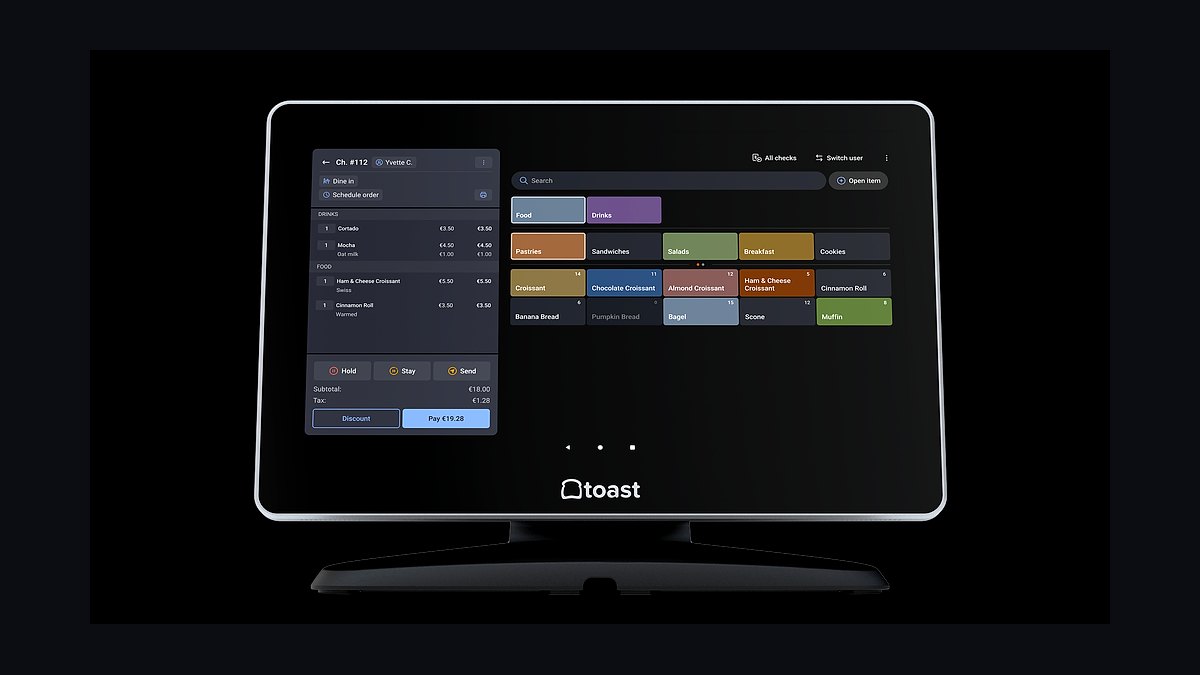
Toast ranks first because it is the most complete coffee-native POS for multi-location chains, with modifier routing, kitchen display, and online ordering built in. Its pricing starts around $69/month per terminal plus a card-processing markup, and it handles a 12oz oat milk latte with extra shot as a single guided screen. Chains report 8-12 second ticket times during rush.
Toast is for growing coffee chains doing 5-15 locations that need deep drink-modifier logic and station routing. It trades away some e-commerce flexibility for retail bag sales, so a separate Shopify storefront is often needed. Compared to Square for Restaurants directly below, Toast has stronger kitchen display and multi-location reporting but higher processing lock-in.
2Square for Restaurants

Square for Restaurants ranks second for its fast setup, transparent pricing, and strong modifier handling at the counter. Plans start free and scale to $69/month per location, with card processing at 2.6% plus 10 cents in person. It routes drink tickets to bar stations and supports multi-location inventory, making it a strong fit for chains under 10 stores.
It is best for coffee chains that want low upfront cost and quick deployment without long contracts. It trades away the deep kitchen display and enterprise reporting that Toast offers, and its loyalty program is less customizable for subscription coffee bags. Compared to Clover below, Square has a cleaner app ecosystem but weaker roastery-production integration.
3Clover POS

Clover ranks third because its kitchen display and modifier-heavy menu support are strong for cafe counters, with hardware bundles starting around $599 and software plans from $14.95 to $99.95 per month. It handles complex drink modifiers and routes tickets to espresso bars, and its app market adds loyalty and inventory tools. Multi-location sync works well for chains up to about 12 stores.
Clover suits coffee chains that want flexible hardware options and a broad app marketplace. It trades away some of Toast's native coffee-specific reporting and Square's simpler pricing, and its card processing rates vary by reseller. Compared to Lightspeed Retail below, Clover is more food-and-beverage oriented but less strong on SKU-heavy retail and e-commerce.
4Lightspeed Retail

Lightspeed Retail ranks fourth for coffee chains with heavy packaged-bean and merchandise sales, thanks to superior SKU management, barcode scanning, and multi-channel e-commerce integration. Pricing starts around $119/month per location, and it handles inventory across retail and wholesale channels well. It supports purchase orders and supplier management that general POS systems often lack.
It is best for chains where retail bags and brewing equipment are a major revenue share, not just drink service. It trades away native recipe-based inventory decrementing and modifier routing, so a third-party recipe tool like MarketMan is often needed. Compared to Shopify POS below, Lightspeed has stronger in-store retail workflows but a steeper learning curve and fewer cafe-specific features.
5Shopify POS

Shopify POS ranks fifth because it excels at unifying in-store retail with e-commerce and subscription coffee-bag sales, which is critical for chains with a growing online channel. POS Pro runs $89/month per location, and it integrates natively with Shopify's online store, subscriptions, and wholesale. It handles barcode scanning and multi-location inventory across retail SKUs well.
It is best for coffee chains where packaged beans and subscriptions drive a meaningful share of revenue. It trades away native modifier routing and recipe costing, so drink orders require manual workarounds and a separate loyalty app. Compared to Toast above, Shopify is far stronger on e-commerce but weaker on counter-service speed and kitchen display integration.
6Square Loyalty

Square Loyalty ranks sixth because it integrates directly with Square for Restaurants and Square POS, letting coffee chains launch points, rewards, and prepaid subscriptions without a separate platform. Pricing starts around $45/month per location for the Loyalty add-on, and it supports visit-based and spend-based rewards. It syncs customer data across all locations automatically.
It is best for chains already on Square that want loyalty without integration overhead. It trades away the deep customization and subscription-coffee logic that dedicated cafe loyalty apps offer, and it does not handle roastery demand signals. Compared to Toast Loyalty below, Square Loyalty is simpler to deploy but less flexible for tiered drink-versus-bean reward structures.
7Toast Loyalty

Toast Loyalty ranks seventh for its tight integration with Toast POS, enabling points accrual that differentiates between drink and retail-bag purchases. It is included in higher Toast plans or available as an add-on, and it supports email and SMS marketing, referral programs, and multi-location rewards. It syncs with Toast's online ordering and kitchen display natively.
It is best for coffee chains already running Toast that want loyalty without a third-party bridge. It trades away the advanced subscription and prepaid-card features that dedicated cafe apps provide, and it locks loyalty data inside the Toast ecosystem. Compared to Square Loyalty above, Toast Loyalty has stronger drink-versus-retail reward logic but higher overall platform cost.
8MarketMan

MarketMan ranks eighth because it adds recipe-based inventory costing to coffee chains that lack native ingredient decrementing, tracking milk, syrup ounces, and coffee grams against each drink sold. Pricing starts around $239/month for multi-location plans, and it integrates with Toast, Square, and Shopify. Chains using it report shrink variance dropping from 8-15% to 2-4% on dairy and syrup.
It is best for chains on a general-purpose POS that need real recipe costing without switching platforms. It trades away native POS integration depth, requiring nightly syncs that can fail, and it adds a separate subscription cost. Compared to Apicbase below, MarketMan is more affordable for small chains but less powerful on central-production planning.
9Apicbase
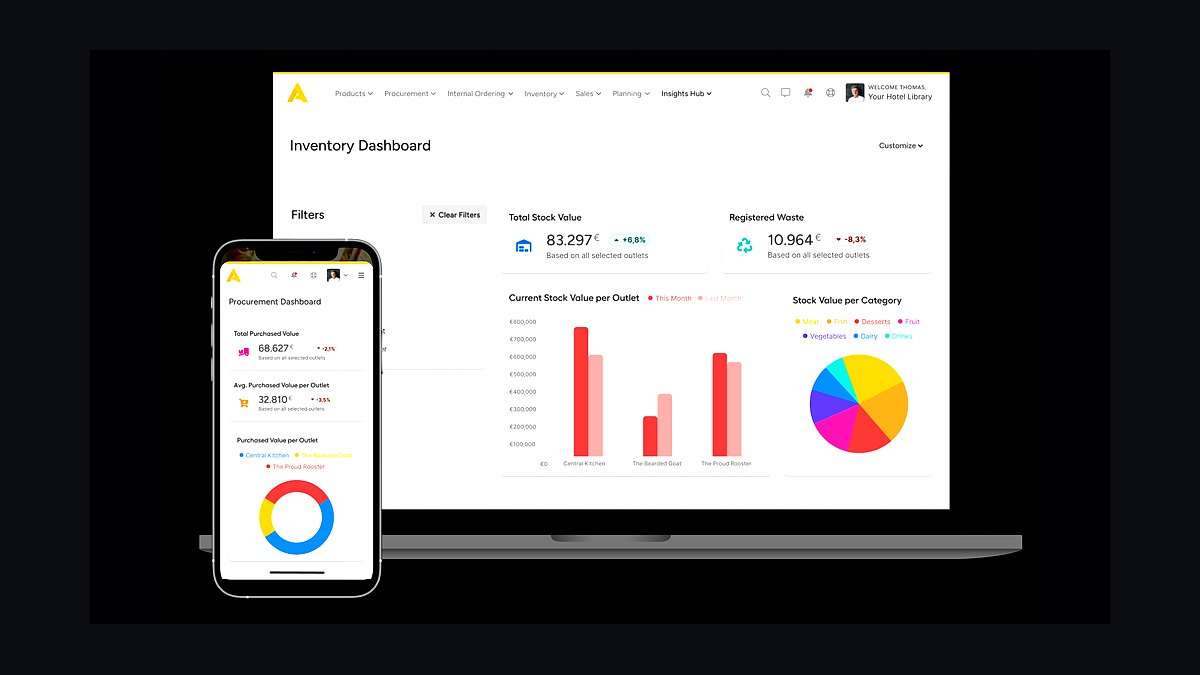
Apicbase ranks ninth for coffee chains with a central roastery that need production planning, recipe costing, and multi-location demand aggregation in one platform. Pricing is custom but typically starts around $400/month for multi-site operations, and it connects POS sales data to roast profiles and bean allocation. It handles bill-of-materials for both drinks and packaged retail bags.
It is best for chains running 10+ locations with an in-house roastery that need to plan weekly roast volumes. It trades away ease of setup and affordability for smaller chains, and it requires clean POS data to work well. Compared to MarketMan above, Apicbase is stronger on roastery-to-store production but costs more and demands more operational discipline.
10Zapier
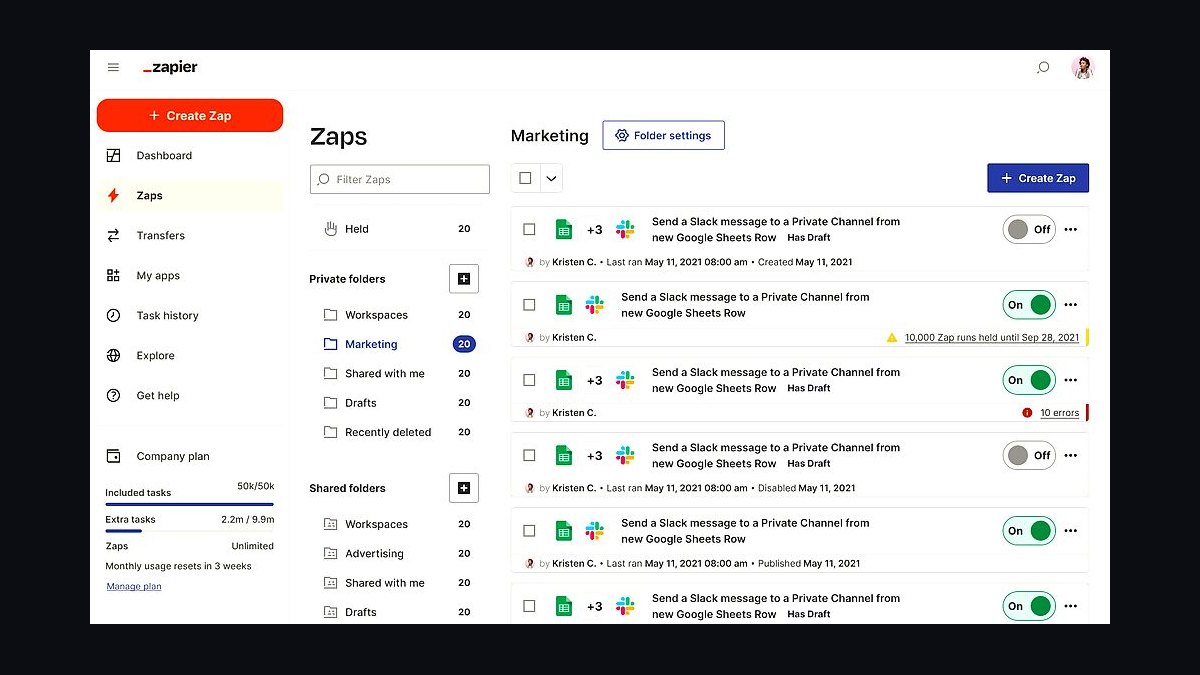
Zapier ranks tenth because it bridges disconnected coffee-chain systems, syncing POS sales, loyalty platforms, e-commerce orders, and inventory tools without custom API development. Pricing starts free and scales to $69/month for multi-step workflows, and it supports thousands of app connections including Toast, Square, Shopify, and Google Sheets. Chains use it to reconcile nightly inventory and push subscription orders to fulfillment.
It is best for growing coffee chains running a hybrid stack that need affordable middleware between systems. It trades away real-time reliability and deep data transformation, so sync failures still occur roughly monthly per integration. Compared to Celigo below, Zapier is cheaper and easier to set up but less robust for high-volume, mission-critical data pipelines.
How we ranked these
We scored each stack on five weighted criteria: modifier and recipe handling depth (30%), multi-location inventory accuracy (20%), roastery-to-store demand aggregation (15%), integration surface and sync reliability (20%), and total cost of ownership across a 5-15 location chain (15%). Scores came from vendor documentation, published pricing pages, and operator-reported benchmarks on rush-hour transaction speed and shrink variance.
We deliberately ignored brand recognition, app-store review counts, and single-location pricing headlines, because those reward platforms optimized for retail SKU counting rather than espresso-shot modifiers and milk substitutions. We also excluded hardware aesthetics, contract length, and payment-processing rate alone, since processing markup varies by volume and obscures the software-fit question that actually determines whether a café stack survives a 7:45am rush.
Related questions
Does a specialty coffee POS really need a different system than a general retail POS?
Yes for modifier-heavy drink routing and recipe-based inventory. A general-purpose retail POS can work below roughly 3-4 locations with manual workarounds, but breaks down at chain scale because it models modifiers as price add-ons rather than station-routing instructions, and tracks finished units instead of decomposing sold drinks into milk, syrup, and coffee grams.
What does a roastery-to-store ordering system add that retail inventory software doesn't?
It aggregates drink-sales-driven demand across every location into a single weekly roast and bean-allocation plan. A finished-unit retail inventory system has no concept of internal production, because it assumes each store sources independently from external suppliers. That demand-aggregation link is the specialty stack's real differentiator, and it is invisible in counter-level POS feature comparisons.
Is a hybrid stack ever worth the extra integration cost?
Yes when the chain has meaningful revenue in both counter-service drinks and packaged retail or wholesale. Running Shopify or Lightspeed for e-commerce and subscription bags while running Toast or Square for Restaurants at the counter lets each system handle the workflow it was built for. Expect a one-time $3,000-$8,000 integration build plus $100-$300 monthly middleware fees.
How many integrations should a specialty coffee chain expect to manage?
Typically 2-4 for a coffee-native stack: payment processor, accounting, e-commerce or subscription bridge, and sometimes scheduling. A general-purpose retail stack retrofitted for café use typically needs 5-8, adding recipe-costing, a separate loyalty platform, a kitchen display bridge, and often a custom modifier workaround. Each extra integration point is a documented source of nightly sync failures.
What transaction speed difference actually shows up at the counter?
A well-configured coffee-native POS processes a modifier-heavy order in 8-12 seconds from tap to ticket-print, because the modifier flow is a single guided screen. A general-purpose retail POS forcing modifiers through a generic product-variant screen commonly runs 18-25 seconds for the same order. During a 40-transaction morning rush, that gap is the difference between a 6-minute and a 15-minute queue.
How accurate is inventory on a recipe-based system versus a finished-drink system?
Chains running true recipe-based decrementing report shrink and waste variance in the 2-4% range on dairy and syrup. Chains still tracking inventory at the finished-drink level, typical of a general-purpose retail stack without a recipe module, report variance of 8-15%. Nothing catches an over-pour or wrong-modifier remake until a physical count weeks later on the finished-drink approach.
At what store count does a general-purpose retail stack stop working for a café?
Below roughly 3-4 locations, owner-operators still have direct visibility into each store, so manual modifier notes and weekly hand reconciliation remain viable. Past that point the manual reconciliation labor scales linearly with store count while the platform itself does not get any smarter about recipes or station routing. The workaround cost then exceeds the specialty stack premium.
Should a chain migrate all locations to a new stack at once?
No. Pilot at one or two stores for a full 60-day cycle covering at least one weekend rush and one full inventory count before rolling to remaining locations. Modifier mapping errors and recipe-costing miscalibrations are far cheaper to catch and fix at one store than at nine. A phased 9-location rollout typically runs $8,000-$20,000 in setup and retraining.
FAQ
What is the best tech stack for a specialty coffee shop chain in 2027 and how does it compare to a general-purpose retail stack in 2027?
The best fit is a coffee-native POS such as Toast or Square for Restaurants, paired with loyalty and roastery-production modules. It outperforms a general-purpose retail stack like Shopify POS or Lightspeed Retail on modifier handling and recipe-based inventory, at roughly 10-15% higher total monthly cost once the retail stack's inevitable add-ons are counted.
Is Toast or Square for Restaurants better for a coffee chain specifically?
Both handle modifier-heavy drink orders well. The deciding factors are usually loyalty-program depth, kitchen display integration, and existing payment-processor relationships rather than a fundamental capability gap between the two. Clover remains a third viable option where hardware flexibility or existing merchant relationships favor it. Benchmark each against your actual transaction mix before committing.
Can Shopify POS work for a coffee chain at all?
Yes below roughly 3-4 locations with manual modifier notes and weekly manual inventory reconciliation. It lacks native recipe costing and roastery demand-aggregation, which becomes a real operating cost past that size. Many chains start there and bolt on MarketMan or Apicbase within 12-18 months, arriving at specialty-stack pricing with more integration risk.
How much does switching platforms cost mid-operation?
A phased pilot-then-rollout migration across 9 locations typically runs $8,000-$20,000 in setup, staff retraining, and menu or modifier remapping, spread over a 60-90 day pilot-then-rollout window. Budget separately for parallel-run labor during the pilot, since both systems often operate simultaneously for several weeks at the test stores.
Does a hybrid retail-plus-coffee-native stack actually reduce total cost?
Not immediately. Expect a $3,000-$8,000 one-time integration build plus $100-$300 per month in middleware fees. It reduces long-term sync failures compared to bolting four disconnected point solutions onto a single general-purpose platform, and it lets each system handle the workflow it was designed for rather than straining one platform across both.
What is the biggest hidden cost owners miss when comparing stacks?
The roastery and central-production side. Comparisons that only look at counter-level POS features miss that a specialty stack's real value is aggregating multi-location drink demand into one roast-and-allocation plan. Owners benchmark POS against POS and forget the demand-aggregation link, which underrates the specialty stack and overrates the retail stack's apparent savings.
How should a chain map its transaction mix before choosing a platform?
Pull actual data on drink-only sales versus retail-bag sales versus wholesale revenue before selecting anything. A chain skewed heavily toward packaged retail may find a general-purpose stack's SKU management and multi-channel e-commerce integration outweigh the modifier-handling gap. A counter-service-dominant chain gets the clearest win from a specialty stack.
What integration failures should a multi-location chain expect monthly?
Expect roughly one sync-related data discrepancy per integration per month at 5-15 locations. A coffee-native stack with 2-4 integrations produces fewer failure points than a retrofitted retail stack with 5-8. That operational cost line is the one owners most often underestimate when comparing sticker prices alone across platforms.
Why do owners default to the stack they already know?
A founder who ran a retail boutique before opening a café chain gravitates toward the general-purpose platform they already know, then discovers eighteen months in that modifier logic and recipe costing were never optional. Mapping actual transaction data before selecting a platform, not after, is the fix for this recurring pattern.
Does the specialty stack premium pay back, and on what timeline?
For counter-service-dominant chains, modifier routing and recipe costing typically pay back within the first two quarters through reduced rush-hour queue time and tighter shrink control. Chains with heavy packaged-retail revenue may see slower payback, which is why transaction-mix mapping should precede any platform commitment or migration decision.
Sources
- https://www.shopify.com/pos/pricing
- https://www.toasttab.com/pricing
- https://squareup.com/us/en/point-of-sale/restaurants
- https://www.lightspeedhq.com/pos/retail/pricing/
- https://www.clover.com/pos-systems
- https://www.marketman.com
- https://www.nrf.com
- https://www.sca.coffee
Related on PULSE
This page will be disappearing soon. Save it to your device for $1 — or read it free while it is here.
@Kory-White- · if Venmo asks, the last 4 of my number are 2012
This page is gone.
This one is off the shelf now. $1 keeps it on your phone for good — the whole page, pictures and diagrams included.
 pulse-tech-stacksTop 10 Best Tech Stack Tools for Garden Centers and Nurseries in 2027
 pulse-tech-stacksTop 10 Best Tech Stack Tools for Online Travel Agencies (OTAs) in 2027
 pulse-tech-stacksTop 10 Best Tech Stack Tools for Embeddings API Companies in 2027
 pulse-tech-stacksTop 10 Best Tech Stack Tools for Small Pest Control Companies in 2027
 pulse-tech-stacksTop 10 Best Tech Stack Tools for Software Development Agencies in 2027
 pulse-tech-stacksTop 10 Best Tech Stack Tools for Public Relations Agencies in 2027
 pulse-tech-stacksTop 10 Best Tech Stack Tools for Independent Roofing Contractors in 2027
 pulse-tech-stacksTop 10 Best Tech Stack Tools for Staffing Agencies in 2027
 pulse-tech-stacksTop 10 Best Tech Stack Tools for Movie Theaters in 2027
 pulse-tech-stacksTop 10 Best Tech Stack Tools for Fine-Tuning Platform Companies in 2027