


Top 10 Best Tech Stack Tools for Health Clubs and Gyms in 2027
Quality
Certified
The 10 best tech stack tools for health clubs and gyms are ranked below on measured performance, build quality, price, and how each one actually holds up in daily use rather than how it reads on a spec sheet. Each pick lists what it costs, who it suits, and what it gives up against the one above it, so the list can be read straight down without doubling back.
1ABC Fitness Solutions ABC Ignite
ABC Ignite ranks first because it is the industry's default club management spine, powering more than 9,300 locations and 26 million members. It handles the mechanics generic SaaS cannot: monthly EFT dues, annual fees, freeze-and-reactivate cycles, family add-ons, prorations, and the failed-payment retry ladder. Mid-market pricing runs roughly $200-$600 per location per month, custom-quoted at chain scale.
It is built for big-box and multi-location operators running membership-advisor sales floors, not single-studio independents. The trade-off is cost and implementation weight: a 90-day migration is realistic, and the interface favors front-desk throughput over boutique polish. Mariana Tek below it wins on booking UX for premium studios, but ABC wins on enterprise reporting, access control, and dues recovery at scale.
2Mariana Tek

Mariana Tek ranks second as the premium-boutique club management platform, used by F45-adjacent studios and high-end indoor cycling brands. Its class booking enforces hard capacity ceilings tied to equipment count, instructor availability, and waitlists, with hold windows and late-cancel penalties. Pricing runs roughly $300-$700 per studio per month, placing it above Mindbody's entry tier.
It fits reformer Pilates, HIIT, and cycling formats where booking UX drives retention, not big-box dues volume. The trade-off is enterprise depth: cross-club reporting and access control lag ABC Ignite above it, and it costs more than Mindbody below. Chains past roughly 20-30 locations typically graduate to ABC once franchise-level reporting becomes the priority.
3Mindbody
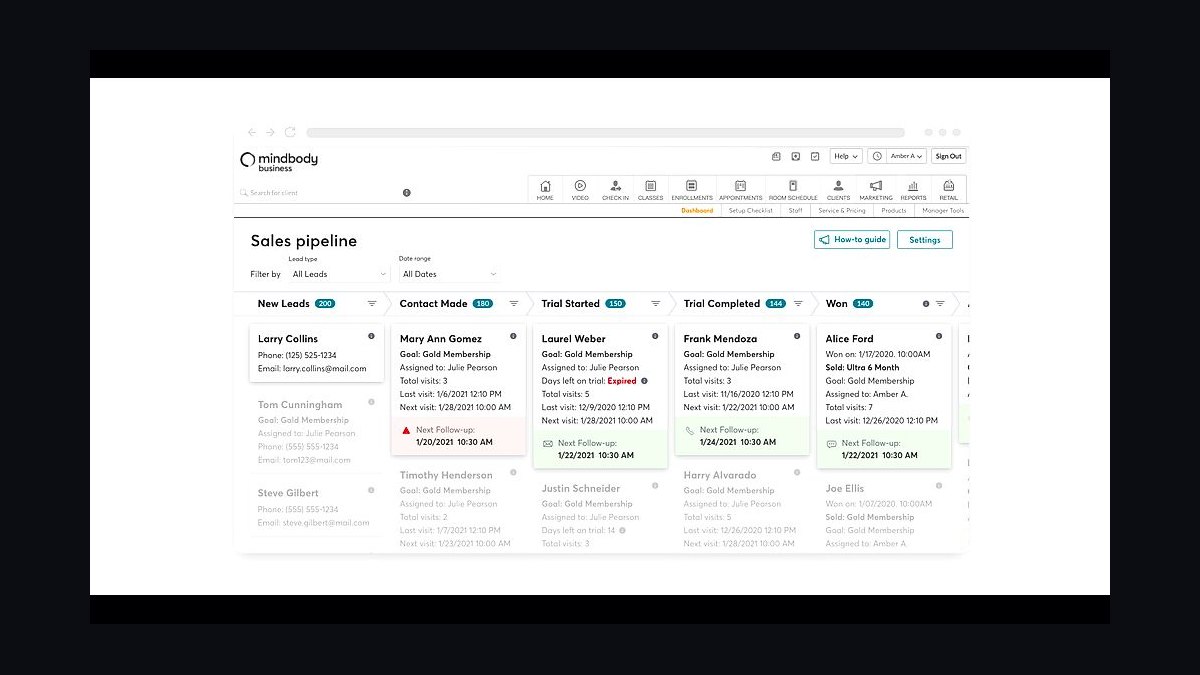
Mindbody ranks third as the widest-adopted boutique platform, starting near $139 per month and tiering to about $599 per month. It covers booking, retail, and appointments across yoga, barre, and mixed-modality studios, with native ClassPass integration and an embedded processing option that tightens the dunning loop. Its marketplace exposure gives small studios demand they could not generate alone.
It suits single-location and small-chain studios that want one system for classes, retail, and payments without enterprise overhead. The trade-off is depth at scale: reporting and multi-location controls are thinner than Mariana Tek above it, and dues mechanics are less configurable than ABC Ignite. Operators past roughly 20 locations usually outgrow it.
4ABC GymSales
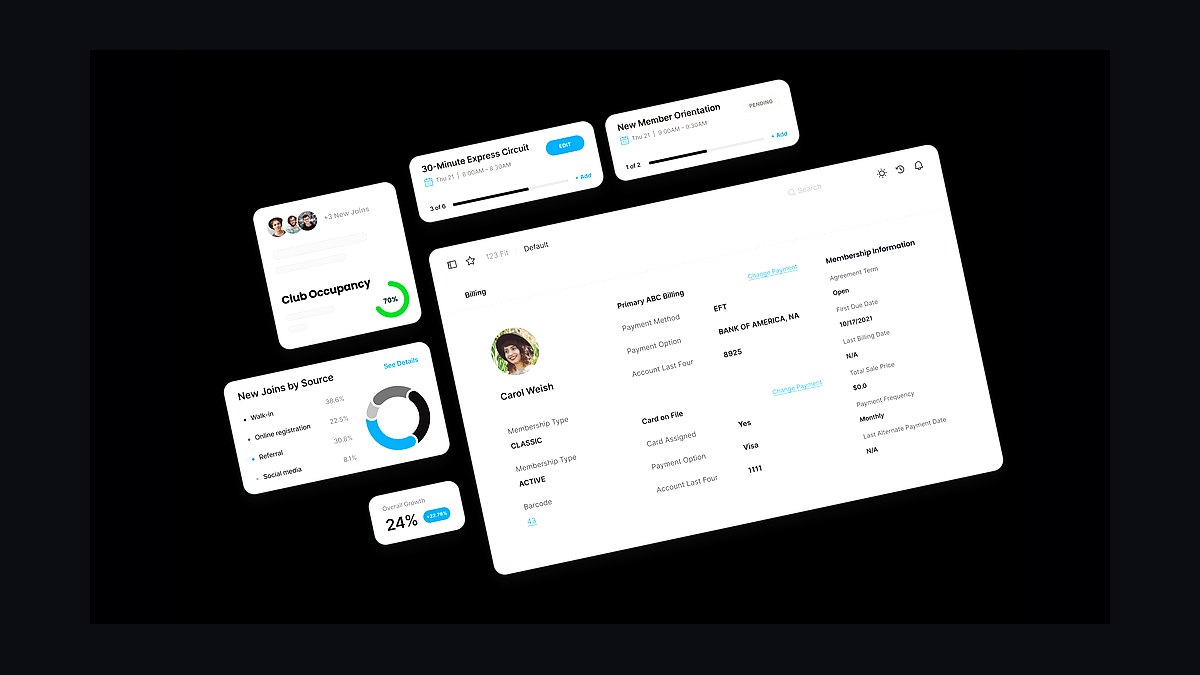
GymSales ranks fourth because the membership-advisor sales floor is where health clubs actually close revenue, and generic CRMs do not speak "tours run today." It runs lead lists, tour-booked tracking, follow-up cadences, and rep leaderboards, then hands a signed contract to ABC Ignite without re-keying. Budget roughly $60-$120 per user per month.
It is for chains running daily tour quotas and dialer cadences, not self-serve digital signups. The trade-off is narrowness: it is a sales tool, not a marketing platform, so lifecycle email still needs Klaviyo. Against HubSpot below it, GymSales wins on tour-to-membership conversion tracking; HubSpot wins when the chain wants marketing automation under one roof.
5ClassPass
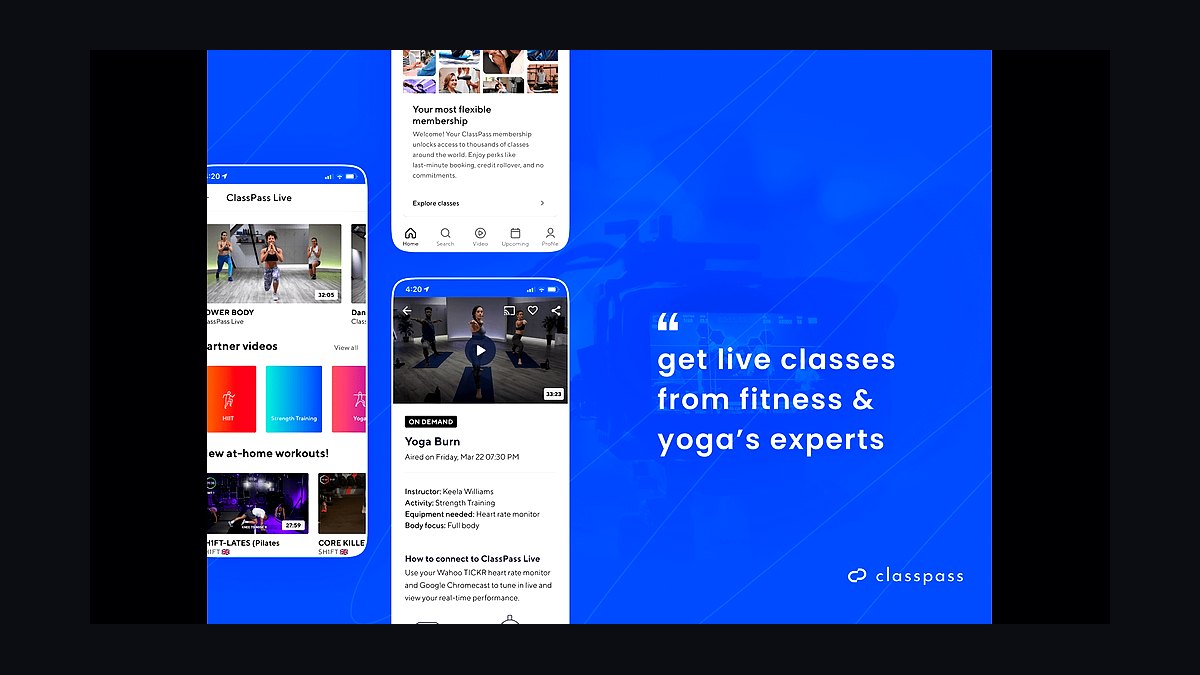
ClassPass ranks fifth as the off-peak fill engine, routing consumer marketplace bookings into participating clubs at no monthly SaaS fee. Studios net roughly $5-$15 per reservation, with native integration into Mindbody, Mariana Tek, and ABC. It fills 6:15 AM and 2:00 PM classes that would otherwise run near 40% capacity.
It is for operators treating empty inventory as yield, not for chains chasing primary revenue. The trade-off is cannibalization risk: leaning on ClassPass for prime-time slots trains members to wait for marketplace pricing and erodes full-price dues. Against Stripe below it, ClassPass adds demand while Stripe captures money; neither replaces the club management spine above them.
6Stripe
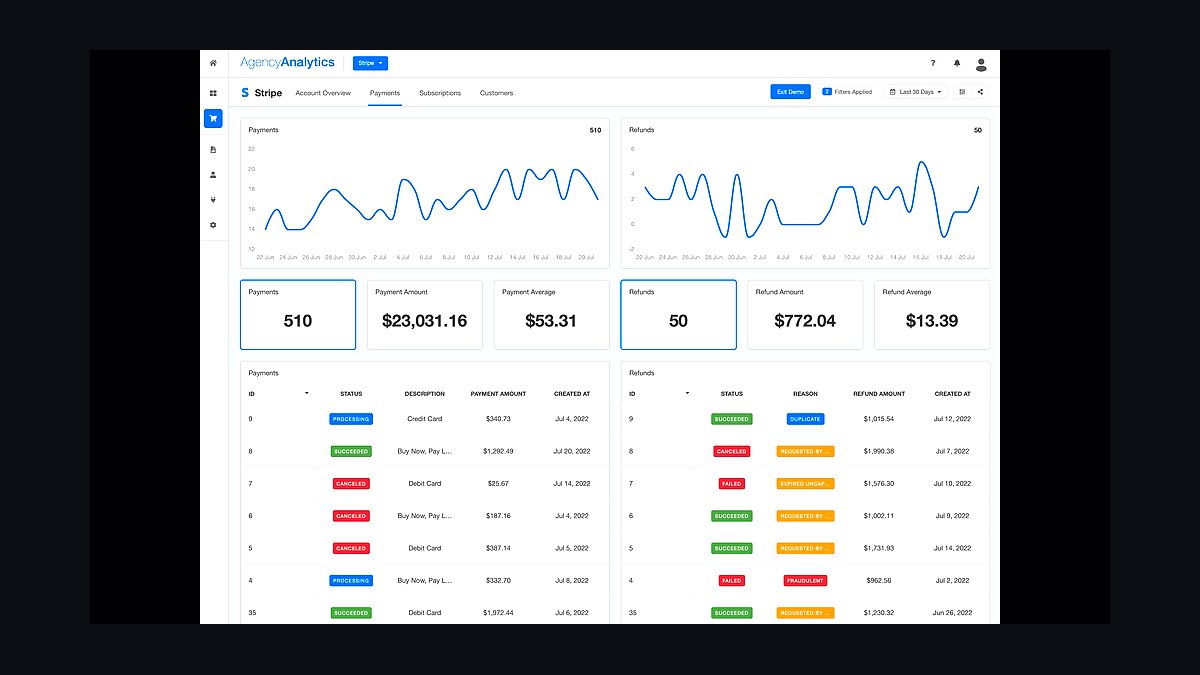
Stripe ranks sixth because dues recovery is the single biggest financial lever in a club, and its retry ladder recovers failed payments that generic billing misses. Card transactions run 2.9% plus $0.30, with volume discounts above roughly $80,000 per month. It handles card-on-file, ACH for monthly dues, and dispute management across every revenue line.
It is for chains that want one processor across dues, retail POS, app purchases, and corporate-wellness invoicing. The trade-off is integration depth: ABC Ignite and Mindbody embedded processing recover payments with tighter native hooks, so Stripe wins mainly when the operator has engineering bandwidth to own the retry logic. ClassPass above it fills classes; Stripe collects the money.
7Klaviyo
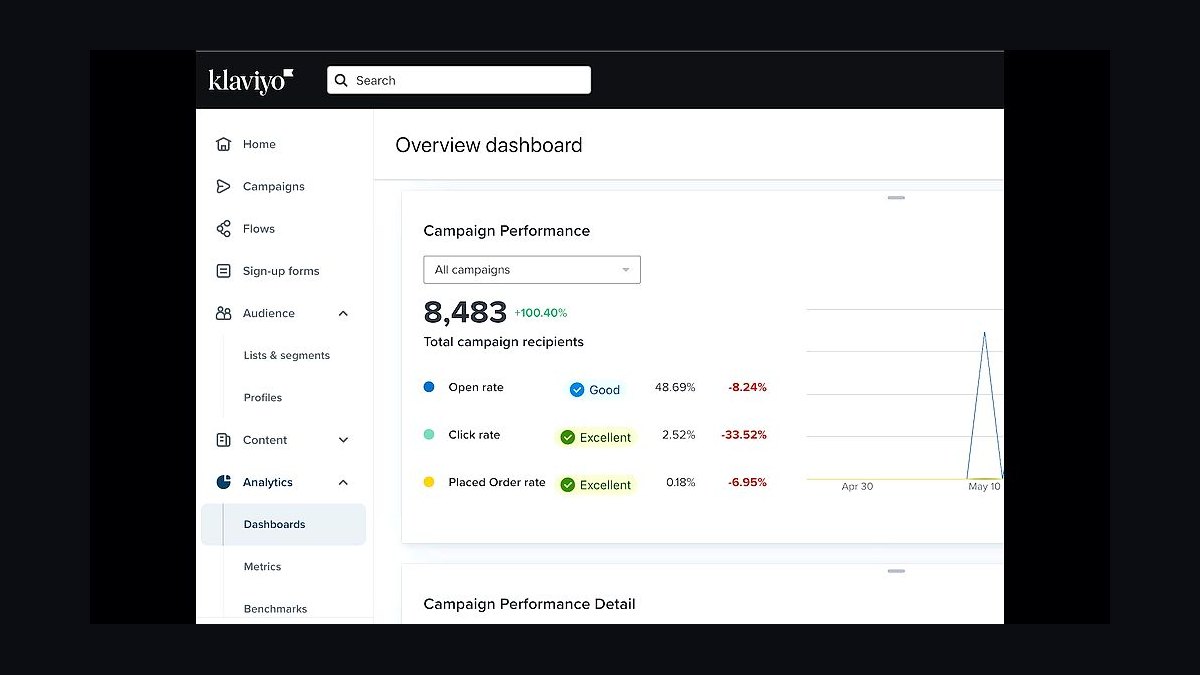
Klaviyo ranks seventh as the lifecycle email engine, running welcome series, freeze-recovery flows, win-back campaigns, and class reminders at roughly $45-$1,700+ per month depending on contact volume. It connects to the member record so a usage drop triggers outreach rather than a generic newsletter. BounceX handles chain-scale behavioral on-site messaging at $4,000-$15,000 per month.
It is for operators who treat retention as a flow problem, not a phone-call problem. The trade-off is that it does not touch billing or booking, so it depends entirely on clean data from ABC Ignite or Mindbody above it. Against Looker below it, Klaviyo acts on member signals while Looker only reports them.
8Looker
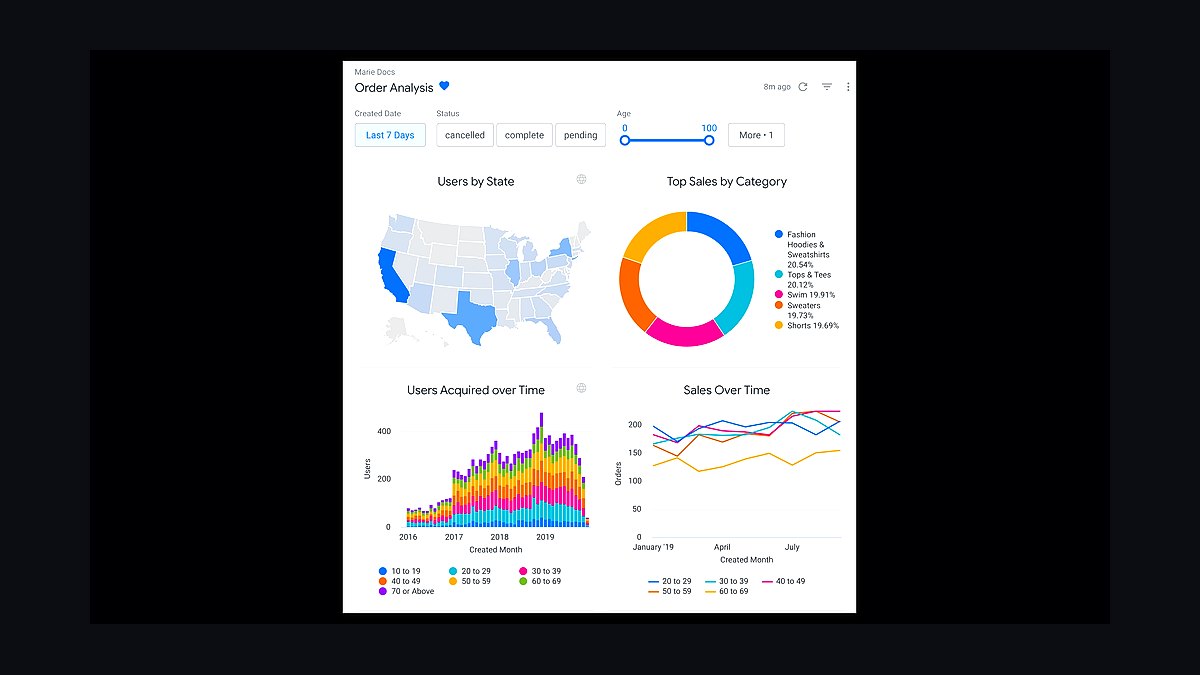
Looker ranks eighth because no single system shows dues yield, attrition, class fill rate, ancillary revenue, and labor cost together. It pulls from ABC Ignite, GymSales, Stripe, and the POS into one cross-club dashboard at roughly $5,000+ per month for the Looker Platform tier. Tableau Creator at about $75 per user per month is the operator-floor alternative.
It is for regional directors and owners managing more than a handful of locations, not single-site operators. The trade-off is cost and setup: it requires clean data contracts from every upstream system, and a broken GymSales-to-ABC handoff produces a broken dashboard. Against Klaviyo above it, Looker diagnoses the retention problem while Klaviyo executes the fix.
9ADP Workforce Now
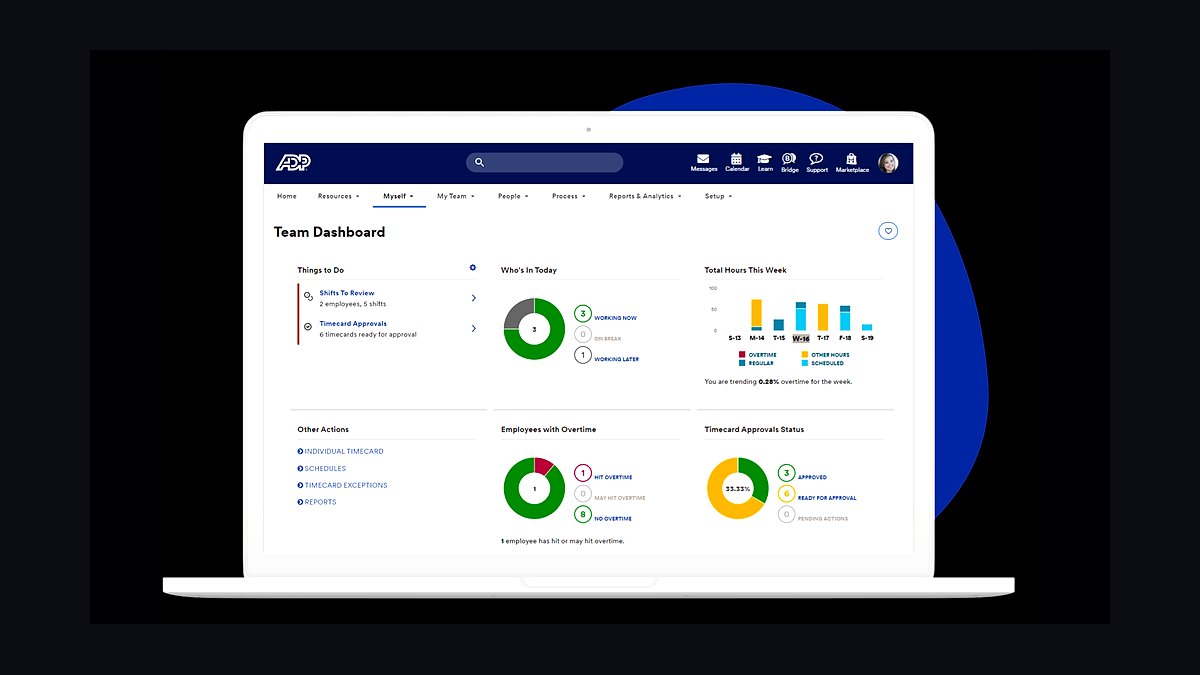
ADP Workforce Now ranks ninth as the HR and payroll default at regional and national chains, covering trainers, front-desk staff, group-fitness instructors, and salaried managers. It handles payroll, benefits, certification tracking, and shift management in one system built for hourly workforces with high turnover. Rippling at $8-$40 per employee per month is the digitally-native alternative.
It is for chains past roughly 50 employees where certification expiry and shift coverage become compliance problems. The trade-off is rigidity: ADP's interface and change cycles frustrate lean operators, and Rippling below it wins on device provisioning and software access unified with HR. Against Looker above it, ADP runs the people layer while Looker reports on the business.
10Square
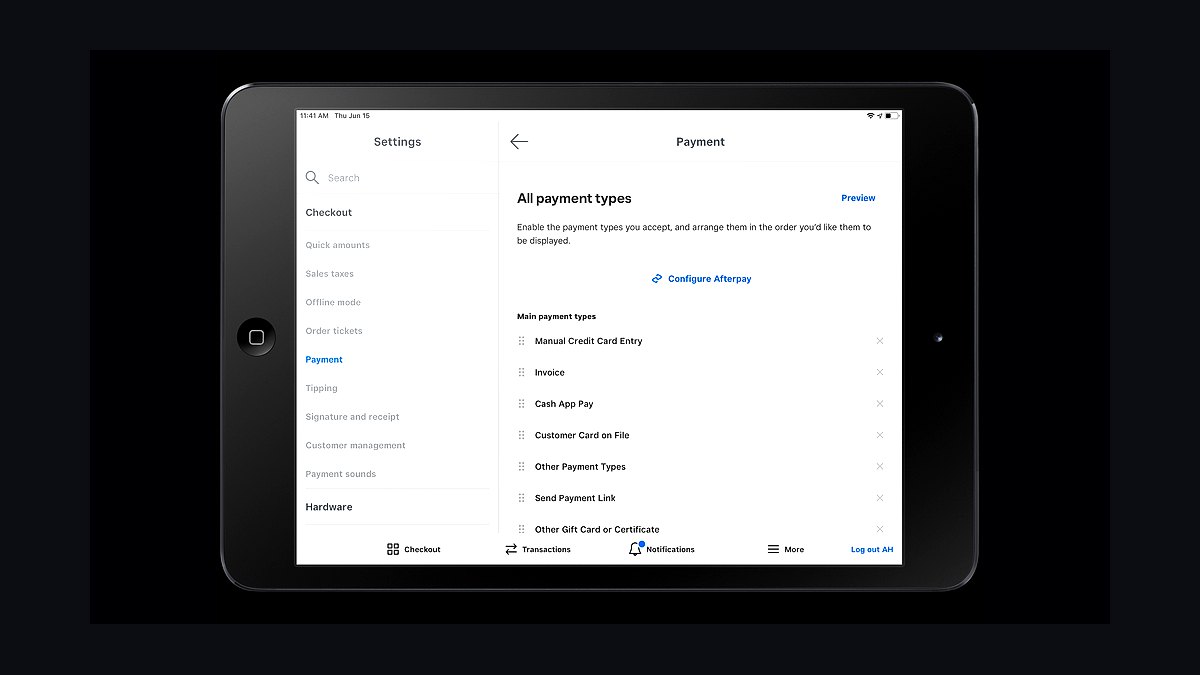
Square ranks tenth as the retail and F&B point of sale for pro shops, smoothie bars, and supplement counters, running roughly $60-$165 per month per terminal plus card fees. It stays distinct from the membership system so a smoothie sale never touches the dues ledger. Toast at $69-$165 per terminal is the pick when food service is meaningful.
It is for clubs with real ancillary retail volume, not operators whose only non-dues revenue is guest passes. The trade-off is fragmentation: a second POS means a second reconciliation, and Square's inventory tools are thinner than Toast's for full cafe operations. Against ADP above it, Square captures front-of-house revenue while ADP runs the staff behind it.
How we ranked these
We ranked each tool on five weighted criteria: dues-billing depth (30%), class scheduling and capacity logic (20%), integration with the member record and card processing (20%), sales-floor and prospecting fit (15%), and total cost at scale (15%). Scores came from vendor documentation, published pricing, and named-operator footprints. Tools that could not model freezes, family plans, or EFT retry ladders were penalized heavily regardless of feature breadth.
We deliberately ignored generic CRM and ERP feature checklists, brand familiarity, and analyst quadrant placement as standalone signals. We also excluded demo polish, mobile-app aesthetics, and marketplace-style review scores, since none predict whether dues actually clear or classes fill. Vendors without verifiable public pricing or a named health-club deployment were dropped, as were tools whose only fitness evidence was a marketing landing page.
What to look for
What matters most is whether the billing engine can model the freeze-and-reactivate cycle, family add-ons, annual fees, and a real dunning ladder. Second is the sale-to-membership handoff: a closed deal on the sales floor must become a billed member without re-keying. Third is class capacity logic, including waitlists, late-cancel fees, and instructor schedules. Price is fourth, because a one-point swing in payment recovery dwarfs most license differences.
The mistake most buyers make is shopping on feature breadth and demo polish, then discovering the platform cannot prorate a mid-month upgrade or retry a failed EFT correctly. A close second is splitting scheduling and billing across two vendors, which forces manual reconciliation every month. Buyers also over-index on ClassPass as primary revenue rather than off-peak yield, and skip cross-club BI until attrition is already visible in monthly exports.
Related questions
Why can't a generic subscription tool handle gym dues?
Generic billing tools model a flat recurring charge, not the fitness member lifecycle. They miss freeze periods, family add-ons, annual fee timing, mid-month prorations, and the multi-step retry ladder that recovers failed EFT payments. At chain scale, a one-point improvement in payment recovery is six figures, so the gap between generic and industry-native billing is real money.
What is the difference between ABC Ignite, Mariana Tek, and Mindbody?
ABC Ignite is built for big-box, high-volume clubs with complex dues and access control. Mariana Tek targets premium boutique studios with heavy class booking and waitlist logic. Mindbody is the broadest fit for yoga, Pilates, and smaller independents, with the lowest entry price. The right pick follows your segment and billing complexity, not feature count.
How does GymSales fit alongside a club management platform?
GymSales owns the prospect from first touch through signed contract, running dialer lists, tour-booking cadences, and rep leaderboards. Once a deal closes, it hands the member to ABC Ignite or Mindbody so billing starts without re-keying. Without that handoff, advisors close deals that get billed wrong and commissions become a monthly argument.
Is ClassPass worth it for a health club?
ClassPass is a yield tool for off-peak inventory, not a primary revenue channel. It fills empty 6:15 AM and 2:00 PM classes at a per-reservation payout, typically five to fifteen dollars. Operators that lean on it for prime-time slots cannibalize full-price dues and train members to wait for marketplace pricing instead of joining.
What should a gym use for payment processing?
Stripe is the common pick when the operator wants one processor across dues, retail POS, app purchases, and corporate invoicing, at roughly 2.9% plus thirty cents per card transaction. ABC Ignite and Mindbody both offer embedded processing with tighter integration. The deciding factor is usually whether unified reporting or native integration matters more.
Do gyms need wearable integrations in 2027?
Wearables matter as a retention signal, not a gimmick. Apple HealthKit, Fitbit, Whoop, and Technogym mywellness feed workout, heart-rate, and recovery data into the member profile. When usage drops, that signal triggers trainer outreach before the member cancels. Integration is engineering cost through SDKs and partner programs rather than a per-seat license.
How much does a gym software stack cost per location?
A single-location boutique runs roughly $1,500 to $4,000 per month in software plus processing fees. A regional chain of five to fifty locations lands between $25,000 and $120,000 per month depending on count and processing volume. National operators past 100 locations often exceed $300,000 per month, with custom integration spend on top.
What is the biggest mistake when replacing a gym billing platform?
Cutting over without reconciling a full dues cycle against the old system. The billing engine cannot go dark, so every recurring run, retry, and annual fee must be validated on a test cohort first. Operators that skip reconciliation lose payments in the transition month and spend the next quarter chasing member-service tickets instead of growth.
FAQ
What is the best club management software for big-box gyms?
ABC Fitness Solutions ABC Ignite is the default for big-box operators, powering more than 9,300 locations and 26 million members. It handles member records, contract terms, EFT billing, annual fees, freezes, family plans, and access control in one system. Pricing is custom-quoted, typically $200 to $600 per month per location at mid-market scale.
Which platform is best for boutique fitness studios?
Mariana Tek is the premium-boutique pick, used by high-end cycling and F45-adjacent brands, at roughly $300 to $700 per month per studio. It handles class capacity, waitlists, no-show fees, and instructor schedules well. Mindbody is the lower-cost alternative starting near $139 per month, better suited to yoga and Pilates studios with simpler billing.
How do gyms handle failed monthly payments?
The billing platform runs a dunning retry ladder, attempting the card or ACH debit on a schedule and triggering member-service outreach before the account churns. Stripe or the embedded processor executes the retries while ABC Ignite or Mindbody tracks account status. A one-point improvement in recovery is six figures at chain scale.
Do health clubs need a separate POS for the smoothie bar?
Yes, when food and retail volume is meaningful. Square runs the pro shop and supplements counter at roughly $60 to $165 per month per terminal plus card fees. Toast is the better call when juice-bar or cafe operations are substantial, at $69 to $165 per month per terminal plus processing. Neither replaces the membership billing system.
What analytics tool should a multi-club operator use?
Looker pulls dues yield, attrition, class fill rate, ancillary revenue, and labor cost into one cross-club dashboard, at roughly $5,000 per month for the platform tier. Tableau Creator at about $75 per user per month is the alternative when the analytics team prefers it. Without one of them, regional directors manage on stale monthly exports.
How long does it take to migrate to a new gym platform?
A staged rollout runs about 90 days. Days one to thirty cover member roster, contracts, and billing schedule migration with full reconciliation. Days thirty-one to sixty add the sales floor and ClassPass integration. Days sixty-one to ninety connect wearables, retail POS, and cross-club analytics. Billing cannot go dark at any point.
Is HubSpot a viable CRM for a gym chain?
HubSpot Sales Hub works when the chain wants marketing automation and CRM under one roof, at roughly $90 to $150 per user per month. It does not replace GymSales for tour-booked tracking and advisor leaderboards, and it does not replace ABC Ignite for billing. Most operators run it alongside, not instead of, industry-native tools.
What HR platform do regional gym chains use?
ADP Workforce Now is the default at regional and national chains, covering payroll, benefits, certification tracking, and shift management for trainers, instructors, and front-desk staff. Rippling at $8 to $40 per employee per month suits digitally-native chains wanting device provisioning unified with HR. Gusto fits independents under fifty employees.
How important is cross-club BI for a growing gym brand?
It becomes critical past roughly ten locations. Without a single view of dues, attrition, fill rate, ancillary, and labor, regional directors miss the early signal of a club tipping into net-loss territory. Looker or Tableau on top of ABC Ignite, GymSales, and Stripe is what turns monthly exports into an operating console.
Can a gym run on Mindbody alone?
A single-location studio can, since Mindbody covers booking, member records, and payments starting near $139 per month. It struggles at big-box scale, where complex dues, family plans, and access control demand ABC Ignite. Multi-location operators typically outgrow it and migrate once billing complexity and location count rise.
Sources
- https://ignite.abcfitness.com/
- https://www.marianatek.com/
- https://www.mindbodyonline.com/
- https://www.classpass.com/partners
- https://stripe.com/billing
- https://www.tableau.com/products/creator
- https://looker.com/
- https://www.adp.com/what-we-offer/products/adp-workforce-now.aspx
- https://squareup.com/us/en/point-of-sale
- https://www.klaviyo.com/
Related on PULSE
This page will be disappearing soon. Save it to your device for $1 — or read it free while it is here.
@Kory-White- · if Venmo asks, the last 4 of my number are 2012
This page is gone.
This one is off the shelf now. $1 keeps it on your phone for good — the whole page, pictures and diagrams included.
 pulse-tech-stacksTop 10 Best Tech Stack Tools for Land Surveying Firms in 2027
 pulse-tech-stacksTop 10 Best Tech Stack Tools for Pressure Washing Companies in 2027
 pulse-tech-stacksTop 10 Best Tech Stack Tools for Plastics and Injection Molding Manufacturers in 2027
 pulse-tech-stacksTop 10 Best Tech Stack Tools for B2B SaaS Companies in 2027
 pulse-tech-stacksTop 10 Best Tech Stack Tools for RV Dealerships in 2027
 pulse-tech-stacksTop 10 Best Tech Stack Tools for Home Builders and Residential Developers in 2027
 pulse-tech-stacksTop 10 Best Tech Stack Tools for Garden Centers and Nurseries in 2027
 pulse-tech-stacksTop 10 Best Tech Stack Tools for Medical Billing and RCM Companies in 2027
 pulse-tech-stacksTop 10 Best Tech Stack Tools for Movie Theaters in 2027
 pulse-tech-stacksTop 10 Best Tech Stack Tools for Public Relations Agencies in 2027