


Should I open or buy an Anago Cleaning Systems franchise in 2027?
Quality
Certified
Probably not — unless you target the Master Franchise (territory developer) tier with $250,000 in liquid capital, a $500K minimum net worth, and a 5-7 year horizon to compound a sub-portfolio of unit franchisees. The Unit Franchise path (the $11,690-$69,250 "starter accounts" tier) is a W-2-replacement job dressed as a business and routinely produces sub-$40K Year-1 owner cash flow. Master operators in Anago's 2026 FDD Item 19 posted $3.53M median collected revenue across 37 qualifying territories, with conservative Year-1 EBITDA of $45K-$110K and breakeven at month 14-22. Choose Master, not Unit. If you cannot fund Master, walk away and look at JAN-PRO, Stratus Building Solutions, or independent route-buying instead.
The Real Numbers
Anago Cleaning Systems sells two completely different franchises under one brand, and conflating them is the single most common buyer mistake. The Unit Franchise is a working owner-operator who buys a starter book of commercial janitorial accounts from the local Master. The Master Franchise is a regional developer who recruits, trains, and sells unit franchises while taking a percentage of every cleaning contract collected. The economics are not comparable.
Real 2026 FDD (Item 7 + Item 19) numbers, verified against Sharpsheets, Franchise Direct, Vetted Biz, and Anago's corporate disclosures:

| Line Item | Unit Franchise | Master Franchise |
|---|---|---|
| Initial franchise fee | $4,590 - $32,348 | Up to $98,000 |
| Total initial investment (Item 7) | $11,690 - $69,250 | $246,000 - $405,000 |
| Liquid capital required | $5,000 | $250,000 |
| Net worth minimum | $10,000 | $500,000 |
| Royalty fee | 10% of gross revenue | 5% of collected revenue |
| Admin/marketing fee | ~2% local marketing | 1% admin support fee |
| Unit-sold flat fee (Master) | n/a | $400 per unit sold |
| Item 19 avg annual sales (2025) | Not separately disclosed in detail | $3,453,102 average / $3,531,399 median (n=37) |
| Item 19 top performer (2025) | n/a | $8,243,733 |
| Realistic Year-1 owner cash flow | $18K - $42K (unit) | $45K - $110K (master, ramp year) |
| EBITDA margin (mature operator) | 8 - 14% | 18 - 28% |
| Payback period | 2 - 4 years if accounts retained | 5 - 7 years to full ROI |
| Veteran discount | 10% off fee + no Year-1 royalty | 10% off fee + no Year-1 royalty |
Industry benchmark anchor: IBISWorld pegs US janitorial services at $112.0B in 2026, growing 1.8% YoY with a 2.7% five-year CAGR. Franchised brands (Anago, JAN-PRO, Stratus, Coverall, ServiceMaster, Vanguard) collectively control roughly 8-10% of total industry revenue — the market remains highly fragmented, which is what gives a disciplined Master operator real white space to consolidate.
The collection-only royalty is genuinely better than peer brands. Anago Master franchisees pay 5% on collected revenue only — if a unit franchisee defaults or a client doesn't pay, the corporate royalty does not accrue. JAN-PRO and Stratus largely use the same model. Compare this to most service franchises, where royalty hits gross billings whether you collect or not.
Who Wins With This Business

The Master Franchisee profile that wins inside Anago is not the cleaning entrepreneur. It is the B2B sales and recruiting operator who treats this as a two-sided marketplace. Specifically:
- Former staffing-agency or franchise-development executives who have closed 50+ B2B contracts and recruited 100+ frontline workers. The Master role is 80% sales + 20% operations, and the sales are split between commercial cleaning contracts (B2B services sale) and unit franchise sales (B2B opportunity sale to immigrant entrepreneurs and aspiring owner-operators).
- Mid-career operators with $400K+ liquid who want a semi-absentee territory business and can hire a salaried operations manager by month 6. The math works because the Master collects on every contract, not just contracts they personally sold.
- Multi-unit franchisees already in service categories (lawn care, pest control, HVAC) cross-selling commercial cleaning to existing accounts. The CRM and sales process transfers; the cleaning labor is already franchised out to units.
- Veterans who get the 10% franchise fee discount and a Year-1 royalty waiver. On a $98K fee that's a real $9,800 + ~$40K in waived royalties in Year 1.
- Operators in second-tier metros (Indianapolis, Greensboro, Boise, Tulsa) where commercial cleaning is still dominated by mom-and-pop independents and a franchised brand with SOC 2-aligned processes and W-9 1099 compliance is a genuine differentiator with property managers and CRE landlords.
- Buyers focused on collected-revenue economics. Unlike royalties tied to gross billings, the 5% collected-revenue royalty structurally aligns Anago corporate with the franchisee — both only get paid when clients pay. This is unusual and underrated.
Who Loses With This Business
- Solo operators buying a Unit Franchise as a "business". It is a route, not a business. At $11,690-$69,250 in, you are buying ~$1,000-$4,000/month in starter contracts and a uniform. The Unhappy Franchisee archive documents cases of buyers who put $9,000 in and received $1,300 in contracts, or waited 12 months for promised accounts. Read every Unit-tier complaint before signing.
- Anyone expecting "guaranteed accounts" to equal "guaranteed income". The guarantee is contract value, not net-of-cancellation revenue. Commercial cleaning contracts churn at 20-35% annually; a "guaranteed" $36K starter book can become a $24K real book by month 9 without aggressive replacement selling.
- First-time owners with no B2B sales background buying Master. The Master Franchisee has to make 120-200 outbound dials per week for 18 months to build the unit pipeline. If you have never cold-called a facilities manager, this is the wrong vehicle.
- Anyone underfunded below ~$300K total liquid. Item 7 says $246K-$405K, but real-world Masters who hit Item 19 medians funded $350K+ including ~$120K working capital for sales hires, vehicles, and the first 18 months of operating losses.
- Buyers in saturated, mature metros (Atlanta, Dallas, Phoenix) where 3-4 cleaning franchise brands already have Masters and CRE vacancy is elevated. 2027 office vacancy in major US metros sits at 18-22% per CBRE; that's the addressable square footage you're competing for.
- Anyone who needs the cash flow in Year 1. Master economics are a 5-7 year compounding play, not an income replacement.
2027 Market Conditions
The commercial cleaning sector entered 2027 in a structurally favorable but cyclically uneven position. Five forces actually matter for an Anago buyer:
Office occupancy stabilization. After the 2023-2025 hybrid-work shakeout, Kastle Systems badge-swipe data shows occupancy stabilizing at 52-58% of pre-2020 levels across the top-10 US metros, with Sun Belt metros at 65-72%. This is the new normal — buy your territory based on this, not on pre-2020 square footage.
Medical, education, and industrial cleaning grew 4-6% in 2026 while traditional Class-A office cleaning declined 2-3%. Anago Masters who built 70%+ non-office account mix (medical office buildings, K-12 charters, light industrial, fitness, daycare) posted Item 19 medians 30-40% above brand average. Pivot the contract mix accordingly.
Labor cost pressure is the binding constraint. Federal minimum wage stalled at $7.25, but 22 states + DC have raised state minimums to $14-$17.50 for 2027. BLS NAICS 5617 (Services to Buildings) average hourly wage is $17.84 (May 2026 OES). Unit franchisees who pay subcontractors are absorbing this; Masters who priced contracts in 2024-2025 are now renegotiating or losing margin.
AI-assisted bidding and route optimization (CleanGuru, Swept, Janitorial Manager) is now table stakes. Independent operators without these tools are losing bids on price by 8-12%. Anago provides proprietary back-office software to Masters — confirm during discovery day that it's competitive with current 3rd-party stack.
M&A roll-ups are accelerating. ABM Industries, Pritchard Industries, and PE-backed platforms (HES Facilities, KBS) are acquiring $5M-$25M regional janitorial books at 4-6x EBITDA. A successful Anago Master built to $3-5M in collected revenue with 22%+ EBITDA is a legitimate $3-7M exit candidate by Year 6-7.
The 90-Day Decision Tree
- Days 1-15: Pillar verification. Pull the 2026 FDD directly from Anago corporate (not a third-party site). Read Item 7, Item 19, Item 20 (franchisee turnover), and Item 21 (audited financials) yourself. Cross-check the $3.45M average and $3.53M median against the n=37 disclosure footnotes — confirm what counts toward "collected revenue" and whether it includes pass-through unit franchisee billings.
- Days 16-30: Validation calls. Anago will send a Franchisee Validation list. Call at least 10 current Masters and 5 former Masters (Item 20 lists terminations). Ask: collected revenue Year 1/3/5, EBITDA margin, unit franchisees sold/active/terminated, sales hire count, biggest mistake.
- Days 31-45: Territory analysis. Request three specific territory P&Ls and the demographic data Anago uses for territory scoring. Verify NAICS 5617 establishment count and BLS payroll data for your metro. Walk away if your territory has fewer than 8,000 commercial cleaning establishments or 6,000+ employer establishments under 50 employees.
- Days 46-60: Capital stack. Confirm $350K liquid (not $250K minimum). Quote SBA 7(a) with two lenders on Anago's SBA Franchise Directory approved list. Expect 10.5-12.0% rates in 2027 and a 10-year term on the franchise fee + working capital.
- Days 61-75: Discovery Day. Attend in person at Anago HQ (Pompano Beach, FL). Stress-test their sales support, software stack, lead generation, and the actual unit-recruitment pipeline math. Get the unit franchise close rate in writing.
- Days 76-90: Legal + decision. Hire a franchise attorney (Goldstein Law, Marks & Klein, Einbinder & Dunn — $4K-$7K flat fee) to redline the franchise agreement. Negotiate territory boundaries and renewal terms. Sign or walk by Day 90 — extended decision cycles produce worse outcomes than either outcome.
Alternative Plays
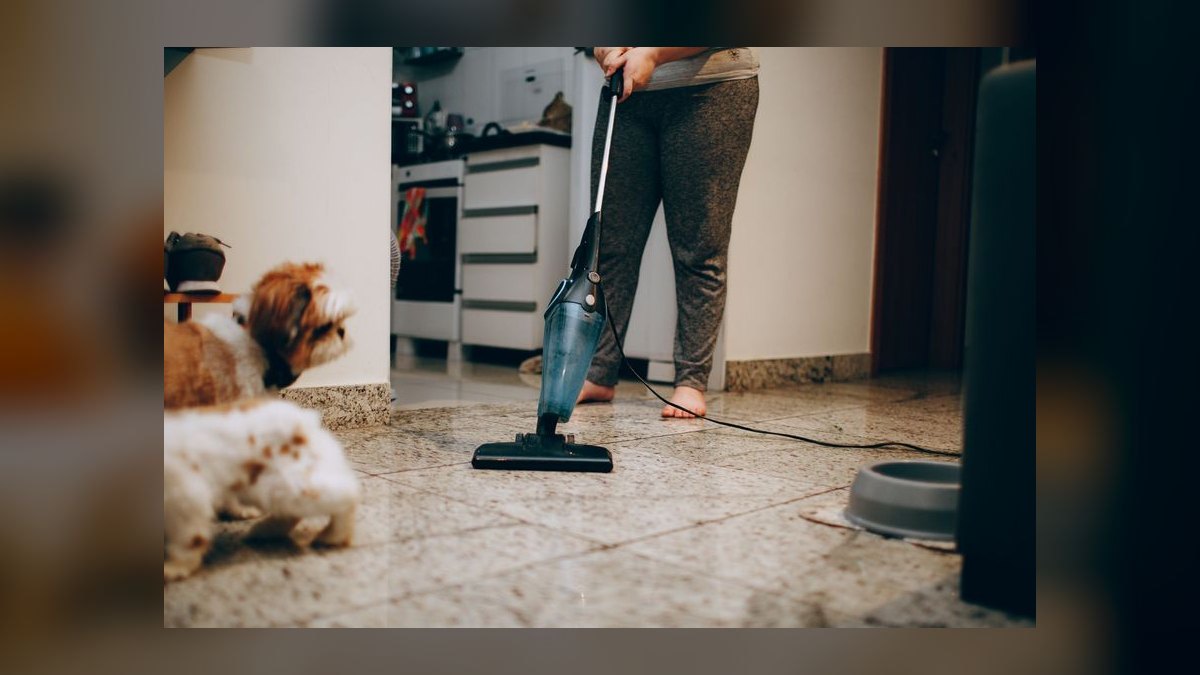
- JAN-PRO Master Franchise. Direct competitor, similar Master/Unit structure. Item 7: $180K-$270K initial investment. Generally lower entry than Anago Master, larger unit network (8,000+ unit franchisees nationally). Comparable 5% collected-revenue royalty structure. Strong second choice if Anago territory is unavailable.
- Stratus Building Solutions Regional Developer. Item 7: $185K-$320K. Heavier emphasis on green cleaning certifications (CIMS-GB, Green Seal), which closes deals with hospitals, universities, and ESG-mandated corporate clients. Better in Pacific Coast and Northeast metros.
- Buy a $1M-$3M independent janitorial book directly. Industry brokers (Murphy Business, Sunbelt) regularly list independents at 3-5x SDE / 0.8-1.2x revenue. You skip the franchise fee, royalty, and brand restrictions, but you also skip the recruitment pipeline and software stack. Math: a $2M book at $480K SDE selling for $1.5M beats a $400K franchise investment only if you already have operations and sales capability.
- Coverall North America Master. Item 7: $240K-$385K. Older brand, heavier corporate overhead, but stronger national accounts pipeline (Fortune-1000 multi-site contracts). Worth comparing if your territory has a major medical or industrial corridor.
- Cleaning Authority / Maid Brigade (residential). Different category entirely. Item 7: $130K-$185K. Lower competition, higher margin, but brutal labor turnover (140-180% annually) and consumer-discretionary revenue. Only consider if you specifically want residential cleaning, not commercial.
- Build independent route-based using ServiceTitan + LinkedIn + Google LSAs. Zero franchise fee, full margin, but you build the brand, software stack, and recruiting funnel yourself. Realistic 18-24 months to first $500K in revenue.
FAQ

What is the minimum investment to become a Master Franchise owner? The Master Franchise tier requires at least $250,000 in liquid capital and a $500,000 minimum net worth. This covers territory development rights, training, and initial support, though total costs can range higher depending on territory size.
How much can a Unit Franchise owner expect to earn in the first year? Unit Franchise owners typically see owner cash flow below $40,000 in Year 1, often closer to $25,000–$35,000. This is because the model functions more as a self-employed job than a scalable business, with most revenue going to labor and supplies.
What are the realistic revenue and profit numbers for a Master Franchise? According to Anago’s 2026 FDD Item 19, median collected revenue for Master operators is $3.53 million across 37 qualifying territories. Year-1 EBITDA generally falls between $45,000 and $110,000, with breakeven achieved between months 14 and 22.
How long does it take to break even with a Master Franchise?

Most Master operators reach breakeven within 14 to 22 months. This timeline depends on territory size, local market conditions, and how quickly you recruit and support unit franchisees.
Is the Unit Franchise a good option for someone wanting a full-time business? It can replace a W-2 job, but it rarely generates significant passive income or wealth. The Unit Franchise path is best suited for someone willing to work hands-on for modest returns, not for those seeking a scalable investment.
What alternatives should I consider if I can’t fund the Master tier? If you lack the $250,000 liquid capital, consider JAN-PRO, Stratus Building Solutions, or independent route-buying. These options offer lower entry costs and similar commercial cleaning models, though each has its own risk and return profile.
Bottom Line
Anago Cleaning Systems is a legitimate, mid-sized commercial cleaning franchise with a real Item 19 disclosure ($3.45M average, $3.53M median across 37 Masters in 2025) and a structurally sound collected-revenue royalty model. The Unit Franchise tier is not a buyable business for anyone who has not already decided to be a working-owner cleaner — the $11,690-$69,250 ticket buys a job with overhead. The Master Franchise tier is a real territory-developer opportunity that requires $350K+ in funded capital, B2B sales DNA, and a 5-7 year horizon to compound into a $3M+ collected-revenue business with $635K-$990K mature EBITDA and a credible $3M-$7M exit to PE-backed cleaning roll-ups in Year 6-7. If you have the capital and the sales background, run the 90-day decision tree exactly as written. If you don't, buy an independent janitorial book or look at JAN-PRO, Stratus, or Coverall as comparison cases before committing.
Sources
- Anago Cleaning Systems 2026 Franchise Disclosure Document (Item 7, Item 19, Item 20, Item 21) — corporate.anagocleaning.com
- Sharpsheets — Anago Cleaning Systems Franchise FDD, Profits & Costs (2025)
- Vetted Biz — Anago Franchise Cost & Profit Exposed (2025 Update)
- Franchise Direct — Anago Cleaning Systems Franchise UFOC Profile
- Franchise Gator — Anago Cleaning Systems Franchise Cost, Fees & Opportunities (2026)
- Entrepreneur Franchise 500 — Anago Cleaning Systems directory entry, 2026
- IBISWorld — Janitorial Services in the US (NAICS 56172), 2026 Industry Report
- US Bureau of Labor Statistics — May 2026 OES, NAICS 5617 Services to Buildings, Wage Series
- International Franchise Association — Economic Outlook for Franchising 2027
- CBRE Research — US Office Occupancy and Vacancy Q1 2027
- Kastle Systems — Back to Work Barometer Top-10 Metro Occupancy Index
- SBA Franchise Directory — Anago Cleaning Systems eligibility listing
- Unhappy Franchisee — Anago Cleaning Systems Franchise Complaints archive
<!-- review keywords: Anago Cleaning Systems franchise review, Anago Cleaning Systems reviews, Anago franchise rating, Anago Cleaning Systems review 2027, review of Anago Cleaning Systems franchise -->
Related on PULSE
- Should I open or buy a Vanguard Cleaning Systems franchise in 2027?
- Best cleaning and janitorial franchises to start in 2027
- Should I open or buy an Oxi Fresh Carpet Cleaning franchise in 2027?
- Should I open or buy a Ned Stevens Gutter Cleaning franchise in 2027?
- Should I open or buy a Fish Window Cleaning franchise in 2027?
- Should I open or buy a The Cleaning Authority franchise in 2027?
This page will be disappearing soon. Save it to your device for $1 — or read it free while it is here.
@Kory-White- · if Venmo asks, the last 4 of my number are 2012
This page is gone.
This one is off the shelf now. $1 keeps it on your phone for good — the whole page, pictures and diagrams included.
 franchiseShould I open or buy a Kona Ice franchise in 2027?
 franchiseShould I open or buy a Planet Fitness franchise in 2027?
 franchiseShould I open or buy a Crumbl Cookies franchise in 2027?
 franchiseShould I open or buy a Firehouse Subs franchise in 2027?
 franchiseShould I open or buy a Roto-Rooter franchise in 2027?
 franchiseShould I open or buy a Whataburger franchise in 2027?
 franchiseShould I open or buy a Pizza Hut franchise in 2027?
 franchiseShould I open or buy a Matco Tools franchise in 2027?
 franchiseShould I open or buy a Culver's franchise in 2027?
 franchiseShould I open or buy a Drybar franchise in 2027?