


Should I open or buy a Summer Moon Coffee franchise in 2027?
Quality
Certified
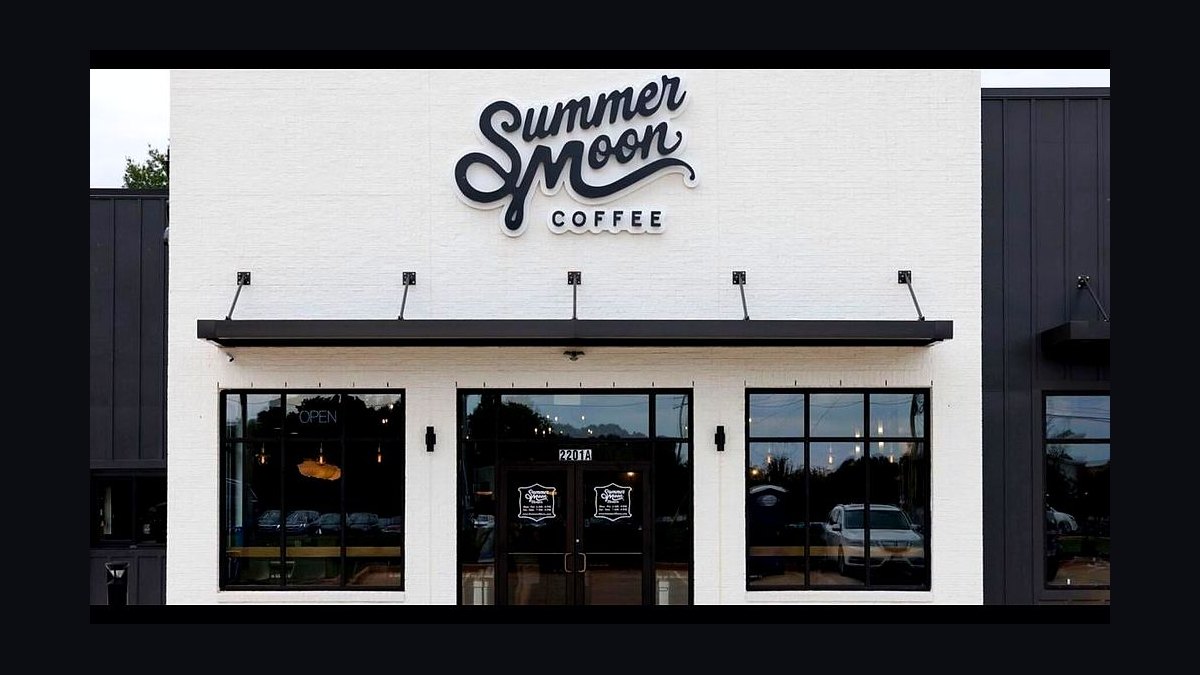
Yes, if you want a differentiated specialty-coffee franchise built around a real product signature — Summer Moon Coffee's wood-fired, oak-roasted coffee and proprietary Moon Milk sweet cream justify the roughly $500,000-$1,200,000 investment for an operator who can secure a strong site in or near Texas. Mature units gross $600,000-$1,400,000 with owners clearing $80,000-$250,000, but regional concentration, coffee-category competition, and labor management remain real risks worth validating against Item 19 before you sign.
Buying an Existing Location vs. Opening a New Build
Anyone evaluating Summer Moon Coffee in 2027 is really choosing between two distinct paths, and they carry very different risk profiles even though both end with the same brand on the sign. The first path is opening a brand-new franchise from the ground up — negotiating a lease or purchasing land, building out a cafe and/or drive-thru shell, installing espresso and roasting-support equipment, and opening with zero trailing sales history. The second path, resale, means buying an existing Summer Moon location from a current owner who is exiting, which comes with a proven revenue stream, an established customer base, and trained staff already in place, but also inherits whatever problems the prior operator built into the business.
New construction gives you a clean slate: you pick the site, negotiate favorable lease terms in a market you've personally validated, and build to the current brand specification rather than retrofitting an older unit. The downside is the 116-145 day build timeline the franchisor typically quotes, zero revenue during that stretch, and full exposure to the oak-roasted coffee category's unproven reception in a market that has never tasted Moon Milk. You are also fully exposed to permitting delays, contractor overruns, and equipment lead times — coffee-specific espresso and roasting-support gear often runs 8-14 weeks out, longer than generic restaurant equipment.

Resale changes the calculus entirely. A seller's asking price is typically set as a multiple of trailing twelve-month EBITDA — in food and beverage franchising that multiple commonly runs 2.5x-4x, meaning a unit clearing $150,000 in owner earnings might list anywhere from $375,000 to $600,000, often less than the all-in cost of a new build once buildout, signage, and pre-opening marketing are included. You inherit trained baristas who already know the oak-roasting process and Moon Milk preparation, an established local following, and — critically — a real Item 19-style track record you can diligence instead of trusting a projection. The tradeoff is you also inherit the lease terms as negotiated (which may be less favorable than what you could get fresh), any deferred maintenance on the espresso and roasting equipment, and the seller's reason for leaving, which is not always disclosed candidly. A seller exiting because the site's daily-habit traffic never materialized is a very different situation than one retiring after a decade of strong volume.
The franchisor's approval process differs too. A new build requires site approval, lease review, and construction-plan sign-off from Summer Moon's real estate and design teams. A resale requires the franchisor's consent to transfer, which typically includes a review of the buyer's qualifications (comparable to a new franchisee application), a right of first refusal the franchisor may or may not exercise, and often a modernization requirement — bringing an older unit up to current decor and equipment standards, which can add $30,000-$80,000 on top of the purchase price depending on how dated the location is.
How to Decide Between Buying New and Buying Resale

The decision tree above reflects how experienced multi-unit operators actually approach this choice: they don't default to "always build new" or "always buy existing." They let the data drive it. If you can't get three years of clean financials and honest Item 19-style disclosure from a seller, that alone is disqualifying — a seller confident in their numbers shares them readily, and the ones who stall or offer only summarized figures are usually hiding a declining trend. If a resale unit checks out on financials but the lease has fewer than five years remaining, you need to price in the very real risk that the landlord raises rent sharply or declines to renew, which can gut an otherwise solid EBITDA multiple.
For a first-time operator with no coffee-industry experience, resale is frequently the safer on-ramp precisely because you inherit trained staff who already know the oak-roasting and Moon Milk process — the franchisor's 4-6 week training program teaches you the system, but nothing replaces a shift lead who has run it daily for two years. For an operator planning a 3-5 unit multi-unit development agreement, new construction in a carefully chosen greenfield market often makes more sense because you're building a footprint on your terms rather than inheriting whatever site economics the previous owner accepted.
Concrete Numbers Behind Each Option
New build investment range (per the 2026 FDD):
| Line Item | Low | High |
|---|---|---|
| Franchise fee | $35,000 | $35,000 |
| Buildout / leasehold improvements | $260,000 | $680,000 |
| Equipment & espresso systems | $120,000 | $280,000 |
| Signage & decor | $22,000 | $70,000 |
| Initial inventory | $10,000 | $26,000 |
| Initial marketing | $14,000 | $40,000 |
| Training & travel | $12,000 | $35,000 |
| Working capital (3 months) | $40,000 | $110,000 |
| Total Item 7 | ~$500,000 | ~$1,200,000 |
Ongoing fees run roughly 6% royalty on gross sales plus a 2-3% advertising fee, identical whether you build new or buy resale — these are brand-wide, not deal-structure-specific.
Resale economics, modeled: if a target unit generates $900,000 in annual gross sales at a 20% EBITDA margin (within the 15-22% band typical for mature units), that's $180,000 in trailing cash flow. At a 3x multiple, the asking price lands near $540,000 — likely $150,000-$300,000 less than what a comparable new build in the same trade area would cost once land, buildout, and pre-opening losses are totaled. But that $540,000 typically requires a larger upfront cash outlay in one lump sum (financing a business acquisition is often harder than financing new construction, where the franchisor and SBA lenders are more accustomed to the draw-schedule structure), whereas new-build costs are spread across a 4-6 month construction period.
Break-even and ramp: new locations typically hit the $40,000-$55,000 monthly break-even point by month 6-12, meaning a full year of investment risk before the unit is self-sustaining. A resale unit, by contrast, is already past break-even on day one of ownership — you're buying cash flow, not building toward it. That difference alone is why many risk-averse first-time franchisees, even outside the coffee category, gravitate toward resale when the financials check out.
Cost structure common to both paths: cost of goods sold runs 30-38% of revenue (coffee beans, Moon Milk ingredients, packaging, all sourced through approved suppliers, often the franchisor's central roastery), labor 28-35%, occupancy 10-15%, and royalty plus ad fee 8% combined. A new build gives you a chance to negotiate occupancy costs fresh; a resale locks in whatever the existing lease specifies, for better or worse.
Implementation Details and Sequencing
Whichever path you choose, the sequencing after the decision point looks similar but the timelines diverge sharply. For a new build, expect roughly 16-20 weeks from signed lease to opening day, covering permitting, buildout, equipment installation (espresso systems and roasting-support gear often have the longest lead times in the whole project), staffing, and a soft-open period. For a resale, the transfer process itself — franchisor consent, buyer qualification review, closing on the purchase agreement — typically runs 4-8 weeks, though if the location requires modernization to meet current brand standards, add another 4-8 weeks of closure or reduced-hours renovation on top of that.
Training is identical either way: the franchisor requires 4-6 weeks of initial training at a corporate location or designated training store, covering oak-roasting technique, Moon Milk preparation, POS systems, and labor-management practices, plus ongoing regional workshops after opening. This is non-negotiable regardless of entry path, and it's worth budgeting the $12,000-$35,000 training-and-travel line even on a resale, since incoming owners still need full certification even if the staff underneath them is already trained.
Staffing needs are consistent across both paths: 8-12 part-time and full-time employees, a general manager at $45,000-$60,000, and an assistant manager at $35,000-$45,000. On a resale, ideally the existing team stays through the transition, which meaningfully de-risks the first 90 days compared to a new build where you're hiring and training an entire crew from scratch while simultaneously learning the oak-roasting and Moon Milk systems yourself. Hours typically run 6:00 AM-7:00 PM daily, with some drive-thru units opening as early as 5:30 AM, and owner-operators should expect 50-60 hours per week initially regardless of which path they took, scaling back to 40-50 hours once a reliable manager is trained and trusted.
Seasonality affects both paths equally: expect a 10-15% dip in January-February and a 15-20% lift during November-December holiday months, which matters for cash-flow planning whether you're carrying new-build debt service or financing a resale purchase. Once past the first year, both paths converge on the same question — is this a single-unit lifestyle business or the first unit in a multi-unit development agreement, which typically requires $500,000+ in liquid assets and $1.5M+ net worth for 3-5 units over 5-7 years, with the franchisor providing site-selection assistance but no exclusive-territory guarantee beyond your initial protected radius of 1.5-3 miles.
Related questions
Is Summer Moon Coffee profitable outside of Texas?
Data is thinner outside the Texas stronghold, but the brand began licensing in Oklahoma, Arkansas, and Colorado as of 2025-2026. Profitability depends heavily on whether the local market responds to the oak-roasted differentiator without the built-in Texas brand awareness.
What's a realistic timeline from signing to opening a new Summer Moon location?
Budget 16-20 weeks for a new build once the lease is signed, covering permitting, construction, equipment installation, and the 4-6 week training program, versus 4-8 weeks for a resale transfer plus any required modernization work.
Can I finance a Summer Moon Coffee franchise with an SBA loan?
Many franchise brands, including food-and-beverage concepts in this investment range, qualify for SBA 7(a) financing; lenders typically want $175,000-$275,000 in liquid capital and will scrutinize Item 19 and, for a resale, the seller's trailing financials closely.
How does the royalty structure compare to other coffee franchises?
Summer Moon's roughly 6% royalty plus 2-3% ad fee is in line with the broader specialty-coffee and quick-service beverage category, where royalties commonly range from 5-8%.
Does buying a resale unit require the same training as opening new?
Yes — the franchisor requires every incoming owner, resale or new build, to complete the full 4-6 week initial training program regardless of how experienced the existing staff is.
FAQ
What is the total investment needed to open a Summer Moon Coffee franchise in 2027? The total investment range is roughly $500,000 to $1,200,000, per the 2026 FDD. This includes the $35,000 franchise fee, build-out, equipment, and initial inventory, though a resale purchase can sometimes come in below the low end of that range once the EBITDA multiple is applied.
How much can I expect to earn as a Summer Moon Coffee franchise owner? Mature units typically gross between $600,000 and $1,400,000 annually, with owner net profit ranging from $80,000 to $250,000. Actual take-home depends on store volume, labor costs, occupancy terms, and local competition.

What makes Summer Moon Coffee different from other coffee franchises? The brand's core differentiator is wood-fired, oak-roasted coffee and the proprietary Moon Milk sweet cream, a flavor profile not found at most competitors. This product signature, paired with a cozy cafe or drive-thru format, helps build a loyal customer base that repeat-visits on a daily-habit basis.
Is it better to buy an existing Summer Moon Coffee franchise or open a new one? It depends on your risk tolerance and access to capital. A resale with clean financials and a favorable remaining lease term often delivers immediate cash flow at a lower effective cost than a new build, while a new build lets you choose your own site and avoid inheriting a prior owner's operational issues.
What are the ongoing fees for a Summer Moon Coffee franchise? The royalty fee is approximately 6% of gross sales, plus an additional 2-3% advertising fee. These apply identically whether you open a new location or buy an existing one.
Is Summer Moon Coffee a good fit for first-time franchise owners? It can be, particularly through a resale where trained staff and an established process reduce the learning curve. The franchisor prefers operators with some business or food-service management experience, and hands-on commitment is expected either way.
Sources
- https://www.entrepreneur.com/franchises/directory
- https://www.franchisedirect.com/foodfranchises/coffeefranchises/
- https://www.ibisworld.com/united-states/industry/coffee-snack-shops/
- https://www.statista.com/topics/1424/coffee-industry/
- https://www.qsrmagazine.com/
- https://www.franchisebusinessreview.com/
- https://www.nrn.com/
- https://www.franchise.org/
- https://www.sba.gov/business-guide/plan-your-business/franchises
Related on PULSE
- Best coffee and beverage franchises to buy in 2027
- Should I open or buy an It's A Grind Coffee franchise in 2027?
- Should I open or buy a The Coffee Bean & Tea Leaf franchise in 2027?
- Should I open or buy a Just Love Coffee Cafe franchise in 2027?
- Should I open or buy a Coffee Beanery franchise in 2027?
- Should I open or buy a Dunn Brothers Coffee franchise in 2027?
This page will be disappearing soon. Save it to your device for $1 — or read it free while it is here.
@Kory-White- · if Venmo asks, the last 4 of my number are 2012
This page is gone.
This one is off the shelf now. $1 keeps it on your phone for good — the whole page, pictures and diagrams included.
 franchiseShould I open or buy a Crumbl Cookies franchise in 2027?
 franchiseShould I open or buy a Meineke franchise in 2027?
 franchiseShould I open or buy a Drybar franchise in 2027?
 franchiseShould I open or buy a Bruster's Real Ice Cream franchise in 2027?
 franchiseShould I open or buy a Taco Bell franchise in 2027?
 franchiseShould I open or buy a Jimmy John's franchise in 2027?
 franchiseShould I open or buy a Stanley Steemer franchise in 2027?
 franchiseShould I open or buy a Supercuts franchise in 2027?
 franchiseShould I open or buy a Jeremiah's Italian Ice franchise in 2027?
 franchiseShould I open or buy a Smoothie King franchise in 2027?