
“Small reps, big results.” — LinkedIn Banner
 Curated byKory White · Fractional CRO · Maryland
 PULSEKNOWLEDGE LIBRARY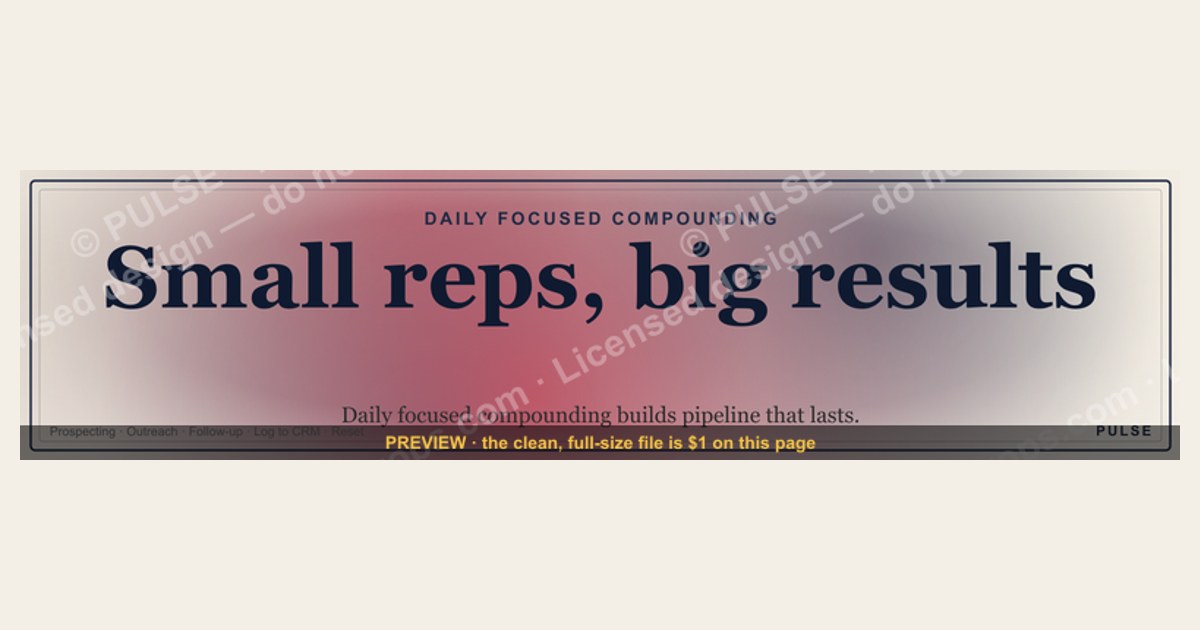
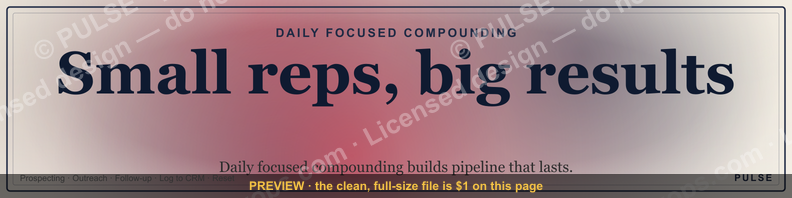
"Small reps, big results." is a free, on-brand LinkedIn banner built for sales and revenue professionals — not a fitness slogan. The line is a deliberate double meaning: in sales, a "rep" is both the person doing the work and the small, repeatable action they run every day — the prospecting touch, the personalized follow-up, the note logged to the CRM. The banner's point is that durable pipeline isn't built in heroic, once-a-week sprints; it's built from small reps done consistently until they compound. Put it on your profile to signal, at a glance, a disciplined, long-game sales philosophy. It scales cleanly to the LinkedIn cover slot (1584×396 px) and is free to download below.
“Small reps, big results.” — LinkedIn Banner

A dark, on-brand LinkedIn banner — "Small reps, big results." over a "Daily Focused Compounding" line with a pulse motif. Put it on your profile to signal exactly what you do.
Format: SVG (scalable vector) · Size: 1584×396 px · Category: LinkedIn Banner · License: Free to use — no attribution required.
Recolor it to your brand
Use the color picker above to recolor this banner to your team or company colors, switch the background (including transparent), then download it as an SVG or PNG. No sign-up, no watermark.
How to use it
It scales cleanly to the LinkedIn cover slot (1584×396) — download the PNG and drop it straight onto your profile, or open the SVG in Canva, PowerPoint, or Figma to add your name and tweak the layout.
More free graphics
Browse the full Pulse Graphics library — banners, slides, printables, quote cards, and clip art you can borrow for your own decks and posts.

Related on PULSE
- Small reps, big results. — LinkedIn Wallpaper
- “DO THE REPS” — Sales Floor Print
- Better reps, every week. — LinkedIn Wallpaper
- Ready reps win. — LinkedIn Wallpaper
- Do the reps. — LinkedIn Wallpaper
- “Great reps wanted.” — LinkedIn Banner
Why “Small Reps” Beat Big Sprints in Sales
The phrase plays on the two meanings of "rep" in revenue work — the person and the repeated action — and the point holds either way: consistency beats intensity. When a seller tries to cram a week's worth of cold calls or outreach into a single marathon day, message quality drops as attention fatigues, and the prospect on the receiving end of a same-day barrage usually feels crowded rather than courted.
Think of it as progressive overload for pipeline. A rep who sends a handful of genuinely researched, personalized touches every day will, over a month, build more familiarity and trust than someone who blitzes a prospect once and goes quiet. B2B buyers typically need several spaced, relevant touches before a real conversation happens — and "spaced" is the operative word. Reps delivered in small, regular doses give a prospect room to recognize you; the same reps dumped in one sitting read as noise.
For sales leaders, the practical translation is to structure the day around short, single-focus blocks rather than open-ended call marathons. Each block does one job — prospecting, outreach, follow-up, or closing — with a deliberate reset in between. The banner is the reminder that hangs over all of it: the seller who does a few great reps every day for a year accumulates far more high-quality interactions than the one who sprints, burns out, and disappears for three weeks.
How to Design Your Own “Small Reps” Daily Workflow
The banner is the inspiration; the workflow is where it pays off. Start by naming your three highest-leverage activities. For most B2B sellers those are:
- Prospecting — finding and qualifying new leads
- Outreach — personalized messages, calls, or emails
- Follow-up — nurturing existing pipeline
Give each one a short, fixed block — roughly 25 focused minutes — rather than an open-ended "until I hit quota." A sample day:
- 9:00–9:25 AM — Prospecting: Use LinkedIn Sales Navigator or your CRM to add a few new leads that match your ICP, each with a personalized note.
- 10:30–10:55 AM — Outreach: Send a few highly customized messages to yesterday's prospects, each referencing something specific about their role or company.
- 1:30–1:55 PM — Follow-up: Reach out to a few existing-pipeline contacts with a value-add — a relevant article, a quick insight, a useful case study.
Each block is short enough to hold real focus and long enough to make progress. Log the activity the moment a block ends — it takes a couple of minutes and prevents the "I'll update the CRM later" trap that quietly wrecks data integrity.
For teams, protect these blocks on the calendar as non-negotiable "Focus" time and keep meetings out of them. Space the blocks apart rather than stacking them back-to-back, so attention resets between sessions. Then review weekly — track outcomes (meetings booked, opportunities created), not just activity (calls made, emails sent) — and adjust the block lengths to fit what each activity actually needs. The system flexes; the principle doesn't: small, consistent reps compound.
The Psychology Behind Why It Sticks
"Small reps, big results" resonates because it works with how attention and motivation actually behave. A small, finishable goal — a few personalized touches in 25 minutes — produces a clean sense of completion, and completion is reinforcing in a way that "make 50 calls today" never is. A vague mountain of a goal invites procrastination; a bounded one invites a start.
The structure also blunts the all-or-nothing mindset. A bad 25-minute block is easy to shrug off and redo later — it's one block. A blown four-hour sprint can color the whole day. Because failure stays small and recoverable, the habit survives bad days. Habit-formation research (Lally and colleagues, 2009) found it took participants an average of about 66 days for a new behavior to become automatic, with wide individual variation — so the win is committing to the reps long enough for them to stop requiring willpower.
A predefined cadence also spares you decision fatigue. Every "what should I do next?" spends a little mental energy; a fixed block removes dozens of those micro-decisions a day and preserves your judgment for the work that needs it — writing the message, reading the room on a call, adapting the pitch in real time. And the banner itself is a quiet commitment device: every time you open LinkedIn you see the phrase, and to your network it signals discipline over flash — a useful credibility marker in a feed full of hype.
Why “Small Reps” Resonates with Modern Buyers
The phrase taps into a psychological principle known as *compounding credibility*. In an era where buyers are bombarded with polished, high-production sales pitches, a banner that reads “small reps, big results” signals something rare: a practitioner who respects the buyer’s time and understands that trust is earned incrementally. It’s an implicit promise that this salesperson won’t spam your inbox or demand a 60-minute demo on first contact. Instead, they’ll show up consistently with relevant value — a relevant article, a thoughtful question, a useful data point — until the relationship naturally warrants a conversation. For hiring managers and decision-makers scanning LinkedIn profiles, this banner acts as a quick filter: it separates volume-hunters from relationship-builders.
How to Pair the Banner with Your Profile Content
A banner is only as effective as the context around it. To make “Small reps, big results.” land authentically, align your headline and summary with the same philosophy. For example, your headline might read “Sales Development | Consistent Prospecting | Pipeline Builder” rather than “Top Performer | Closer.” In your About section, include a concrete example of a small rep that paid off — like a 3-sentence LinkedIn message that led to a $50k deal after 11 touches. This creates a cohesive narrative: the banner catches the eye, the profile reinforces the story, and the reader walks away with a clear sense of your methodology. Avoid generic buzzwords like “results-driven” or “strategic” in the same profile — they dilute the specific, grounded message the banner is trying to send.
When to Update or Rotate the Banner
While the banner is designed to be evergreen, consider swapping it out every 3–6 months if your role or focus shifts significantly. For example, if you move from SDR to Account Executive, you might update the banner to “Small reps, bigger deals.” or “Consistent outreach, closed revenue.” — keeping the core “small reps” framework intact. Similarly, if your company rebrands or you join a new organization, refresh the banner to reflect current branding colors or logos (the free SVG file is easily editable). The key is to maintain the “small reps” ethos as a personal brand anchor, not a one-time graphic. A stale banner on a profile that hasn’t been updated in a year can ironically suggest the opposite of consistency — so treat it as a living asset, not a set-and-forget decoration.
Why this works for sales leaders
The phrase "small reps" lands differently depending on your audience. For sales leaders managing teams, it's a quiet signal that you prioritize process over heroics — that you'd rather see 50 consistent touches per week than one massive deal that closes on luck. The banner becomes a visual shorthand for your coaching philosophy: you teach reps to trust the daily compound, not the quarterly sprint. It's especially effective for VPs of Sales, revenue operations leads, and enterprise account executives who want to attract talent or clients that value grind over glamour.
Pair it with your headline
The banner's impact doubles when your LinkedIn headline echoes the same idea. Try something like: "Helping sales teams build pipeline through small, daily reps" or "Revenue leader | Small reps, big results." This creates a cohesive brand story — the banner catches the eye, the headline confirms the philosophy. Avoid generic titles like "Sales Professional" or "Business Development"; instead, lean into the compound mindset the banner promotes. The visual and text together make your profile instantly memorable to recruiters and prospects scanning for disciplined, long-term thinkers.
Sources
- LinkedIn Help Center — Recommended profile cover/banner image dimensions (1584 × 396 px). https://www.linkedin.com/help/linkedin
- James Clear, *Atomic Habits* (Avery, 2018) — how small, repeated habits compound, plus the "two-minute rule." https://jamesclear.com/atomic-habits
- BJ Fogg, *Tiny Habits* (Houghton Mifflin Harcourt, 2019) — Stanford Behavior Design Lab research on building habits from very small actions. https://tinyhabits.com
- Phillippa Lally et al., "How are habits formed: Modelling habit formation in the real world," *European Journal of Social Psychology* (2009) — the ~66-day average to automaticity. https://onlinelibrary.wiley.com/doi/10.1002/ejsp.674
- Roy F. Baumeister & John Tierney, *Willpower* (Penguin, 2011) — research on decision fatigue and self-regulation. https://www.penguinrandomhouse.com
- Harvard Business Review — research and articles on sales force effectiveness and consistent sales activity. https://hbr.org/topic/sales
FAQ
What does “small reps, big results” mean for a salesperson? It means leaning on high-frequency, low-friction actions — a couple of personalized follow-ups a day, a few extra well-researched prospecting touches — instead of trying to overhaul your whole process in one heroic push. Those small, consistent reps compound over weeks into measurable pipeline. It's a play on "rep" meaning both the seller and the repeated action.
Is this banner only for salespeople, or can other roles use it? It's aimed at sales and revenue leaders, but the idea travels. Marketers, customer success teams, and founders can all adopt the small-reps mindset; the trick is naming the one or two micro-habits that move the needle in your specific role and doing them daily.
How long before small reps produce visible results? It depends on your starting point, sales cycle, and industry, so treat any fixed timeline with suspicion. What's reliable is the mechanism: consistent daily action improves the quality of each interaction over time because you're not rushing, and that quality is what eventually shows up as more meetings and opportunities.
Does this approach work for very long sales cycles? Yes — arguably more so. In six-to-twelve-month cycles, small, spaced reps keep accounts warm without overwhelming the buyer or the team. A single thoughtful touch per account per week sustains momentum that a one-off sprint can't, because the relationship is built over the whole cycle, not in a burst.
Can I use this banner if I’m not a CRO or sales leader? Absolutely. The message is universal for anyone betting on consistent effort — individual contributors, startup founders, or operators. Pair it with profile copy that fits your context, e.g., "Helping founders turn small daily actions into revenue growth."
What’s the best way to tell whether my small reps are working? Pick one leading metric — outbound touches per day, reply rate, or meetings booked — and review it weekly rather than obsessing daily. If the trend climbs while you hold the habit steady, the reps are working; if it flatlines, adjust the block (better targeting or a stronger message) rather than just doing more volume.
This page will be disappearing soon. Save it to your device for $1 — or read it free while it is here.
@Kory-White- · if Venmo asks, the last 4 of my number are 2012
This page is gone.
This one is off the shelf now. $1 keeps it on your phone for good — the whole page, pictures and diagrams included.
 graphicField Sales Rep — LinkedIn Banner
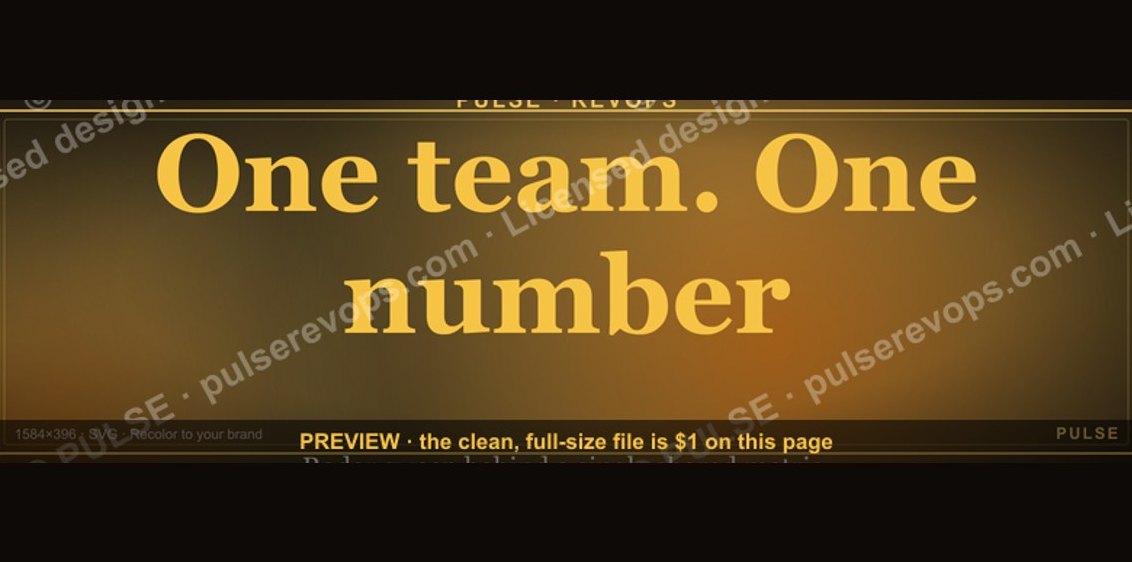 graphicOne team. One number. — LinkedIn Wallpaper
 graphicCommercial Director — LinkedIn Banner
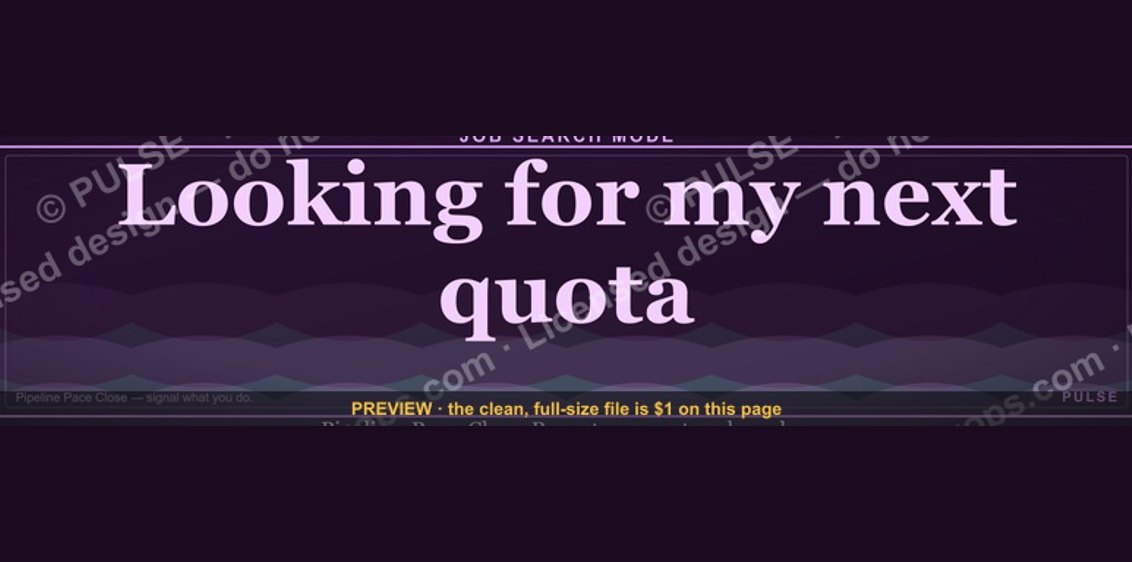 graphic“Looking for my next quota.” — LinkedIn Banner
 graphicStartup Founder — LinkedIn Banner
 graphic“Don’t pitch. Diagnose.” — LinkedIn Banner
 graphicRevOps Manager — LinkedIn Banner
 graphicMake it predictable. — LinkedIn Wallpaper
 graphic“Bring the energy every call.” — LinkedIn Banner
 graphic“Champions are made before the call.” — LinkedIn Banner